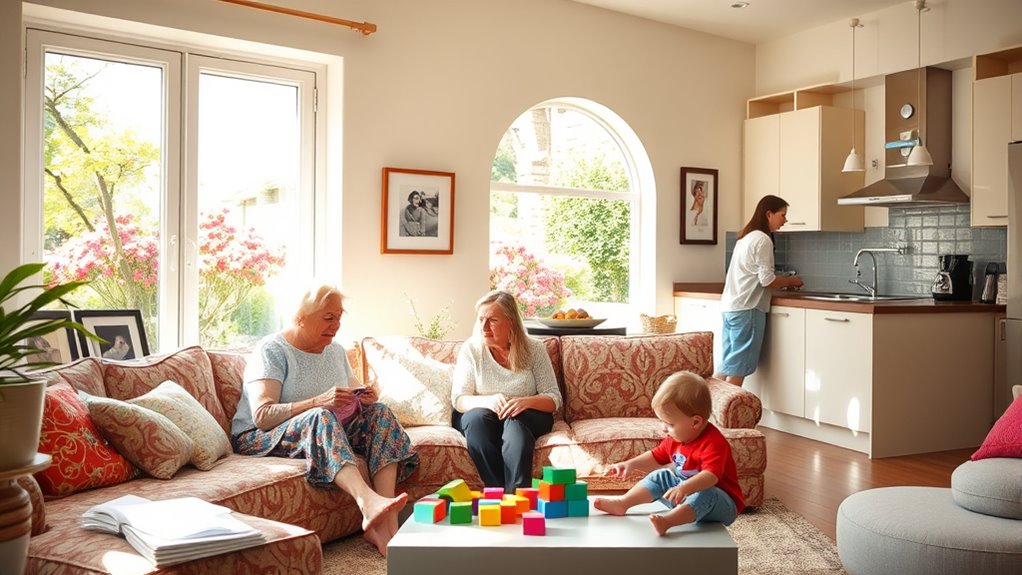

In a multigenerational household, you’ll find that shared living offers both benefits and challenges. You get to enjoy stronger family bonds and receive support with childcare, but differing lifestyles can cause friction. Open communication and clear boundaries are key to maintaining harmony. Pooling financial resources also eases burdens, while shared traditions help create lasting memories. By managing these aspects thoughtfully, your family can create an environment where everyone thrives. Discover how to make this arrangement work for you.
Key Takeaways
- Foster open communication to address differing lifestyles and expectations among family members to prevent conflicts.
- Establish clear boundaries and designated quiet times to maintain harmony in a shared living environment.
- Pooling financial resources can alleviate individual financial burdens and simplify expense management for all family members.
- Engage in shared cultural traditions and experiences to strengthen family bonds and create lasting memories.
- Be flexible and patient in navigating the diverse needs of all household members to promote a supportive atmosphere.
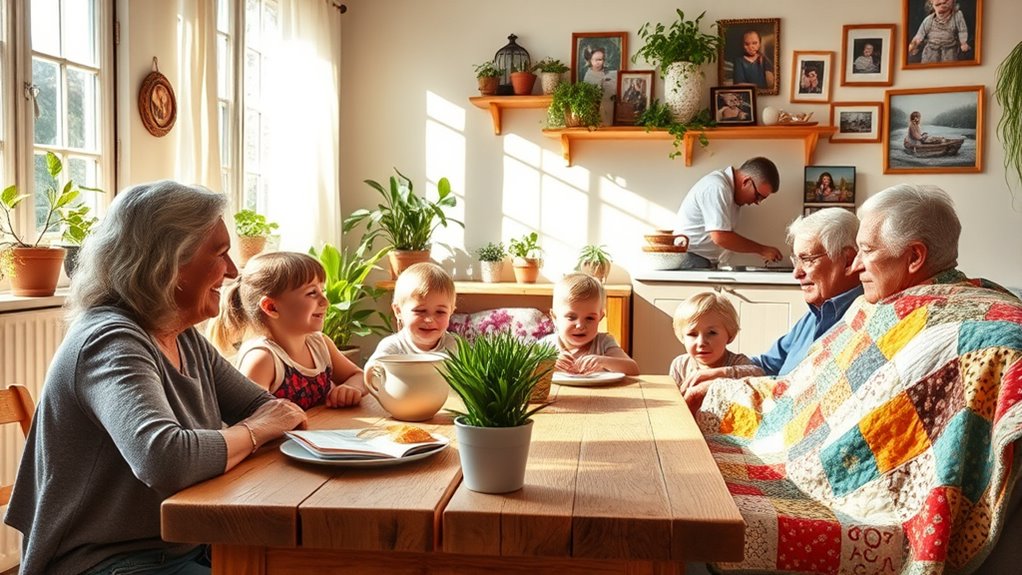
Have you ever considered the dynamics of multigenerational households? Living under one roof with multiple generations can be both rewarding and challenging. You share your life with family members from various age groups, each bringing unique perspectives, experiences, and needs. This diverse mix can foster a sense of closeness, but it also requires maneuvering different lifestyles and expectations.
You might find that having grandparents, parents, and children together creates a supportive environment. Children benefit from the wisdom and attention of their grandparents, while parents can gain assistance with childcare or household responsibilities. This shared living arrangement can strengthen family bonds and offer emotional support during tough times. When everyone pitches in, you can experience a sense of teamwork that’s often missing in single-family homes.
However, living with multiple generations can also lead to conflicts. You may face challenges with differing opinions on parenting styles, household rules, or lifestyle choices. The key is to communicate openly and respectfully. Setting clear boundaries is essential for maintaining harmony. For instance, establishing designated quiet times or shared responsibilities can help everyone feel comfortable in their space.
Consider the financial aspect of multigenerational living, too. Pooling resources can alleviate financial pressures. Whether it’s sharing rent or splitting utility bills, you’ll likely find it easier to manage expenses as a collective. However, it’s critical to have transparent conversations about finances to prevent misunderstandings. You don’t want money matters to strain relationships.
Embracing cultural traditions can also enhance the experience of living in a multigenerational household. Sharing family recipes, celebrating holidays, or passing down stories can create a rich tapestry of memories that connect generations. These shared experiences can help you appreciate your family’s heritage and strengthen your identity as a unit. Additionally, engaging in activities like juice cleanses for weight loss can promote health and well-being among family members, encouraging a collective approach to wellness.
Ultimately, maneuvering a multigenerational household requires flexibility and patience. You’ll learn to adapt to different needs and schedules, fostering an environment where everyone feels valued. With effective communication and a spirit of cooperation, you can create a harmonious living space that celebrates the unique strengths of each generation. So, if you’re considering this living arrangement, weigh the pros and cons, and remember that the journey can be just as rewarding as the destination. Embrace the opportunity to grow closer as a family while tackling the challenges together.
multigenerational household communication tools
As an affiliate, we earn on qualifying purchases.
As an affiliate, we earn on qualifying purchases.
Frequently Asked Questions
How Can We Handle Differing Parenting Styles in a Multigenerational Household?
To handle differing parenting styles, start by having open conversations with everyone involved. Share your perspectives and listen to theirs, finding common ground. Establish clear guidelines for the kids that everyone agrees on, ensuring consistency. It’s vital to respect each other’s approaches, even if you disagree. When conflicts arise, address them calmly and collaboratively. Remember, flexibility and understanding can help create a supportive environment for everyone, including the children.
What Are Effective Strategies for Conflict Resolution Among Family Members?
To resolve conflicts effectively, start by encouraging open communication. Let everyone express their feelings without interruption. Focus on active listening—show you understand their perspectives. Next, identify common goals and brainstorm solutions together. Keep a calm demeanor and avoid personal attacks; it’s about the issue, not the person. Finally, agree on actionable steps and follow up to guarantee everyone feels heard and valued. This approach fosters a respectful environment and strengthens family bonds.
How Do I Maintain Privacy in a Shared Living Space?
Like a delicate spider weaving its web, you can maintain privacy in a shared living space. Set clear boundaries by establishing personal zones, whether that’s a room or specific times for solitude. Communicate openly with housemates about your need for privacy. Use headphones to create an audio barrier, and consider simple dividers for shared areas. Remember, respect is a two-way street; when you honor others’ space, they’ll likely honor yours in return.
What Legal Considerations Should We Be Aware of When Living Together?
When living together, you should consider lease agreements, property ownership, and local housing laws. Make sure everyone understands their rights and responsibilities, especially regarding utilities and maintenance. It’s wise to discuss financial contributions and any potential disputes ahead of time. If you’re renting, check for any restrictions on subletting or guests. Consulting with a legal expert can also help clarify any lingering questions to guarantee a smooth living arrangement.
How Can We Create a Fair Financial Contribution System Among Residents?
To create a fair financial contribution system among residents, start by discussing everyone’s income and expenses openly. Consider splitting bills based on individual earnings or equally dividing shared costs. Set up a monthly budget, and document contributions to guarantee transparency. You could also establish a joint fund for communal expenses. Regularly review the system to address any changes in financial situations, ensuring everyone feels valued and treated fairly. Communication is key!
shared household boundaries and privacy products
As an affiliate, we earn on qualifying purchases.
As an affiliate, we earn on qualifying purchases.
Conclusion
Journeying through a multigenerational household can be both rewarding and challenging. With 20% of Americans living in these shared spaces, it’s clear that more families are embracing this lifestyle. By fostering open communication and understanding, you can strengthen bonds and create a harmonious environment. Remember, it’s not just about cohabitation; it’s about building a supportive community within your home. As you traverse this journey, cherish the unique experiences that come from living with loved ones across generations.
family expense pooling and budgeting tools
As an affiliate, we earn on qualifying purchases.
As an affiliate, we earn on qualifying purchases.
cultural tradition activity kits for families
As an affiliate, we earn on qualifying purchases.
As an affiliate, we earn on qualifying purchases.