
Neuromorphic computing mimics the human brain’s architecture to create systems that process information more efficiently. It uses specialized hardware to replicate neural structures, enabling parallel processing and real-time sensory data handling. By mimicking the brain’s low-energy operation, it markedly reduces power consumption, making it ideal for mobile and IoT applications. This technology enhances robotics and autonomous vehicles, paving the way for more advanced AI systems. Discover more about its transformative potential in various fields.
Open a free Amazon Business account
Business pricing, bulk buying and tax-exempt orders.
As an affiliate, we earn on qualifying purchases.
Key Takeaways
- Neuromorphic computing emulates the brain’s architecture, using specialized hardware to replicate neural structures and processes.
- It utilizes spike-based signaling, allowing for efficient neuron communication and real-time sensory processing.
- This technology significantly reduces power consumption by activating only relevant neurons, mimicking the brain’s energy-efficient operations.
- Applications include enhancing robotics and enabling autonomous vehicles to make rapid, informed decisions based on their environment.
- Neuromorphic systems support learning and adaptation, paving the way for advanced, context-aware artificial intelligence.
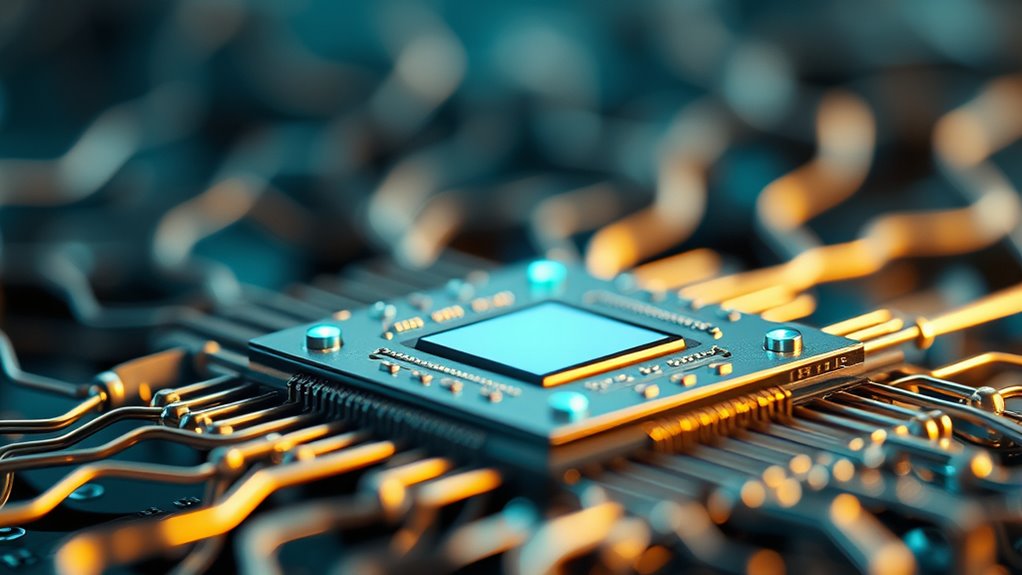
Have you ever wondered how the human brain processes information so efficiently? It’s a marvel of nature, capable of executing complex tasks with astonishing speed and energy efficiency. This incredible capability has inspired scientists and engineers to develop neuromorphic computing, a field that aims to mimic the brain’s architecture and functioning in artificial systems. You might be curious about how this technology works and what it could mean for the future.
At its core, neuromorphic computing uses specialized hardware designed to replicate the neural structures found in the brain. Instead of relying on traditional binary computing, which processes information in a linear fashion, neuromorphic systems emulate the way neurons communicate through spikes or bursts of electrical activity. This approach allows for parallel processing, meaning multiple operations can occur simultaneously. You can imagine it as a symphony of interconnected neurons working together to solve complex problems.
One of the primary benefits of neuromorphic computing is its energy efficiency. Traditional computers consume a considerable amount of power, especially for tasks involving machine learning and artificial intelligence. In contrast, neuromorphic systems use far less energy by activating only the necessary neurons, similar to how our brains function. This efficiency could revolutionize technology, enabling devices to run longer on less power, which is especially vital for mobile and IoT devices. Additionally, neuromorphic computing can enhance energy efficiency in various applications, making it a promising area of research.
As you explore deeper into neuromorphic computing, you’ll find its applications are vast. From robotics to autonomous vehicles, the ability to process sensory information in real-time is a game-changer. Imagine self-driving cars that can interpret their surroundings like a human driver, making split-second decisions based on complex stimuli. Neuromorphic systems could make this a reality, enhancing safety and efficiency on the roads.
Moreover, the implications for artificial intelligence are staggering. By mimicking the plasticity of the brain, neuromorphic architecture can learn and adapt over time, improving its performance based on experience. This could lead to more advanced AI systems that understand context, recognize patterns, and make decisions more like humans do.
As an affiliate, we earn on qualifying purchases.
Frequently Asked Questions
What Are the Main Applications of Neuromorphic Computing?
You’ll find that neuromorphic computing has several exciting applications. It’s used in robotics for real-time processing and decision-making, enhancing machine learning algorithms, and improving energy efficiency in AI systems. You can also see it in sensory processing for devices like cameras and microphones, enabling them to mimic human perception. Additionally, it’s paving the way for advancements in autonomous vehicles, where quick, brain-like responses are vital for safety and functionality.
How Does Neuromorphic Computing Differ From Traditional Computing?
Neuromorphic computing differs from traditional computing by processing information more like the human brain. While traditional systems rely on sequential logic and predefined algorithms, neuromorphic systems use parallel processing and adaptive learning. They excel at handling complex, unstructured data, enabling them to learn from experiences rather than just following instructions. This means you’ll find neuromorphic computing more efficient for tasks like pattern recognition and sensory processing, mimicking how you naturally think and respond.
What Are the Potential Benefits of Neuromorphic Systems?
Neuromorphic systems offer several potential benefits. You’ll experience improved energy efficiency, enabling complex computations without draining resources. These systems can process information in real time, mimicking human-like responses, which enhances adaptability in various applications. They’re also capable of learning and evolving, allowing for more personalized experiences. Plus, their parallel processing capabilities can handle vast amounts of data simultaneously, making them ideal for tasks in artificial intelligence and robotics.
Who Are the Leading Researchers in Neuromorphic Computing?
You’ll find that some of the brightest minds in neuromorphic computing include Dr. Kwabena Boahen, a pioneer at Stanford University, and Dr. Dharmendra Modha from IBM, who’s been at the forefront of innovative research. Additionally, Dr. Chris Eliasmith at the University of Waterloo has made significant contributions. These researchers are shaping the future of the field, pushing boundaries, and exploring new frontiers that could change our understanding of computing as we perceive it.
What Are the Challenges Facing Neuromorphic Computing Development?
You’ll face several challenges in developing neuromorphic computing. First, there’s the complexity of designing chips that accurately replicate brain functions. You’ll also need to tackle issues like energy efficiency and scalability. Additionally, the lack of standardized frameworks makes collaboration difficult. Adapting existing algorithms to work with neuromorphic architectures can be tricky too. Finally, securing funding and investment for research and development often proves challenging, impacting progress in this innovative field.
As an affiliate, we earn on qualifying purchases.
Conclusion
In the world of neuromorphic computing, you’re witnessing a technological revolution that’s turning science fiction into reality. By mimicking the human brain’s architecture, these systems promise to enhance everything from AI to robotics, making them smarter and more efficient. Just as the first computers transformed our lives, neuromorphic chips could be the next leap forward, bridging the gap between human intelligence and machine capability. Embrace this evolution—it’s like having a pocket-sized Einstein at your fingertips!
As an affiliate, we earn on qualifying purchases.
autonomous vehicle sensor system
As an affiliate, we earn on qualifying purchases.
As an affiliate, we earn on qualifying purchases.
Fall Picks
fall essentials
As an affiliate, we earn on qualifying purchases.