
Blender power ratings can be confusing because watts and horsepower often don’t fully show how well a machine performs. Higher wattage or horsepower might suggest better blending, but many marketing tricks exaggerate these numbers to attract buyers. Instead, focus on factors like blade design, motor quality, and efficiency. If you’re curious about how to choose the right power for your needs or spot misleading claims, explore more to get the full picture.
Key Takeaways
- Wattage indicates energy consumption, but motor efficiency and design are more important for blending performance.
- Horsepower measures actual motor power output; higher horsepower often means better capacity for tough ingredients.
- Marketing claims like “peak power” or “professional-grade” often exaggerate actual continuous wattage or performance.
- For common tasks, 300-600 watts suffices; dense ingredients like nuts or ice require 700+ watts.
- Proper cooling, quality components, and maintenance are crucial for motor longevity, regardless of wattage.
What Do Horsepower and Watts Really Mean for Your Blender?
Understanding what horsepower and watts really mean can help you choose a blender that meets your needs. Horsepower measures the motor’s power output, while watts indicate energy consumption. A higher horsepower often suggests a more powerful motor, but it doesn’t always mean better efficiency. Motor efficiency determines how well the blender converts electrical energy into mechanical work, affecting both performance and energy use. A blender with high wattage but low efficiency might consume more electricity without delivering proportionate performance. When selecting a blender, consider how motor efficiency influences energy consumption; a more efficient motor can provide sufficient power while saving you money on electricity. Additionally, performance metrics play a crucial role in overall performance and cost savings. Ultimately, understanding these metrics helps you find a model that balances power and energy use, ensuring you get the best value.
How Does Blender Motor Power Affect Performance and Durability?

Higher motor power in your blender generally means better performance, especially when blending tough ingredients like nuts, ice, or fibrous vegetables. However, more powerful motors tend to generate more motor heat, which can impact the motor’s longevity if it isn’t properly cooled or if you overuse it. Increased power often results in higher noise levels, so expect a louder operation during heavy blending tasks. While a powerful motor can handle demanding ingredients more efficiently, it also puts more stress on internal components, potentially reducing durability if quality parts aren’t used. To maximize both performance and lifespan, choose a blender with a balanced motor power that suits your typical use and includes good ventilation or cooling features. Proper cooling mechanisms can help improve the overall durability of a high-powered motor. Additionally, understanding motor heat management is essential for maintaining the longevity of your appliance over time. Regularly monitoring internal temperature and allowing rest periods during extended use can further help prevent overheating and extend motor life. Moreover, selecting a blender with built-in safety features can prevent damage caused by overheating or overload conditions.
Why Watt Ratings Can Be Misleading: And What Actually Matters When Buying a Blender
While a higher watt rating often appears to promise better performance, it can be a misleading indicator of a blender’s true capabilities. Many marketing exaggerations focus on wattage to attract buyers, leading to consumer misconceptions about a blender’s power. Higher wattage doesn’t necessarily mean better blending, especially if the motor isn’t designed efficiently. Instead, focus on factors like blade design, motor speed, and build quality, which influence performance more directly. Watt ratings can be inflated through marketing tricks to create the illusion of power, but they don’t tell the whole story. When shopping, consider real-world reviews and test results rather than just wattage numbers. Additionally, understanding motor efficiency can help you make smarter purchasing decisions by highlighting the importance of design over raw wattage. Recognizing that performance metrics such as torque and blade sharpness play crucial roles can lead to more satisfying purchases. For example, motor design can significantly impact how effectively a blender handles tough ingredients regardless of wattage. Furthermore, power-to-weight ratio is an important factor that influences how well a motor performs under load and can be more indicative of real performance. Ultimately, what matters most is how well the blender performs tasks you care about, not the watt rating alone. Moreover, understanding the influence of marketing tactics can help consumers avoid being misled by exaggerated specifications.
What Blender Power Do You Need for Common Tasks Like Smoothies or Ice Crushing?
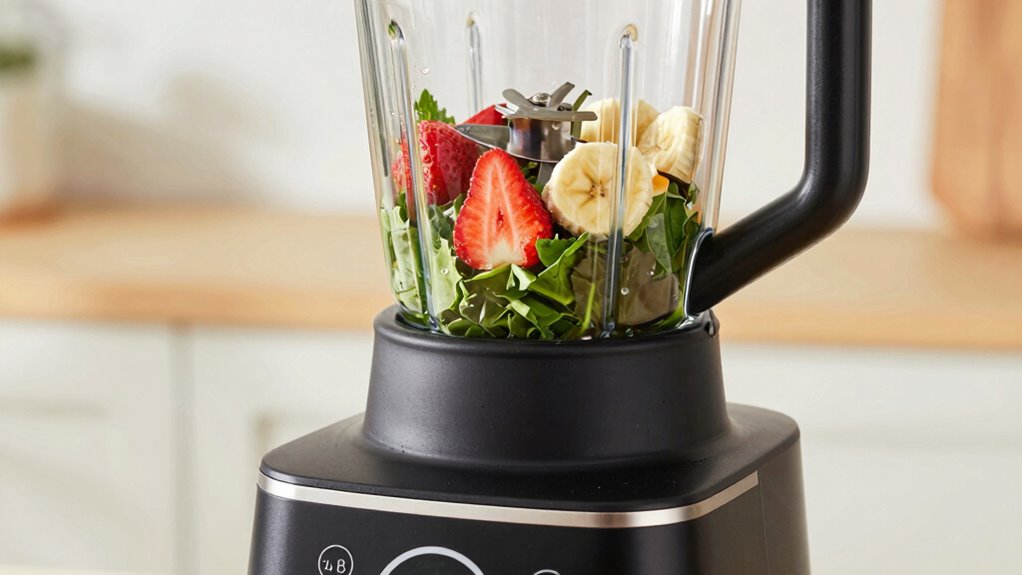
When making smoothies or crushing ice, you need a blender that offers enough power to handle tough ingredients without wearing out quickly. Durable models are better for daily use, so they last longer and perform reliably. Keep in mind that for crushing ice, you’ll want a blender with higher power to get the job done efficiently. Additionally, understanding the monetization tips behind popular blender brands can help you make smarter purchasing decisions.
Durability for Daily Use
Choosing the right blender power for daily tasks depends on the types of ingredients you frequently blend. For durability, focus on blade material and warranty coverage, as these guarantee longevity. A sturdy stainless steel blade is more resistant to wear and tear, especially when handling tough ingredients like ice or frozen fruit. Additionally, a solid warranty indicates the manufacturer’s confidence in durability. To maximize your blender’s lifespan, consider models with reinforced motors and high-quality components. Proper maintenance also prolongs performance. Free floating Blender models designed for continuous use often feature enhanced cooling systems, which can further extend their lifespan. Being aware of the motor power can help you select a model that balances performance with durability. Moreover, understanding existential themes can deepen your appreciation for the design and purpose of your appliance, ensuring it meets your daily needs effectively. Recognizing feature Buddies in blender specifications can help you compare models more effectively.
Power Needed for Ice
To effectively crush ice or blend thick smoothies, you need a blender with sufficient power. For ice crushing, look for models with at least 500 watts, as this guarantees your blender can handle tough, frozen ingredients without stalling. Higher wattage blenders typically deliver better ice crushing performance and reduce processing time. However, power efficiency also matters; a more efficient motor can achieve great results without excessive energy use or noise. If you frequently blend icy drinks or dense mixtures, investing in a blender with 700 watts or more provides extra capacity and smoother results. Keep in mind that a powerful motor alone isn’t enough—sharp blades and good design contribute to effective ice crushing as well. Balance power and efficiency to meet your blending needs. For optimal results, considering the motor design and blade quality can make a significant difference in performance. Understanding the traits of quality assurance in blender manufacturing can help you select a durable, reliable appliance. Additionally, choosing models with expert voice actors in marketing materials can enhance consumer confidence and trust. Incorporating cultural craftsmanship into your choice can also ensure authenticity and aesthetic appeal, especially if you want the appliance to reflect traditional Indonesian decor principles. Utilizing effective email marketing strategies can also help you reach more customers who are interested in high-performance kitchen appliances.
How Does Horsepower Impact Blending Tasks and Results?
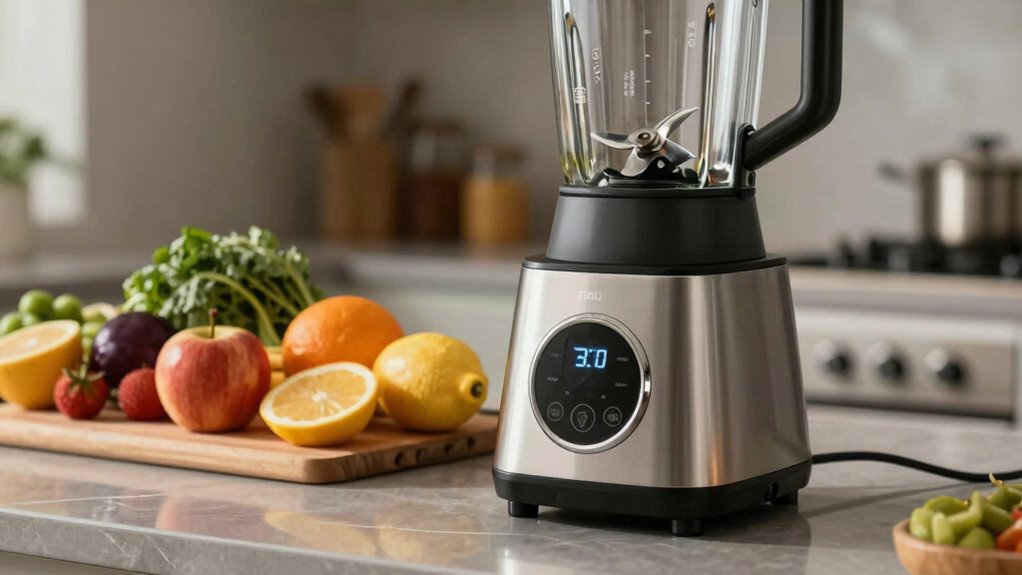
Ever wondered how horsepower influences the performance of your blender? Higher horsepower generally means better motor efficiency and faster blending speed, allowing you to handle tougher ingredients with ease. It impacts your blending tasks by:
- Reducing blending time for smoothies or sauces
- Improving ability to crush ice and frozen fruits
- Making certain of consistent results with dense ingredients
- Increasing overall motor durability and lifespan
- Enabling smoother, more uniform textures
While more horsepower can enhance blending speed and efficiency, it’s not the only factor to consider. A powerful motor helps you process ingredients quickly and effectively, but proper design and motor quality also play vital roles. Understanding this connection ensures you pick a blender that meets your specific blending needs. Additionally, motor testing and filtration efficiency are crucial aspects when selecting a high-performance blender, as they directly relate to the blender’s ability to maintain performance over time.
What Are Common Marketing Tricks That Overstate Blender Power?
Have you noticed that many blender ads boast incredibly high horsepower ratings that seem too good to be true? These marketing claims often use power exaggeration to attract buyers. Brands may highlight peak horsepower or combine motor and blade wattages to inflate numbers. For example:
| Marketing Claim | Reality |
|---|---|
| “1000 Watts Peak Power” | Continuous power is usually lower |
| “Horsepower Equivalence” | Horsepower figures are often exaggerated |
| “Professional-grade Motor” | Motor specs aren’t always accurate |
These tricks can mislead you into thinking a blender is more powerful than it really is. Always look beyond the hype, focusing on consistent wattage ratings and real-world reviews rather than flashy claims.
How to Choose the Right Blender Power Level for Your Needs
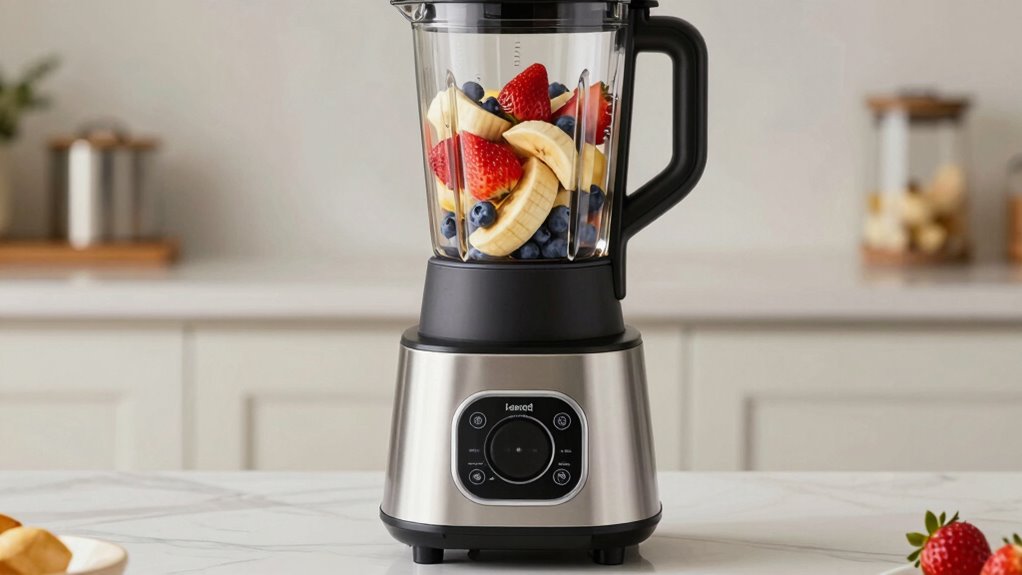
To pick the right blender power, consider the complexity of your blending tasks. Simple smoothies need less power, while tough ingredients like nuts or ice demand higher levels. Knowing your needs helps you choose from various power options to get the best results.
Blending Tasks Complexity
Choosing the right blender power level depends on the complexity of your blending tasks. If you often blend tough ingredients like ice, nuts, or fibrous vegetables, you’ll need a higher power blender that offers better motor efficiency to handle these challenges. For simple tasks like smoothies or liquids, a lower power blender suffices. Consider your blending techniques; more advanced techniques demand more power to ensure smooth results without overloading the motor.
Here are key points to keep in mind:
- Tough ingredients require higher power levels
- Consistent blending techniques improve efficiency
- Lower power blenders are suitable for basic tasks
- Motor efficiency impacts overall performance
- Complex recipes need a more capable motor to prevent strain
Matching the power to your blending tasks ensures efficiency, longevity, and better results.
Power Level Options
Selecting the right blender power level hinges on understanding your specific blending needs. Motor efficiency plays a key role in how well a blender performs at different power levels, affecting both results and energy consumption. Many blenders offer power scaling options, allowing you to adjust the motor speed for different tasks. For light tasks like smoothies or soft fruits, lower power settings are sufficient and help preserve motor efficiency. For tougher ingredients like ice or nuts, higher power levels provide the necessary torque. By choosing the appropriate power level, you optimize blending performance without overtaxing the motor. This ensures longevity and better results, giving you control over how much power you use based on your task’s complexity.
Real-World Examples: What Power Do Blenders Use for Smoothies, Nut Butters, and Ice Crushing?
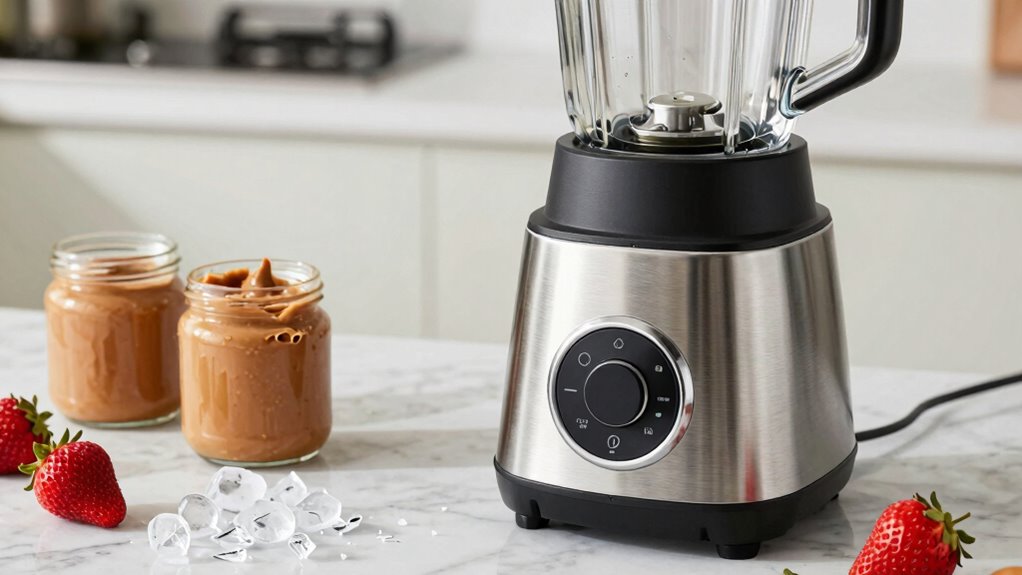
Blenders vary in power depending on their intended use, which directly impacts their ability to blend smoothies, nut butters, or crush ice effectively. Higher wattage motors typically provide better motor efficiency and handle tougher ingredients with less strain, but they may consume more energy. For smoothies, a blender with 300-600 watts usually suffices, offering good performance without excessive energy use. Nut butters require more power—around 600-1000 watts—to process dense ingredients smoothly. Crushing ice often demands 700-1500 watts for quick, efficient results. Keep in mind, a powerful motor doesn’t always mean better performance; motor efficiency and proper design matter.
- Lower wattage blenders save energy but may struggle with tough ingredients
- Higher wattage improves blending but increases energy consumption
- Motor efficiency impacts overall blending performance
- For thick ingredients, opt for at least 600 watts
- Ice crushing benefits from powerful, high-watt motors
Frequently Asked Questions
Can a Higher Wattage Guarantee Better Blending Results?
A higher wattage doesn’t guarantee better blending results. While it can increase power consumption and potentially improve blending speed, other factors like blade design, motor quality, and container shape are essential. You might find a lower-wattage blender that performs just as well as a higher-wattage one. Focus on overall performance features rather than wattage alone to get the best results for your blending needs.
How Does Motor Size Relate to Blender Noise Levels?
A larger motor size often means more motor noise, especially during high-speed blending, because bigger motors tend to vibrate more. However, a bigger motor can also enhance durability, allowing the blender to handle tough ingredients longer without overheating. You might notice increased motor noise with larger motors, but they usually last longer and maintain performance, making them ideal if you need a durable, powerful blender.
Are Premium Brands Always More Powerful Than Budget Options?
You might think premium brands always pack more punch, but that’s not always true. Like a finely tuned sports car, brand reputation can suggest power, yet some budget options outperform pricier models in performance. When choosing, focus on price versus performance rather than brand name alone. Don’t be swayed by flashy marketing; instead, read reviews and specs to find a blender that truly meets your blending needs.
What Safety Features Are Linked to Higher Horsepower Blenders?
Higher horsepower blenders often include safety features like motor overload protection and safety sensors. These features automatically shut off the motor if it overheats or detects a jam, preventing damage and injury. By integrating motor overload protection, you minimize the risk of burnout. Safety sensors help you operate the blender safely, ensuring the motor only runs under safe conditions. Always check for these features when choosing a powerful blender for secure, efficient use.
Does Blade Design Influence Blending Efficiency Regardless of Power?
Yes, blade design substantially influences blending efficiency regardless of power. A well-designed blade improves cutting and crushing, resulting in smoother blending and better consistency. You’ll notice that blades with sharper edges, ideal angles, and multiple blades create more uniform textures and reduce the time needed to blend ingredients thoroughly. So, even with moderate power, choosing a blender with an efficient blade design enhances blending performance and consistency.
Conclusion
Understanding blender power isn’t just about numbers; it’s about what those numbers mean for your needs. Horsepower and watts can be misleading, but knowing how they translate to performance helps you choose wisely. Whether blending smoothies or crushing ice, the right power level makes all the difference. Don’t be swayed by marketing tricks—focus on real performance. With this knowledge, you’ll select a blender that truly works for you, not just for show.