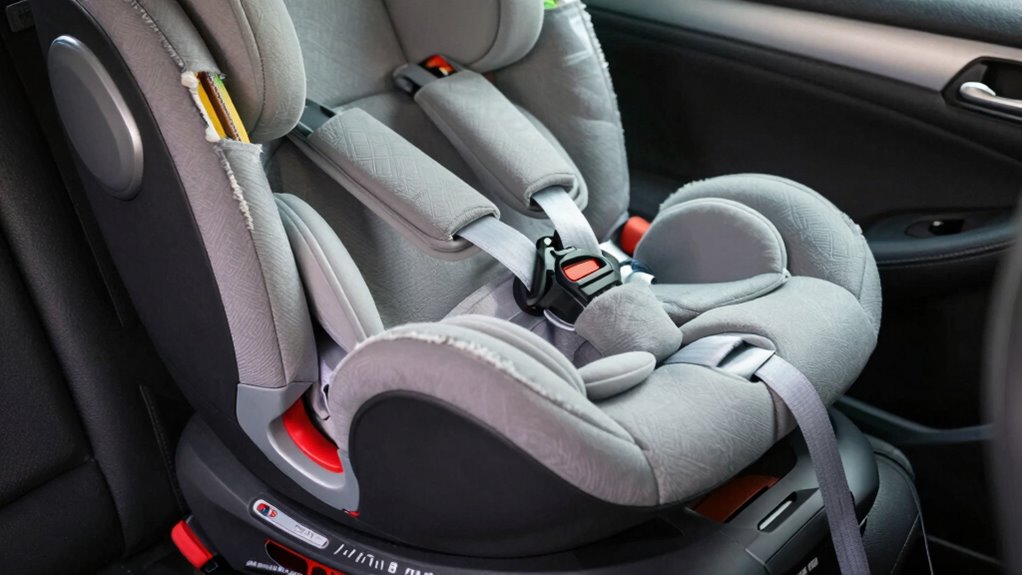

If your car seat is installed wrong, you’ll notice three signs: excessive movement, with the seat shifting more than an inch side to side or front to back; harness straps that are twisted or at the wrong shoulder height; and the seat itself tilting or wobbling when gently pushed. You might also see safety indicators that aren’t lit or showing proper colors. Keep going to discover how to double-check your installation and keep your child safe.
Key Takeaways
- The seat shifts more than an inch side-to-side or front-to-back during stability tests.
- Harness straps are twisted, at incorrect shoulder height, or not snug enough.
- The seat moves or tilts when gentle pressure is applied, indicating loose installation.
- Safety indicators do not confirm proper installation or alignment.
- The seat wobbles excessively or is not securely anchored to the vehicle.
How to Perform a Car Seat Fit Test Step-by-Step
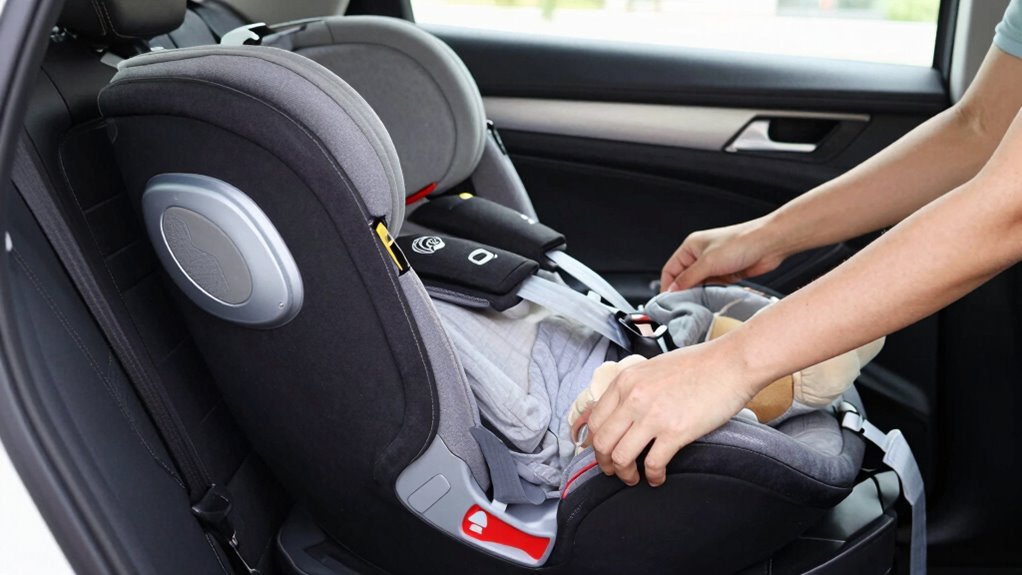
To guarantee your child’s safety and comfort, performing a car seat fit test is essential. Begin with installation verification by ensuring the seat is securely anchored and properly positioned. Check if the harness straps are at the correct height for your child’s shoulders, and make sure they lie flat without twists. Engage safety indicators, such as indicator lights or color cues, if your seat has them, to confirm correct installation. Test the seat’s stability by giving it a firm shake; it should stay firmly in place without excessive movement. Always follow the manufacturer’s instructions closely. Confirm that the seat doesn’t tilt or shift when you apply gentle pressure. Proper installation techniques are crucial for ensuring maximum safety and compliance with safety standards. Performing these steps helps ensure the seat is installed correctly and provides the maximum safety for your child. Additionally, regularly recheck the fit as your child grows or if the seat is moved to a different vehicle, to guarantee ongoing safety and proper positioning. Remember, vehicle safety standards may vary, so staying informed about your specific model is beneficial. In addition, consulting installation guides can help clarify complex procedures and prevent common errors. Regularly inspecting the seat and adjusting the harness ensures ongoing safety and comfort.
How to Check if Your Car Seat Is Too Loose or Moves Excessively
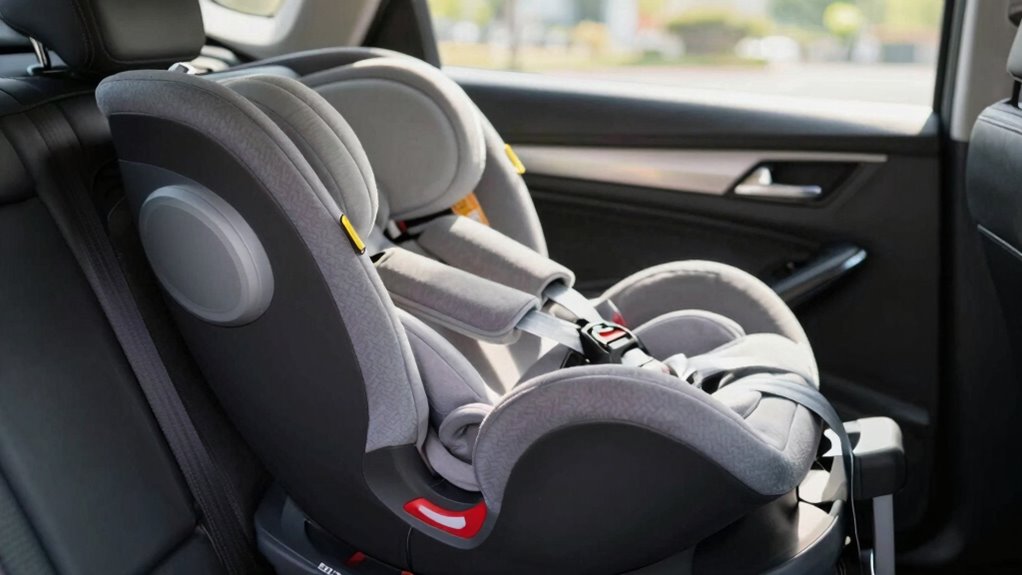
After confirming your car seat is properly installed, it’s important to check if it’s too loose or moves excessively. To do this, apply firm pressure at the seat’s base and sides, testing for any rocking or shifting. If it moves more than an inch side to side or front to back, it’s too loose. Use proper installation tips, like ensuring the seat belt or LATCH system is tightly secured and the seat doesn’t wobble. Common mistakes include not tightening straps enough or not locking the seat in place correctly. Double-check all connections, and give the seat a firm tug in multiple directions. If it still moves markedly, re-tighten or reinstall the seat, paying careful attention to installation tips to prevent errors. Also, make sure the installation materials are appropriate and in good condition for secure attachment. Regularly inspecting the installation integrity can help identify potential issues before they compromise safety. Ensuring that you follow smart installation practices can help prevent accidental loosening over time.
How to Adjust the Seat Angle and Position for Safety and Comfort
Ensuring your child’s seat is properly adjusted for angle and position is crucial for safety and comfort. You want the seat angle to keep your child secure without slouching or leaning forward. Adjust the seat position so that your child’s back is flush against the seat and their harness fits snugly at the shoulders. Use the following guidelines:
| Seat Angle | Seat Position | Key Considerations |
|---|---|---|
| Slight recline for infants | Centered in the seat | Prevents slumping |
| Upright for toddlers | Close to the vehicle’s back | Ensures harness fit |
| Adjust for comfort | Legroom and head support | Maintains proper fit |
Make small adjustments, test the fit, and ensure the seat supports your child’s safety and comfort. Proper seat positioning can significantly impact both safety and comfort during travel. Checking the installation angle regularly helps ensure that the seat remains correctly positioned over time. Regularly verifying the seat angle helps maintain a safe and secure fit as your child grows. Additionally, consulting the vehicle’s owner manual can provide specific guidance for optimal car seat installation.
Frequently Asked Questions
When Should I Replace My Car Seat After an Accident?
You should replace your car seat immediately after an accident, regardless of visible damage. The seat belt tension and harness snugness may be compromised, even if it looks fine. The impact can weaken the seat’s structure, reducing its effectiveness in protecting your child. Always follow the manufacturer’s guidelines and safety recommendations, and get a new seat after any collision to guarantee your child’s safety during future rides.
Are There Differences Between Infant and Booster Seat Installation Checks?
Think of installation checks as the heartbeat of your child’s safety. Yes, there are differences between infant and booster seat installation checks. Infants need snug harnesses and proper recline angles, while boosters require correct seat belt positioning. Watch for common installation mistakes and adjustment errors, ensuring each seat fits perfectly. Remember, a proper fit isn’t just a checkmark—it’s your child’s shield against harm on every trip.
How Often Should I Recheck My Car Seat’s Fit?
You should recheck your car seat’s fit every time you install it or when your child’s size or weight changes. Make certain the seat belt tension is secure and the harness snugness is proper. Regularly verifying these factors helps prevent installation errors. Also, check after any car accident or if you notice the seat shifting or loose. Consistent checks keep your child safe and guarantee the best protection.
Can I Use a Second-Hand Car Seat Safely?
Using a second-hand car seat is like walking a tightrope—you need to be extra cautious. You can’t always trust used car seats for second hand safety, as they may have hidden damage or missing parts. Always check for recalls, confirm it hasn’t expired, and verify the safety standards. If in doubt, it’s safer to invest in a new car seat to keep your child protected.
What Are Common Signs of a Defective Car Seat?
You’ll notice a defective car seat if it has incorrect installation, making it unstable or wobbly. Check for faulty harnesses that don’t secure your child properly or show signs of fraying or damage. If the seat moves excessively when you try to shake it, or if the harness is difficult to tighten, these are clear signs it might be faulty. Always ensure everything is secure and in good condition before use.
Conclusion
By doing a quick fit test, you might just notice that your child’s car seat isn’t quite right—saving them from potential harm. Sometimes, a simple adjustment or a closer check reveals what’s wrong, even when you least expect it. Remember, ensuring a snug and secure fit isn’t just about safety—it’s about peace of mind knowing you’ve done everything possible. So, take a moment, double-check, and keep your little one safely in place every ride.