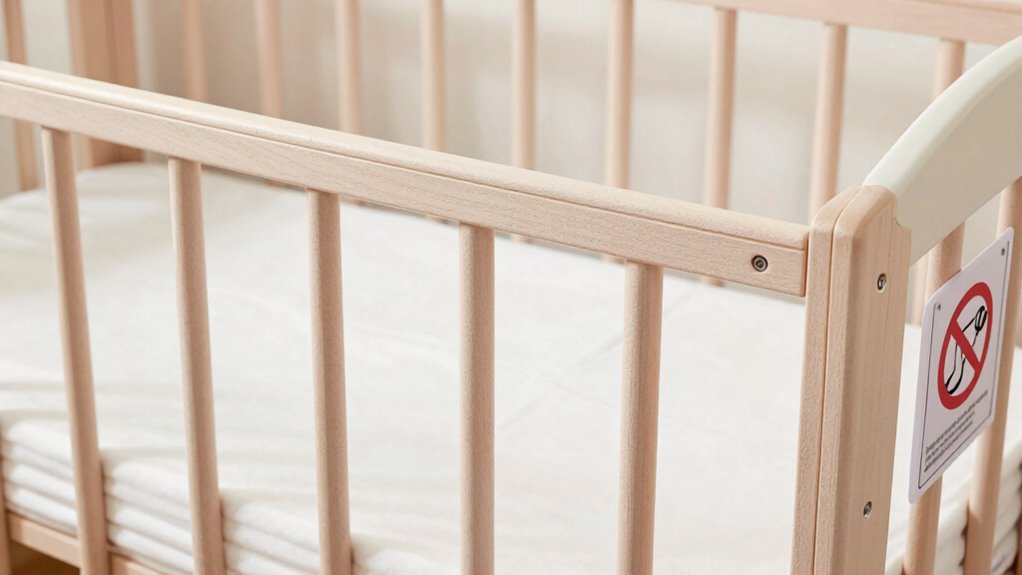

To keep your baby safe in the crib, make certain the slats are no more than 2 3/8 inches apart to prevent entrapment. Confirm the mattress fits snugly with gaps no wider than two fingers to avoid suffocation risks. Keep the crib free of loose bedding, pillows, stuffed toys, and hanging mobiles or cords. Regularly check the crib for recalls and safety standards. If you follow these guidelines, you’ll create a secure sleep space—and there’s more to learn to maximize safety.
Key Takeaways
- Ensure crib slats are no more than 2 3/8 inches apart to prevent entrapment or injury.
- Verify the mattress fits snugly with no gaps larger than two fingers around the edges.
- Keep the crib bare, removing pillows, blankets, stuffed animals, and loose bedding to reduce suffocation risks.
- Avoid hanging mobiles, curtains, or toys with long cords that could pose choking or strangulation hazards.
- Regularly inspect the crib for damage, loose hardware, and verify safety recalls to maintain a secure sleep environment.
Why Crib Safety Matters: Protecting Your Baby During Sleep
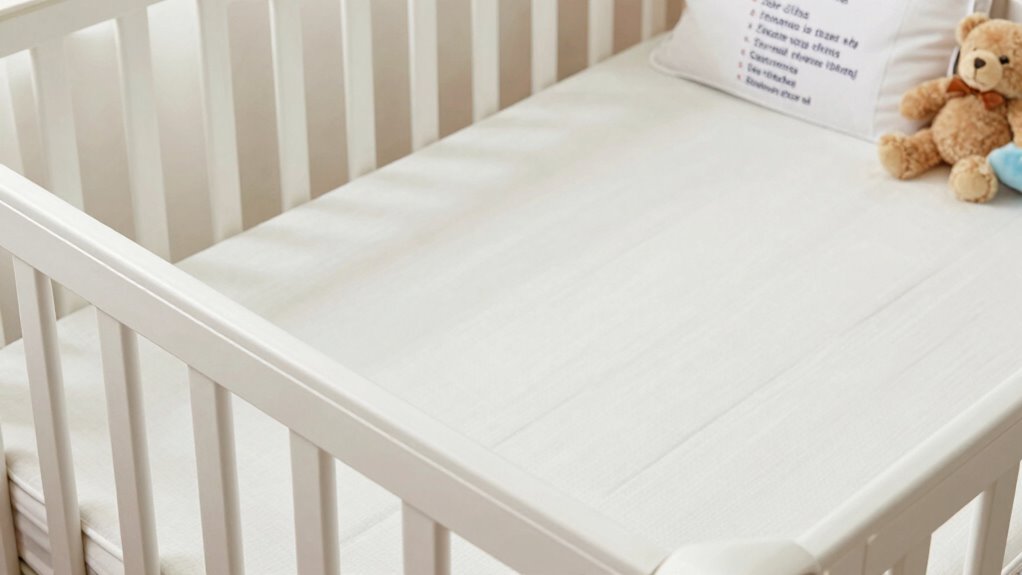
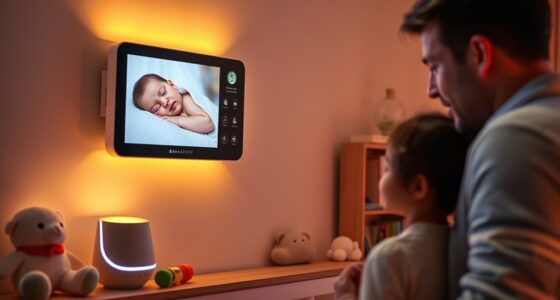
Ensuring your baby’s crib is safe is crucial because sleep is when they are most vulnerable to accidents. Your nursery décor should prioritize safety, avoiding any decorations or items that could pose a choking hazard or fall into the crib. Choosing the right baby monitor options helps you keep an eye on your little one, providing peace of mind and immediate alerts if something’s wrong. A safe crib setup reduces risks like suffocation, entrapment, or falls. Proper slat spacing and a snug mattress fit are essential, but your overall nursery environment also plays a role in safety. For example, nursery safety guidelines can help you create a comprehensive safety plan. Additionally, understanding crib safety standards ensures that your crib meets all current safety requirements. Staying informed about latest safety updates can help you adapt your nursery to any new recommendations or regulations. Regularly inspecting your crib for wear and tear is vital, as crib maintenance helps prevent potential hazards. By focusing on these elements, you protect your baby during their most vulnerable hours and create a secure space for restful sleep.
What Are the Most Common Crib No-No Items and Practices to Avoid?
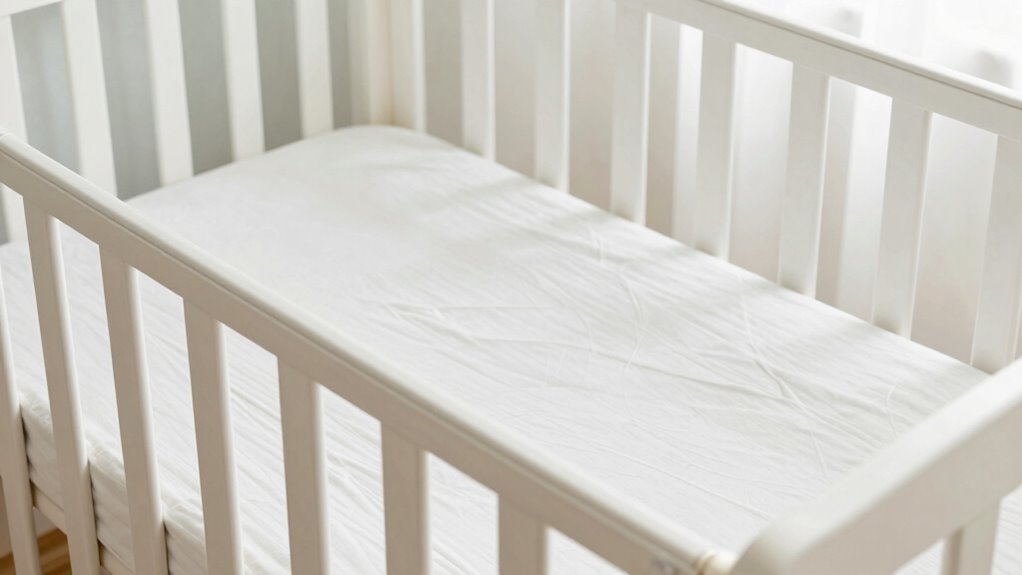
To keep your baby safe, avoid using loose bedding, pillows, or stuffed animals in the crib. Hanging items like mobiles or curtains can pose choking or strangulation risks, so keep them out of reach. Also, make certain the mattress fits snugly to prevent gaps that could trap or suffocate your little one. Additionally, be cautious with crib projector lights or other electronic devices that could distract or disturb your baby during sleep. Remember, maintaining a toxin-free environment is essential for your baby’s health and safety. Ensuring your crib has correct slat spacing is also crucial to prevent your baby from slipping or getting stuck. Proper privacy policy compliance helps protect both your child’s safety and your peace of mind.
Loose Bedding Hazards
Loose bedding items like pillows, comforters, and stuffed animals can pose serious suffocation hazards for your baby in the crib. They compromise your baby’s sleep environment and increase the risk of Sudden Infant Death Syndrome (SIDS). To keep your little one safe, avoid using these items altogether. Instead, opt for a fitted sheet on a firm mattress. Here’s a quick overview of common no-no items and practices:
| No-No Item/Practice | Reason |
|---|---|
| Pillows, comforters | Cause suffocation and overheating |
| Stuffed animals | Block airway and cause entrapment |
| Loose blankets | Cover face, restrict breathing |
| Bumper pads | Risk of suffocation and entrapment |
| Unsuitable sleep environment | Increases SIDS risk |
Additionally, ensuring the gap-sealing of the crib slats can help prevent the baby from getting trapped or stuck. Proper slat spacing is essential for safety, making sure the gaps are narrow enough to prevent a baby’s head or limbs from slipping through. Using appropriate crib materials also contributes to a safer sleep environment. Regularly inspecting the crib for wear and tear can further reduce potential hazards. Maintaining good air quality considerations in the nursery can also contribute to your baby’s overall safety and health.
Hanging Items Risks
Hanging items in a crib can pose serious safety hazards that are often overlooked. Decorative mobiles and hanging toys may seem charming, but they can become dangerous if not used properly. If these items are too close to your baby’s face or become loose, they can cause choking or strangulation. Avoid attaching anything with long or loose cords, strings, or ribbons, as these pose a significant risk. Always verify that mobiles are securely fastened and out of your baby’s reach, and remove hanging toys once your baby can sit or pull up. Remember, the safest crib is one free of any hanging items that could potentially fall or entangle your baby. Prioritize safety over decoration to keep your little one protected. Proper crib safety practices are essential for preventing accidents and ensuring your baby’s well-being. For additional crib safety tips, consult trusted pediatric safety guidelines to enhance your baby’s environment.
Improper Mattress Fit
Ensuring your baby’s safety extends beyond avoiding dangling toys; proper mattress fit is equally important. You want to make sure there are no mattress gaps between the mattress and the crib sides, as these can trap your baby or cause suffocation. The mattress should fit snugly, with no more than a two-finger width gap around the edges. Additionally, check that the mattress firmness is appropriate—firm enough to provide support and prevent sinking, reducing the risk of Sudden Infant Death Syndrome (SIDS). Avoid using soft mattresses, toppers, or padding that can compromise safety. An improper mattress fit is a common no-no, so always verify that your crib mattress fits securely and remains firm to keep your baby safe and comfortable.
How Wide Should Crib Slats Be? Understanding Proper Spacing
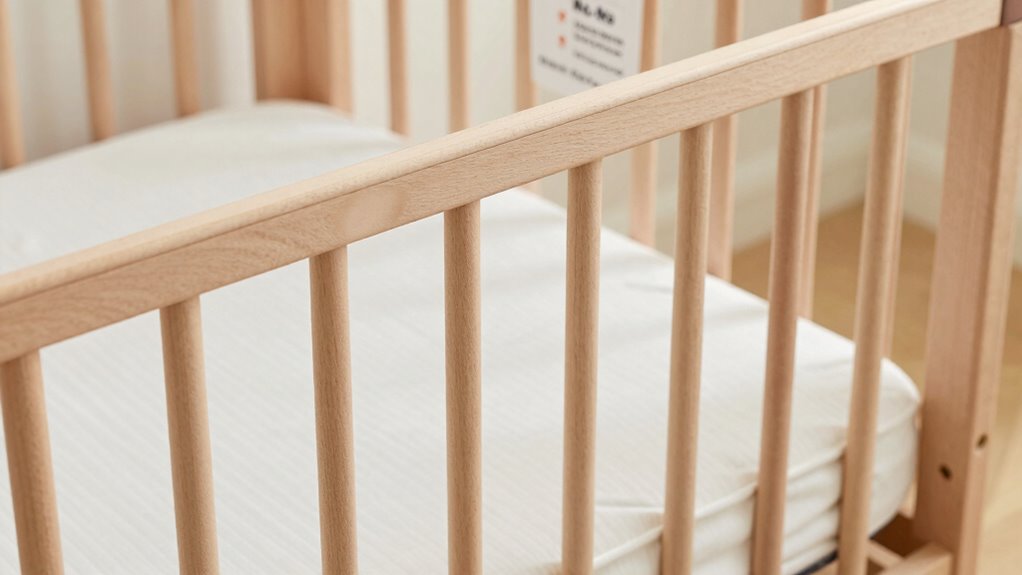
Crib slats need to be spaced just right to keep your baby safe. Proper slat spacing prevents your little one from slipping through or getting stuck. The standard distance between wooden slats should be no more than 2 3/8 inches (6 cm). This measurement guarantees your baby’s head can’t fit between the slats. When checking slat spacing, use a ruler or a piece of paper to test the gaps. If the paper slips through easily, it’s time to adjust or replace the crib. Here’s a quick reference:
| Wooden Slats | Slat Spacing |
|---|---|
| Safe | Less than 2 3/8 inches |
| Too Wide | More than 2 3/8 inches |
| Acceptable | Exactly 2 3/8 inches |
| Unsafe | More than 3 inches |
Keep your crib compliant for your baby’s safety. Ensuring the mattress fit is snug is equally important for crib safety.
Does Your Crib Mattress Fit Properly? Tips for a Secure Fit
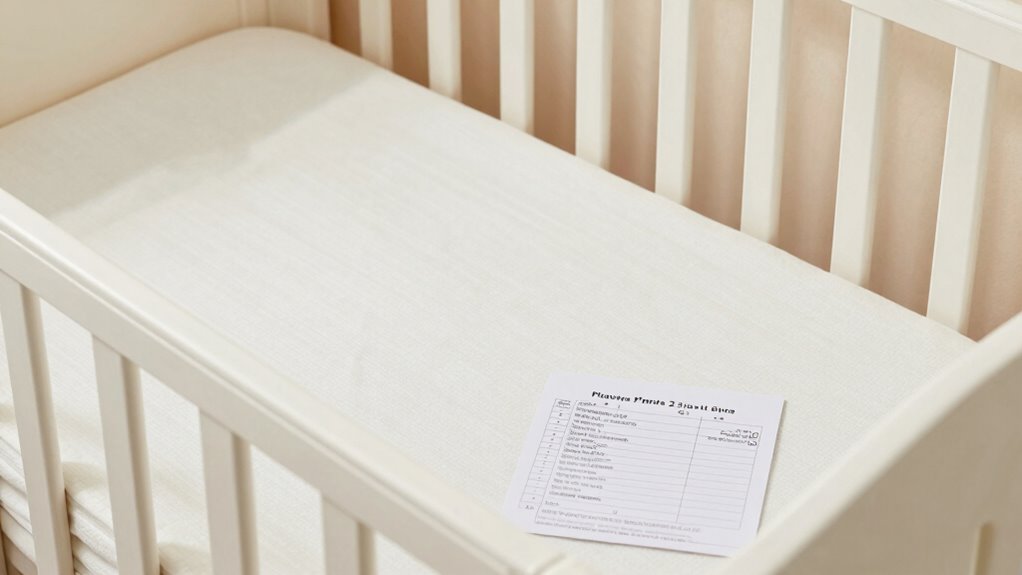
A properly fitting crib mattress is essential for your baby’s safety and comfort. To guarantee a secure fit, check that the mattress fits snugly with no more than a two-finger gap around the edges. When selecting crib bedding, choose fitted sheets that stay tight without bunching. Also, pay attention to mattress firmness; a firm mattress provides the best support and reduces suffocation risks. Here’s what to look for:
Ensure your baby’s safety with a snug-fitting, firm crib mattress and secure fitted sheets.
- The mattress fits snugly without gaps or movement.
- The fitted crib bedding stays tight and smooth on the mattress.
- The mattress is firm, not soft or sagging, to promote safe sleep.
- Ensuring slat spacing meets safety standards helps prevent accidents and entrapment. Additionally, verifying bedrail safety can further reduce potential hazards. Proper mattress fit also minimizes the risk of gaps that could trap a baby, making it a crucial aspect of crib safety. Regularly inspecting your crib for wear and tear can help spot potential hazards before they become serious. It’s also important to maintain a clean crib environment to prevent allergens and pests from affecting your baby’s health.
How Can You Check If Your Crib Meets Safety Standards and Has No Recalls?
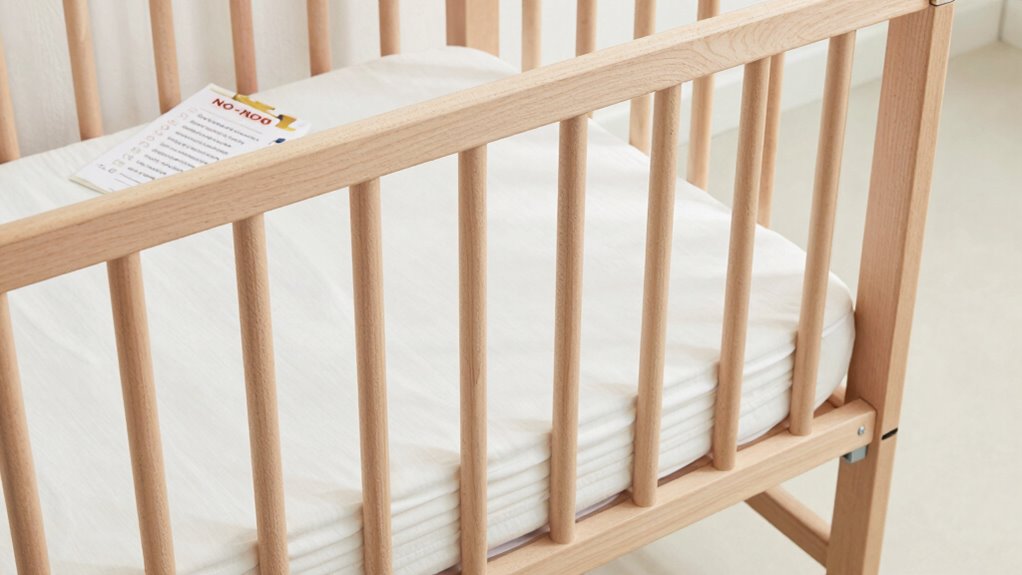
Wondering if your crib still meets current safety standards and isn’t subject to recalls? The first step is to check the manufacturer’s label or packaging for the model number and date of manufacture. Visit the Consumer Product Safety Commission (CPSC) website to look up any recalls associated with your crib model. Also, inspect your crib for any visible damage, loose parts, or missing hardware. Avoid using old or recalled cribs with unsafe slats or broken components. When selecting crib bedding and accessories, ensure they’re compatible with safety guidelines—no loose bedding or pillows that could pose risks. Regularly verify that your crib remains compliant with safety standards to keep your little one safe and secure. Paying attention to home design and architecture details can help you understand safe crib placement and avoid potential hazards in your nursery. Additionally, staying informed about product recalls and safety alerts can help you promptly identify and address any safety issues with your crib.
What Safe Bedding Practices Should You Follow? Bedding-Free Sleep Guidelines

Ensuring your baby’s sleep environment is safe involves paying close attention to bedding practices. To promote breathing safety and proper sleep positioning, follow these guidelines:
- Keep the crib bare—use only a fitted sheet and remove pillows, blankets, and stuffed toys.
- Avoid heavy or loose bedding that can obstruct airflow or cause suffocation.
- Place your baby on their back for sleep, ensuring their head and face remain unobstructed and free from soft bedding.
- Consider using tracking gear such as monitors that alert you if your baby moves into unsafe positions or if environmental conditions change.
How Do You Choose Safe, Non-Toxic Crib Materials? Finishes and Construction Tips

Choosing safe, non-toxic crib materials starts with understanding the importance of quality finishes and sturdy construction. Look for cribs with safe finishes, such as water-based paints or natural oils, that are free from harmful chemicals like VOCs, formaldehyde, or phthalates. Confirm the materials used are non toxic, reducing your baby’s exposure to toxins. Check that the crib’s construction is solid, with smooth, splinter-free surfaces and secure joints to prevent accidents. Avoid cribs with painted or stained surfaces that haven’t been tested for safety. Opt for natural wood or certified non-toxic engineered wood. A well-built crib with safe finishes not only keeps your baby safe from toxins but also offers durability and long-lasting safety. Prioritize quality, safety certifications, and transparent manufacturing practices.
How to Assemble Your Crib Safely and Verify Its Safety Features

Properly assembling your crib is essential to maintaining the safety standards you’ve prioritized in selecting non-toxic materials. Start by carefully following the manufacturer’s instructions to ensure all parts are secure. To verify safety features, do the following:
- Check that all slats are tightly secured and evenly spaced to prevent gaps.
- Confirm that the mattress fits snugly without any gaps around the edges.
- Inspect that all hardware is tight and no loose or missing pieces remain.
These steps help create a safe sleep environment and promote good nursery organization. When your crib is assembled correctly, it reduces risks and supports your baby’s safety. Regularly review these features to ensure ongoing safety and peace of mind.
What Should You Do If Your Crib Fails Safety Checks? Recalls and Replacement Options

If your crib fails safety checks, it’s essential to act quickly to protect your baby. First, stop using the crib immediately and remove all crib bedding and nursery décor that could pose a hazard. Check for recalls by visiting the Consumer Product Safety Commission’s website or contacting the manufacturer. If your crib has been recalled, follow instructions for a repair, replacement, or refund. If no recall exists but the crib is still unsafe, consider replacing it with a new, certified crib that meets safety standards. When choosing a replacement, prioritize safety over style or décor, ensuring slat spacing and mattress fit meet guidelines. Remember, a safe crib is the foundation for a secure sleep environment for your baby.
How to Create a Safe, Consistent Sleep Environment for Your Baby
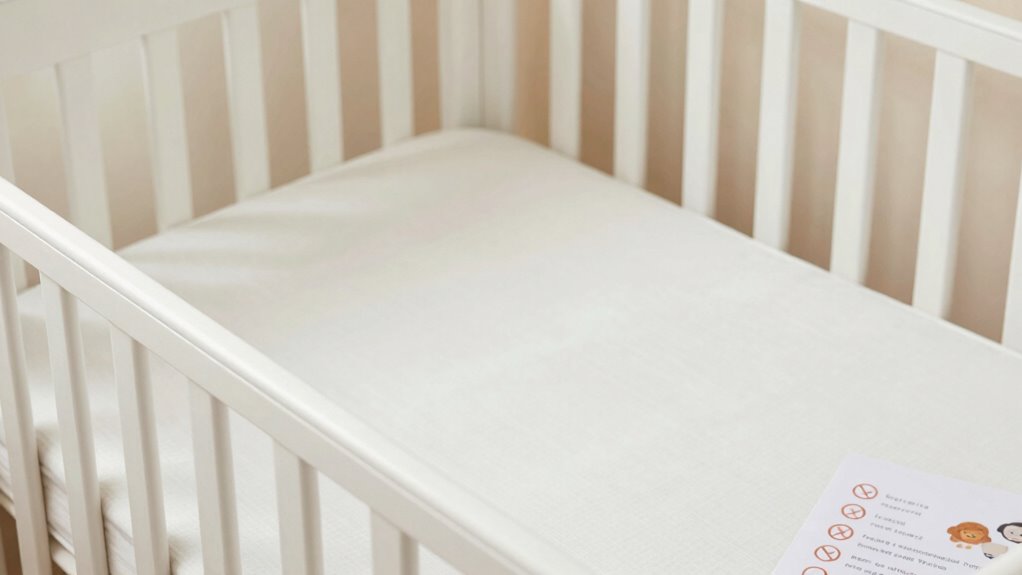
Creating a safe and consistent sleep environment for your baby is essential for their development and well-being. To achieve this, focus on creating a calm nursery decor that promotes restful sleep and supports sleep training efforts. Here are three ways to do so:
A calm, safe nursery environment promotes restful sleep and supports healthy development.
- Keep the nursery quiet and dark, using blackout curtains and white noise machines to minimize disruptions.
- Choose simple, soothing nursery decor that isn’t overstimulating, creating a peaceful atmosphere.
- Establish a consistent bedtime routine, helping your baby associate specific cues with sleep and reinforcing sleep training strategies.
Frequently Asked Questions
Can Crib Slats Be Too Close or Too Far Apart?
Yes, crib slats can be too close or too far apart, which can pose safety risks. The slat gap should be no more than 2 3/8 inches to prevent a baby’s head from getting stuck. Proper slat spacing guarantees your little one’s safety and comfort. Always check the manufacturer’s guidelines, and avoid cribs with slats that are unevenly spaced or too wide apart.
How Often Should I Check My Crib for Recalls?
Think of your crib like a trusted garden—regular checks keep it safe and thriving. You should inspect it monthly for recalls and safety issues. While doing so, verify the crib mattress firmness is just right, and that crib bedding safety standards are met. This way, you catch potential hazards early, just like tending to delicate plants, and keep your little one safe and secure in their cozy nursery.
Are There Specific Brands With Better Safety Records?
Some brands have better safety records due to strict quality control and recall monitoring. Look for reputable brands known for their commitment to safety, like Storkcraft or DaVinci, which often prioritize child safety. You should regularly check for recall notifications on these brands’ websites or through consumer safety agencies. Choosing a brand with strong safety standards helps make certain your crib remains a safe environment for your baby.
What Signs Indicate My Mattress Is Unsafe?
If your crib mattress feels too soft, sagging, or shows tears or mold, it’s unsafe for baby sleep safety. Confirm it fits snugly in the crib without gaps and meets crib mattress standards. Also, check for any signs of wear, loose fabric, or unusual odors. An unsafe mattress can increase the risk of suffocation or SIDS, so replacing it promptly keeps your little one safe and sound.
How Do I Prevent My Baby From Climbing Out?
To prevent your baby from climbing out, you should baby proof the crib using safe practices. Implement baby proofing tips like lowering the mattress to the lowest position, removing any soft bedding or toys that could encourage climbing, and using a sleep sack instead of blankets. Regularly check for any loose parts. These steps help in preventing falls and keep your little one safe during sleep.
Conclusion
Ensuring your crib meets safety standards is essential for your baby’s well-being. Did you know that nearly 10,000 crib-related injuries occur annually? By checking slat spacing, mattress fit, and avoiding common hazards, you create a safer sleep space. Stay vigilant about recalls and choose non-toxic materials. A safe crib provides peace of mind, so you can focus on what matters most—your little one’s healthy sleep and growth.