To prevent knee pain and improve comfort, adjust your exercise bike’s seat height so your knee slightly bends at the bottom of each pedal stroke and your heel is on the pedal. Make sure your handlebar reach allows you to sit upright with relaxed wrists and a slight bend in your elbows. Proper alignment, muscle engagement, and avoiding common misadjustments can keep knees healthy. Keep going to discover more tips for optimizing your bike fit and riding safely.
Key Takeaways
- Proper seat height ensures knees are slightly bent at the bottom of pedaling to prevent overextension and knee pain.
- Adjust reach and handlebar position for optimal body alignment, reducing strain on knees and shoulders.
- Regularly check knee tracking to ensure knees move smoothly over pedals without wobbling or inward/outward movement.
- Engage core and leg muscles during pedaling to promote proper biomechanics and reduce joint stress.
- Consistently fine-tune bike fit and technique to prevent misalignment and long-term knee issues.
How to Adjust Your Exercise Bike Seat Height for Comfort and Efficiency
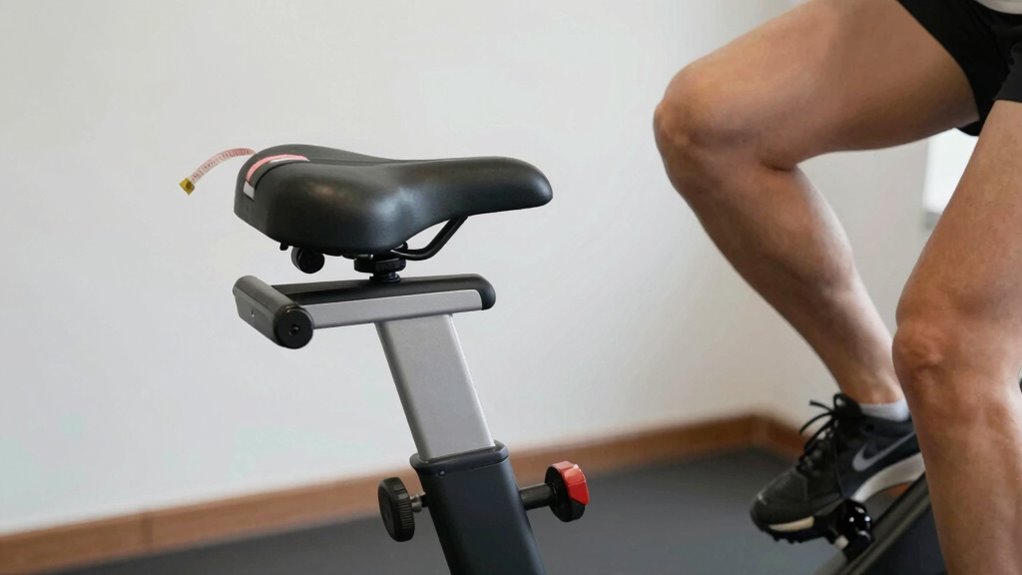
Adjusting your exercise bike seat height correctly is essential for both comfort and effective workouts. Start by checking the saddle material; a cushioned, supportive saddle reduces discomfort during longer rides. Next, consider your bike frame size—an appropriately sized frame ensures proper alignment. To find the right height, sit on the saddle with your heel on the pedal and pedal backward; your leg should be fully extended at the bottom of the pedal stroke. If your knee bends too much or feels strained, lower the seat slightly. If your hips sway or you can’t reach the pedals comfortably, raise it. Fine-tune the height until your leg is nearly straight at the pedal’s lowest point, but your hips stay stable. Proper adjustment improves efficiency and reduces strain.
How to Find the Right Handlebar Reach to Prevent Knee Pain
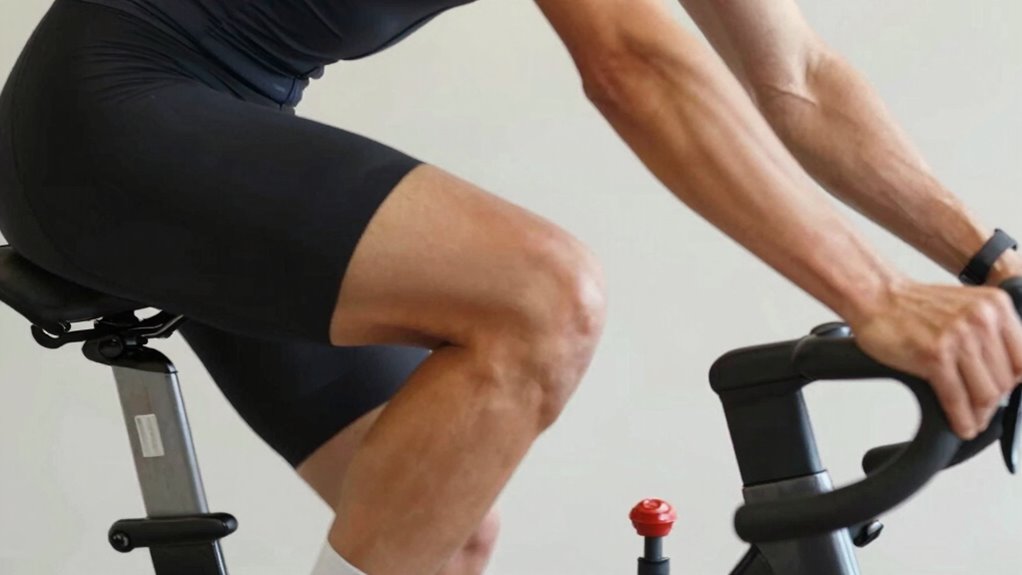
Finding the right handlebar reach is key to preventing knee pain and guaranteeing a comfortable ride. Proper handlebar ergonomics help you maintain a natural posture, reducing strain on your knees and shoulders. When adjusting reach, focus on your wrist positioning; your wrists should be straight and relaxed, not overly extended or flexed. If the handlebars are too close, you might lean forward excessively, increasing knee stress. Too far away, and you’ll stretch unnecessarily, causing discomfort. Aim for a slight bend in your elbows and a neutral wrist position, which promotes better control and reduces unnecessary pressure on your knees. Adjust the handlebar reach gradually, test your comfort, and guarantee your body remains aligned for optimal knee health and riding comfort. Handlebar ergonomics play a crucial role in maintaining proper body alignment and preventing discomfort during cycling. Ensuring proper bike fit not only enhances comfort but also helps prevent injuries and improves cycling efficiency. Paying attention to proper bike adjustments can make a significant difference in overall ride quality and injury prevention. Additionally, regularly checking your bike setup ensures that your adjustments remain optimal as you ride more frequently. Incorporating regular bike maintenance checks can further prolong the effectiveness of your adjustments and ensure safety during rides.
How to Tell if Your Bike Fit Is Causing Knee Pain: And When to Readjust

If you start experiencing persistent knee pain while riding, it’s a clear sign your bike fit might be off. One common cause is improper pedal alignment, which can put unnecessary stress on your knees. Check if your bike saddle is at the right height—if it’s too high or low, it can cause your knee to overextend or stay bent too much during pedaling. Pay attention to how your knees track over the pedals; they should move smoothly without wobbling or shifting side to side. If you notice pain after riding or discomfort that persists, consider readjusting your saddle height, fore-aft position, or ensuring your pedal alignment is correct. A proper fit reduces strain and prevents knee issues over time. Additionally, understanding Free Floating concepts can help you optimize your riding posture and prevent repetitive strain injuries. Recognizing proper bike fit is essential to avoid long-term joint problems and ensure a comfortable ride. Proper alignment and ergonomic positioning are key components to maintaining comfort and preventing injury during extended rides.
Tips for Keeping Your Knees Properly Aligned During Rides

Maintaining proper knee alignment during your ride can prevent discomfort and long-term injury. To do this, focus on your knee biomechanics—ensure your knees track straight over your pedals without wobbling inward or outward. Proper muscle engagement is key; activate your quadriceps and glutes to stabilize your legs, reducing undue stress on your knees. Adjust your saddle height so your knee has a slight bend at the bottom of each pedal stroke, promoting ideal biomechanics. Keep your feet level and centered on the pedals to avoid lateral strain. Regularly check your knee position during rides, making small adjustments as needed. By consciously aligning your knees and engaging the right muscles, you’ll protect your joints and enhance your cycling efficiency.
Common Fitting Mistakes and How to Avoid Knee Pain on Your Bike

One common mistake is setting your saddle height too high or too low, which can cause knee strain. Poor reach positioning and overlooking proper pedal technique also contribute to knee pain during rides. Paying attention to these details can help you avoid discomfort and ride more efficiently. Additionally, ensuring your bike’s fit adjustments are properly made can significantly reduce the risk of knee pain and improve overall comfort. Utilizing tools that detect passive voice can help ensure your writing remains clear and active, enhancing the effectiveness of your communication.
Incorrect Saddle Height
A common mistake riders make is setting their saddle height too low or too high, which can lead to knee pain and discomfort during your workout. If your saddle is too high, you risk saddle slippage, especially if the seat padding isn’t enough to keep you secure. Conversely, a saddle set too low forces you to over-flex your knees, increasing strain and causing pain. Proper saddle height ensures your knee is slightly bent at the bottom of each pedal stroke, reducing undue stress. Adjusting the saddle so it stays steady and doesn’t slide during rides is key. Make sure your seat padding is comfortable and supportive, helping you maintain stability and control. Correct saddle height promotes a smoother, pain-free cycling experience. Embracing the Stoic principles of patience and moderation can also help you approach your bike fit with clarity and calm, leading to better adjustments and a more enjoyable ride. Ensuring your saddle is properly aligned with the correct ergonomic setup can further prevent discomfort and improve your overall cycling efficiency. Paying attention to your body alignment can help identify any misalignments that contribute to knee strain and discomfort.
Poor Reach Positioning
Poor reach positioning can cause unnecessary strain on your knees, leading to discomfort and potential injury over time. If your handlebar positioning is too far or too close, it forces your knees into awkward angles during pedaling. Make sure your handlebars are adjusted so you’re comfortable and maintain a slight bend in your elbows, which helps reduce tension on your knees. Additionally, proper pedal alignment is vital; your pedals should be aligned with your hips and knees to promote efficient movement. Misaligned pedals can cause your knees to twist or overreach, increasing pain risk. Take the time to fine-tune your handlebar height and distance, and double-check pedal alignment before riding. Correct positioning promotes smoother pedaling and minimizes knee stress, making your workout safer and more comfortable. Ensuring your power tools’ safety setup is proper can also help prevent injuries during maintenance or adjustments. Paying attention to bike fit adjustments can further improve your comfort and prevent issues. Regularly consulting a professional bike fitter can also help identify subtle misalignments that contribute to knee pain.
Overlooking Pedal Technique
Even if your bike is properly fitted, overlooking proper pedal technique can still lead to knee pain. Your pedal stroke plays a vital role in ensuring smooth, efficient movement and preventing strain. If you focus only on the pedals’ position without paying attention to your technique, you risk uneven pressure and overuse injuries. Make sure you’re engaging your entire pedal stroke, avoiding a quick downstroke or upstroke that causes unnecessary stress. Maintain a consistent cadence and avoid mashing the pedals or pushing too hard at the top or bottom of each cycle. Proper pedal technique distributes effort evenly, reducing knee strain and improving comfort. Remember, mastering your pedal stroke is essential to prevent knee pain and maximize your workout benefits. Additionally, muscle engagement can help you stay motivated and mindful of proper technique during your rides. Incorporating technique awareness into your routine can further optimize your cycling experience and reduce injury risk. Paying attention to your bike fit and ensuring it is correctly adjusted can also significantly impact your comfort and injury prevention during rides. Being mindful of your cycling posture can also help prevent asymmetrical loading that contributes to knee issues.
Long-Term Exercise Bike Fitting Tips for Comfort and Injury Prevention

To stay comfortable and prevent injuries over time, regularly check your bike’s settings. Make sure your seat height is just right so your knees don’t overextend or stay too bent. Keeping your knees aligned properly helps you pedal efficiently and reduces strain. Additionally, maintaining proper air quality can contribute to overall comfort during your workouts. Ensuring your exercise environment has good ventilation can help improve breathing and prevent discomfort. Using appropriate car protection accessories, such as fans or climate control, can also help create a more comfortable workout space.
Adjust Seat Height Properly
Adjusting your seat height correctly is essential for long-term comfort and preventing injuries during your workouts. When your saddle height is right, it promotes proper saddle comfort and reduces strain on your knees and hips. To find the ideal height, sit on the bike and place your heel on the pedal at the lowest point; your leg should be straight. When you pedal normally, slight knee bend indicates proper fit. Consider seat materials for added comfort, especially if you ride frequently; padded or gel-filled saddles can help reduce pressure points. Make small adjustments and test ride for a few minutes. Proper seat height ensures efficient pedaling, minimizes discomfort, and supports your overall exercise routine, making your workouts safer and more enjoyable.
Maintain Correct Knee Alignment
Maintaining proper knee alignment during your rides helps prevent pain and long-term injury. Focus on knee tracking to guarantee your knee moves straight over your foot, avoiding inward or outward wobbling. Proper joint stability is essential; if your knee shifts excessively, it can cause strain and discomfort. To keep your knees aligned, check your pedaling form and adjust your seat if needed. Use the table below to visualize key tips:
| Tip | What to Do | Why It Matters |
|---|---|---|
| Monitor knee tracking | Keep knees aligned with toes during pedal stroke | Prevents joint stress |
| Adjust seat height | Ensure proper knee bend at the top of pedal | Maintains joint stability |
| Strengthen supporting muscles | Engage core and leg muscles regularly | Improves joint stability and control |
Frequently Asked Questions
How Often Should I Reassess My Exercise Bike Fit?
You should reassess your bike fit every few months or if you notice discomfort, pain, or changes in your flexibility. Regular bike adjustments ensure ideal comfort and prevent injuries. Pay attention to any knee pain or discomfort during rides, as these signs indicate it’s time for a fit reassessment. Making small bike adjustments periodically keeps your riding efficient and enjoyable, especially if your fitness level or flexibility changes over time.
Can Improper Bike Fit Cause Long-Term Knee Damage?
Yes, improper bike fit can cause long-term knee damage by stressing your knee joint and disrupting proper pedaling mechanics. If your seat height, reach, or pedal alignment are off, you might put unnecessary strain on your knee, leading to joint issues over time. To prevent this, regularly check and adjust your bike fit, ensuring smooth pedaling mechanics and reducing the risk of long-term knee injury.
What Signs Indicate My Bike Fit Needs Adjustment?
Did you know that improper bike fit can increase injury risk by up to 30%? If you notice persistent knee pain, tingling in your hands, or discomfort after riding, your saddle height or handlebar reach might be off. You should feel comfortable during your ride, with a slight bend in your knees at the bottom of pedaling. Adjust your saddle height and handlebar reach for ideal comfort and performance.
Are There Specific Exercises to Complement Proper Bike Fitting?
Yes, you can do core strengthening and flexibility exercises to complement your proper bike fit. Focus on planks, bridges, and seated twists to boost core stability, which helps maintain proper posture on the bike. Incorporate hamstring stretches, hip flexor stretches, and yoga poses to improve flexibility. These exercises reduce strain, enhance comfort, and prevent injuries, making your bike rides more enjoyable and efficient.
How Does Riding Terrain Affect Bike Fit and Knee Health?
Imagine tackling a mountain of rugged terrain or cruising on smooth asphalt—you’ll notice terrain variation dramatically impacts your bike fit and knee health. Bumpy trails demand extra bike stability, causing you to shift positions and risking knee strain. If your bike isn’t properly fitted, these changes amplify stress on your knees, leading to discomfort or injury. Adjust your fit for different terrains to keep your knees safe and riding smoothly.
Conclusion
By mastering your bike fit, you’ll minimize knee pain, maximize movement, and maintain motivation. Focus on fixing your seat, finding the perfect reach, and fine-tuning your form. Prevent problems before they start by paying attention to posture, positioning, and proper alignment. With consistent care and smart adjustments, you’ll enjoy cycling comfortably and confidently for years to come. Keep tweaking, tuning, and taking care—your knees will thank you!