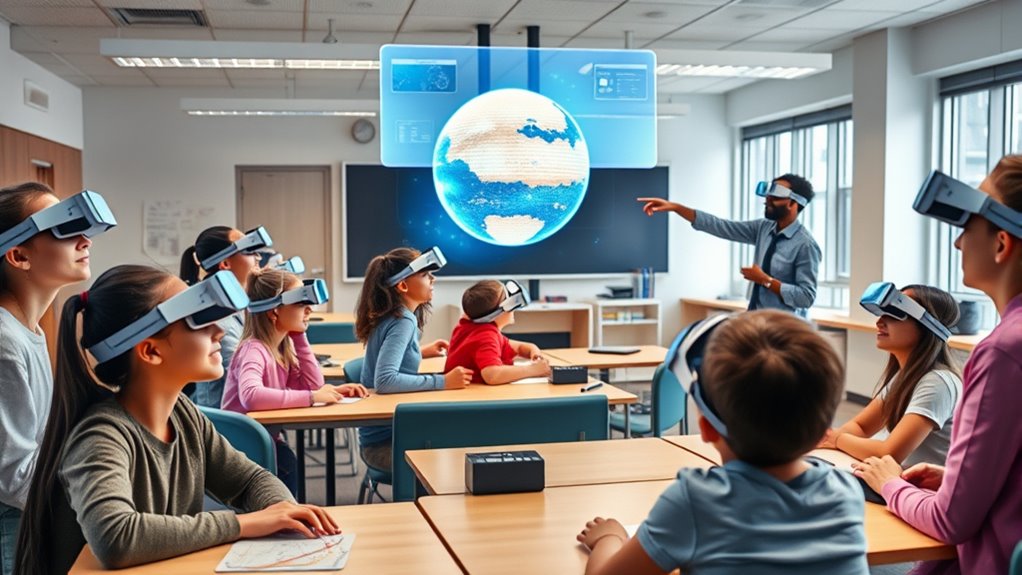

Extended Reality (XR) transforms training and education by creating immersive environments where you can engage with content like never before. You can practice complex procedures in safe simulations, interact with global peers, and receive real-time feedback tailored to your learning pace. Whether it’s through virtual or augmented reality, XR caters to your unique learning style, making information absorption easier and more effective. Explore how this innovative technology is reshaping the future of learning and skill development.
Key Takeaways
- XR creates immersive learning environments, allowing for practical experiences in fields like medicine and engineering without real-world risks.
- Personalized XR experiences cater to different learning styles, enhancing engagement and improving retention of information.
- It facilitates global collaboration, breaking geographical barriers and providing access to diverse educational resources.
- Real-time feedback through AI integration helps learners identify and improve on their weaknesses instantly during training sessions.
- XR prepares students for future industry demands by offering innovative ways to acquire and practice relevant skills.
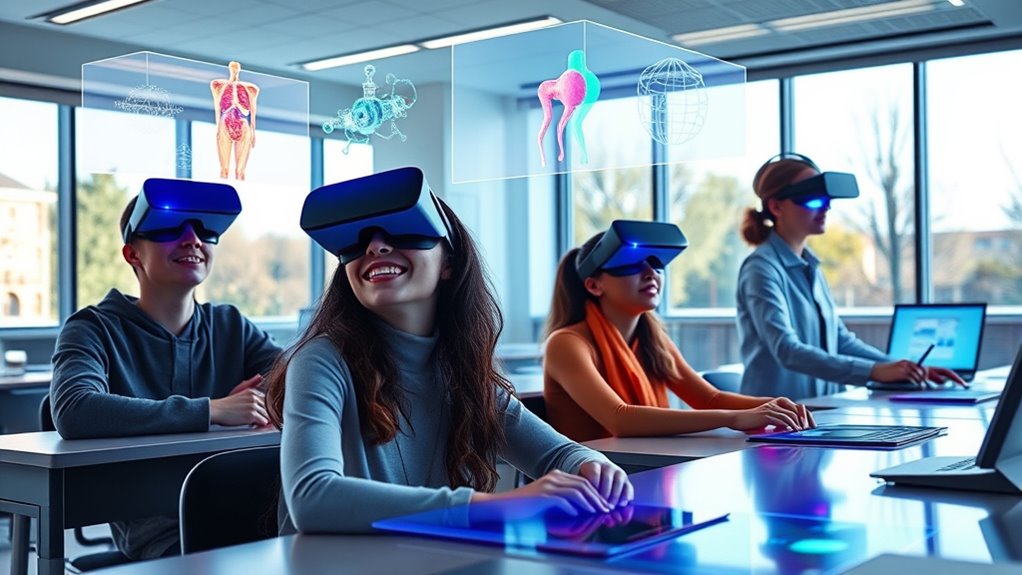
As technology continues to evolve, you’ll find that extended reality (XR) is transforming the landscape of training and education. XR, which encompasses virtual reality (VR), augmented reality (AR), and mixed reality (MR), offers immersive learning experiences that can markedly enhance your understanding and retention of knowledge. Instead of sitting in a traditional classroom or staring at a textbook, you can engage with interactive simulations and realistic environments that make learning more engaging and effective.
Imagine being able to step into a virtual operating room, where you can practice surgical procedures without the risks associated with real-life operations. With XR, you can replicate complex scenarios that allow you to learn by doing. This hands-on approach not only builds your confidence but also deepens your comprehension of the subject matter. Whether you’re training for a medical career, engineering, or even customer service, these immersive experiences can prepare you for real-world challenges like never before.
Step into a virtual operating room and practice complex procedures, building confidence and deepening comprehension through immersive learning experiences.
You’ll also notice that XR can cater to various learning styles. If you’re a visual learner, AR can overlay digital information onto your physical environment, helping you grasp concepts more intuitively. For those who prefer auditory learning, XR can incorporate soundscapes that enhance your educational experience. This adaptability allows you to absorb information in a way that resonates with you, making the training process more personalized and effective.
Moreover, XR can break down geographical barriers. You can collaborate with peers and instructors from around the world in a shared virtual space. This global interaction not only enriches your learning experience but also prepares you for a diverse working environment. No longer are you limited by your physical location; the world becomes your classroom.
In addition, XR technologies are continuously evolving, integrating advancements like artificial intelligence to create even more responsive and tailored learning experiences. Imagine receiving immediate feedback on your performance while engaged in a virtual training module. This real-time assessment can help you identify areas for improvement and refine your skills on the spot. Incorporating techniques like auditory feedback therapy can further enhance your learning by allowing you to monitor and adjust your speech in real-time.
As you explore the potential of extended reality in training and education, it’s clear that the future holds exciting possibilities. By embracing XR, you’ll not only enhance your learning experience but also equip yourself with valuable skills that meet the demands of a rapidly changing world. The journey into XR is one that promises to redefine how you learn, grow, and succeed in your chosen field.
Frequently Asked Questions
What Devices Are Required for Extended Reality Experiences?
To enjoy extended reality experiences, you’ll need a few key devices. First, a compatible headset, like an Oculus Quest or HTC Vive, immerses you in the virtual world. You’ll also require controllers for interaction, and some experiences might benefit from additional sensors for better tracking. A powerful computer or a gaming console can help run more demanding applications. Finally, make sure you have a stable internet connection for online features and updates.
How Much Does Extended Reality Training Typically Cost?
On average, businesses can expect to spend between $1,000 to $50,000 on extended reality training solutions, depending on complexity and scale. Notably, companies that invest in these technologies often see a 30% improvement in training efficiency. This means you’re not just spending; you’re potentially saving time and resources in the long run. It’s essential to evaluate your specific needs and budget to find the right fit for your training goals.
Can I Create Custom Content for My Training Programs?
Yes, you can definitely create custom content for your training programs! You’ll want to identify your specific training goals and target audience first. Then, gather the necessary resources and tools to develop engaging materials. Whether it’s videos, interactive modules, or simulations, tailoring content to your needs enhances learning. Don’t forget to test it with your audience to guarantee it meets their expectations and provides effective training experiences.
What Industries Benefit Most From Extended Reality Training?
You’ll find industries like healthcare, manufacturing, and aviation benefiting most from immersive training. Picture a surgeon practicing complex procedures through a virtual simulation, or factory workers refining skills in a lifelike environment. In aviation, pilots use realistic scenarios to hone their reactions. The ability to engage directly in these experiences enhances learning and retention, making these industries prime candidates for incorporating innovative training solutions that boost safety and efficiency while minimizing risks.
How Do I Assess the Effectiveness of Extended Reality Training?
To assess the effectiveness of your training, start by gathering feedback from participants. Use surveys or interviews to capture their experiences and knowledge retention. Measure performance improvements through assessments before and after training sessions. Observe skills application in real-world scenarios to see if participants can transfer what they’ve learned. Finally, analyze key performance indicators relevant to your goals to determine if the training meets your desired outcomes.
Conclusion
Incorporating extended reality into training and education is like opening a door to a new world of possibilities. It transforms traditional learning experiences, making them more engaging and effective. As you embrace these innovative tools, you’ll find that they not only enhance understanding but also foster collaboration and creativity. By leveraging extended reality, you’re not just keeping pace with technology; you’re paving the way for a brighter, more interactive future in education and training.