
Farm-to-table cooking in 2025 emphasizes seasonal eating, connecting you with fresh, local ingredients and the farmers who nurture them. Choosing in-season produce not only enhances flavor and nutrition but also supports sustainable practices and your community. You’ll discover healthier, tastier meals while reducing your carbon footprint. Engaging with local farmers’ markets opens the door to culinary creativity and deeper relationships with food. There’s much more to explore about this lifestyle choice and its benefits.
Key Takeaways
- Farm-to-table cooking in 2025 emphasizes fresh, local ingredients, enhancing flavor and nutrient content in meals.
- Seasonal eating connects consumers to food origins, promoting conscious consumption aligned with harvest cycles.
- Engaging with local farmers’ markets fosters community ties and culinary creativity through direct interaction with food producers.
- Choosing in-season produce reduces carbon footprints and supports sustainable practices, contributing to a resilient local food economy.
- Restaurants increasingly adopt seasonal menus, showcasing the best local harvests and enriching the dining experience.
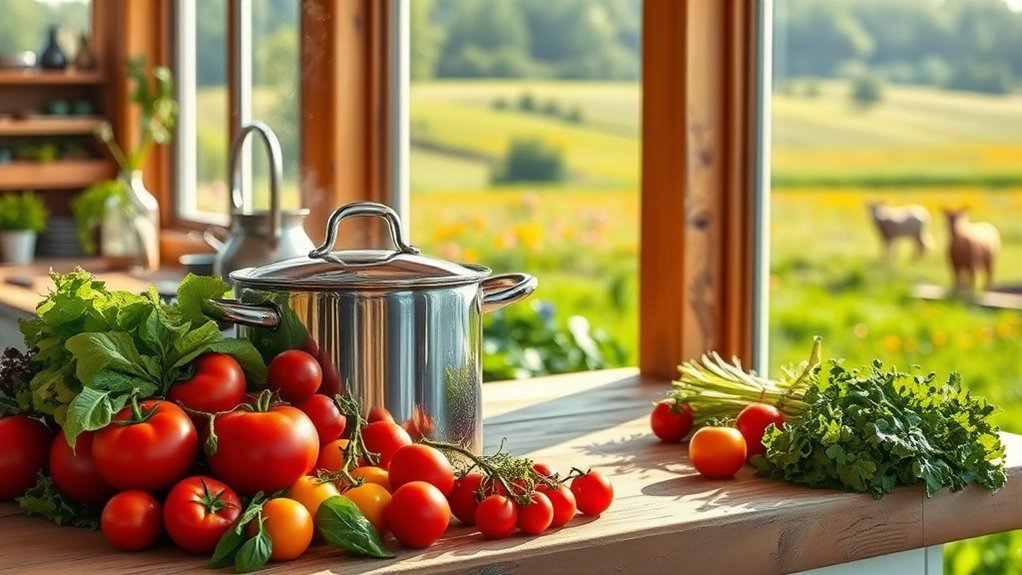
If you’ve ever tasted a freshly picked tomato or crisp greens straight from the farm, you know the joy of farm-to-table cooking. It’s more than just a trend; it’s a way of connecting with the food you eat and the land it comes from. In 2025, this connection has only deepened as more people recognize the benefits of seasonal eating. You’re likely to find that incorporating fresh, local ingredients into your meals not only enhances your cooking but also supports your community.
In this era of convenience, it’s easy to forget the importance of seasonality. But when you choose ingredients that are in season, you’re not just eating better; you’re also making a conscious decision to support local farmers. You’ll notice that seasonal ingredients are often more flavorful and packed with nutrients. Imagine biting into a juicy peach in the summer or enjoying hearty squash in the fall. These ingredients not only taste better, but they’re also at their peak in terms of quality and value.
As you embrace seasonal eating, think about visiting local farmers’ markets. Here, you can meet the people who grow your food, learn about their practices, and discover new varieties of produce. You might even get inspired to try something new. The colors and textures of fresh vegetables and fruits can spark your creativity in the kitchen. You can experiment with recipes that highlight these seasonal stars, allowing you to create meals that are both nourishing and satisfying.
Farm-to-table cooking also encourages sustainability. By focusing on local and seasonal ingredients, you’re reducing the carbon footprint associated with transporting food over long distances. You’re choosing to invest in your local economy and, in turn, fostering a sense of community. You’ll find that many restaurants in 2025 have embraced this philosophy, offering menus that change with the seasons, bringing the best of each harvest to your plate. Moreover, understanding the concept of cost behavior analysis can further enhance your ability to budget for seasonal ingredients effectively.
Frequently Asked Questions
What Are the Environmental Benefits of Farm-To-Table Cooking?
Farm-to-table cooking offers significant environmental benefits. By sourcing food locally, you reduce transportation emissions and support sustainable farming practices. Seasonal eating helps preserve biodiversity and encourages crop rotation, which enhances soil health. You’re also minimizing packaging waste, as local producers often use less plastic. Additionally, when you choose fresh, local ingredients, you help maintain the ecosystem balance, promote pollinator health, and contribute to sustainable land usage, fostering a healthier planet for future generations.
How Can I Start My Own Urban Garden for Seasonal Ingredients?
Imagine a lush green oasis right outside your window. To start your own urban garden, choose a sunny spot and gather containers or raised beds. Select seasonal seeds or seedlings that thrive in your climate, like tomatoes or herbs. Water regularly and use compost for nutrients. Don’t forget to check for pests and enjoy the process. Soon, you’ll be harvesting fresh ingredients, turning your small space into a vibrant source of seasonal goodness.
What Tools Do I Need for Farm-To-Table Cooking at Home?
To start your farm-to-table cooking, you’ll need some essential tools. Grab a good set of knives for chopping and slicing, a sturdy cutting board, and quality pots and pans for cooking. Don’t forget measuring cups and spoons for accuracy. A blender or food processor can help with sauces and purees. Finally, invest in a compost bin to turn kitchen scraps into rich soil for your urban garden. You’ll be well on your way!
How Do I Find Local Farms That Support Farm-To-Table Practices?
To uncover local farms that embrace farm-to-table practices, start by diving into your community like a treasure hunter. Search online for farmers’ markets and co-ops, or check social media for local groups sharing farm-fresh finds. Talk to your neighbors or friends; they might know hidden gems. Visit local food festivals to discover passionate farmers. You’ll soon find a network of dedicated growers enthusiastic to share their seasonal bounty with you. Happy hunting!
What Are Some Common Misconceptions About Farm-To-Table Dining?
One common misconception about farm-to-table dining is that it’s always more expensive. While some restaurants may charge a premium, many offer affordable options. Another myth is that farm-to-table means strictly organic; some local farms use sustainable practices without certification. In conclusion, people often think it’s only about vegetables, but farm-to-table includes meats, dairy, and grains too. Understanding these points can help you appreciate the true essence of farm-to-table dining.
Conclusion
As you savor a vibrant plate of heirloom tomatoes alongside rich, roasted squash, you feel the pulse of the earth in each bite. In 2025, while the world races toward artificial flavors and convenience, you embrace the freshness of seasonal produce. The contrast between the synthetic and the natural becomes crystal clear. With every meal, you’re not just nourishing your body; you’re reconnecting with the land, celebrating its bounty, and honoring the farmers who bring it to your table.