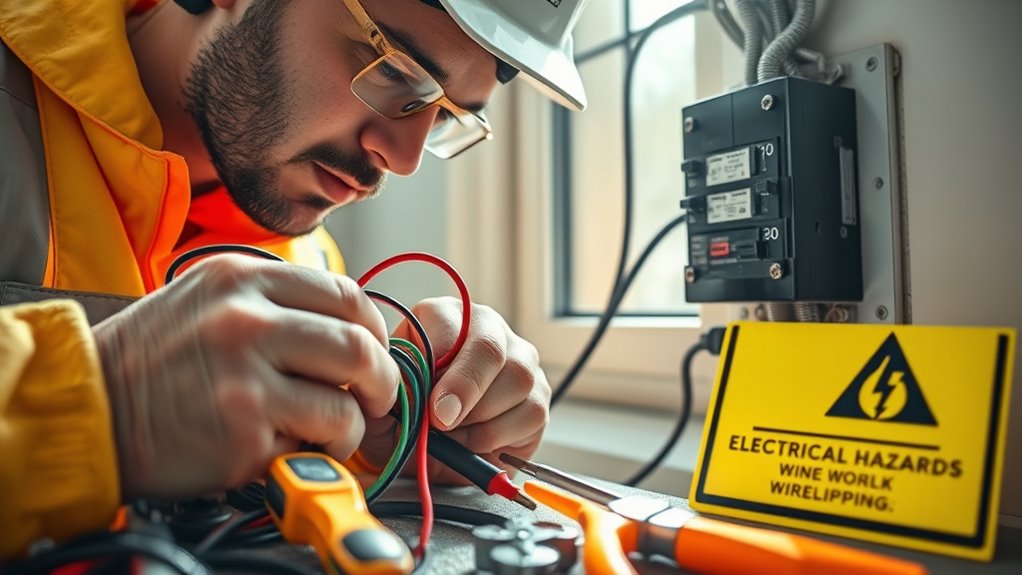

Fixing common electrical issues safely means you need to identify problems like flickering lights or tripped breakers first. Always turn off the power at the circuit breaker before you start. If a light flickers, check the bulb or socket for damage. For tripped breakers, unplug devices and redistribute the load. If outlets aren’t working, inspect for burn marks and replace damaged ones. Remember, when in doubt, call a professional to avoid hazards. There’s more to learn about electrical safety.
Key Takeaways
- Always turn off power at the circuit breaker before attempting any electrical repairs to ensure safety.
- Identify the specific electrical issue, such as flickering lights or tripped breakers, before proceeding with repairs.
- Check for signs of damage, like burn marks or melting, especially in outlets and fixtures, and replace them immediately.
- Avoid fixing wiring issues without professional help; consult an electrician for complex problems or persistent issues.
- Prioritize personal safety over quick fixes, and verify power is fully cut off before starting any work.
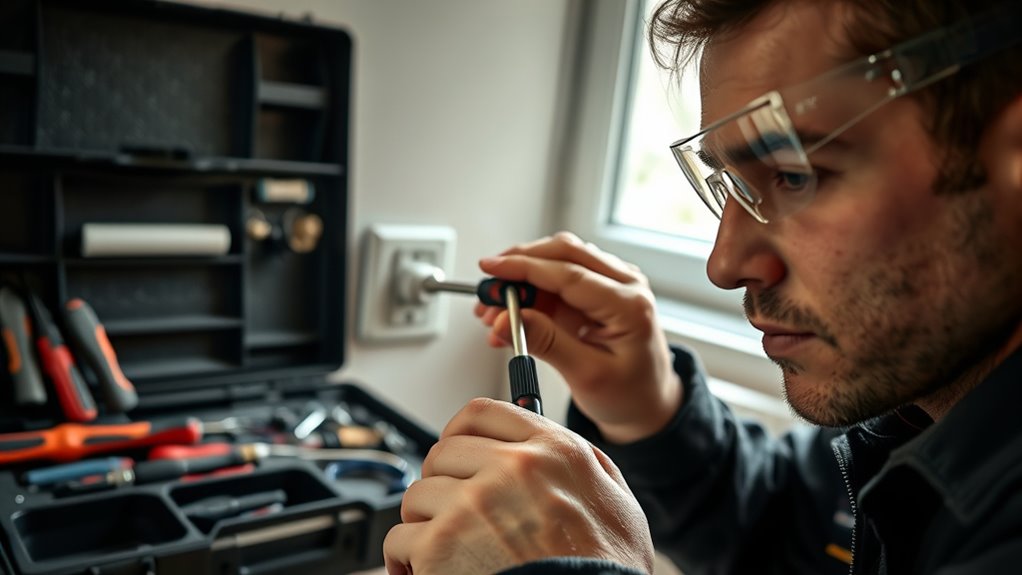
When you encounter electrical issues at home, it’s essential to address them safely and effectively. Ignoring these problems can lead to more significant hazards, including fire risks or electrical shock. Start by identifying the specific issue you’re facing, whether it’s flickering lights, tripped breakers, or outlets that aren’t working. Each of these problems has its own set of solutions, but safety should always come first.
Before you plunge into any repair, make sure you’ve cut off power to the affected area at the circuit breaker. This step is critical; it protects you from potential shock while you’re working. If you’re not sure which breaker controls which area, take a moment to test each one until you find the right circuit. Once you’re confident the power’s off, you can proceed with your inspection.
For flickering lights, check the bulb first. Sometimes, a loose bulb can be the culprit. If that doesn’t solve the problem, examine the socket and wiring. If you notice any corrosion or damage, it’s best to replace the fixture rather than trying to fix it. Remember, your safety comes first, so don’t hesitate to call a professional if you feel uncertain.
Tripped breakers indicate a problem that needs attention. Often, it’s due to an overloaded circuit. Unplugging some devices might resolve the issue, but if it keeps happening, you should consider redistributing your electrical load or upgrading your circuit. Again, if you’re unsure, it’s always wise to consult an electrician. They can assess whether the problem lies in the wiring or if you need a different solution.
For outlets that don’t work, start by checking the breaker again. If it’s fine, look for signs of damage, like burn marks or a melted appearance. If you see anything suspicious, replace the outlet immediately. When doing so, remember that each wire connects to a specific terminal, so take a photo before disconnecting anything. This helps guarantee you’ll reconnect everything correctly.
Lastly, never hesitate to seek professional help. It’s easy to underestimate electrical issues, but they can quickly escalate into dangerous situations if not handled properly. By following these steps, you’ll not only tackle common electrical problems but also do so with the utmost safety in mind. Always prioritize your well-being, and don’t take unnecessary risks when it comes to electricity. Your home deserves to be safe and secure. Additionally, understanding color accuracy in electrical systems can prevent potential hazards related to lighting and fixtures.
Frequently Asked Questions
How Can I Tell if an Electrical Issue Is Serious?
You can tell if an electrical issue is serious by looking for warning signs. If you notice frequent circuit breaker trips, flickering lights, or burning smells, it’s time to take action. Check for warm outlets or wires, as these can indicate overheating. If you see exposed wires or sparks, don’t ignore them. Always trust your instincts; if something feels off, it’s best to call a professional to assess the situation.
What Tools Do I Need for Basic Electrical Repairs?
For basic electrical repairs, you’ll need a few essential tools. Grab a screwdriver set, wire stripper, and pliers. A digital multimeter is vital for measuring voltage and checking circuits. Don’t forget insulated gloves for safety! A voltage tester helps you verify circuits are live or dead before you start working. Finally, having electrical tape and wire connectors on hand will make your repairs more secure. With these tools, you’re ready to tackle simple projects!
Are There Specific Safety Gear Requirements for Electrical Work?
When you step into the world of electrical work, think of yourself as a knight preparing for battle. You need specific safety gear to protect yourself. Always wear insulated gloves to shield your hands, and safety goggles to guard your eyes from flying debris. A sturdy pair of non-slip shoes is essential to keep you grounded. Don’t forget a hard hat if you’re working in areas with overhead hazards. Stay safe, and you’ll conquer any challenge!
Can I Fix Electrical Issues Without Previous Experience?
You can tackle minor electrical issues without previous experience, but it’s vital to proceed with caution. Start with simple tasks like replacing a light switch or bulb, and make sure you turn off the power beforehand. However, if you encounter complex problems or feel uncertain, it’s best to call a professional. Safety’s always a priority, and knowing your limits will help you avoid potentially dangerous situations. Trust your instincts and stay safe!
When Should I Call a Professional Electrician Instead?
If you smell burning wires while plugging in a device, it’s time to call a professional electrician. You should reach out to an expert whenever you encounter flickering lights, frequent circuit breaker trips, or if your outlets feel warm. These issues can indicate serious problems that aren’t safe to manage alone. Trusting a qualified electrician ensures your safety and peace of mind, allowing you to focus on enjoying your home without worry.
Conclusion
In summary, tackling common electrical issues can be safe and manageable when you follow the right precautions. Did you know that nearly 51,000 home fires are attributed to electrical malfunctions each year? By staying informed and using safe practices, you can greatly reduce risks and keep your home secure. Always remember to turn off the power before starting repairs and, when in doubt, call a professional. Your safety is worth it!