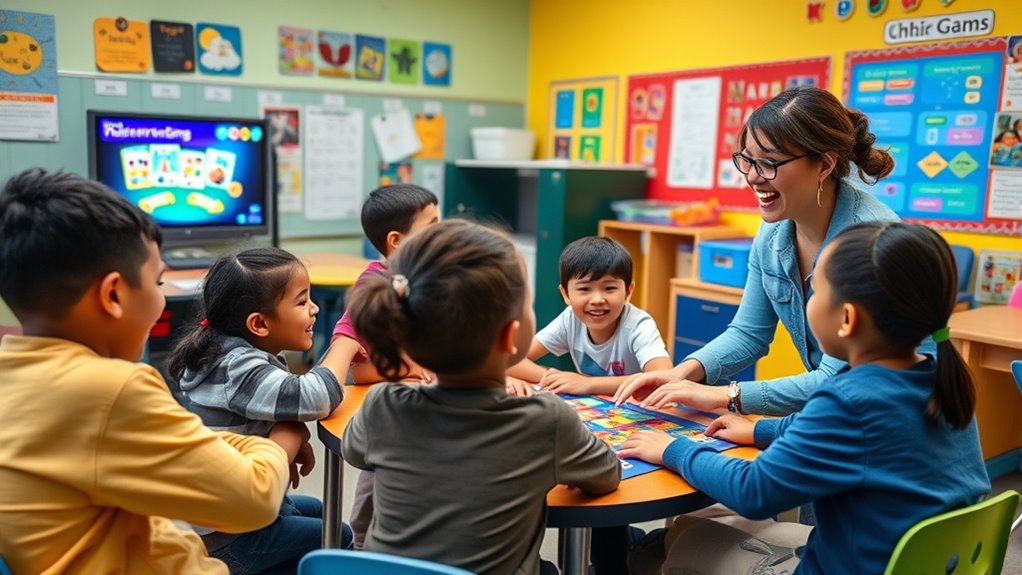

Gamification in education makes learning fun by turning lessons into exciting challenges. You’ll find elements like points, badges, and leaderboards that motivate you to participate actively rather than just absorb information. This approach fosters teamwork, enhancing communication and cooperation among peers while catering to your unique learning style. With immediate feedback and visible progress, you’ll feel a sense of achievement. There’s so much more to explore about how gamification can transform your educational experience.
Key Takeaways
- Gamification transforms traditional assignments into engaging challenges with points, badges, and rewards, enhancing student motivation and participation.
- Active participation in gamified learning fosters better information retention and critical thinking skills through interactive experiences.
- Collaborative activities in gamification promote teamwork and communication, building a sense of community among students.
- Personalized learning paths cater to diverse learning styles, keeping education relevant and engaging for each individual.
- Immediate feedback from gamified assessments allows students to identify improvement areas and adjust their learning strategies in real-time.

Have you ever wondered how turning learning into a game could change the way students engage with their education? The concept of gamification in education isn’t just a passing trend; it’s reshaping how you and your peers learn. By incorporating game-like elements into traditional curricula, educators tap into your natural desire for competition, achievement, and fun. Instead of viewing assignments as chores, you’ll see them as opportunities to earn points, badges, or rewards, making the process more exciting.
Imagine walking into a classroom where your teacher hands out a leaderboard filled with names, and you’re motivated to climb higher. That’s the essence of gamification. It encourages you to participate actively. You’re not just passively absorbing information; you’re engaging with it. Quizzes become challenges, and discussions turn into quests. When you’re actively involved, you’re more likely to retain information and develop critical thinking skills.
Gamification also fosters collaboration among students. You’re often placed in teams, working together to achieve common goals. This collaboration helps you build communication skills and enhances your ability to work with others. You’re not just competing against each other; you’re joining forces to solve problems and overcome challenges. This sense of community can make learning feel less isolating and more enjoyable.
Furthermore, gamified learning environments cater to different learning styles. Whether you’re a visual learner who thrives on graphics and animations or a kinesthetic learner who benefits from hands-on activities, gamification can be tailored to meet your needs. You’ll find various paths to success, which keeps you engaged and motivated. It’s about personalizing your educational experience, making it more relevant and effective.
Feedback becomes instant in a gamified setting. Instead of waiting for weeks to get your test scores back, you receive immediate responses after quizzes and activities. This timely feedback lets you identify areas for improvement right away, allowing you to adjust your learning strategies on the fly. You’ll feel a sense of accomplishment as you see your progress in real time.
Incorporating gamification into education isn’t just about making learning fun; it’s about enhancing your overall experience. When you’re engaged and motivated, you’re more likely to develop a lifelong love for learning. Additionally, mindfulness techniques can be integrated into gamified education to help you manage stress and maintain focus. So next time you’re in class, consider how a game-like approach could transform your educational journey. Who knows? You might just discover that learning can be as exhilarating as playing your favorite game.
Frequently Asked Questions
What Age Groups Benefit Most From Gamification in Education?
You’ll find that children aged 6 to 12 benefit most from gamification in education. At this age, their cognitive and social skills develop rapidly, making them more receptive to interactive learning. However, teens also gain from it, as it can enhance engagement and motivation in subjects they find challenging. So, whether you’re teaching younger kids or teenagers, incorporating gamified elements can markedly boost their learning experience and retention of information.
Can Gamification Be Implemented in Traditional Classroom Settings?
Yes, you can definitely implement gamification in traditional classroom settings. Start by incorporating game elements like points, badges, and leaderboards to motivate your students. You can also design interactive activities that encourage collaboration and competition. By integrating storytelling and challenges related to your curriculum, you’ll keep students engaged. Remember to tailor the gamified elements to fit the learning objectives, ensuring that fun and education go hand in hand for effective learning.
Are There Specific Subjects That Gain More From Gamification?
Yes, specific subjects like math, science, and language arts often gain more from gamification. In math, you can tackle problems through interactive challenges, making concepts stick. Science benefits from simulations that bring experiments to life. Language arts can leverage storytelling games to enhance reading and writing skills. By incorporating game elements, you’ll find students more engaged and motivated, leading to deeper understanding and retention of the material across these subjects.
How Can Teachers Measure the Effectiveness of Gamification?
Measuring the effectiveness of gamification is like tuning a musical instrument—you need the right notes to create harmony. You can track student engagement through quizzes, participation rates, and feedback surveys. Observing improvements in grades or skills can also indicate success. Additionally, using analytics from gamified platforms helps you gauge progress and adapt strategies. Ultimately, it’s about finding the rhythm that keeps your students motivated and learning effectively.
What Tools and Platforms Are Best for Gamifying Lessons?
To gamify your lessons effectively, consider tools like Kahoot for quizzes, Classcraft for role-playing elements, and Quizizz for interactive assessments. Platforms like Edmodo and Google Classroom can also enhance engagement. Incorporating educational games like Minecraft: Education Edition or Prodigy can make learning enjoyable. Don’t forget about using badges and leaderboards to motivate your students. Experiment with these tools and see which ones resonate best with your class!
Conclusion
Incorporating gamification into education isn’t just a trend; it’s a game changer. Did you know that 85% of students report feeling more engaged when learning is game-based? By transforming lessons into fun challenges, you’re not only capturing attention but also enhancing retention. So, why not embrace this innovative approach? When learning feels like play, students thrive, and the classroom becomes a dynamic space where knowledge is keenly sought after. Let’s make education exciting together!