To see if an air purifier has genuine HEPA filtering, check for labels that say “True HEPA” and verify it traps 99.97% of 0.3-micron particles. Look for details on filter lifespan, efficiency, and manufacturer standards. Keep an eye on metrics like airflow and filter capacity to ensure it suits your room size. If you stay alert to these clues, you’ll be better equipped to select a reliable purifier—more insights await.
Key Takeaways
- Look for labels that explicitly state “True HEPA” to confirm genuine filtration performance.
- Verify the filter’s efficiency rating of 99.97% at 0.3 microns for proven particle removal.
- Check the product’s specifications for filter lifespan and replacement intervals to ensure ongoing effectiveness.
- Review the CADR rating and compatibility with your air purifier to match room size and filtration needs.
- Ensure the purifier includes official HEPA certification marks and detailed performance information on the label.
What Does HEPA Mean, and Why Is It Important?

Have you ever wondered what makes a HEPA air purifier so effective? The key is its ability to markedly improve air quality by capturing tiny particles like dust, pollen, and pet dander. HEPA stands for High-Efficiency Particulate Air, meaning the filter traps at least 99.97% of particles as small as 0.3 microns. This high filtration efficiency guarantees cleaner, healthier indoor air. Additionally, a genuine HEPA filter’s lifespan depends on how often it’s used and the air quality in your space. Regular maintenance and timely replacement keep the purifier functioning at peak performance, maintaining ideal air quality. Understanding what HEPA means helps you select the right filter, ensuring you get the best value and longest filter lifespan for your needs. Proper filter care and choosing the right maintenance schedule are crucial for maintaining filter efficiency. Recognizing the filter technology can also assist you in making informed purchasing decisions and optimizing your air purification system. Supporting sustainable practices in filter manufacturing can contribute to environmental conservation and reduce waste. Recognizing the filter lifespan and replacement guidelines can further extend the effectiveness of your air purifier over time.
How Do Genuine HEPA Filters Differ From Other Filters?
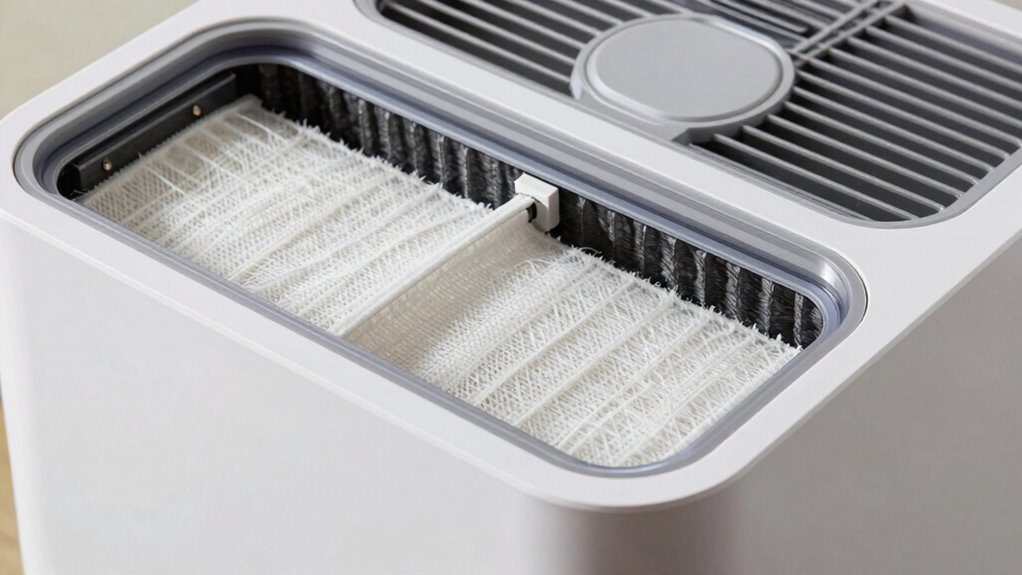
Genuine HEPA filters meet strict filtration efficiency standards, capturing at least 99.97% of particles as small as 0.3 microns. Unlike other filters, they use high-quality materials designed specifically for maximum particle removal. This means they perform better at filtering out allergens, dust, and other airborne contaminants.
Filtration Efficiency Standards
To understand how HEPA filters stand out, it’s important to recognize their strict filtration efficiency standards. Genuine HEPA filters must capture at least 99.97% of particles as small as 0.3 microns, ensuring superior air quality. This high standard minimizes allergens, dust, and microbes, improving your indoor environment. Many other filters, like activated carbon or standard pleated filters, don’t meet these rigorous requirements and often have shorter filter lifespans, meaning you’ll need to replace them more frequently. These less efficient filters may give a false sense of cleaner air but can leave harmful particles behind. When evaluating air purifiers, look for labels that specify a true HEPA standard, so you’re confident in their ability to maintain ideal air quality over time.
Material Composition Differences
While filtration efficiency sets the standard for particle removal, understanding the material composition of HEPA filters reveals what makes them truly effective. Genuine HEPA filters are made from tightly woven glass fibers that create a dense, web-like structure. This material composition guarantees that microscopic particles, including allergens and bacteria, are captured efficiently. In contrast, other filters often use synthetic or less durable materials that may degrade faster over time, reducing filter durability. The high-quality glass fiber structure not only enhances particle retention but also maintains performance longer, making HEPA filters more reliable and long-lasting. Knowing these material differences helps you distinguish genuine HEPA filters from cheaper alternatives, ensuring you choose a filter that offers both superior filtration and durability.
Particle Removal Capabilities
Genuine HEPA filters are designed to remove at least 99.97% of particles as small as 0.3 microns, making them highly effective at capturing airborne particles. Their advanced filtration mechanisms trap contaminants like dust, pollen, and bacteria, outperforming other filters. Non-HEPA filters may only filter larger particles, allowing smaller pollutants to pass through. To visualize this, consider the following:
| Filter Type | Particle Size Removal | Filtration Mechanism |
|---|---|---|
| HEPA | 0.3 microns and above | Interception, impaction, diffusion |
| Standard Fiberglass | Larger particles | Mechanical filtering |
This comparison shows why genuine HEPA filters are superior in purifying indoor air efficiently. Additionally, understanding the filtration efficiency of different filters can help you make more informed choices for air quality.
How Can You Tell If an Air Purifier Has Real HEPA?
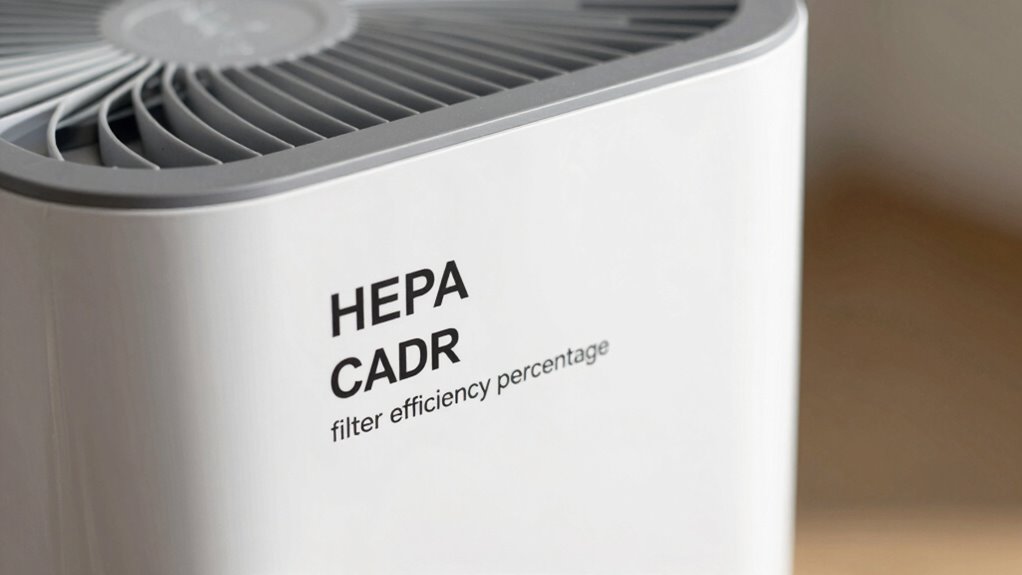
If you want to guarantee an air purifier has a true HEPA filter, start by checking the product labels and specifications carefully. Look for explicit mentions of “True HEPA” rather than generic claims like “HEPA-type” or “HEPA-like,” which may not meet standards. Genuine HEPA filters trap at least 99.97% of particles as small as 0.3 microns, improving your air quality considerably. Additionally, verify the filter’s lifespan—true HEPA filters typically last 6 to 12 months, depending on usage. An authentic label will often include details about the filter’s efficiency and expected durability. By scrutinizing these details, you can confidently choose an air purifier that delivers real HEPA performance and maintains ideal air quality over time.
What Key Metrics Help You Evaluate HEPA Filter Performance?

When evaluating HEPA filter performance, key metrics like filtration efficiency, airflow rate, and particle removal capacity provide essential insights. These metrics directly influence your air quality and determine how well the purifier maintains its effectiveness over time. Consider these factors:
Monitoring filtration efficiency, airflow, and capacity ensures optimal HEPA filter performance and air quality.
- Filtration efficiency percentage, indicating how many particles the filter captures
- Airflow rate (CFM), which affects how quickly your air quality improves
- Particle removal capacity, showing how many particles the filter can handle before needing replacement
- Filter lifespan, reflecting how long the filter remains effective before performance declines
- Microplastics in dust, which can impact indoor air quality and highlight the importance of efficient filtration. Additionally, understanding the filter media composition can help you assess its ability to trap fine particles and pollutants. Recognizing the significance of air circulation ensures the purifier maintains optimal performance throughout its lifespan. Proper maintenance and replacement schedules are also critical to sustain high filtration efficiency and prevent performance degradation. Regularly inspecting the filter integrity can help identify potential issues early and maintain peak efficiency.
Monitoring these metrics helps you choose a purifier that maintains superior air quality and ensures the filter’s longevity. Understanding these key performance indicators allows you to make informed decisions and maximize your investment.
Is a Higher MERV Rating Better for HEPA Filters?

A higher MERV rating indicates better filtration, but it’s important to know how it relates to HEPA filters. Understanding the MERV scale and what it measures helps you choose the right filter for your needs. A filtration efficiency produces between 10 to 20 horsepower, demonstrating the importance of selecting filters that can handle high-performance air purification in demanding environments. Additionally, knowing how filter ratings correlate with actual particle removal efficiency ensures you get the best value for your air quality needs. Recognizing the performance standards of filters can help you make more informed decisions for your specific filtration requirements, especially when considering the different categories of cookie types used for website analytics and functionality.
MERV Scale and Filtration
The MERV (Minimum Efficiency Reporting Value) scale measures a filter’s ability to capture particles of various sizes, and a higher MERV rating generally indicates better filtration. A higher MERV rating can improve your air quality by trapping smaller particles more effectively, but it may also impact filter lifespan and airflow. When choosing filters, consider these points:
- Higher MERV ratings (13-16) provide superior particle removal, ideal for sensitive environments.
- Lower ratings (1-4) are suitable for basic filtration but less effective against small particles.
- As MERV increases, filters tend to clog faster, potentially reducing filter lifespan if not maintained properly.
- Balance your air quality needs with your system’s airflow capacity to ensure ideal performance without compromising filter durability.
- Understanding airflow performance and how it interacts with filtration efficiency can help optimize your air purification system. Additionally, considering filter maintenance can extend the effectiveness and lifespan of your filters.
HEPA Compatibility and Ratings
Higher MERV ratings generally indicate better filtration capabilities, but they don’t necessarily mean compatibility with HEPA filters. HEPA filters meet specific standards, typically capturing 99.97% of particles as small as 0.3 microns, regardless of MERV rating. While a higher MERV rating can improve overall air quality, it may also reduce airflow and strain the filter system, potentially shortening its lifespan. Not all air purifiers labeled with high MERV ratings are designed to handle HEPA filters, so check manufacturer specifications. Using a filter that isn’t compatible can compromise performance and air quality. Always confirm your purifier supports HEPA filters and consider how the rating impacts filter lifespan and efficiency for ideal results.
How Do You Read Air Purifier Labels for HEPA Certification?

Understanding how to read air purifier labels for HEPA certification is essential to guarantee you’re getting effective filtration. First, check for the official HEPA certification mark, which confirms the filter meets strict standards. Second, review the CADR (Clean Air Delivery Rate) to ensure the purifier suits your room size and improves air quality efficiently. Third, examine the filter lifespan, so you know how often you’ll need replacements to maintain peak performance. Fourth, look for details about the filter type and any additional features that support consistent filtration. These labels help you assess the purifier’s ability to enhance air quality reliably. By understanding these key points, you can make smarter choices and ensure your air remains clean and healthy over time.
What Features Should You Look for Alongside HEPA Filters?
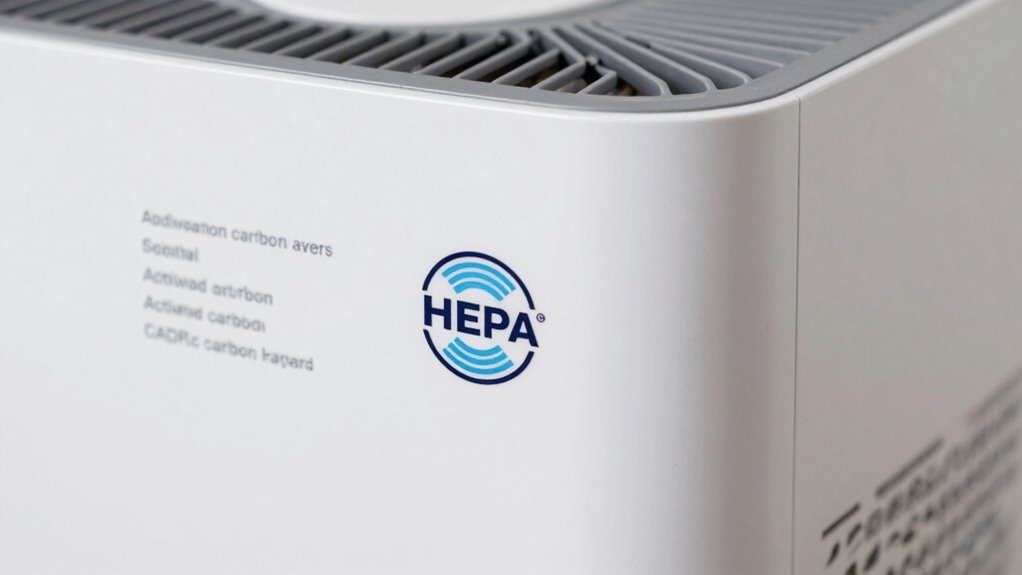
While HEPA filters are essential for trapping airborne particles, considering additional features can markedly enhance your air purifier’s overall effectiveness. First, pay attention to air purifier placement; positioning it in the right spot ensures better air circulation and filtration. Avoid placing it in corners or cramped spaces where airflow is restricted. Also, check the noise level considerations, especially if you plan to run the purifier in bedrooms or work areas. A quieter model allows for continuous operation without disruption. Features like adjustable fan speeds, filter indicators, and smart controls can provide added convenience and efficiency. Combining a quality HEPA filter with these features helps optimize air cleaning, creating a healthier environment tailored to your specific needs.
How Do Room Size and Filter Capacity Impact Effectiveness?

Choosing the right placement and features for your air purifier is only part of ensuring effective air cleaning. Room size and filter capacity directly influence performance, especially regarding air exchange and filter lifespan. If your purifier is too small for the room, it won’t adequately refresh the air, reducing its effectiveness. Conversely, a larger-capacity filter can handle bigger spaces more efficiently. Consider these factors:
Choosing the right size and capacity ensures your air purifier works efficiently in any space.
- Match your purifier’s recommended room size to your space to optimize air exchange.
- Larger filters generally extend filter lifespan but may require more power.
- Higher capacity units process air faster, improving overall air quality.
- Proper placement ensures maximum circulation, enhancing filter efficiency and maintaining consistent air exchange.
- Incorporating sound vibrations or calming music into your environment can further promote relaxation and well-being alongside air purification.
Why Is Regular Maintenance Important for HEPA Filters?
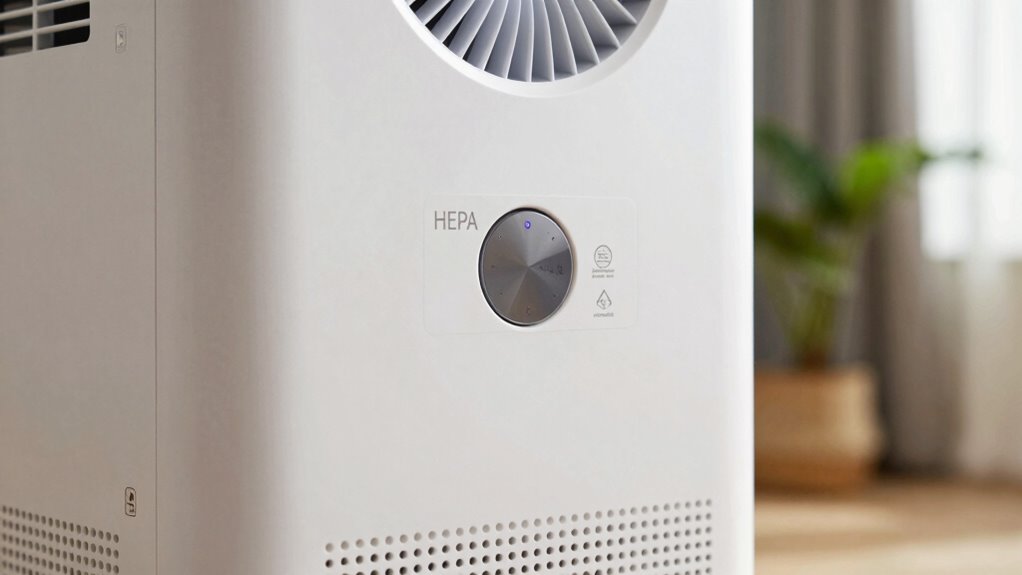
Regular maintenance of your HEPA filter is essential to guarantee it continues to effectively remove pollutants from the air. Over time, filters accumulate dust, allergens, and other particles, which can reduce their filter lifespan and efficiency. By following simple maintenance tips, you ensure your purifier works at ideal capacity. Regularly check and replace filters when recommended, typically every 6-12 months. Proper upkeep prevents airflow blockages and extends the filter’s longevity. Monitoring indoor air quality levels can help determine when a filter replacement is needed sooner. Additionally, understanding how air purification works can help you optimize your filter’s performance over time. Recognizing different filter types can also assist in selecting the best replacement options for your specific needs. Knowing about HEPA filter specifications can further improve your maintenance routine and ensure optimal air cleaning. Staying informed about filter lifespan expectations can help you plan replacements proactively.
Questions to Ask When Choosing an Air Purifier With HEPA?
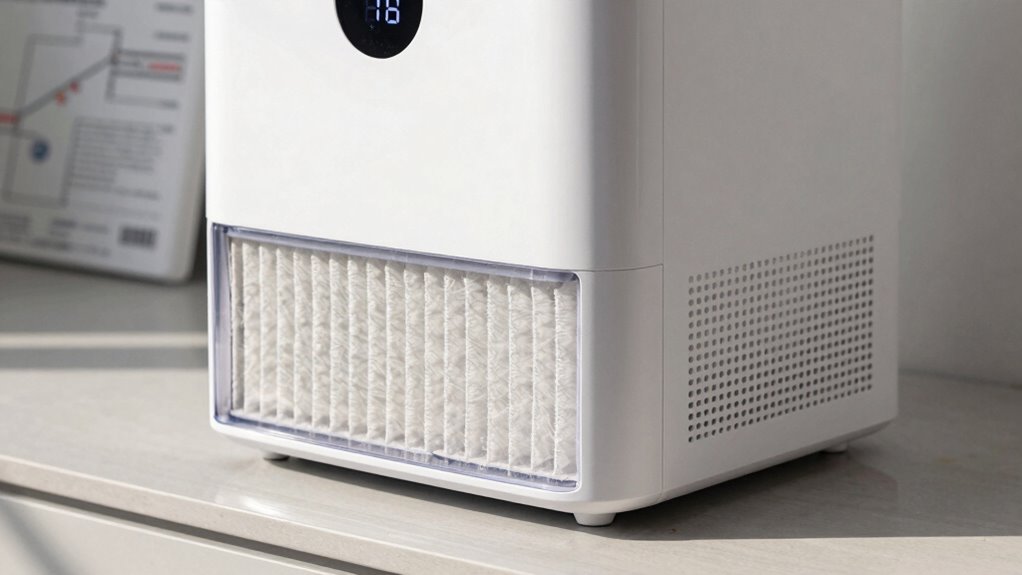
When selecting an air purifier with a HEPA filter, asking the right questions helps guarantee you get a device that meets your needs and maintains ideal performance. Consider these key questions:
- How does the purifier improve air quality for my specific concerns (allergens, smoke, VOCs)?
- What is the filter lifespan, and how often will I need replacements?
- Is the device capable of handling the room size or air volume in my space?
- What maintenance requirements are involved to make sure consistent HEPA performance?
Frequently Asked Questions
How Often Should HEPA Filters Be Replaced for Optimal Performance?
You should replace your HEPA filter every 6 to 12 months for peak performance. Regular filter replacement guarantees your air purifier continues to effectively trap airborne particles and allergens. Keep an eye on your device’s indicator light, if available, and check the manufacturer’s recommendations. If you notice decreased airflow or persistent odors, it’s time for a filter replacement to maintain your air quality.
Are There Any Certifications to Verify HEPA Filter Authenticity?
Think of certifications as your air purifier’s passport to credibility. To verify a HEPA filter’s authenticity, look for certification standards like those from the U.S. Department of Energy (DOE) or the European Norm (EN) standards. These labels serve as proof of quality and performance, ensuring you’re getting genuine HEPA filters. Always check for official markings and documentation, so your air stays safe and purified.
Can HEPA Filters Remove Viruses and Bacteria Effectively?
Yes, HEPA filters can effectively remove viruses and bacteria through viral removal and bacterial filtration. They trap tiny particles, including airborne pathogens, with high efficiency—usually 99.97% for particles as small as 0.3 microns. While they don’t kill viruses or bacteria directly, HEPA filters substantially reduce their presence in the air, making your environment safer. For added protection, look for filters with certifications like HEPA standards and tested viral filtration capabilities.
Do HEPA Filters Produce Ozone or Other Harmful Emissions?
HEPA filters do not produce ozone emission or other harmful byproducts during operation. They simply trap particles like dust, pollen, viruses, and bacteria without generating harmful emissions. However, be cautious with some air purifiers that use ionizers or other technologies, as those can produce ozone or other harmful byproducts. Always check the product label to make sure it’s ozone-safe, especially if you’re sensitive to ozone or have health concerns.
What Is the Typical Lifespan of a HEPA Filter in an Air Purifier?
Think of your HEPA filter like a trusty sidekick—its typical lifespan is about 6 to 12 months with proper filter maintenance. To keep it performing its best, follow the replacement guidelines provided by the manufacturer. Regularly check for signs of dirt and reduced airflow. If you notice these, it’s time for a swap. Staying on top of filter maintenance guarantees your air purifier keeps your air fresh and clean.
Conclusion
Remember, choosing the right HEPA filter isn’t just about labels—it’s about creating a healthier space. By understanding what to look for and asking the right questions, you can find an air purifier that genuinely enhances your environment. Think of it as a small step toward clearer air and better well-being. When you prioritize quality and maintenance, fresh, clean air becomes less of a goal and more of a reality you can enjoy daily.