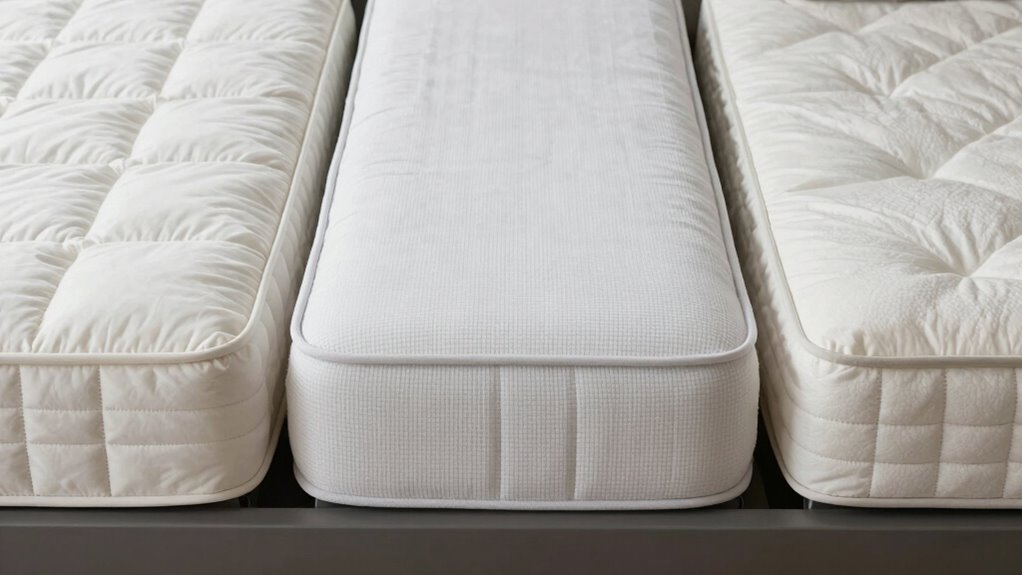
“Medium” firmness on mattresses is a vague term that varies widely across brands and materials, making it unreliable for choosing the right bed. Different manufacturers define and measure firmness differently, so what feels medium to one person may feel soft or firm to another. Factors like your sleep position and mattress material type also influence how a firmness level feels and supports you. If you want to understand the real meaning behind these labels, keep exploring the details below.
Key Takeaways
- “Medium” firmness varies across brands due to inconsistent standards and different materials, making it unreliable as a universal measure.
- Mattress labels like soft, medium, or firm are subjective and depend on manufacturer definitions, materials, and testing methods.
- Material type (memory foam, latex, innerspring) significantly influences how firmness feels, even if ratings are similar.
- Personal preferences, sleep position, and body type greatly affect perceived firmness, rendering labels insufficient for perfect fit.
- Relying solely on firmness labels can lead to dissatisfaction; testing and understanding support and pressure relief are more effective.
What Does ‘Medium’ Really Mean for Mattress Firmness?
When you see a mattress labeled as “medium,” it often suggests a balance between softness and firmness, but it doesn’t always mean the same thing across brands. This label is meant to appeal to a broad range of sleepers seeking ideal sleep comfort. However, mattress technology varies widely, so a “medium” firmness in one brand might feel notably different in another. The materials used—like memory foam, latex, or innerspring coils—impact how the mattress responds to your body and pressure points. This means you could experience similar firmness ratings but different feels and support levels. Recognizing that “medium” is more of a general guideline than a standard can help you better evaluate mattress options and find one that truly suits your sleep preferences. Understanding mattress variability highlights the importance of testing and comparing mattresses in person or through trial periods.
Why Are Mattress Firmness Labels Often Inconsistent?
Mattress firmness labels are often inconsistent because manufacturers don’t follow a universal standard for rating firmness levels. This means a “firm” mattress from one brand might feel softer than a “medium” from another. Factors influencing this include:
- Different materials used (foam, innerspring, latex) that affect feel.
- Variations in bed height, which alter how firm or soft a mattress seems.
- Brand reputation, where some brands prioritize marketing over standardized testing.
- Subjective testing methods, leading to inconsistent firmness ratings across products.
As a result, your perception of firmness can vary widely, even within the same firmness label. Always consider the brand’s reputation and check for specific firmness measurements rather than relying solely on labels.
How Do Brands Define Mattress Firmness (Soft, Medium, Firm)?
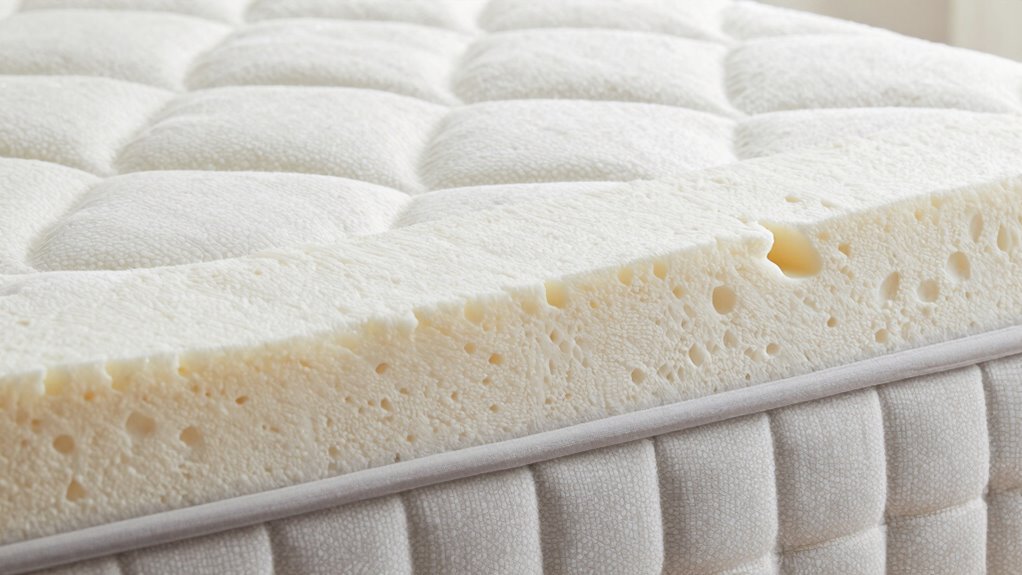
Different brands may use varying terminology to describe mattress firmness, which can be confusing. They often rely on specific criteria like mattress materials, user feedback, or testing methods to define what soft, medium, or firm means. Understanding these differences helps you better interpret how each brand sets its firmness levels. Additionally, some brands incorporate industry standards and testing methods to create more consistent and comparable firmness ratings. To ensure accuracy, many companies also consider hygiene and durability testing as part of their overall firmness assessment.
Brand Terminology Variations
Understanding how brands define mattress firmness can be tricky because terminology varies widely. Different brands use their own language, which can be confusing. For example, a “medium” firmness might mean: 1. A specific material difference, like a layer of foam or latex. 2. A subjective feel, described as “balanced” or “supportive.” 3. A standardized firmness rating, based on industry tests. 4. A brand-specific label, like “Class 3” or “Level 6.” This variation means you can’t rely solely on labels. Instead, focus on understanding each brand’s unique material differences and how they describe their firmness levels. Recognizing these brand language nuances helps you make smarter choices, avoiding assumptions based on vague terms like “medium.” Additionally, learning the art of smart shopping on Amazon can help you compare options more effectively and find the best fit for your comfort preferences. Familiarizing yourself with industry standards for firmness ratings can further clarify what each label truly means across different brands.
Criteria for Firmness Levels
Since brand terminology varies, it’s important to recognize that each company uses specific criteria to define firmness levels like soft, medium, or firm. These criteria often include the mattress’s materials, foam density, and overall feel, rather than a standardized scale. For example, a “medium” mattress might differ greatly between brands. To maintain consistent comfort and support, you should consider bed frame compatibility, as some frames affect firmness perception. Mattress rotation is also essential; regularly flipping or rotating your mattress helps maintain its intended firmness and prevents uneven wear. Ultimately, understanding these criteria helps you choose a mattress that aligns with your preferences, regardless of labels, ensuring you get the right level of support and comfort.
How Your Sleep Position and Pressure Points Influence Firmness Needs

Your sleep position plays a crucial role in determining the firmness level that’s best for you because it directly affects how pressure is distributed across your body. Different sleep postures create unique pressure hotspots that influence your comfort. For example:
- Sleeping on your back spreads weight evenly, often favoring medium firmness.
- Side sleepers put extra pressure on shoulders and hips, needing softer support for relief.
- Stomach sleepers experience concentrated pressure on the abdomen and chest, requiring firmer support.
- Combination sleepers shift positions, needing adaptable firmness levels to address multiple pressure points.
- Recognizing pressure distribution can help you select a mattress that reduces discomfort and promotes proper spinal alignment for restful sleep. Additionally, understanding how pressure points relate to your sleep posture can guide you toward individualized comfort solutions, which may involve adjusting firmness to better accommodate your unique pressure patterns, and considering factors like body weight can further refine your comfort choices for enhanced sleep quality.
How Mattress Materials Affect Firmness and Feel
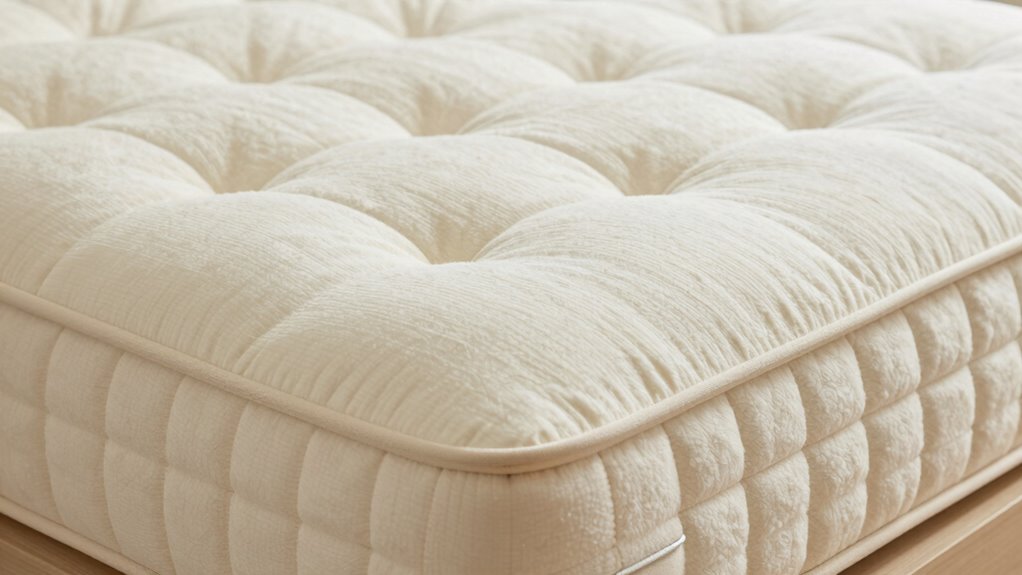
The materials used in a mattress considerably influence its firmness and overall feel, shaping how it responds to your body’s weight and pressure. Different materials offer varying levels of fabric comfort, affecting how soft or supportive the surface feels. For example, memory foam provides a plush, contouring sensation, while latex offers a more resilient, bouncy surface. Material durability also plays a role; high-quality components maintain their feel over time, ensuring consistent firmness. Cheaper materials may soften or degrade quickly, altering how your mattress responds. Your choice of materials affects not only comfort but also how long your mattress stays firm and supportive. Additionally, understanding the material composition can help you select a mattress that aligns with your firmness preferences and provides lasting comfort. Knowing how different materials perform can guide you toward a durable, comfortable choice. Furthermore, the angle of pressure distribution influences how well the mattress supports various body types and sleeping positions over time. Incorporating high-quality materials can also enhance the overall sleep experience, making your mattress more comfortable and long-lasting. For example, selecting materials with better material resilience ensures your mattress maintains its supportive qualities longer.
The Risks of Relying Solely on ‘Medium’ as a Standard

Relying solely on ‘medium’ as a standard for mattress firmness can be misleading because it assumes a one-size-fits-all approach that doesn’t account for individual preferences or body types. This shortcut can lead to dissatisfaction and increased mattress returns. Here’s what you might miss:
Relying on ‘medium’ firmness overlooks personal preferences, risking discomfort and costly returns.
- Personal comfort varies greatly—what feels perfect for one person may be too soft or firm for another.
- Bedroom aesthetics can suffer if you choose a mattress based on a label rather than your needs.
- Mattress pricing can be unpredictable—‘medium’ options often vary in quality and cost, making it hard to find true value.
- Relying solely on ‘medium’ ignores the nuances that influence sleep quality, potentially costing you more in the long run.
- Additionally, understanding Free Floating mattress technology can help you select options that better conform to your individual sleep preferences and improve overall comfort.
- Considering personalized sleep solutions can further enhance your overall sleep experience by matching your unique needs rather than relying on generic labels. Exploring adjustable firmness options can also provide tailored comfort that adapts to your changing preferences over time.
- Being aware of sleep science insights can guide you toward more informed mattress choices that support your health and well-being.
Support, Comfort, and Pressure Relief: Factors to Consider Beyond Firmness

Support, comfort, and pressure relief are just as important as firmness. You need to ensure how well it keeps your spine aligned, especially based on your sleeping position. Finding the right balance can help prevent aches and ensure restful sleep. Additionally, incorporating smart home safety features like leak detectors or indoor air monitoring can promote a healthier sleeping environment. Proper support can also influence your overall well-being by reducing strain on muscles and joints during sleep. Understanding sleep ergonomics can further optimize your mattress choice for better health. Recognizing the importance of proper mattress maintenance can extend its lifespan and maintain optimal support over time. Paying attention to material quality can further enhance comfort and durability, ensuring your investment lasts longer and continues to provide effective support.
Spinal Alignment Importance
Achieving proper spinal alignment is essential for restful sleep and overall health, and it depends on more than just a mattress’s firmness. Your pillow selection and mattress height play critical roles in maintaining that alignment. Consider these factors:
- Make certain your pillow supports your neck without tilting your head forward or backward.
- Choose a mattress height that keeps your spine straight from your hips to shoulders.
- Adjust your sleeping position to prevent sagging or arching that disrupts alignment.
- Use a mattress that contours to your body, supporting natural curves and reducing pressure points.
These details help keep your spine properly aligned, reducing pain and improving sleep quality. Remember, support and comfort extend beyond firmness alone.
Pressure Point Relief
Finding the right support and comfort involves more than just choosing a mattress with the correct firmness. To effectively reduce pressure points, look for a mattress that contours to your body’s relief zones—areas like shoulders, hips, and knees—where excessive pressure can cause discomfort. Good pressure point relief helps prevent numbness and pain by evenly distributing your weight. Memory foam and latex mattresses excel at this, as they adapt to your body’s curves. When shopping, test how well a mattress cushions these zones, ensuring it provides enough support without sacrificing comfort. Remember, a mattress that targets pressure points will help you wake up feeling refreshed, rather than sore or stiff. Prioritizing relief zones guarantees better sleep quality and overall comfort.
Personal Sleeping Position
Your sleeping position plays a crucial role in choosing the right mattress support and comfort. Your sleep posture impacts how your body aligns and how pressure points are relieved. Consider these factors:
- Back sleepers need medium support to keep the spine aligned without sinking too much.
- Side sleepers benefit from softer surfaces that cushion shoulders and hips, enhancing pressure relief.
- Stomach sleepers require firmer support to prevent sagging and maintain proper alignment.
- All positions demand a mattress with good durability to withstand regular use without losing support.
Beyond firmness, focus on how well your mattress adapts to your sleep posture and maintains support over time. The right fit ensures better sleep quality and prolongs mattress durability.
How to Test and Choose a Mattress That Fits Your Sleep Style
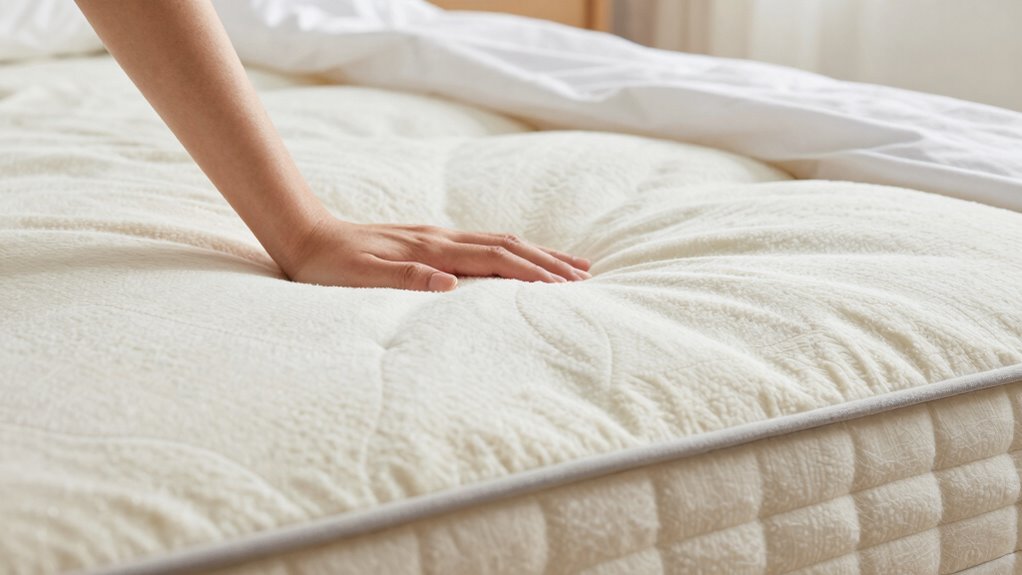
Choosing the right mattress starts with understanding how you sleep. Your sleep environment, including temperature and noise levels, impacts comfort and helps you identify what feels best. When testing mattresses, lie down in your usual sleep position for at least 10-15 minutes to gauge support and comfort. Pay attention to how your body feels—are pressure points relieved? Feel for proper spinal alignment. Consider mattress longevity; a good fit means it maintains comfort over time. Don’t rush your decision—try different firmness levels and materials. Use trial periods when available to test the mattress at home. Ultimately, selecting a mattress that suits your sleep style ensures better rest, reduces discomfort, and enhances your sleep environment’s overall quality.
What Questions Should You Ask When Shopping for a Mattress?
When shopping for a mattress, asking the right questions can make all the difference in finding one that truly suits your needs. Consider asking:
- What sleep technology is used to enhance comfort and support?
- Are eco friendly materials incorporated in the mattress?
- How does the mattress respond to different sleeping positions?
- What’s the trial period and return policy?
Knowing about sleep technology helps you understand features like cooling or motion isolation. Inquiring about eco friendly materials ensures you choose a sustainable option. Understanding how the mattress adapts to your sleep style can prevent future discomfort, and clear policies give peace of mind. Asking these questions helps you make an informed decision, ensuring your new mattress supports a restful night for years to come.
Tips for Communicating Your Firmness Preferences to Retailers

Effective communication with retail staff is key to finding a mattress that matches your firmness preferences. Clearly describe what “firm” or “soft” feels like to you, and don’t hesitate to ask about sleep trials. A generous sleep trial allows you to test different firmness levels in your own space, ensuring you get the right feel. Also, inquire about mattress warranties—these protect you if the firmness changes over time or if the mattress doesn’t meet your expectations. Be specific about your preferences, and listen carefully to staff recommendations. Remember, firmness is subjective, so use the trial period to confirm your choice. Good communication helps you navigate options confidently and avoid misunderstandings about your mattress’s comfort level.
Frequently Asked Questions
How Does Mattress Firmness Affect Spinal Alignment During Sleep?
Your mattress firmness directly impacts your spinal support and pressure points during sleep. A firmer mattress keeps your spine aligned by preventing sagging, reducing strain on pressure points like hips and shoulders. Conversely, a mattress that’s too soft may cause your spine to curve unnaturally, leading to discomfort. Finding the right firmness guarantees proper spinal support, minimizes pressure points, and promotes restful, pain-free sleep.
Can Mattress Firmness Influence Allergy Symptoms or Air Quality?
Yes, mattress firmness can influence allergy symptoms and air quality. A softer mattress may trap more allergy triggers like dust mites and mold, worsening symptoms. Conversely, a firmer mattress can promote better air circulation and reduce trapped allergens. Additionally, choosing a mattress with good air filtration properties helps keep airborne irritants at bay. Regularly cleaning and using hypoallergenic covers also improves air quality and minimizes allergy flare-ups during sleep.
Is a Firmer Mattress Better for Back Pain Relief?
A firmer mattress can be better for back pain if it provides proper spinal alignment and support. Look for foam density, as higher-density foams offer more durability and support, reducing pressure points. You might also consider adding a memory foam or latex mattress topper to customize firmness and comfort. Remember, the best choice depends on your body, sleeping position, and personal preferences, so try different options to find what works best.
How Often Should I Replace My Mattress Based on Firmness Changes?
You should replace your mattress every 7 to 10 years, especially as firmness changes due to wear. Over time, mattress materials like memory foam or latex break down, affecting your sleep cycles and support. If you notice your mattress feels less supportive, causes discomfort, or your sleep quality declines, it’s a sign to upgrade. Regularly evaluating firmness and comfort helps guarantee you get restful sleep and prevent back pain.
Do Luxury Mattresses Maintain Firmness Longer Than Budget Options?
Luxury mattresses often maintain firmness longer than budget options because they use premium materials like high-density foams and advanced support layers. These luxury materials resist sagging and indentations better, offering lasting comfort. In contrast, budget durability tends to decline faster as cheaper materials wear out more quickly. So, if you want a mattress that keeps its firmness over time, investing in a luxury model is a smarter choice.
Conclusion
So, next time you see “medium” on a mattress tag, remember—it’s just a clever marketing term, not a universal truth. Don’t fall for the illusion of clarity; after all, your comfort depends on understanding what’s beneath the label. Ask questions, test, and don’t settle for the “middle ground” if it doesn’t support your sleep style. Because in the world of mattresses, “medium” is really just a fancy way of saying “we’re guessing.”