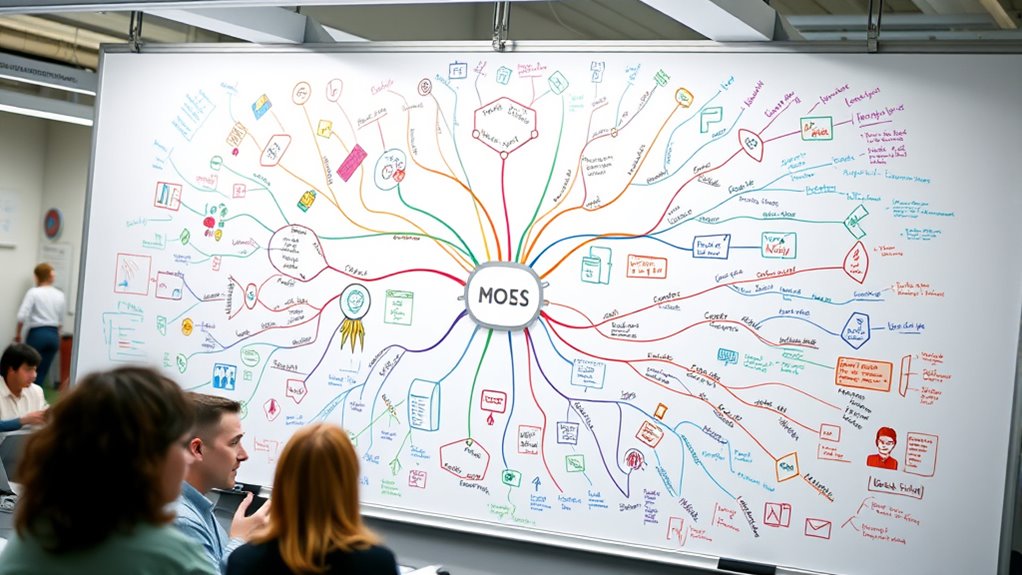

Mind mapping is a visual thinking tool that helps you organize complex ideas by creating colorful, free-flowing diagrams. It encourages you to connect concepts naturally, making problem-solving more intuitive. By breaking down challenging issues into manageable parts and using visual cues like colors and shapes, you stimulate both brain hemispheres. This boosts your creativity and memory, making ideas easier to grasp. Keep exploring, and you’ll discover how powerful mind mapping can be for tackling even the toughest problems.
Key Takeaways
- Mind mapping visually organizes complex information, making it easier to identify connections and underlying issues.
- It encourages free association, fostering innovative solutions through non-linear thinking.
- Using colors and spatial arrangements enhances memory retention and highlights critical problem areas.
- Mind maps break down complex challenges into manageable parts, aiding in systematic analysis and prioritization.
- They support iterative refinement, allowing continuous development of strategies and solutions.

Have you ever struggled to organize your ideas or remember important information? If so, you’re not alone. Many people find it challenging to sort through complex thoughts or generate new ideas efficiently. That’s where mind mapping can make a real difference. This visual thinking tool taps into your natural way of processing information, helping you see the bigger picture and connect ideas more easily. One of the key benefits of mind mapping is its ability to enhance your brainstorming techniques. Instead of trying to hold everything in your head or jotting down a linear list, you create a dynamic diagram that lays out your thoughts visually. This process encourages free association, making it easier to uncover new angles or solutions you might not have considered otherwise. As you start to map out your ideas, you’ll notice your creativity enhancement kicks in—you’re no longer confined by traditional note-taking methods. Instead, you can freely explore different branches of thought, linking concepts in ways that feel natural. The act of drawing out these connections stimulates both hemispheres of your brain, fostering a more innovative mindset. When tackling complex problems, mind mapping transforms the way you approach challenges. Instead of feeling overwhelmed, you gain clarity by breaking the problem into smaller, more manageable parts. Each branch of your map can represent a different aspect or potential solution, allowing you to see how everything fits together. This visual structure helps you prioritize tasks, identify gaps in your knowledge, and develop strategies more effectively. Plus, because mind maps are flexible and easily adjustable, you can refine your ideas as you progress. You might start with a rough outline and then add details, color-code branches for emphasis, or reorganize sections to improve flow. The visual nature of mind mapping makes it easier to remember information too—your brain associates concepts with colors, shapes, and spatial relationships, which boosts retention. Whether you’re working on a project, preparing for a presentation, or trying to solve a tricky problem, mind mapping offers a clear, engaging way to harness your thinking power. It’s an active process that keeps you involved, making ideas more tangible and accessible. By integrating mind mapping into your routine, you’ll find that your ability to generate ideas, solve problems, and retain information improves considerably. It’s a simple yet powerful technique that aligns with how your brain naturally processes information, turning complex challenges into organized, manageable visuals. So, next time you’re stuck or feeling overwhelmed, give mind mapping a try—your creativity and clarity will thank you.
Frequently Asked Questions
How Can Mind Mapping Improve Team Collaboration?
You can boost team collaboration by using mind mapping as it incorporates collaborative techniques that encourage everyone’s input. It visually organizes ideas, making communication enhancement easier and more effective. When you create a shared mind map, your team members can see connections, add their thoughts, and build on each other’s ideas. This approach fosters a more inclusive environment, improves understanding, and streamlines problem-solving, ultimately strengthening your team’s cohesion.
What Are the Best Digital Tools for Mind Mapping?
Your mind is an unstoppable force, so choosing the right digital brainstorming tools can elevate your ideas to new heights. When exploring the best digital tools for mind mapping, consider premier mind mapping software like XMind, MindMeister, or Coggle. These platforms make organizing thoughts effortless. They’re user-friendly, collaborative, and packed with features, transforming your chaotic ideas into clear, actionable plans—making complex problems feel like simple puzzles.
Can Mind Mapping Assist in Creative Brainstorming Sessions?
Yes, mind mapping can greatly assist in creative brainstorming sessions. It encourages visual brainstorming, helping you organize ideas more effectively. As you create a mind map, you stimulate idea generation by making connections between concepts, which sparks creativity. This visual approach keeps your thoughts flexible and accessible, making it easier to explore new angles and develop innovative solutions quickly during brainstorming.
How to Effectively Prioritize Ideas Within a Mind Map?
You’re facing an epic mountain of ideas—how do you conquer it? Start by establishing a clear idea hierarchy, giving top priority to the most impactful concepts. Use prioritization techniques like dot voting or ranking to sort ideas quickly. Focus your energy on high-value ideas first, then refine the rest. By aligning your mind map with these techniques, you streamline decision-making and turn chaos into a well-organized roadmap for action.
Are There Any Common Mistakes to Avoid When Creating a Mind Map?
When creating a mind map, watch out for common pitfalls like clutter and losing clarity. Avoid overloading branches with too many ideas, which can make your map confusing. Keep your labels clear and concise to guarantee easy understanding. Don’t stray from your main theme, and be cautious about inconsistent color coding. Staying focused and organized helps prevent clarity issues, making your mind map a more effective tool for problem-solving.
Conclusion
By harnessing mind mapping, you turn chaos into clarity, much like a modern-day Leonardo sketching ideas on a digital tablet. This visual thinking tool helps you navigate complex problems with ease, connecting dots like a detective in a noir film. As you continue to practice, you’ll find solutions emerging faster than you can say “Eureka.” So, embrace this technique and watch your problem-solving skills evolve from dial-up frustrations to high-speed breakthroughs.