
Mindfulness meditation helps you stay present by focusing on the here and now. It teaches you to observe your thoughts and emotions without judgment, promoting inner peace. By paying attention to your breathing and surroundings, you can manage distractions more effectively. This practice empowers you to recognize and respond to your feelings thoughtfully, enhancing your overall well-being. Discover how you can integrate mindfulness into your daily life for even greater benefits.
Key Takeaways
- Mindfulness meditation involves focusing on the present moment, observing thoughts and emotions without judgment.
- Find a quiet space, sit comfortably, and concentrate on deep, slow breathing.
- Redirect your attention gently when distractions or wandering thoughts arise during meditation.
- Practice mindfulness in daily activities like walking or eating to enhance awareness of your surroundings.
- Regular mindfulness practice leads to reduced anxiety and improved emotional resilience over time.
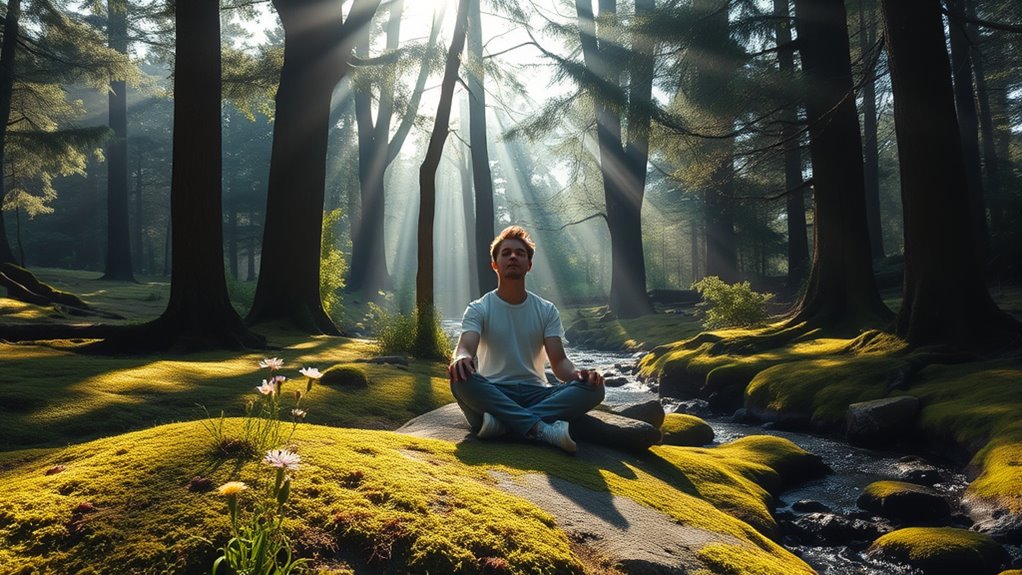
Have you ever found yourself overwhelmed by the chaos of everyday life? You’re not alone. Many people struggle to find balance amid the noise of responsibilities, technology, and constant distractions. This is where mindfulness meditation can step in and make a profound difference. By practicing mindfulness, you can learn to stay present and cultivate a sense of inner peace.
Mindfulness meditation focuses on being aware of the here and now. It encourages you to observe your thoughts, emotions, and surroundings without judgment. Rather than getting swept away by the whirlwind of your daily routine, you can develop the ability to pause, breathe, and simply be. When you embrace this practice, you’ll notice how much clarity and calmness it brings to your life. Mindfulness is an effective way to reclaim focus, allowing you to cut through the noise of modern life.
Mindfulness meditation invites you to embrace the present, fostering clarity and calm amidst life’s chaos.
To get started, find a quiet space where you won’t be disturbed. Sit comfortably, close your eyes, and take a deep breath. Feel the air fill your lungs, then exhale slowly. As you breathe, focus your attention on the sensations in your body, the sounds around you, or the rhythm of your breath. It’s normal for your mind to wander. When it does, gently guide your attention back to your chosen focal point. This is the essence of mindfulness—acknowledging your thoughts and then letting them go.
As you continue to practice, you’ll discover that moments of mindfulness can occur anywhere. Whether you’re walking, eating, or even washing dishes, you can engage fully with the present moment. Notice the textures, smells, and sounds around you. This awareness helps you appreciate life’s simple pleasures and reduces stress.
Mindfulness meditation isn’t just about relaxation; it’s a tool for personal growth. By observing your thoughts and emotions, you’ll become more attuned to your reactions and patterns. This awareness can empower you to make healthier choices and respond thoughtfully to challenges rather than react impulsively.
The benefits of mindfulness extend beyond the meditation cushion. As you integrate this practice into your daily life, you’ll likely find yourself feeling less anxious and more centered. You’ll cultivate resilience, allowing you to navigate life’s ups and downs with greater ease.
Frequently Asked Questions
Can Mindfulness Meditation Help With Anxiety and Stress Relief?
Yes, mindfulness meditation can definitely help with anxiety and stress relief. When you practice mindfulness, you learn to focus on the present moment, which can reduce racing thoughts and overwhelming feelings. As you become more aware of your thoughts and emotions, you can respond to them with greater calmness. Regular practice helps train your mind to manage stress better, allowing you to approach life’s challenges with a clearer perspective and improved resilience.
How Long Should I Meditate Each Day for Benefits?
You don’t need to meditate for hours to feel the benefits. Even just 10 to 15 minutes a day can make a significant difference. Think of it like exercise; a short, focused workout can be just as effective as a long one. Start small and see how it fits into your routine. As you get comfortable, you can gradually increase the time, discovering what truly works for you and enhances your well-being.
Is Mindfulness Meditation Suitable for Children and Teenagers?
Yes, mindfulness meditation is suitable for children and teenagers. It can help them manage stress, improve focus, and enhance emotional regulation. By practicing mindfulness, they learn to be present and develop a greater awareness of their thoughts and feelings. You can start with short sessions, making it engaging and fun. As they grow, you can gradually increase the duration. It’s a valuable tool for their overall well-being and personal growth.
What Are Common Misconceptions About Mindfulness Meditation?
Many think mindfulness meditation is just about sitting in silence or clearing your mind completely, like trying to catch smoke with your bare hands. In reality, it’s about observing thoughts without judgment and embracing the present moment. Some believe it’s only for relaxation, when it can also boost focus and emotional resilience. Others worry it takes too long, but even a few minutes can spark positive change in your day.
Can I Practice Mindfulness Meditation While Doing Other Activities?
Yes, you can practice mindfulness meditation while doing other activities! You don’t need to sit in silence to be mindful. Whether you’re walking, eating, or even washing dishes, focus on your senses and the present moment. Notice the sounds, smells, and sensations around you. By integrating mindfulness into daily tasks, you enhance your awareness and appreciation of life. Just remember to stay attentive and engage fully with whatever you’re doing in that moment.
Conclusion
In the hustle and bustle of life, you might find that mindfulness meditation offers a gentle reprieve from the chaos. By embracing the present moment, you’re not just avoiding distractions; you’re gracefully inviting peace into your life. So, take a deep breath and let the worries fade into the background. As you cultivate this serene awareness, you’ll discover that staying present isn’t just a practice; it’s a beautiful dance with tranquility that enriches your everyday existence.