
To quickly size your mini split, multiply each room’s square footage by 20 BTUs as a simple shortcut—you’ll get a good estimate to avoid overspending or undercooling. Keep in mind, factors like insulation, sun exposure, and climate influence the actual needs, so professional assessment is best for precise sizing. If you want to maximize comfort and efficiency without costly mistakes, there’s more to know that will help you get it just right.
Key Takeaways
- Use the quick formula: multiply room square footage by 20 BTUs for an accurate, efficient mini split size.
- Proper sizing prevents short cycling, ensures consistent comfort, and reduces energy waste.
- Oversized units cause frequent on/off cycles, increasing wear and lowering efficiency.
- Undersized systems struggle to heat or cool effectively, leading to discomfort and higher utility bills.
- Always consider additional factors like insulation, sun exposure, and climate for precise BTU calculation.
Why Proper Mini Split Sizing Is Key to Comfort and Savings
Properly sizing your mini split is essential because an undersized unit won’t cool or heat your space effectively, while an oversized one can lead to short cycling and wasted energy. When your system is correctly sized, it maintains consistent comfort levels, reducing strain on components like the thermostat calibration, which helps regulate temperature accurately. Duct efficiency also plays a role; well-designed ducts minimize airflow loss, ensuring your mini split operates at peak performance. If the system is too large, it will turn on and off frequently, increasing energy bills and reducing lifespan. Conversely, an undersized unit struggles to keep up, leading to discomfort. Proper sizing ensures your mini split runs smoothly, saves energy, and keeps your home comfy year-round. Additionally, system maintenance plays a crucial role in maintaining optimal performance and efficiency over time. Regular inspections and cleaning can prevent issues related to improper sizing, ensuring your system continues to operate effectively. A well-maintained system also promotes better energy efficiency, further extending savings and comfort. Taking the time to get the right size minimizes potential system issues and maximizes your investment.
How to Calculate the Right BTU for Your Home

Calculating the right BTU (British Thermal Units) for your home starts with understanding your space’s size and characteristics. Measure each room’s square footage and consider factors like ceiling height, insulation quality, and sun exposure. These details influence the cooling or heating load. Use a simple formula or online calculator to estimate the needed BTUs, but remember, a professional assessment offers better accuracy. Proper sizing ensures your mini split operates efficiently, reducing energy bills and wear. Also, incorporate maintenance routines into your plan to keep the system running effectively, avoiding overworking or underperforming units. When you know your BTU requirements, you can confidently select the right mini split size, making installation tips easier to follow and ensuring long-term comfort. Additionally, understanding your system’s cooling capacity can help optimize performance and prevent issues. Regularly checking and replacing filters, such as HEPA filters, can enhance efficiency and indoor air quality, further supporting the system’s reliability. To further improve efficiency, consider system performance factors like airflow and refrigerant levels, which are crucial for optimal operation. Maintaining proper insulation not only reduces energy loss but also lessens the workload on your system, leading to better overall efficiency.
Quickly Size Your Mini Split Using a BTU Shortcut
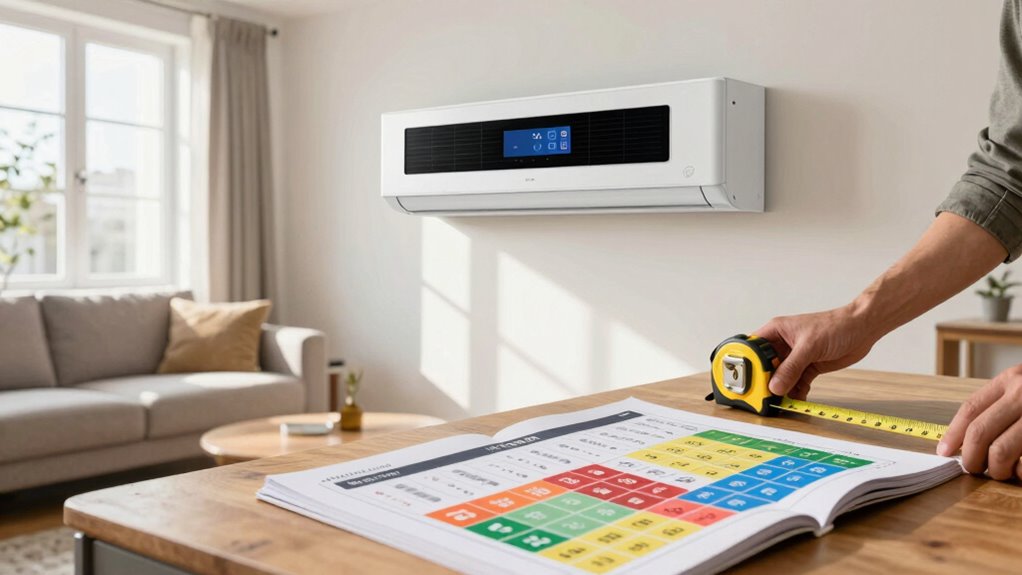
If you need a quick way to size your mini split, using a simple BTU shortcut can save you time. Just multiply your room’s square footage by 20 BTUs for a rough estimate. This method helps you pick an energy-efficient system without complex calculations. Keep these installation tips in mind to optimize performance:
Quickly size your mini split by multiplying room square footage by 20 BTUs for an easy estimate.
- Ensure proper sizing to avoid energy waste
- Seal leaks for better efficiency
- Use the right mounting location
- Maintain clear airflow around the unit
- Regularly clean filters for maximum cooling
This shortcut simplifies the process, giving you confidence in your choice. It’s perfect when you’re pressed for time or want a quick reference. Remember, an accurately sized mini split enhances energy efficiency and comfort, preventing costly regrets later. Proper diagnostics and troubleshooting can help ensure your system operates at peak performance.
Common Mini Split Sizing Mistakes to Avoid
Choosing the right mini split size is vital for ideal comfort and energy savings, but many people make common mistakes that can undermine these goals. One mistake is ignoring ductless compatibility, which affects how well your system performs and how easily it can be installed. Installing a unit that’s too small or too large can lead to uneven temperatures and higher energy bills. Additionally, installation pitfalls, like improper placement or inadequate sealing, can cause the system to work harder and reduce efficiency. Avoid sizing based solely on square footage; instead, consider your specific space and insulation. Proper sizing techniques are essential for maximizing both comfort and efficiency in your cooling system. To make informed decisions, accurate load calculations should be part of your assessment process. Moreover, understanding professional recommendations can help ensure you select the appropriate system size and type, reducing the risk of costly mistakes. Incorporating energy efficiency considerations into your decision can further optimize long-term savings and performance. Being aware of system capacity errors can also help prevent mismatched sizes that compromise overall performance.
What Factors Affect Your Mini Split’s BTU Needs

Several key factors influence your mini split’s BTU requirements, guaranteeing it provides adequate heating or cooling for your space. Recognizing these factors helps you avoid over or under-sizing, which can lead to discomfort or higher energy bills. Consider the room size, insulation quality, sun exposure, ceiling height, and local climate. Your diy installation skills and the brand comparisons you make also impact the system’s effectiveness. Poor insulation or excessive sunlight can increase BTU needs, while well-insulated spaces may require less. Choosing the right brand with reliable performance ensures your mini split meets your specific needs without waste. Being aware of these factors helps you select a unit with the perfect BTU capacity, maximizing comfort and efficiency from the start. Understanding the mini split sizing process can prevent costly mistakes and ensure optimal operation. Proper system maintenance and regular checks can significantly enhance the system’s performance and longevity. For instance, factors like air quality and regular filter cleaning play a vital role in maintaining efficiency over time. Additionally, considering the energy efficiency ratings can help you choose a unit that reduces ongoing operating costs.
How Incorrect Sizing Impacts Comfort and Energy Bills
When your mini split is the wrong size, you’ll notice uneven temperature control that makes parts of your space uncomfortably cold or hot. It also causes your system to work harder than necessary, leading to higher energy bills. Proper sizing is essential to keep your home comfortable and save money on energy costs. Additionally, selecting a unit with the appropriate cooling capacity ensures optimal performance and longevity of the system. Ensuring proper airflow distribution can prevent overworking the unit and improve overall efficiency. Avoiding AI-driven design mistakes in sizing can also prevent future issues and ensure your system operates efficiently over time. Recognizing the importance of system efficiency can help in making informed sizing decisions for long-term comfort and savings.
Uneven Temperature Control
Have you ever noticed uneven temperatures in different rooms despite running your mini split? Incorrect sizing can create zonal zones with significant temperature disparity, leaving some areas uncomfortably hot or cold. This inconsistency can lead to frustration and discomfort, making it hard to enjoy your home. When your system isn’t properly matched to your space, it struggles to maintain steady temperatures, especially in larger or irregularly shaped rooms. You might find yourself constantly adjusting the thermostat or feeling guilty about wasted energy. The imbalance not only compromises your comfort but also causes your system to work harder, increasing wear and tear.
- Frustration from inconsistent comfort
- Wasted energy in unresponsive zones
- Increased frustration during extreme weather
- High energy bills from overworking the system
- Feelings of regret for poor sizing choices
Increased Energy Consumption
Improperly sized mini splits often cause your system to work harder than necessary, leading to increased energy consumption. When your unit is too small, it runs constantly trying to reach the desired temperature, which wastes energy and reduces efficiency. Conversely, an oversized system cycles on and off frequently, causing unnecessary wear and tear. This inefficiency not only hikes up your energy bills but also shortens your appliance lifespan. Overworking your mini split strains its components, increasing the risk of breakdowns and costly repairs. Correct sizing guarantees your system operates at peak energy efficiency, reducing utility costs and prolonging its lifespan. Properly sized units maintain consistent comfort without excessive energy use, making them a smarter, more economical choice in the long run.
When to Consult a Professional for Accurate Sizing
While small mistakes in sizing a mini split can lead to reduced efficiency and comfort, it’s often best to consult a professional when in doubt. If you’re considering DIY installation or want to ensure your unit fits aesthetic considerations, expert advice can save you headaches later. A professional can accurately assess your space, accounting for factors like insulation and airflow, which are easy to overlook. They can also help you avoid costly mistakes that impact performance. Trusting a pro guarantees your mini split is sized correctly, preventing short-cycling or inadequate cooling. Remember, investing in proper sizing now avoids regrets and extra expenses down the line.
- Avoid frustration from ill-fitting units
- Maximize energy savings and comfort
- Prevent costly mistakes
- Achieve seamless integration with your space
- Gain peace of mind with expert guidance
Tips to Keep Your Mini Split Running Efficiently Over Time
To keep your mini split running efficiently over time, regular maintenance is essential. Follow simple maintenance routines like cleaning or replacing filters monthly to ensure proper airflow. Good ventilation tips include ensuring vents are unobstructed and maintaining consistent indoor air quality, which helps prevent strain on the unit. Periodically inspect the outdoor unit for debris, dirt, or leaves, and clear any obstructions to maximize airflow. Check refrigerant lines for leaks or damage, and schedule professional inspections annually. Proper ventilation prevents moisture buildup and mold, extending your system’s lifespan. Keeping your mini split well-maintained not only boosts efficiency but also reduces energy costs and prevents unexpected breakdowns. Consistent care guarantees your system operates smoothly, year-round.
Frequently Asked Questions
Can DIY Mini Split Sizing Lead to Long-Term Problems?
DIY mini split sizing can definitely lead to long-term problems if you’re not careful. Common DIY pitfalls include inaccurate sizing, which causes inefficient cooling or heating and increased energy bills. Without proper sizing accuracy, your system may struggle to maintain comfort or wear out prematurely. It’s best to consult a professional or use reliable tools to make sure you select the right BTU capacity, avoiding costly mistakes down the line.
How Often Should Mini Split BTU Needs Be Reassessed?
You should reassess your mini split’s BTU needs every few years or when significant changes occur, like home renovations or new insulation. This guarantees peak energy efficiency, preventing waste and reducing your energy bills. Ignoring these updates can lead to increased costs and inefficient cooling or heating. Regularly evaluating your system’s size keeps it running smoothly, saving you money and ensuring comfort without sacrificing performance.
Are There Specific Brands Better for Small Spaces?
You should look for brands with a strong reputation for reliability and efficiency, especially for small spaces. Top brands like Mitsubishi, Daikin, and Fujitsu are known for quality and performance, making them excellent choices. While they might cost more initially, their durability and energy efficiency can save you money long-term. Consider your budget and prioritize brands with good reviews to guarantee you get the best value and performance for your small space.
What Are Signs of an Incorrectly Sized Mini Split?
Did you know improper mini split sizing can increase energy bills by up to 30%? If your unit struggles to cool or heat, it’s a sign it’s incorrectly sized. You might also notice uneven temperatures or excessive noise. These issues harm energy efficiency and can lead to installation challenges. To avoid this, guarantee your mini split matches your space’s needs, preventing frustration and costly adjustments later.
Does Climate Change Affect Mini Split Sizing Requirements?
Climate change impacts your mini split sizing requirements by altering local temperature patterns. You should consider climate impact when planning your system, as rising temperatures may increase cooling needs. Sizing adjustments become essential to guarantee efficiency and comfort. Keep in mind that older models might struggle under new conditions, so regularly assess your system’s capacity and consult professionals to adapt your mini split for evolving climate demands.
Conclusion
Getting your mini split size right is essential for comfort and savings. Remember, even in this age of smartphones and smart homes, a proper BTU calculation is like having a trusty quill—timeless and crucial. Don’t rush the process or guess—use the shortcut, avoid mistakes, and consider professional advice when needed. With the right size, your AC will perform like a well-oiled machine, keeping your home cozy and energy bills in check for many moons to come.