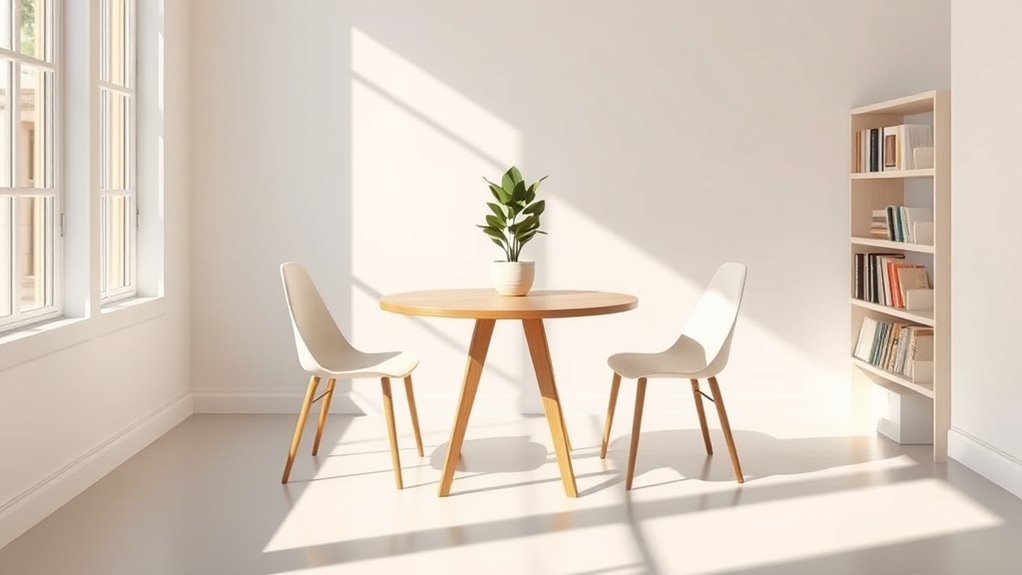

Minimalist living is all about decluttering your life to support sustainability and boost your overall well-being. By reducing your possessions, you lighten your mental load and create space for what truly matters. This intentional approach helps you focus on quality over quantity, making environmentally friendly choices that lower your carbon footprint. Simplifying your environment not only improves your mental clarity but also enhances your financial freedom. Discover how embracing minimalism can transform your life even further.
Key Takeaways
- Minimalist living encourages decluttering, reducing mental and emotional baggage while promoting mental clarity and emotional relief.
- Prioritizing quality over quantity in personal possessions supports sustainable practices and lessens environmental impact.
- Reducing material belongings lowers carbon footprint and diminishes waste, contributing to a healthier planet.
- Financial freedom gained from limited purchases allows for investment in meaningful experiences rather than material goods.
- A decluttered space fosters peace, enhances focus, and aligns with personal values of sustainability and intentional living.
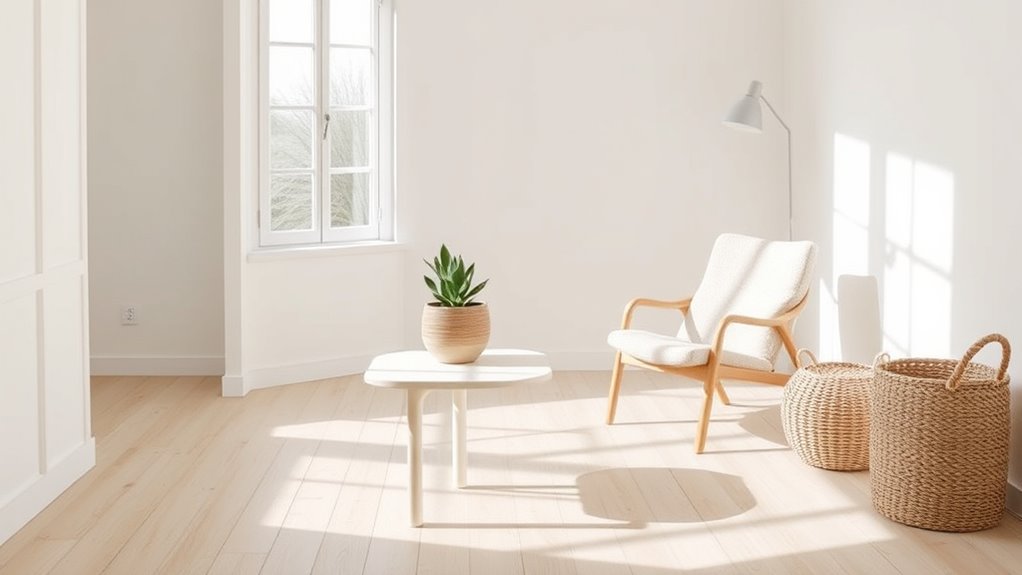
Have you ever considered how much your possessions weigh you down? It’s easy to overlook, but the clutter in your life can create mental and emotional baggage. Every item you own requires attention, space, and maintenance. When you hold onto more than you need, it can feel overwhelming. Minimalist living encourages you to simplify your surroundings and, in turn, your life. By decluttering, you not only lighten your load but also foster a more sustainable lifestyle.
Consider how your possessions may be weighing you down; decluttering can lead to a lighter, more sustainable life.
When you start evaluating your possessions, ask yourself what truly adds value to your life. You might find that many items are remnants of past decisions or gifts that no longer resonate with you. By letting go of these unneeded items, you’re making room for what genuinely matters. This doesn’t mean you have to get rid of everything; rather, focus on quality over quantity. Each piece should serve a purpose or evoke joy. This mindset promotes a more intentional approach to consumption, which is vital for sustainability.
As you go through your belongings, consider where your items come from. Many products contribute to environmental degradation through resource extraction and waste. By minimizing your possessions, you’re not just decluttering; you’re also reducing your carbon footprint. When you choose to buy less, you support a more sustainable economy. Opting for quality items that last longer helps conserve resources and reduces the demand for fast fashion and disposable goods.
Embracing minimalist living can also lead to savings. When you limit your purchases, you have more financial freedom. You can invest in experiences rather than things, which often brings more fulfillment. Imagine spending your weekends exploring nature or learning a new skill instead of organizing clutter. The joy derived from experiences tends to outweigh that of material goods.
Additionally, a decluttered space can enhance your mental clarity. Without distractions, you can concentrate on what truly matters, be it your work, relationships, or personal growth. A minimalist environment fosters peace and allows you to be present in the moment. Incorporating innovative design ideas can also support your minimalist lifestyle by creating functional spaces that enhance your home.
Ultimately, minimalist living isn’t just about having fewer things; it’s about creating a life that aligns with your values. By decluttering, you embrace sustainability and cultivate a sense of freedom. Start today, and you’ll soon realize how liberating it is to live with less. Your mind and the planet will thank you.
Frequently Asked Questions
How Can Minimalist Living Improve Mental Health and Well-Being?
Minimalist living can considerably improve your mental health and well-being by reducing stress and creating a more peaceful environment. When you simplify your space, you eliminate distractions and clutter, allowing your mind to focus on what truly matters. You’ll find clarity and a sense of control over your life, leading to increased happiness. Plus, fewer possessions mean less maintenance and worry, so you can enjoy more time doing what you love.
What Are the First Steps to Start Decluttering?
To start decluttering, think of it like a spring cleaning for your soul. First, choose a small area, like a drawer or a shelf. Next, take everything out and sort items into keep, donate, or discard piles. Be honest about what you truly need. Set a timer for 15-30 minutes to keep focused. Finally, celebrate your progress, even if it’s just a tiny space—every little bit counts in creating a more peaceful environment!
How Do I Maintain a Minimalist Lifestyle Long-Term?
To maintain a minimalist lifestyle long-term, regularly assess your belongings and prioritize essentials. Set boundaries for new purchases, asking yourself if an item truly adds value. Create a routine for decluttering, perhaps monthly or seasonally, to keep things in check. Embrace experiences over material goods, which can shift your focus. Finally, surround yourself with like-minded individuals who inspire and support your minimalist journey, making it easier to stay committed.
Is Minimalist Living Suitable for Families With Children?
Absolutely, minimalist living can be incredibly beneficial for families with children! Imagine a home so serene that it feels like a peaceful sanctuary. By embracing minimalism, you’re teaching your kids the value of experiences over possessions. You’ll find that less clutter means more room for creativity and play. Plus, it encourages responsibility as they learn to care for their belongings. You can create a harmonious environment together, making family life more enjoyable.
Can Minimalist Living Save Me Money Over Time?
Yes, minimalist living can save you money over time. By focusing on quality over quantity, you’ll invest in fewer, but more durable items. This leads to less frequent replacements and lower overall spending. You’ll also find that decluttering often reveals items you forgot you had, reducing unnecessary purchases. Plus, you’ll likely spend less on storage solutions and maintenance for excess belongings, freeing up your budget for experiences rather than things.
Conclusion
Embracing minimalist living not only simplifies your life, but it also contributes to a more sustainable future. Did you know that the average American throws away about 4.4 pounds of trash every day? By decluttering and focusing on what truly matters, you can reduce waste and lessen your environmental impact. So, as you let go of excess, remember: each item you keep or discard can make a difference. Start your journey towards a more mindful, sustainable lifestyle today!