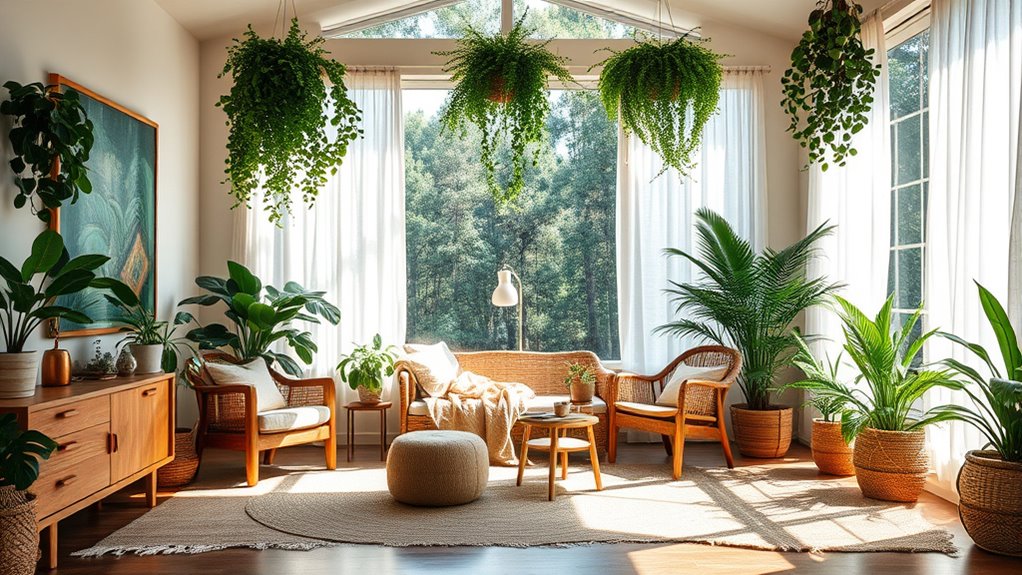

Nature-inspired interior design enhances your wellbeing by incorporating plants, earthy colors, and natural materials. You can improve air quality and mood with greenery, while soft hues like greens and browns evoke tranquility. Utilize wooden furniture and stone accents to create warmth and connection to nature. Maximizing natural light with sheer curtains or mirrors can invigorate your space. By arranging your space thoughtfully, you can transform your home into a soothing retreat. Discover more tips for an inviting sanctuary.
Key Takeaways
- Incorporate plants throughout your space to boost air quality and enhance mood, fostering a calming connection to nature.
- Use earthy colors like greens and browns to create a tranquil atmosphere that mimics the outdoors and promotes relaxation.
- Select natural materials such as wood and stone to create a warm, inviting environment that connects you to the natural world.
- Maximize natural light with sheer curtains and mirrors to improve mental health and create a bright, uplifting living space.
- Arrange spaces thoughtfully with cozy corners for reading and meditation to encourage mindfulness and serve as retreats from daily stress.
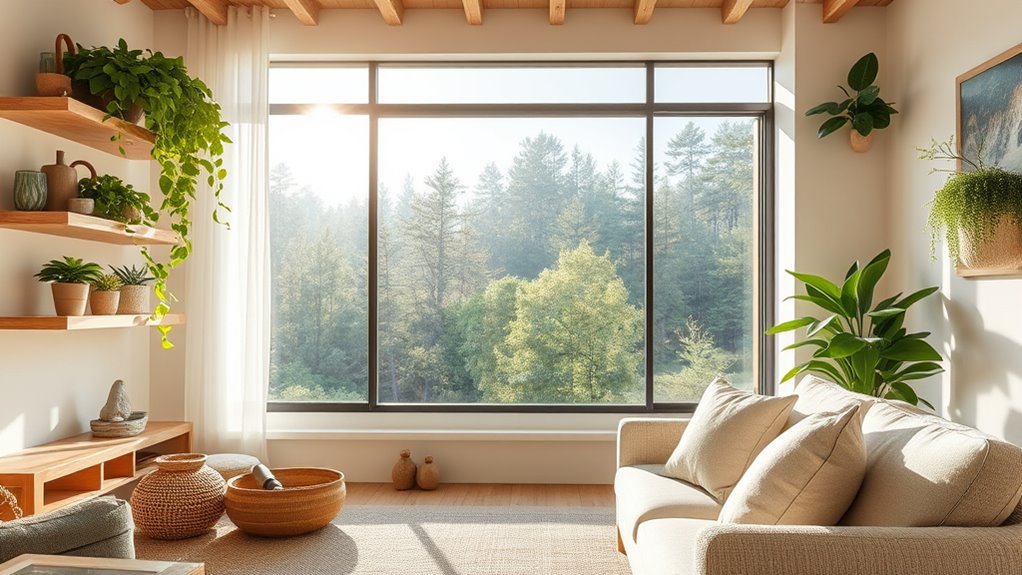
How can your living space enhance your overall wellbeing? The answer lies in the concept of nature-inspired interior design. By integrating elements from nature into your home, you can create an environment that promotes relaxation, reduces stress, and boosts your mood. Imagine walking into a room filled with natural light, greenery, and earthy colors. It feels invigorating, doesn’t it?
To start, consider incorporating plants into your decor. Studies show that having greenery around can improve air quality and elevate your mood. Place potted plants on windowsills, hang them in macramé holders, or create a small indoor garden. Not only do these plants look beautiful, but they also connect you to the natural world, reminding you of the calming effects nature has to offer.
Next, think about the colors you use in your living space. Earthy tones like greens, browns, and soft blues can evoke feelings of tranquility. These colors mimic the outdoors and help create a serene atmosphere. You might paint your walls in a soft sage green or introduce decorative items in natural hues. This subtle shift can markedly impact how you feel in your space.
Another powerful aspect of nature-inspired design is the use of natural materials. Opt for wooden furniture, stone accents, or textiles made from organic fibers. These materials not only contribute to a warm, inviting aesthetic but also ground you in reality, reminding you of the beauty of the world outside. When you touch a wooden table or sit on a bamboo chair, you can experience a tactile connection to nature that enhances your sense of wellbeing. Additionally, incorporating backyard greenhouses can provide a direct source of fresh produce and a connection to nature.
Don’t forget the importance of natural light. It’s essential for your mental health. Try to maximize the sunlight that enters your home by using sheer curtains or strategically placing mirrors to reflect light. You’ll notice the difference it makes in your mood and energy levels. The warmth of natural light can invigorate your spirit and create a welcoming atmosphere.
Lastly, consider how you arrange your space. An open layout with designated cozy corners for relaxation encourages mindfulness and peace. Create a reading nook by a window, or set up a space for meditation. These small adjustments can transform your home into a sanctuary, offering you a daily retreat from the chaos of life.
With these elements, your living space can become a haven for wellbeing, nurturing your mind, body, and spirit.
Frequently Asked Questions
How Can I Incorporate Nature Into a Small Apartment?
You can incorporate nature into your small apartment by adding houseplants, like succulents or snake plants, which require minimal space. Use natural materials for your decor, such as wood or stone accents. Hang artwork featuring landscapes or botanical prints to bring the outdoors in. Consider using soft, earthy colors for your walls and textiles. Finally, maximize natural light with sheer curtains to create an airy atmosphere that connects you with nature.
What Are the Best Plants for Improving Indoor Air Quality?
If your home’s air quality feels as stale as a forgotten loaf of bread, consider adding some plants to freshen it up. Spider plants, peace lilies, and snake plants are among the best for improving indoor air. They not only filter toxins but also release oxygen, making your space feel vibrant. Place them in bright spots, and you’ll enjoy cleaner air while adding a touch of greenery that brightens your mood and environment.
Can Nature-Inspired Design Improve Productivity in Workspaces?
Yes, nature-inspired design can definitely improve productivity in workspaces. By incorporating elements like plants, natural light, and earthy colors, you create an environment that boosts your mood and focus. Studies show that greenery reduces stress and enhances creativity, making it easier for you to concentrate. When you feel connected to nature, it energizes you and fosters a sense of well-being, helping you stay productive throughout your workday.
What Colors Are Most Calming for Nature-Inspired Interiors?
Soft blues, gentle greens, and warm earth tones are the most calming colors for nature-inspired interiors. These hues evoke the tranquility of natural landscapes, helping you feel relaxed and focused. Light shades of gray can also create a serene backdrop, allowing other elements to shine. When you incorporate these colors into your space, you’ll find it easier to unwind and enhance your overall sense of well-being. So, choose wisely!
How Do I Maintain Indoor Plants for Optimal Health?
Think of indoor plants as your green companions, thriving on your care. To keep them healthy, water them when the top inch of soil feels dry, ensuring proper drainage. Place them in indirect sunlight, as too much can scorch their leaves. Feed them with a balanced fertilizer every month during the growing season. Finally, wipe their leaves occasionally to remove dust, letting them breathe and shine like the vibrant friends they are.
Conclusion
Incorporating nature-inspired elements into your interior design isn’t just about aesthetics; it’s a pathway to enhanced wellbeing. By inviting the outdoors in, you create a sanctuary that rejuvenates the spirit and calms the mind. Just like a gust of fresh air can clear your thoughts, these design choices can transform your space into a healing retreat. So, go ahead—let nature’s beauty wrap around you like a warm embrace, and watch your home flourish with life and tranquility.