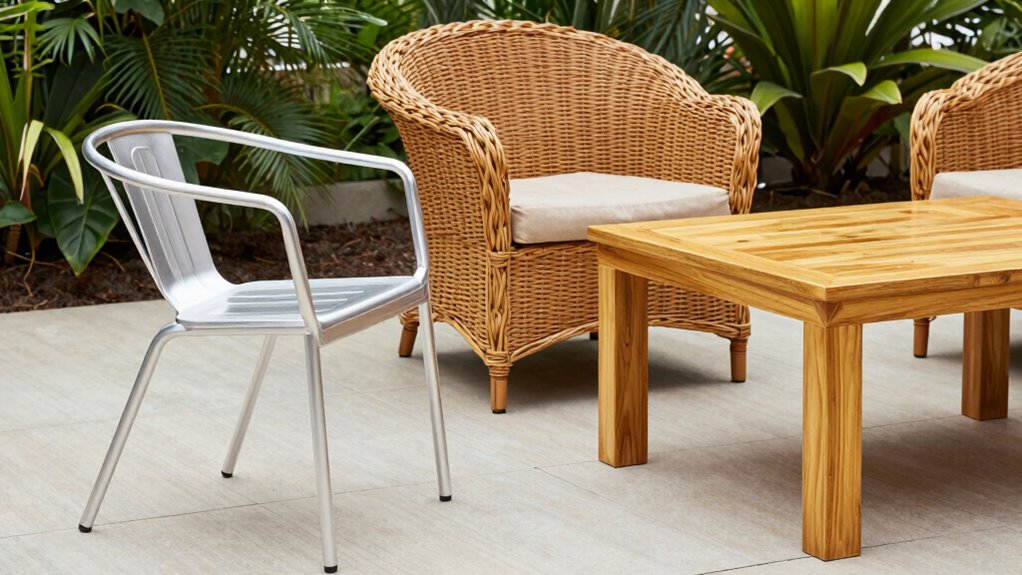

Aluminum, wicker, and teak each offer unique benefits for patio furniture. Aluminum is lightweight, durable, and low-maintenance, making it ideal for damp or humid environments. Wicker provides a cozy, textured look and handles outdoor elements well with proper care. Teak is naturally resilient and stylish but requires regular maintenance to keep its appearance. Choosing the right material depends on your climate, style, and upkeep preferences—explore further to find the best fit for your outdoor space.
Key Takeaways
- Aluminum furniture is lightweight, highly weather-resistant, and requires minimal maintenance, making it ideal for damp or humid environments.
- Wicker offers a cozy, textured aesthetic with good resilience; synthetic wicker is durable outdoors but needs regular cleaning.
- Teak is a dense, oily hardwood naturally resistant to pests and rot, offering elegance but requiring periodic care like oiling.
- Cost varies: aluminum is usually the most affordable, wicker is mid-range, and teak is the most expensive but highly durable.
- Environmental impact depends on material sourcing: aluminum is highly recyclable, natural wicker is eco-friendly, while teak’s sustainability depends on responsible harvesting.
How Durable Are Aluminum, Wicker, and Teak Patio Furniture?
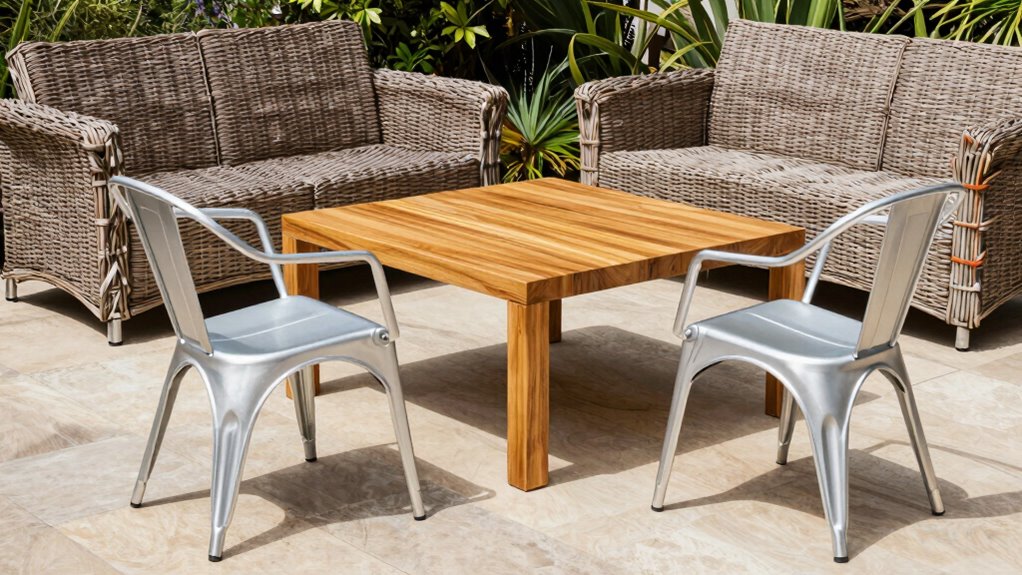
When selecting patio furniture, understanding the durability of different materials is essential. Aluminum, wicker, and teak each offer unique advantages in frame strength and material longevity. Aluminum frames are lightweight yet sturdy, resisting rust and corrosion, which makes them highly resilient over time. Wicker, especially synthetic varieties, provides good resilience but can weaken if exposed to excessive moisture or sun damage. Proper maintenance, such as regular cleaning and protective covers, can significantly extend the lifespan of wicker furniture, making maintenance practices an important consideration. Additionally, climate considerations play a crucial role in determining how well each material performs in your outdoor environment. Weather resistance is another key factor that influences how long outdoor furniture lasts in various settings. Teak boasts exceptional longevity because of its dense, oily wood, naturally resistant to pests and rot. Its frame strength ensures it remains sturdy for years, even with frequent outdoor use. Additionally, exposure to the elements can impact the lifespan of all outdoor furniture, emphasizing the importance of choosing materials suited to your environment. Understanding how material properties interact with environmental factors can help you select the most durable option for your outdoor space. Overall, aluminum and teak excel in durability, while wicker’s longevity depends on maintenance and exposure conditions. Knowing these differences helps you choose furniture that withstands the elements and lasts longer.
Which Material Is Best for Your Climate Conditions?
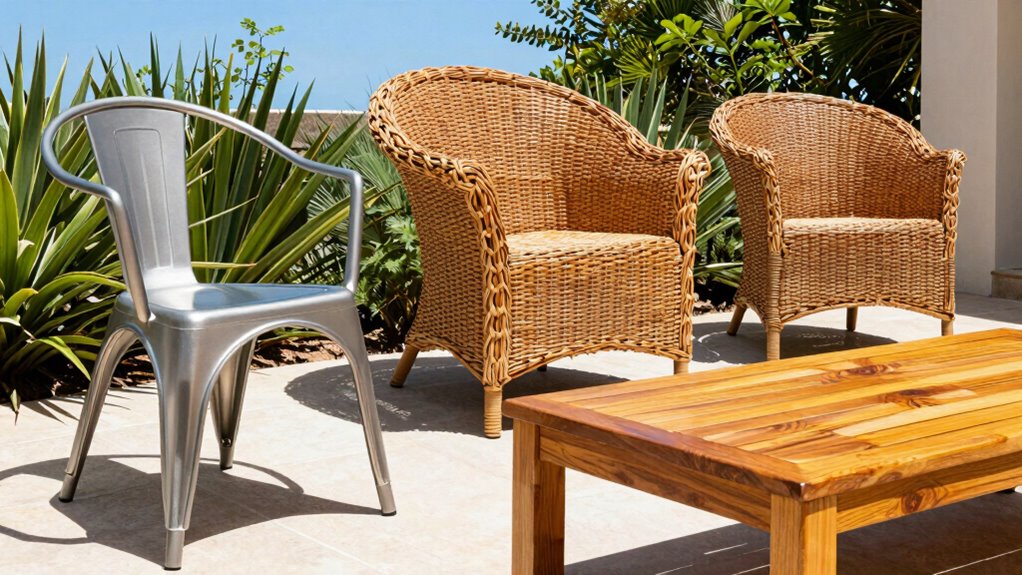
Think about how humidity and moisture affect your outdoor space, as some materials resist rust and mold better than others. If your area gets intense sun exposure, you’ll want furniture that won’t fade or crack quickly. Choosing the right material depends on your climate’s specific demands to keep your furniture looking great longer. Additionally, considering market reputation can help you select a durable material that withstands your local weather conditions more effectively. It’s also helpful to research material maintenance requirements to ensure your furniture stays in good condition over time. Understanding material durability can further guide your decision based on how well each material holds up over years of outdoor use. Being aware of climate resilience can help you choose materials that perform better under your specific environmental stresses.
Humidity and Moisture
Choosing the right patio furniture material depends heavily on your climate’s humidity and moisture levels. If you live in a humid environment, moisture resistance is essential to prevent mold, warping, or rot. Aluminum offers excellent humidity control because it resists rust and doesn’t absorb moisture, making it ideal for damp conditions. Wicker, especially synthetic varieties, also performs well since it’s designed to handle moisture without deteriorating quickly. Wicker’s moisture resistance makes it a popular choice for outdoor settings exposed to humidity. Additionally, synthetic wicker often features UV protection, helping it withstand sun damage over time. Teak, while naturally durable, contains oils that help resist moisture, but prolonged exposure to high humidity can still cause swelling or mold if not properly maintained. Consider your climate carefully; materials with superior moisture resistance will keep your furniture looking good and lasting longer, saving you time and money on repairs or replacements. Furthermore, understanding the environmental durability of each material can help you choose furniture that withstands your specific weather conditions over time. Being aware of how each material responds to humidity and moisture will ensure your patio furniture remains attractive and functional for years to come.
Sun Exposure Durability
If your patio faces strong sunlight regularly, selecting a material that withstands sun exposure is essential for maintaining its appearance and durability. Aluminum is highly UV resistant, preventing significant color fading over time. Wicker, especially synthetic types, offers good UV resistance but can fade if exposed continuously without protection. Teak naturally resists sun damage due to its dense oils, but prolonged exposure may cause some color change. Consider this table:
| Material | UV Resistance | Color Fading Risk |
|---|---|---|
| Aluminum | Excellent | Minimal |
| Wicker | Good | Moderate if untreated |
| Teak | Good | Possible with extended sun |
Additionally, climate considerations can influence how well each material performs over time, so choosing a durable option tailored to your environment is advisable. Selecting the right UV protection methods can further extend the lifespan of your patio furniture, especially in harsh climates.
What Are the Styles and Aesthetics of Aluminum, Wicker, and Teak?
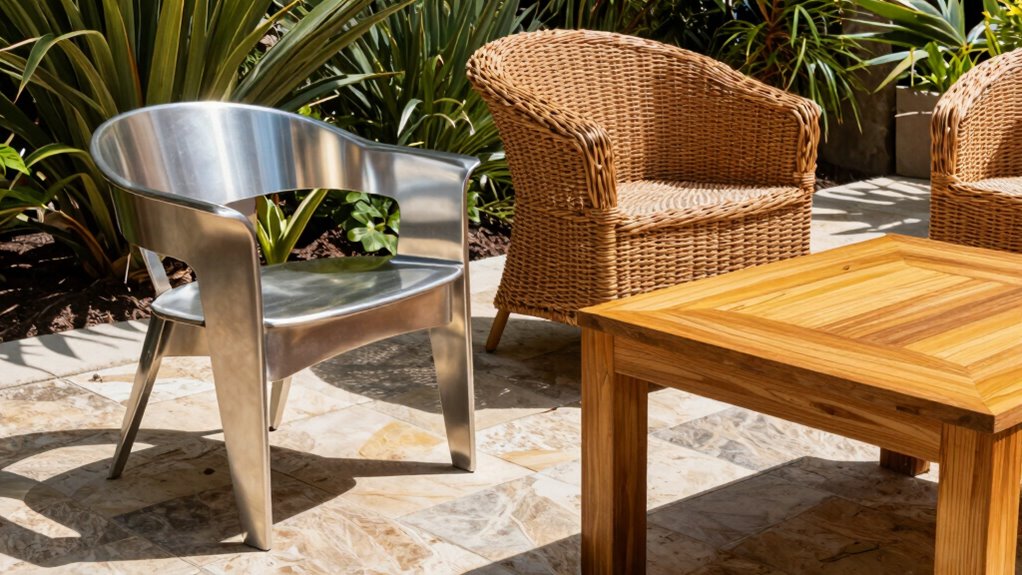
Aluminum, wicker, and teak each bring distinct styles and aesthetics to outdoor spaces, allowing you to tailor your patio furniture to your personal taste. Aluminum offers a sleek, modern look with clean lines and a smooth finish, emphasizing design versatility. It pairs well with contemporary decor and can be painted or finished in various colors. Wicker provides a more casual, textured appearance that evokes a cozy, inviting vibe. Its woven pattern adds visual interest and a timeless charm. Teak, on the other hand, embodies material authenticity with its rich, natural grain and warm tones. It exudes classic elegance and durability, fitting traditional or rustic outdoor styles. Artistic influences and design preferences play a crucial role in selecting the right material for your outdoor space. Each material’s unique style helps you create an outdoor space that reflects your aesthetic preferences. Additionally, material durability is an important consideration when choosing your patio furniture to ensure longevity and sustained beauty over time. Moreover, understanding the maintenance requirements of each material can help you keep your furniture looking its best with minimal effort. Recognizing how climate conditions affect different materials can also guide your decision-making process for outdoor durability. Being aware of environmental factors can further help in choosing the most suitable material for your specific outdoor setting.
How Much Maintenance Do These Materials Require?
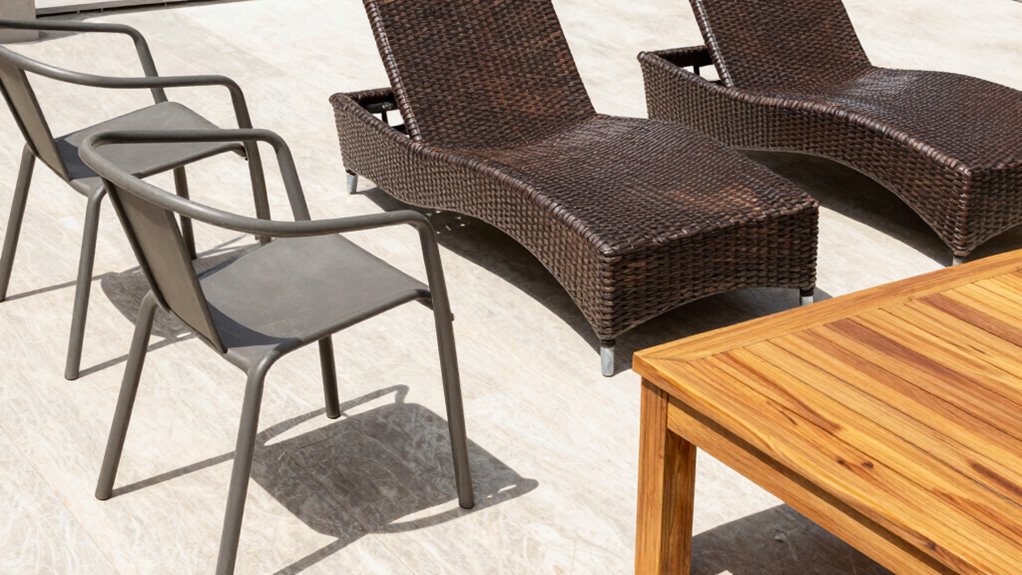
How much effort you’ll need to keep your patio furniture in good shape depends on the material. Some require regular cleaning and protective covers, while others are more weather-resistant with minimal upkeep. Understanding these needs helps you choose furniture that fits your maintenance routine. Additionally, smart home safety features like outdoor sensor systems can help monitor and alert you to weather conditions that might affect your furniture. For instance, materials like aluminum are highly weather-resistant, reducing the amount of maintenance needed over time. Selecting durable materials can significantly decrease the ongoing care required to keep your outdoor space looking its best.
Cleaning and Care Needs
The amount of maintenance required for patio furniture materials varies widely, so understanding their care needs helps you keep your pieces looking their best. For aluminum, cleaning tips include wiping with a damp cloth and mild soap to prevent buildup, with care routines being minimal. Wicker furniture benefits from regular dusting and occasional gentle cleaning with a soft brush or vacuum. Teak requires periodic washing with water and a soft brush, and applying teak oil every year helps maintain its appearance. Aluminum is low-maintenance, needing only occasional cleaning. Wicker may need more frequent dusting to prevent dirt accumulation. Teak demands consistent care routines to preserve its natural beauty. Knowing these cleaning tips ensures your furniture stays attractive and durable with minimal effort.
Weather Resilience and Protection
Since weather conditions can substantially impact patio furniture, choosing materials with good resilience reduces the need for frequent maintenance. Aluminum is highly resistant to UV rays and won’t warp or crack, making it a low-maintenance choice in sunny climates. Wicker, especially synthetic types, offers good UV resistance but can be prone to mold if not properly protected or stored during heavy rain. Teak is naturally durable and resistant to moisture, but it can develop mold or mildew if exposed to prolonged dampness without proper sealing or cleaning. Overall, aluminum requires the least upkeep, while wicker and teak need some protection against mold and UV damage. Regular cleaning and covering your furniture during storms will extend its lifespan and keep it looking its best.
How Do Costs Compare for Aluminum, Wicker, and Teak Furniture?

Are you wondering how the costs of aluminum, wicker, and teak furniture stack up? When doing a pricing comparison, aluminum tends to be the most affordable option, making it ideal if you’re on a tight budget. Wicker furniture falls in the mid-range, offering a good balance between cost and style, especially if you choose synthetic wicker. Teak, however, is usually the most expensive due to its premium quality and durability. If budget considerations are your priority, aluminum might be the best choice. But if you’re willing to invest in long-lasting materials that age gracefully, teak could be worth the extra upfront cost. Ultimately, your decision depends on balancing initial expense with longevity and maintenance needs.
What Is the Environmental Impact of These Patio Materials?
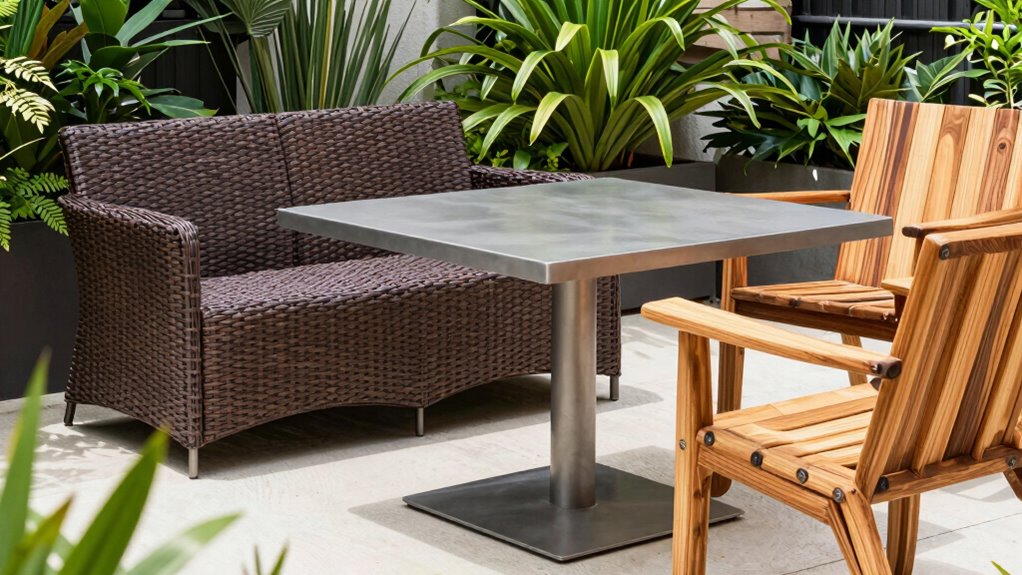
Choosing patio furniture involves more than just considering costs; environmental impact plays a significant role too. Aluminum is highly recyclable, with strong recycling potential, which reduces waste and energy use once the product reaches the end of its life. Its sustainable sourcing depends on how responsibly the aluminum is mined and processed. Wicker, often made from natural materials like rattan or synthetic fibers, varies in environmental impact—natural wicker has a lower footprint if sourced sustainably, but synthetic wicker relies on plastics, which have higher environmental costs. Teak wood can be sustainably sourced if harvested responsibly, but illegal logging and deforestation pose risks. Overall, evaluating each material’s sourcing and recycling potential helps you choose eco-friendlier options for your outdoor space.
How to Choose the Right Patio Furniture Material for Your Outdoor Space?
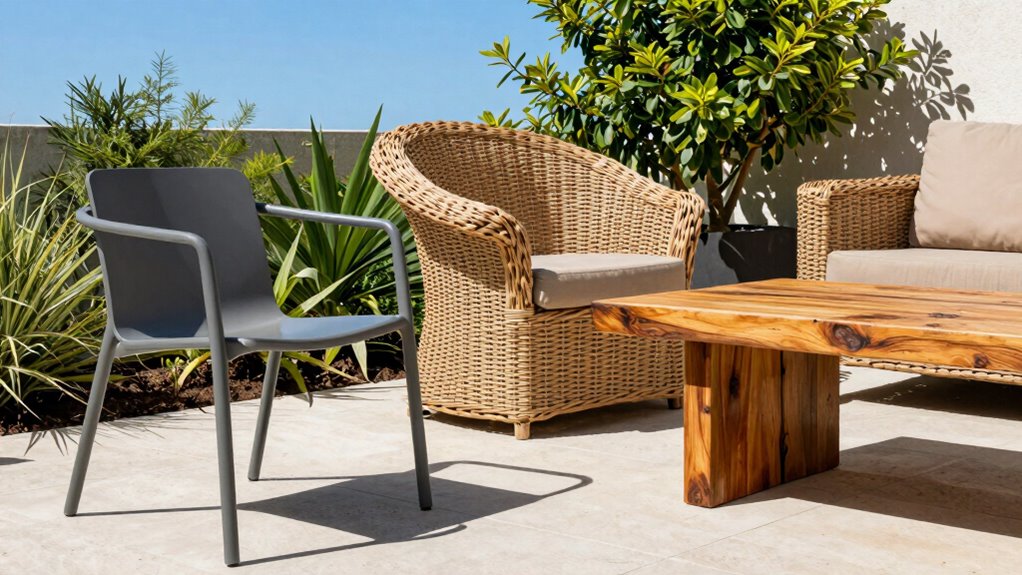
Selecting the right patio furniture material depends on your specific needs, climate, and aesthetic preferences. Consider current design trends to guarantee your outdoor space feels modern and cohesive. For example, if you prefer a sleek, minimalist look, aluminum offers a clean appearance and low maintenance. If you value natural beauty and durability, teak provides a timeless appeal, but check how the material is sourced to ensure sustainability. Wicker can add a cozy, textured vibe, perfect for a relaxed atmosphere. Think about your local climate—wicker and teak can withstand different weather conditions, but aluminum is highly resistant to rust. By understanding these factors, you’ll make a smarter choice that complements your style, suits your environment, and aligns with responsible material sourcing.
Frequently Asked Questions
Can Aluminum, Wicker, and Teak Furniture Be Repaired if Damaged?
Yes, you can repair aluminum, wicker, and teak furniture, but the options vary. Aluminum often needs patching or repainting, while wicker can be re-woven or glued, and teak may require sanding or oiling. Keep durability considerations in mind—aluminum is highly durable, wicker can crack, and teak withstands weather well. Knowing your material‘s repair options helps extend your furniture’s lifespan and maintain its appearance.
Are There Any Health Concerns Associated With Each Material?
You might be concerned about allergy risks or chemical exposure from patio furniture materials. Aluminum generally poses low allergy risks and little chemical concern, but some coated options may contain paints or sealants. Wicker can cause allergies if made from natural fibers like rattan, but synthetic wicker usually doesn’t. Teak has minimal chemical exposure, though some treatments might contain preservatives. Always check for non-toxic finishes if you’re sensitive to chemicals or prone to allergies.
How Do These Materials Perform in High Humidity Environments?
You might worry about humidity damaging your patio furniture, but aluminum, wicker, and teak each perform well in high humidity environments. Aluminum’s humidity resilience and lightweight durability make it ideal, while synthetic wicker resists moisture and won’t warp or rot. Teak’s natural oils provide excellent material durability against moisture, ensuring your furniture stays sturdy and beautiful despite high humidity. With proper care, these materials can last years outdoors.
Can These Materials Be Recycled or Repurposed After Their Lifespan?
Yes, you can recycle or repurpose aluminum, wicker, and teak after their lifespan. Aluminum is highly recyclable through efficient processes, reducing environmental impact. Wicker, especially if synthetic, can often be repurposed or recycled into new products, though natural wicker may decompose more easily. Teak can be reclaimed or repurposed into furniture or art, but its recycling depends on the treatment it received. Proper disposal minimizes environmental impact and promotes sustainability.
Do These Materials Require Special Treatments for Pest Resistance?
You’ll want to be proactive, as these materials often need special treatments for pest resistance. Aluminum naturally resists pests, so it usually doesn’t require chemical treatments. Wicker, especially natural, may need pest-resistant coatings or chemical treatments to fend off bugs. Teak’s dense wood is naturally pest-resistant, but applying a protective finish can boost its defenses. Taking these steps guarantees your furniture stays beautiful and pest-free, so don’t wait until pests have a field day.
Conclusion
Choosing the right patio furniture lets you craft an inviting outdoor oasis that reflects your style. Imagine relaxing on a sturdy teak chair, its warm grain glowing in the sun, or lounging on a sleek aluminum table that gleams under clear blue skies. Whether you prefer the timeless elegance of teak, the modern sheen of aluminum, or the textured charm of wicker, your perfect outdoor retreat starts with selecting a material that suits your needs and climate perfectly.