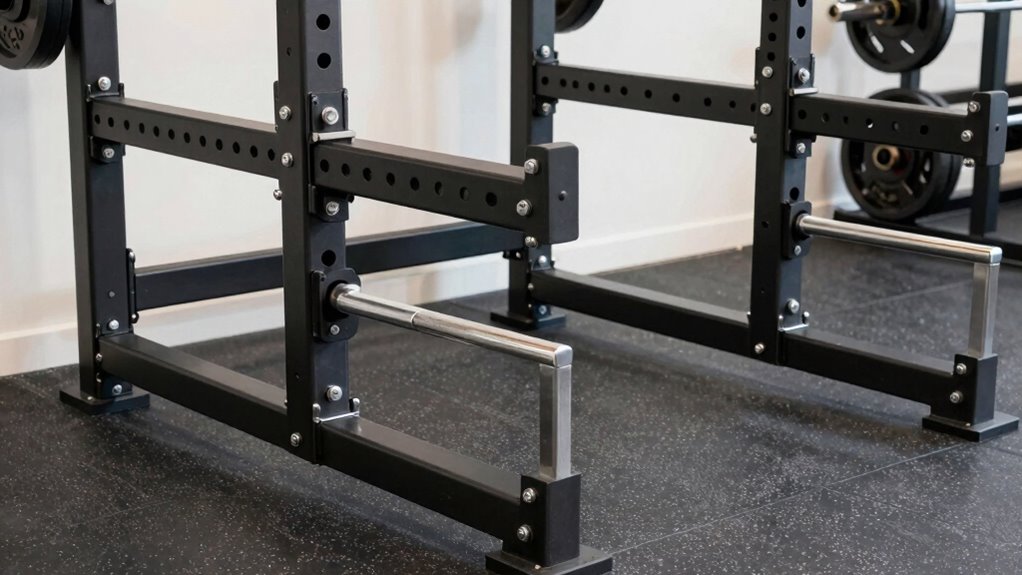

Power racks are safer than squat stands because they come with built-in safety features like adjustable safety bars and spotter arms that catch heavy loads if you lose control. They also offer more stability and support for heavier weights, reducing wobbling or tipping risks. Squat stands lack these safety mechanisms, increasing the risk of accidents during intense lifts. If you want a thorough safety overview, keep exploring how these differences impact your home gym experience.
Key Takeaways
- Power racks feature built-in safety bars and spotter arms, providing secure lifting and reducing injury risk during solo workouts.
- They are constructed with heavy-duty materials for enhanced stability, lowering wobbling and collapse hazards under heavy loads.
- Power racks support a wider variety of exercises safely, thanks to adjustable safety mechanisms, unlike squat stands which lack comprehensive safety features.
- Lack of safety features in squat stands increases reliance on external spotters and raises injury risks during heavy or complex lifts.
- Although more expensive, power racks create a safer training environment with integrated safety systems, unlike more affordable but less secure squat stands.
How Do Power Racks Keep You Safe During Heavy Lifts?
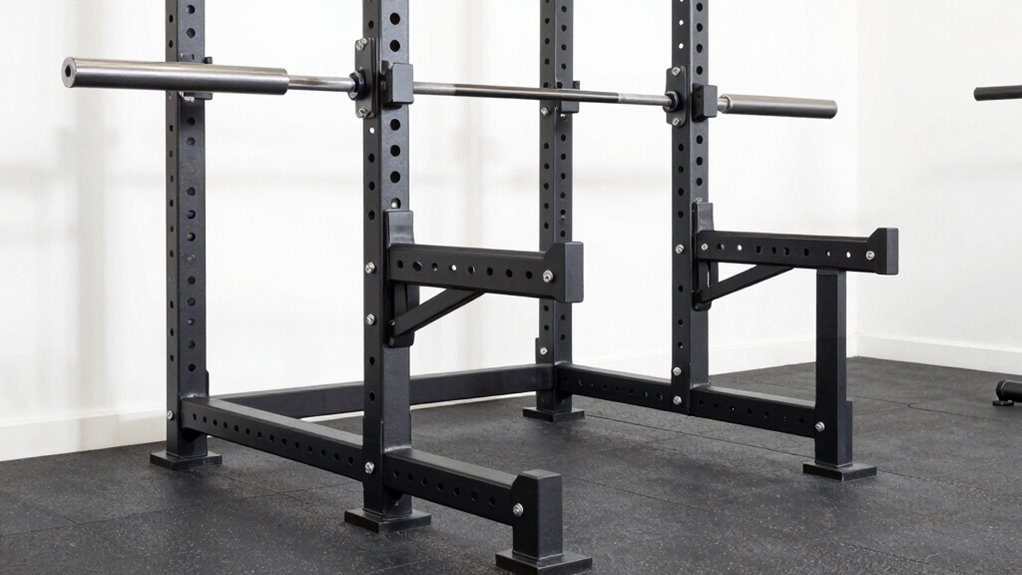
Power racks are designed to provide a secure environment for heavy lifting by incorporating safety features like adjustable safety bars and spotter arms. These safety mechanisms are vital for accident prevention, giving you confidence to lift heavier weights without the fear of injury. If you struggle or lose control, safety bars catch the barbell at your preset height, preventing it from crashing down on you. Spotter arms serve as an extra layer of protection, allowing you to perform lifts with peace of mind. This setup minimizes the risk of accidents and guarantees you can focus solely on your form and strength gains. Overall, power racks are built to support safe lifting practices, making them an essential tool for serious weight training. Additionally, training environment plays a crucial role in maintaining safety during heavy lifts, ensuring all safety features are properly used and maintained. Proper equipment maintenance further enhances safety by keeping safety features functioning correctly and preventing equipment failure. Regular inspection and safety feature checks are key to ensuring your power rack remains reliable during intense workouts. Incorporating proper safety protocols can significantly reduce the risk of injury and maximize your training effectiveness. Moreover, understanding the correct lifting techniques can further improve safety and performance during heavy lifts.
What Safety Risks Are Common When Using Squat Stands Without Proper Features?
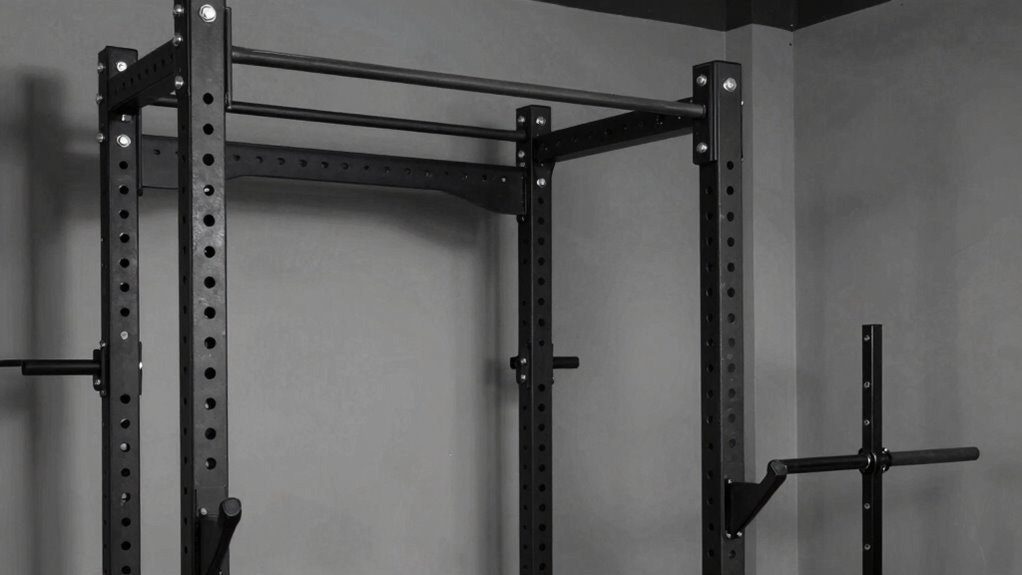
Without the safety features found in power racks, squat stands pose significant risks during heavy lifts. You face pinch hazards where moving parts or supports can trap fingers or skin. Unstable supports increase the chance of your equipment tipping or collapsing under load. This instability can cause serious injury if you’re not careful. To visualize, consider the following:
| Risk | Explanation |
|---|---|
| Pinch hazards | Moving supports can trap fingers or skin |
| Unstable supports | Supports may wobble or collapse under weight |
| Falling weights | Lack of safety bars increases drop risk |
| Support failure | Supports may bend or break unexpectedly |
| Equipment tipping | Supports may not stay secure during lifts |
Additionally, lack of safety mechanisms can leave lifters vulnerable to unexpected accidents. Incorporating proper safety features such as safety bars or secure supports is essential to prevent these hazards and promote safer lifting practices. Moreover, regular maintenance of equipment ensures that all components remain secure and reliable. Ensuring that safety measures are in place and properly maintained is crucial for minimizing injury risk during training sessions.
What Safety Features Should You Look for in Power Racks and Squat Stands?

To guarantee your safety during heavy lifts, look for power racks and squat stands equipped with key safety features. These features help prevent accidents and give you peace of mind. First, check for reliable safety lock mechanisms—they should securely hold weights in place during your workout. Second, adjustable safety bars are essential; they allow you to set the height according to your lift and prevent the barbell from falling too far. Third, assure the safety bars are sturdy and easy to reposition, so you can quickly adapt when needed. Proper body jewelry measurements and materials are also important for maintaining equipment integrity and safety. Additionally, selecting equipment with durable construction ensures longevity and safety during intense training sessions. Well-designed welding and locking systems contribute significantly to the overall stability and safety of the equipment. Proper frame stability is crucial to prevent wobbling or tipping during lifts. Lastly, look for a solid frame with secure welds or locking systems to withstand heavy loads. Proper safety features are critical for reducing injury risk and ensuring your workout remains secure. Prioritizing these safety features ensures you can train confidently and reduce injury risk during intense sessions.
What Are the Most Common Mistakes That Can Lead to Injury With Home Gym Equipment?
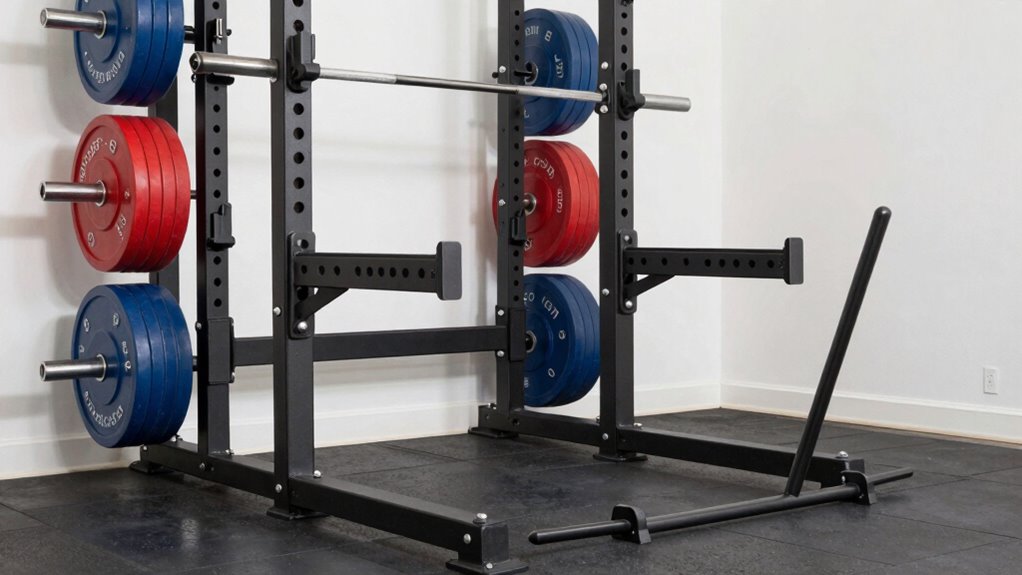
One of the most common mistakes that can lead to injury with home gym equipment is using it improperly or without proper form. This increases the risk of accidents, especially when lifting heavy weights. Always ensure you have spotter assistance when needed, especially during max lifts. Neglecting equipment maintenance can also cause failures; inspect your gear regularly for signs of wear. Using digital content formats effectively can help you stay informed about proper techniques and safety tips. Use this table to remember key safety points:
| Mistake | Consequence | Solution |
|---|---|---|
| Ignoring proper form | Strains, sprains | Focus on technique |
| Skipping spotter assistance | Dropped weight, injury | Have a spotter present |
| Poor equipment maintenance | Equipment failure, injury | Regularly check and service |
Avoid these mistakes to stay safe and prevent injuries during your workouts.
Which Is Safer for Your Home Gym: Power Rack or Squat Stand?
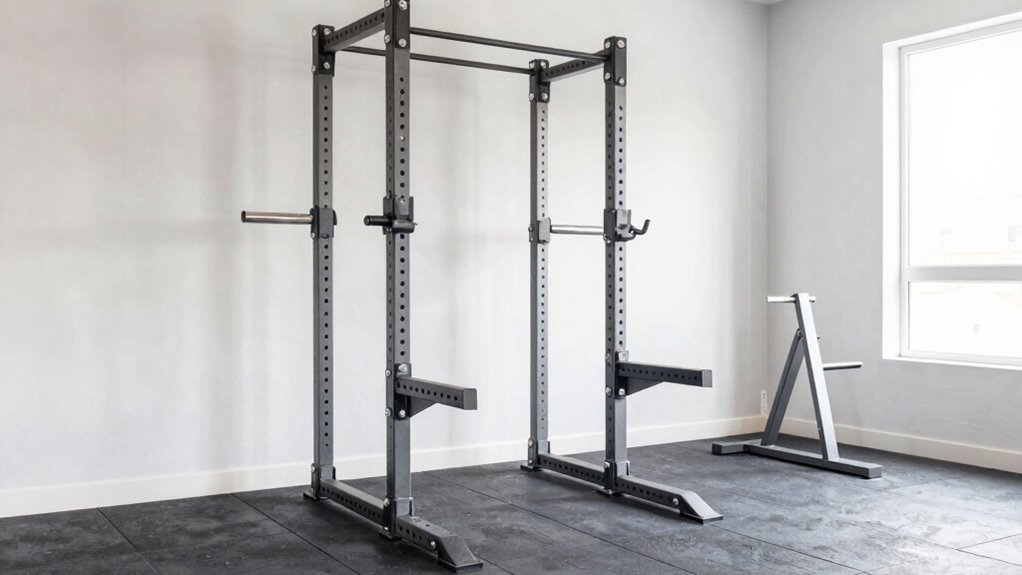
When deciding between a power rack and a squat stand for your home gym, safety should be a top priority. A power rack generally offers better security, especially with safety accessories like adjustable pins and safety bars, enhancing your user experience and reducing injury risk. Squat stands are more portable but lack these safety features, making them riskier during heavy lifts. Consider these points:
- Power racks provide built-in safety accessories for controlled workouts.
- Squat stands require external safety bars, which may not be as reliable.
- Power racks support heavier weights safely.
- User experience improves with added safety features, especially for solo training.
- Emergency safety measures are easier to implement with a power rack, providing extra peace of mind during intense sessions. Additionally, the presence of built-in safety features simplifies setup and adjustment, minimizing the chance of accidents. Incorporating safety accessories can further enhance your workout security, especially when lifting alone or handling maximal loads. Moreover, power racks are often designed with stability and durability in mind, making them a more dependable choice for long-term safety. Furthermore, choosing equipment with reliable safety mechanisms can help prevent accidents and injuries during heavy lifting routines.
Ultimately, a power rack offers a safer environment, especially if you prioritize safety accessories and a confident user experience.
Frequently Asked Questions
Can Power Racks Be Used for Exercises Other Than Squats?
Yes, power racks are versatile tools that you can use for various alternative exercises beyond squats. You can perform bench presses, overhead presses, deadlifts, and pull-ups, making them highly beneficial for a well-rounded workout. Their versatility benefits include increased safety and flexibility, allowing you to target different muscle groups efficiently. With a power rack, you get an all-inclusive gym experience at home, maximizing your workout options safely.
Are Portable Squat Stands Safer Than Fixed Power Racks?
Yes, portable squat stands are generally safer than fixed power racks because their portable design allows for easier setup and movement, giving you flexibility. However, stability concerns can arise, especially if the stands aren’t well-built or properly secured. You need to make certain they’re stable and sturdy before lifting. Ultimately, choose a stand that balances portability with solid stability to keep your workouts safe and effective.
How Do Weight Limits Impact Safety in These Equipment Types?
Weight limits greatly impact safety because exceeding the weight capacity or maximum load can cause equipment failure. You should always check the specified weight capacity of your power rack or squat stand before lifting. Staying within these limits ensures stability and reduces the risk of accidents. Ignoring maximum load guidelines puts you at serious risk, so prioritize equipment specs to maintain a safe workout environment.
Is Additional Padding Necessary for Safety With Squat Stands?
Think of your squat stand as a sturdy bridge. You might wonder if adding padding concerns safety, but it’s usually unnecessary. Safety accessories like padding can prevent minor discomfort, yet they don’t replace proper technique or spotters. Focus on secure setup and correct form. If you’re lifting very heavy weights or have joint issues, then additional padding could offer extra comfort, but generally, your squat stand’s design provides enough safety.
Do Power Racks Require Professional Installation for Safety?
Power racks generally don’t require professional installation for safety. You can set them up yourself, as long as you follow the manufacturer’s instructions carefully. However, if you have installation concerns or lack experience with heavy equipment, it’s wise to seek professional setup. Proper installation guarantees stability and safety during your workouts, preventing accidents. Taking this step helps you get the most secure and reliable use from your power rack.
Conclusion
Ultimately, choosing between a power rack and a squat stand is like picking a sturdy ship or a swift sailboat—your safety depends on the vessel you trust. A power rack acts as a safety net, catching you before you hit the ground. If safety’s your top priority, investing in a well-equipped power rack keeps you anchored and confident. Remember, your home gym should be a fortress, not a gamble.