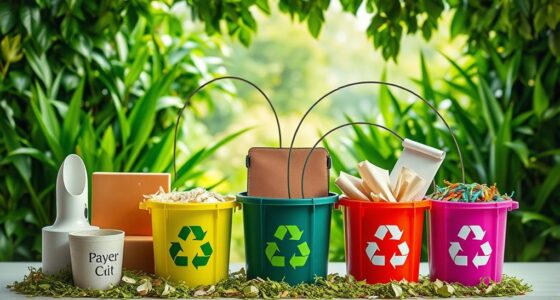

Reducing plastic use in daily life is easier than you think. Start by switching to bamboo toothbrushes and using bar soap instead of liquid soap. Bring reusable bags for groceries and glass containers for food storage. Invest in a reusable water bottle and a travel mug for your coffee. By choosing eco-friendly brands and products, you’ll make a significant impact. These small swaps add up, and there’s even more you can do to help the planet!
Key Takeaways
- Switch to bamboo toothbrushes and biodegradable personal care products to reduce plastic waste in your daily hygiene routine.
- Use reusable bags and mesh produce bags to eliminate single-use plastic bags while grocery shopping.
- Replace plastic wrap with beeswax wraps or silicone lids for more sustainable food storage solutions.
- Invest in a reusable water bottle and travel mug to avoid single-use beverage containers.
- Support eco-friendly brands that prioritize sustainable packaging and plastic-free alternatives in all purchases.
As our planet faces increasing environmental challenges, reducing plastic use has become more essential than ever. You might feel overwhelmed by the sheer volume of plastic products in your daily life, but making simple swaps can markedly impact your carbon footprint. By being mindful of your choices, you can contribute to a healthier planet.
Start with your morning routine. Instead of reaching for a plastic toothbrush, consider switching to a bamboo one. Bamboo is biodegradable and sustainable, making it a smart choice for your oral hygiene. Likewise, when it comes to your skincare products, opt for glass or metal containers. This small change can reduce the amount of plastic waste you generate while supporting companies that prioritize eco-friendly packaging.
Switch to bamboo toothbrushes and glass skincare containers to reduce plastic waste and support eco-friendly brands.
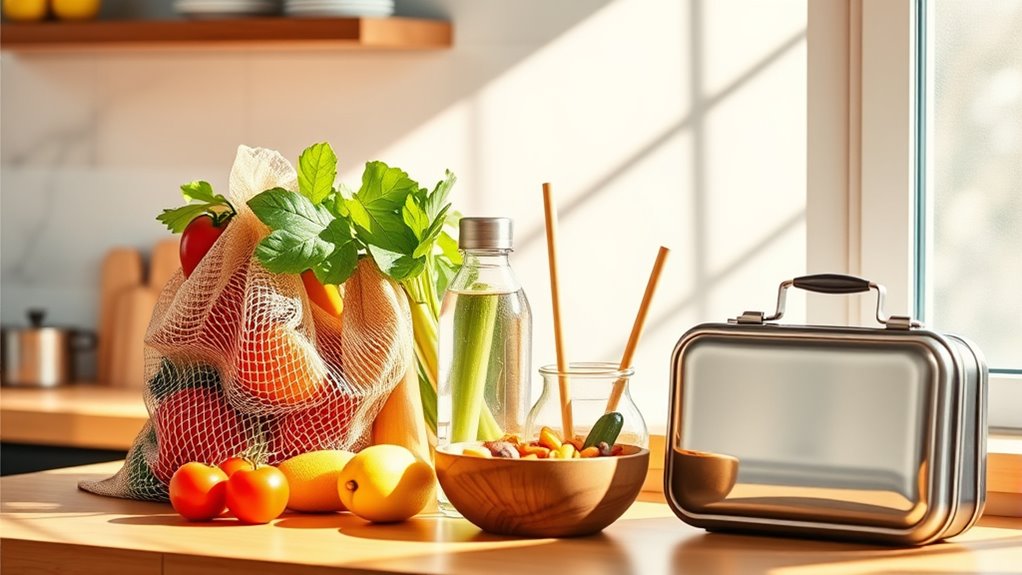
When you head out for groceries, remember to bring your reusable bags. Ditch the single-use plastic bags that often end up in landfills and oceans. A sturdy canvas bag not only holds more but also lasts longer, saving you money in the long run. If you’re buying produce, try using reusable mesh bags instead of the plastic ones provided at the store. This simple swap helps reduce plastic consumption and keeps your fruits and vegetables fresh.
Next, think about your beverage choices. Instead of buying bottled water, invest in a reusable water bottle. You can fill it up at home or at public water stations, cutting down on plastic waste. If you enjoy coffee on-the-go, consider using a travel mug. Many coffee shops offer discounts for bringing your own cup, so you’ll save money while being eco-conscious.
In the kitchen, replace plastic wrap with beeswax wraps or silicone lids. These alternatives keep your food fresh without contributing to plastic waste. You can also use glass containers for storage instead of plastic ones. They’re durable, easy to clean, and won’t leach harmful chemicals into your food.
When it comes to personal care items, switch to bar soap instead of liquid soap in plastic containers. Many brands offer eco-friendly, biodegradable options that come wrapped in paper. Similarly, consider a safety razor instead of disposable razors. They last longer and produce less waste.
Finally, support brands that prioritize sustainability. Research companies that use recycled materials and offer plastic-free alternatives. Your purchasing power can drive change in the industry. By making these simple swaps, you can greatly reduce your plastic use and inspire others to do the same. Every small action counts, and together, we can create a cleaner, greener planet. Moreover, embracing sustainable energy practices can complement your efforts to reduce plastic and promote overall environmental well-being.
Frequently Asked Questions
What Are the Environmental Impacts of Plastic Waste?
Plastic waste harms the environment in several ways. It pollutes oceans, harming marine life and ecosystems. Wildlife often ingests plastic, mistaking it for food, leading to injury or death. Plastic takes centuries to decompose, contributing to landfill overflow. It also releases toxins into the soil and water, affecting plant growth and human health. By reducing your plastic usage, you help mitigate these impacts and protect the planet for future generations.
How Can I Encourage Others to Reduce Plastic Use?
You can encourage others to reduce plastic use by leading by example. Share your own experiences with sustainable choices and highlight the benefits. Organize community clean-up events or workshops that educate about plastic waste. Use social media to share tips and success stories, inspiring others to join in. Start conversations about the importance of reducing plastic and offer practical alternatives. Your enthusiasm can create a ripple effect, motivating those around you to take action.
Are Biodegradable Plastics a Good Alternative?
Are biodegradable plastics really a good alternative? Yes, they can be, but it’s essential to understand their limitations. While they break down more quickly than traditional plastics, they still require specific conditions to decompose effectively. If you choose biodegradable options, make sure you dispose of them properly. Remember, reducing overall plastic use is still the best approach. So, consider combining biodegradable choices with other eco-friendly practices for greater impact.
What Are the Best Practices for Recycling Plastics?
To recycle plastics effectively, start by rinsing containers to remove any residue. Check for recycling symbols on the bottom and sort them accordingly. Don’t forget to remove caps and labels, as they can contaminate the recycling stream. Look for local recycling guidelines, as they vary by location. Finally, consider reducing your plastic usage overall; it’s a proactive way to help the environment while still participating in recycling efforts.
How Does Reducing Plastic Benefit My Health?
Imagine your body as a garden, thriving under sunlight and fresh air. Reducing plastic helps keep your garden healthy. When you cut back on plastic, you minimize exposure to harmful chemicals often found in plastic products. These toxins can disrupt your hormones and lead to various health issues. By making conscious choices, you cultivate a safer environment for yourself, allowing your garden to flourish and promoting overall well-being. Your health truly blossoms when you choose wisely.
Conclusion
As you stand at the crossroads of choice, remember that every small swap you make is a seed planted in a garden of hope. Each reusable bag, glass bottle, and metal straw nurtures a future where nature thrives, instead of drowning in plastic. You have the power to be the gardener of this world, cultivating change with each mindful decision. Embrace the journey, and watch as your simple actions bloom into a cleaner, greener tomorrow for all.