
Planning your DIY reflection retreat is a great way to disconnect and find clarity. Choose a quiet spot, turn off distractions, and set aside dedicated time for self-exploration. Incorporate mindfulness practices like deep breathing or mindful walking, and keep a journal for honest thoughts and insights. Stay flexible and gentle with yourself throughout the process. If you want to craft a meaningful solo retreat, these tips will guide you toward impactful self-discovery.
Key Takeaways
- Choose a peaceful, undisturbed location and dedicate specific time blocks for your retreat.
- Incorporate mindfulness practices like deep breathing, body scans, and mindful walking to foster presence.
- Use journaling techniques such as prompts and free writing to explore thoughts and emotions honestly.
- Turn off devices and minimize distractions to create a safe space for self-reflection and growth.
- Maintain a flexible routine, focus on consistency, and embrace insights as part of your personal development.
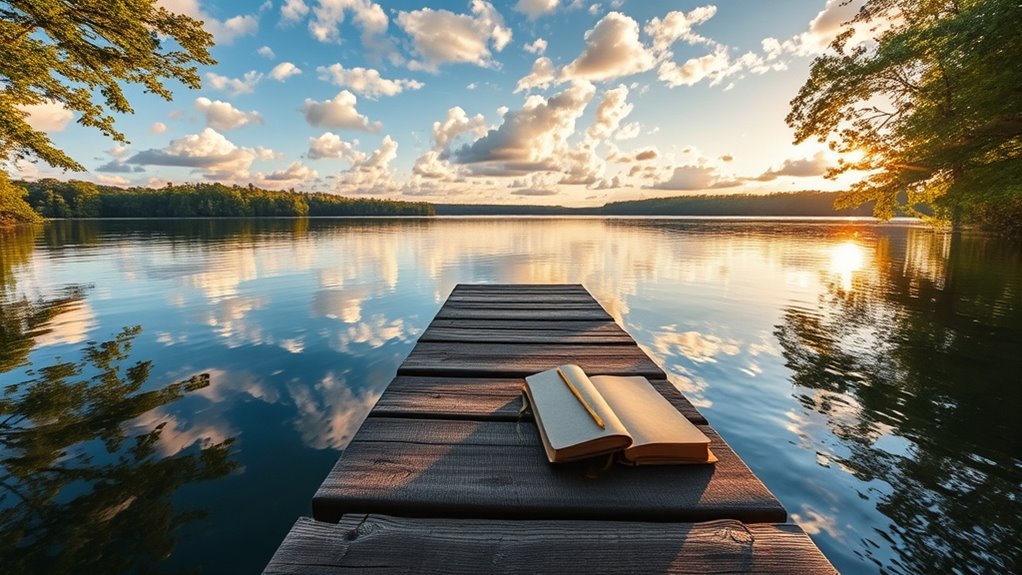
Have you ever felt overwhelmed by the constant rush of daily life and yearned for a moment to pause and reflect? If so, a reflection retreat might be just what you need. You don’t have to book an expensive getaway; you can create your own DIY think week right at home or in a quiet natural spot. The goal is to disconnect from distractions, focus inward, and gain clarity on your thoughts and feelings. To make this meaningful, incorporate mindfulness practices into your routine. These practices help center your attention on the present moment, reducing stress and increasing awareness. Simple mindfulness exercises like deep breathing, body scans, or mindful walking can ground you and set the tone for your retreat.
Create your own peaceful retreat at home with mindfulness and journaling to reconnect and gain clarity.
Journaling techniques are equally essential. Keep a dedicated journal where you write freely about your thoughts, emotions, and observations. Don’t worry about grammar or structure—just let your thoughts flow. This process helps you process feelings you might not even realize you’re holding onto and uncovers patterns or insights that can guide your personal growth. Set aside specific times each day for journaling, perhaps in the morning to set intentions or in the evening to reflect on the day’s experiences. Use prompts if you need direction, such as “What am I grateful for today?” or “What lessons did I learn?” These techniques create a safe space for honest self-exploration.
To start your self-guided retreat, choose a peaceful environment where you won’t be interrupted. This could be a cozy corner in your home, a quiet park, or a cabin in the woods. Dedicate a block of time—whether a few hours or an entire day—where you turn off your devices and commit to being present. During this time, practice mindfulness regularly, gently bringing your focus back whenever your mind wanders. Pair this with your journaling exercises, writing down insights or questions that arise. Remember, the purpose isn’t to produce perfect entries but to connect with yourself authentically.
As your retreat unfolds, stay open to whatever comes up. Sometimes, insights emerge unexpectedly through silence or simple observation. Keep your journaling techniques flexible, and don’t be afraid to explore new mindfulness practices as you go. The key is consistency and compassion with yourself—this is your sacred space for reflection. Developing color accuracy and other visual skills can deepen your understanding of what makes a meaningful experience. By creating a dedicated time for self-awareness, you allow your mind to reset, recharge, and gain perspective, making your daily life more intentional and fulfilling.
Frequently Asked Questions
How Do I Choose the Perfect Location for My Retreat?
To pick the perfect location for your retreat, start by considering your goals and preferences. Look for a place with inspiring views and nearby local attractions that can refresh your mind. Prioritize safety considerations, ensuring the area feels secure and accessible. Think about amenities and quietness, so you can relax and focus. Ultimately, choose a spot that sparks creativity and peace, helping you reconnect and reflect deeply during your solo think week.
What Are Some Common Challenges Faced During Solo Retreats?
You might feel like you’re battling an army of distractions or drowning in overwhelming emotions during your solo retreat. Common challenges include poor time management, causing chaos in your schedule, and emotional resilience, making it hard to stay focused and calm. You’ll need to navigate these hurdles with discipline and self-compassion. Staying organized helps, while building emotional resilience keeps you grounded amidst the chaos, turning obstacles into opportunities for growth.
How Long Should a Reflection Retreat Ideally Last?
When planning your reflection retreat, consider a duration that allows deep thinking without causing fatigue—typically, 3 to 5 days works well. You should also think about retreat frequency; spacing them out every few months helps maintain clarity and focus. Listen to your needs, adjust the length accordingly, and make certain of enough downtime for integration. Keep your goals in mind to optimize your experience and keep your reflection meaningful.
What Supplies and Materials Are Essential for a Successful Retreat?
Supplying your space with simple staples sets the scene for a successful solo retreat. Bring journaling techniques and mindfulness exercises to foster focus and reflection. Essentials include a journal, pens, calming music, a comfortable seat, and maybe scented candles for serenity. Stay stocked with snacks and water to sustain your spirit. With these supplies, you create a cozy, contemplative corner that nurtures your nature of introspection and inspiration.
How Can I Maintain Momentum After Completing My Retreat?
To keep your momentum going after your retreat, set clear goals and create a routine that includes ongoing journaling. Find accountability partners who can support and motivate you along the way. Regular check-ins with them help you stay focused and committed to your personal growth. Keep reflecting on your progress, celebrate your achievements, and adjust your plans as needed to guarantee continuous momentum and meaningful development.
Conclusion
Think of your reflection retreat as tending a quiet garden within. Each moment you carve out, like planting seeds, nurtures clarity and growth. As you walk through this personal landscape, weeds of doubt clear away, leaving space for insights to bloom. Embrace this journey as tending a sacred space inside yourself, where patience and intention cultivate the quiet strength you carry forward. When you return, you’ll find your inner garden thriving, ready to blossom anew.