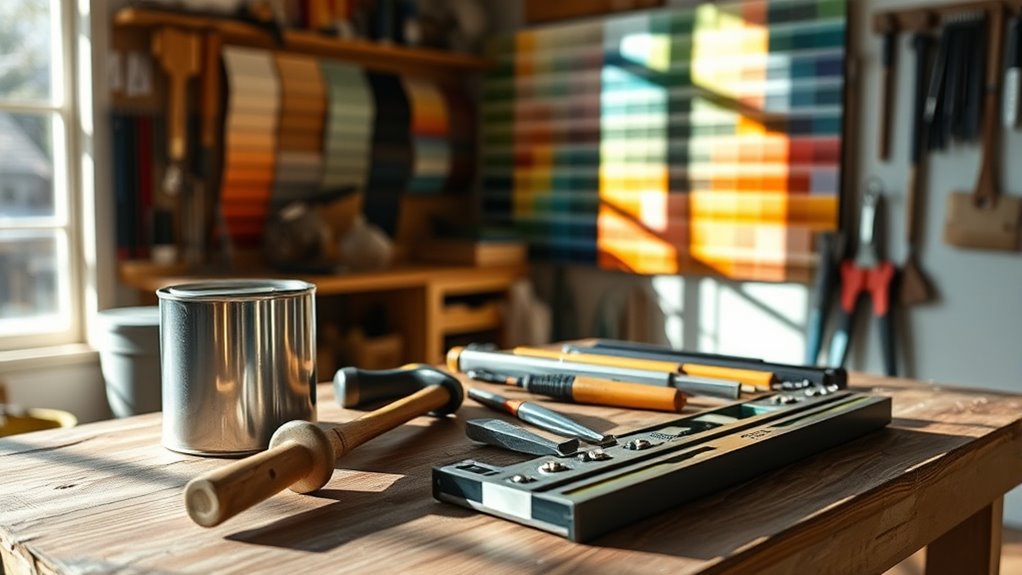

Selecting the right tools for your home improvement projects is key to achieving great results. Start by identifying the specific tasks you’ll tackle, like painting or woodworking. Different materials call for different tools; for example, tile installation needs a tile cutter, while drywall work requires a utility knife. Don’t forget safety gear, either—it’s just as essential. By using the appropriate tools and equipment, you can save time and frustration. There’s plenty more to discover about tool selection and project success.
Key Takeaways
- Assess your project needs to identify specific tasks and corresponding tools, enhancing efficiency and effectiveness.
- Consider the materials you’ll be working with to select the appropriate tools, ensuring compatibility and ease of use.
- Prioritize safety by investing in necessary protective gear, such as gloves and goggles, to minimize injury risks.
- Decide whether to buy or rent tools based on how often you’ll use them, balancing cost-effectiveness with project requirements.
- Maintain and organize your tools properly to ensure longevity and effectiveness for all your home improvement projects.
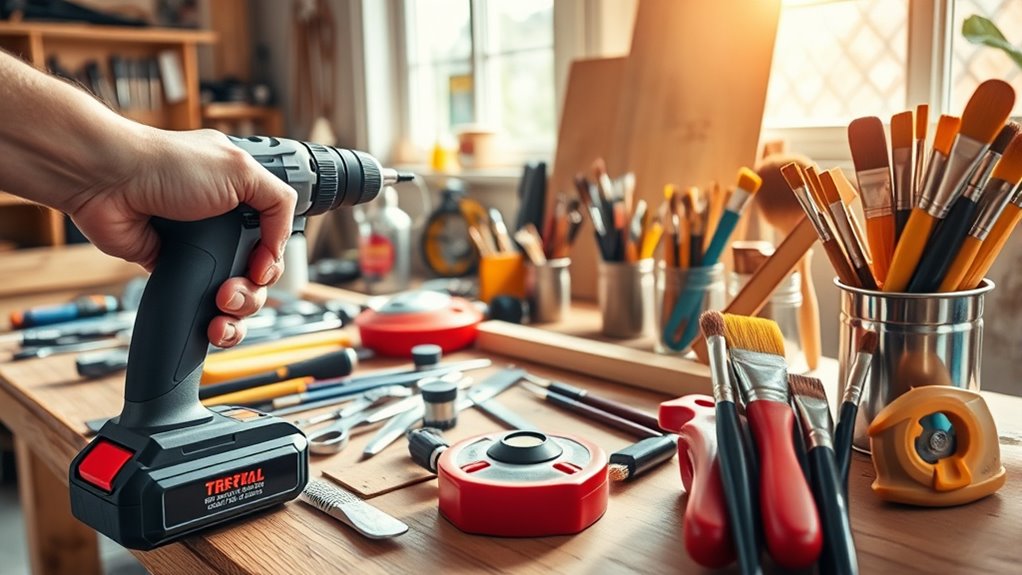
When you set out on a home improvement project, choosing the right tools can make all the difference in achieving your desired results. It’s tempting to grab whatever’s handy, but taking a moment to assess your needs can save you time, frustration, and even money. Whether you’re tackling a simple task like hanging a picture or a more complex renovation, the correct tools will help you work efficiently and effectively.
Start by identifying the specific tasks you’ll be performing. If you’re painting a room, you’ll need brushes, rollers, and drop cloths. For woodworking, gather saws, hammers, and measuring tapes. You might think you can get by with just a few basic items, but having the right tools can streamline your process and yield better results. A good set of tools will empower you to tackle various projects, making it worthwhile to invest in quality over quantity.
Identifying your specific tasks and having the right tools can significantly enhance your project efficiency and results.
Next, consider the type of materials you’ll be working with. Different materials require different tools. For example, if you’re installing tile, you’ll need a tile cutter and a notched trowel. On the other hand, if you’re working with drywall, a utility knife and a drywall saw will be essential. Understanding your materials will guide you in selecting the right tools, so you don’t end up struggling with the wrong equipment.
Don’t forget about safety. Some projects can present hazards, and having the right safety gear is just as important as having the right tools. Invest in gloves, goggles, and a mask if necessary. It’s better to be safe than sorry, so make sure to equip yourself adequately before starting any project.
Once you’ve determined what tools you need, evaluate whether to buy or rent. For occasional projects, renting can be a cost-effective choice. However, if you plan on a series of projects, purchasing tools might be the better option. Think about how often you’ll use them and whether they’re worth the investment.
Finally, keep your tools organized and well-maintained. This not only ensures they’ll last but also makes your projects more enjoyable. When you know where everything is and your tools are in good condition, you’ll find you can work more efficiently and confidently.
Frequently Asked Questions
What Are the Most Essential Tools for Beginners in Home Improvement?
The most essential tools for beginners in home improvement include a hammer, a tape measure, a screwdriver set, and pliers. You’ll also want a utility knife for cutting, a level to verify everything’s straight, and a power drill for various tasks. Don’t forget safety gear like gloves and goggles. Having these tools handy will make your projects easier and help you gain confidence as you tackle home improvements.
How Do I Maintain My Tools for Longevity and Efficiency?
To preserve your tools for longevity and efficiency, clean them after each use to remove dirt and debris. Keep them dry to prevent rust, and apply oil to moving parts regularly. Store them in a dry, organized space to avoid damage. Inspect them periodically for wear and tear, and replace any worn parts promptly. By following these simple steps, you’ll ensure your tools stay in great shape and perform well for years.
Can I Rent Tools Instead of Buying Them?
Absolutely, you can rent tools instead of buying them! Renting’s like borrowing a friend’s favorite jacket; it gives you what you need without the commitment. If you’ve got a one-time project or just want to test out a tool, renting saves you money and storage space. Local hardware stores and rental companies offer a wide selection. Just make certain you return them in good condition, and you’ll be all set for your next project!
What Safety Gear Is Recommended When Using Power Tools?
When using power tools, you should wear essential safety gear to protect yourself. This includes safety goggles to shield your eyes from debris, ear protection to guard against loud noises, and a dust mask to filter out harmful particles. Thick gloves can protect your hands, while steel-toed boots offer foot protection. Ultimately, wearing a hard hat is wise if you’re working in areas where objects might fall. Stay safe and focused while you work!
How Do I Choose Environmentally Friendly Tools and Materials?
Choosing environmentally friendly tools and materials isn’t just a trend; it’s a necessity for a sustainable future. Start by looking for products made from recycled or sustainably sourced materials. Check for certifications like FSC for wood or Energy Star for appliances. When selecting tools, opt for electric over gas-powered options to reduce emissions. Don’t forget to take into account biodegradable or non-toxic finishes and adhesives to keep your project eco-friendly from start to finish!
Conclusion
As you set out on your home improvement journey, think of yourself as a skilled captain steering uncharted waters. Your tools are the trusty crew, each with a unique role, guiding you toward your destination. By choosing wisely, you’re ensuring a smooth voyage, avoiding stormy setbacks. Embrace the process, and let each tool be a stepping stone on your path to a beautiful home. With the right crew by your side, you’ll sail into success with confidence and ease.