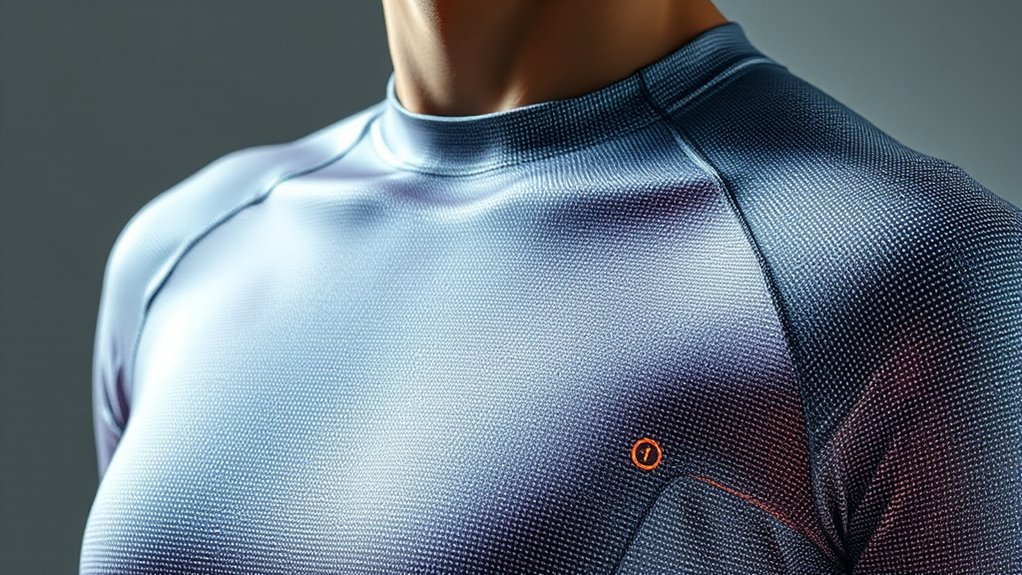

Smart fabrics are innovative clothing embedded with sensors and conductive fibers that monitor your health and activity in real time. They continuously collect data on essential signs like heart rate and respiration, providing effortless health insights without bulky gadgets. Perfect for fitness, medical monitoring, or everyday safety, these garments can alert you to dehydration, poor posture, or environmental hazards. If you’re curious about how these textiles work and their future impact, you’ll find much more below.

Get your next haul delivered free with Prime
- Fast, free delivery on millions of items
- Prime Video, Amazon Music and more included
- Member-only deals all year
Key Takeaways
- Smart fabrics incorporate embedded sensors and conductive fibers to monitor vital signs and health data seamlessly.
- These textiles enable real-time health tracking, alerting users to issues like abnormal heart rates or dehydration during activities.
- Embedded micro-sensors and chips transform clothing into continuous health monitoring systems without bulky gadgets.
- Medical applications include remote patient monitoring, early detection of health issues, and reducing hospital visits.
- Future smart clothing aims to enhance everyday life by providing proactive health and safety features integrated into daily wear.

Smart fabrics are revolutionizing the way we interact with clothing by integrating technology directly into textile fibers. This breakthrough in textile innovation allows your clothing to do more than just cover your body; it can now monitor your health, track your activity, and even provide real-time feedback. As you wear these garments, they’re constantly collecting data through embedded sensors, transforming your everyday attire into a sophisticated health monitoring system. Imagine shirts or pants that can detect your heart rate, measure your respiration, or track your movement patterns without the need for separate devices. This seamless integration of wearable technology means you can stay informed about your well-being effortlessly, without bulky gadgets or constant manual input.
When you choose smart fabrics, you’re embracing a new level of convenience and insight into your health. These textiles often utilize conductive fibers, micro-sensors, and tiny chips woven directly into the fabric, making the technology almost invisible and incredibly comfortable. You won’t feel the sensors, but your clothing will be working behind the scenes, gathering essential signs or activity data. This innovation not only enhances your ability to monitor your health but also encourages proactive management of your fitness and wellness routines. For instance, your smart workout gear can alert you if your heart rate exceeds safe levels or if you’re dehydrated during exercise, helping you make immediate adjustments. Additionally, some smart fabrics incorporate electric bike technology to power embedded sensors, extending their functionality and battery life.
The potential of textile innovation extends beyond just fitness enthusiasts. Medical applications are rapidly expanding, with smart fabrics assisting in patient monitoring and chronic disease management. These garments can transmit data directly to healthcare providers, enabling early detection of health issues and reducing the need for frequent hospital visits. Additionally, this technology can be used in everyday clothing to alert you to environmental hazards or even provide posture correction, making your clothing a proactive health companion. The versatility of wearable technology embedded in textiles means that the future of smart fabrics could dramatically improve quality of life for many.
Frequently Asked Questions
How Durable Are Smart Fabrics in Daily Wear?
You’re likely wondering about the durability of smart fabrics in daily wear. While fabric longevity varies depending on materials and construction, many smart fabrics are designed to withstand regular use. However, wearability concerns can arise, especially with frequent washing or stretching. You should look for fabrics with reinforced areas and proper care instructions to make sure they last longer. Overall, with proper maintenance, smart fabrics can be quite durable for everyday activities.
Are Smart Fabrics Washable Without Damage?
Imagine you’re wearing a smart shirt that tracks your heart rate, and you wonder if you can wash it like regular clothes. Generally, smart fabrics are designed to withstand standard washing processes, but you should follow manufacturer instructions to guarantee fabric longevity. Using gentle cycles and avoiding harsh detergents helps prevent damage. Proper care allows your smart clothing to stay functional and durable through multiple washes.
What Are the Privacy Concerns With Health Data?
When it comes to health data, privacy concerns are real. You should be aware that your information might be shared or hacked if not protected properly. To guard your data, companies should use data encryption and obtain your explicit user consent before collecting or sharing any health details. Always read privacy policies and ask questions about how your data is stored, used, and protected to guarantee your health information stays secure.
How Accurate Are the Health Sensors in Smart Clothing?
You might wonder about the accuracy of health sensors in smart clothing. They often rely on sensor calibration to guarantee precise readings, but accuracy can vary depending on the quality and how well they’re calibrated. While they offer convenience, you should also consider data privacy, as sensitive health data could be vulnerable. Overall, these sensors are improving, but it’s wise to stay informed about their calibration and security features.
What Is the Cost Difference Compared to Regular Clothing?
When comparing prices, smart fabrics tend to be more expensive than regular clothing due to their advanced technology. You’ll notice a higher price comparison, especially for items with integrated sensors and electronics. Affordability factors include the brand, features, and durability. While the initial cost is higher, some believe the health benefits and convenience justify the investment. Overall, expect to pay markedly more than traditional apparel, but prices are gradually decreasing as technology advances.
Conclusion
Imagine your clothing becomes a loyal health guardian, silently watching over you like a vigilant sentinel. As smart fabrics weave technology into your everyday life, they transform your wardrobe into a personal health monitor. This innovative fabric acts as a second skin, alerting you to changes and keeping you connected to your well-being. Embrace this future where your clothes are more than just fabric—they’re your most trusted health allies, always ready to protect and inform.
Halloween Picks
halloween
As an affiliate, we earn on qualifying purchases.