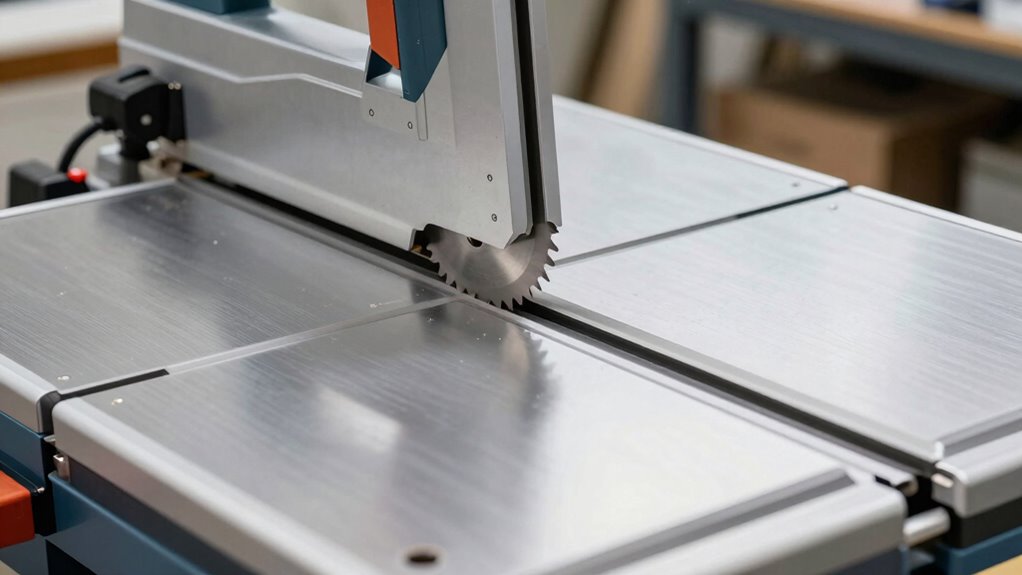

The biggest safety mistake to avoid is neglecting proper setup and safety measures on your table saw. Always make certain your blade is correctly aligned, set at the right height, and your safety devices like guards and riving knives are properly installed. Use push sticks and PPE, stay focused, and avoid rushing through cuts. Regular maintenance and building safe habits help prevent accidents. Keep learning to ensure you operate your saw both safely and effectively.
Key Takeaways
- Always ensure the blade height is set just above the wood to prevent kickback and accidental contact.
- Regularly calibrate and align the fence to guarantee accurate cuts and reduce safety hazards.
- Use push sticks and safety tools consistently to keep hands away from the blade during cuts.
- Verify the proper setup and functioning of safety devices like blade guards and riving knives.
- Avoid rushing; focus on building safe habits, maintaining focus, and performing routine safety checks.
What Is the Biggest Safety Mistake to Avoid on a Table Saw?

The biggest safety mistake to avoid on a table saw is neglecting to use a push stick or push block when guiding the material through the blade. This keeps your hands away from the spinning blade and reduces the risk of injury. Before starting, verify the blade installation is correct—improper alignment can cause kickback or binding. Additionally, good dust collection plays a crucial role in safety by maintaining clear visibility and preventing dust buildup that can make surfaces slippery or obscure hazards. Proper tool maintenance is also essential for ensuring all safety features work correctly and reducing the risk of accidents. Regularly inspecting your safety features, such as blade guards and emergency stops, helps maintain a safe working environment. Using a push stick or block, combined with proper blade installation and effective dust collection, helps you maintain control and stay safe during your woodworking projects. Moreover, staying informed about safety protocols can further help prevent accidents and ensure a secure workspace. Remember that proper training is vital to understanding how to use your table saw safely and effectively.
How Proper Blade Height Prevents Accidents and Damage
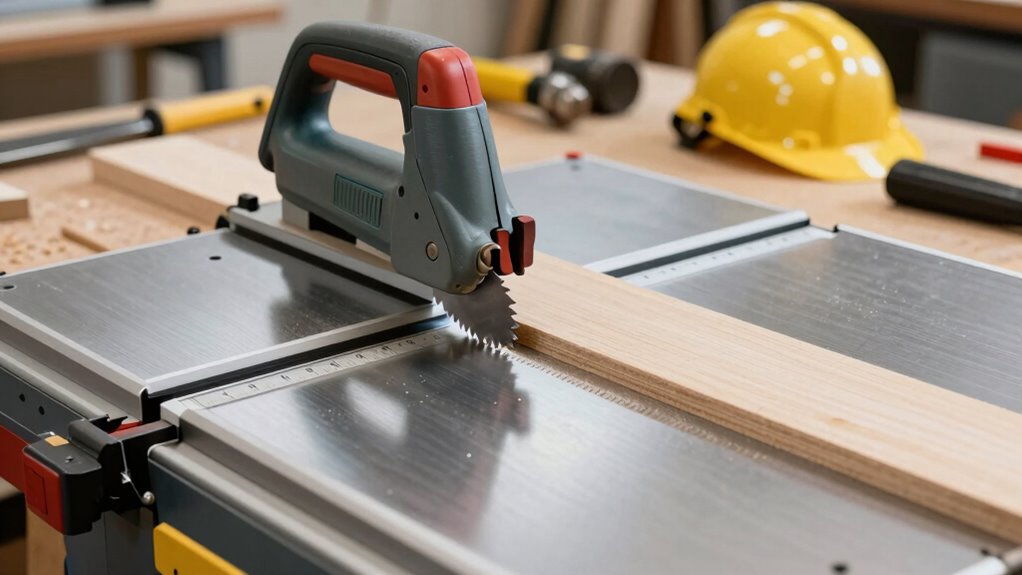
Setting the blade height correctly is essential for safe and efficient woodworking. When you adjust the blade to the right height, you reduce the risk of accidents and prevent unnecessary damage to your material. A proper blade height ensures saw safety by minimizing kickback and reducing the chance of blade contact. Using the correct projector technology can also enhance your viewing experience and safety during setup. Be mindful of these critical points: – Avoid dangerous kickbacks by setting the blade just high enough to clear the wood, preventing sudden jumps. – Protect your fingers by lowering the blade to reduce exposure during cuts. – Save time and money by preventing blade damage and ensuring cleaner, more precise cuts. Proper blade height is a simple step that considerably enhances your safety and keeps your tools in top condition. Additionally, understanding safety procedures can further reduce the risk of accidents during operation. Regularly inspecting your tableware and tools can help identify potential hazards before starting a cut. Incorporating filtering techniques can also help maintain the cleanliness of your workspace and equipment, reducing the risk of malfunctions. Remember, maintaining proper body awareness and respecting your workspace can significantly contribute to safe woodworking practices.
Why You Need Push Sticks and How They Keep You Safe
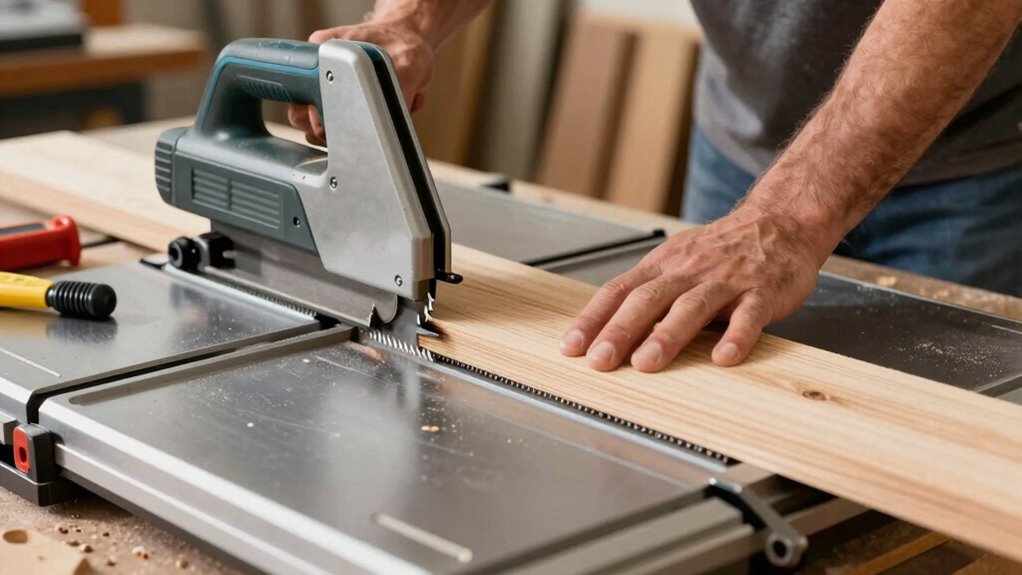
Have you ever worried about losing control of your wood piece during a cut? That’s where push sticks come in. They keep your hands safely away from the saw blade, giving you better control and reducing the risk of kickback. Using push sticks guarantees your fingers stay clear of danger, especially on narrow or tricky cuts. Don’t forget safety gloves—they add an extra layer of protection and improve grip, making handling easier. Combining push sticks with safety gloves minimizes accidents and keeps you focused on the task. Remember, even the most skilled woodworkers rely on these tools to maintain safety. Staying vigilant and using push sticks consistently helps prevent common table saw mistakes, keeping your workspace safe and your projects on track. Additionally, understanding the importance of proper tool safety can further enhance your overall workshop safety. Practicing consistent workshop safety habits ensures you’re prepared for unexpected situations and maintains a secure environment. Incorporating proper technique when using push sticks can further reduce the likelihood of mishaps. Being aware of auditory feedback and other safety cues can also help you stay alert during woodworking tasks. Developing good safety awareness can significantly reduce the chance of accidents and promote a safer working environment.
Avoid Rushing: How to Stay Focused During Cuts
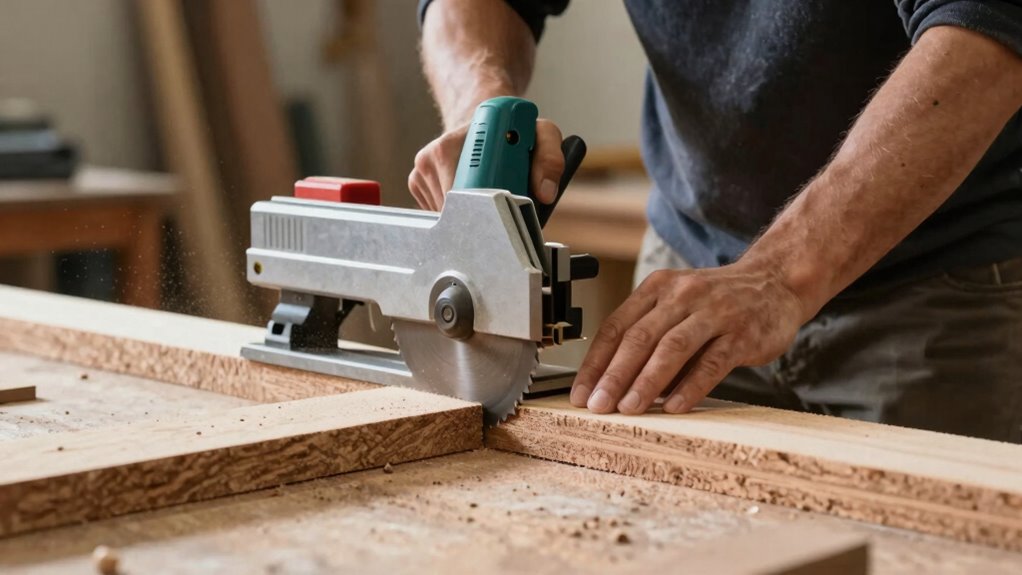
Rushing through a cut increases the risk of mistakes and accidents, so it’s essential to stay focused at all times. To maintain concentration, use mindfulness techniques like deep breathing to center yourself before starting. Avoid distraction triggers—silence your phone and clear your workspace. Remember, rushing compromises safety and precision, so take your time with each cut. Additionally, ensuring your kitchen gear is well-maintained can prevent unexpected malfunctions that might tempt you to rush. Being aware of equipment reliability helps you anticipate and prevent issues during operation. Recognizing the importance of measurement accuracy in your tools also supports precise cuts and safer operation. To stay alert: – Focus solely on the task, blocking out background noise – Pause if your mind wanders or you feel rushed – Break complex cuts into smaller, manageable steps. Incorporating regular equipment inspections can further reduce the likelihood of sudden failures that disrupt your workflow. Moreover, practicing proper heat buffering techniques can help mitigate the risk of overheating equipment during prolonged use, ensuring consistent performance and safety.
How to Set Up Your Blade Guard for Maximum Safety
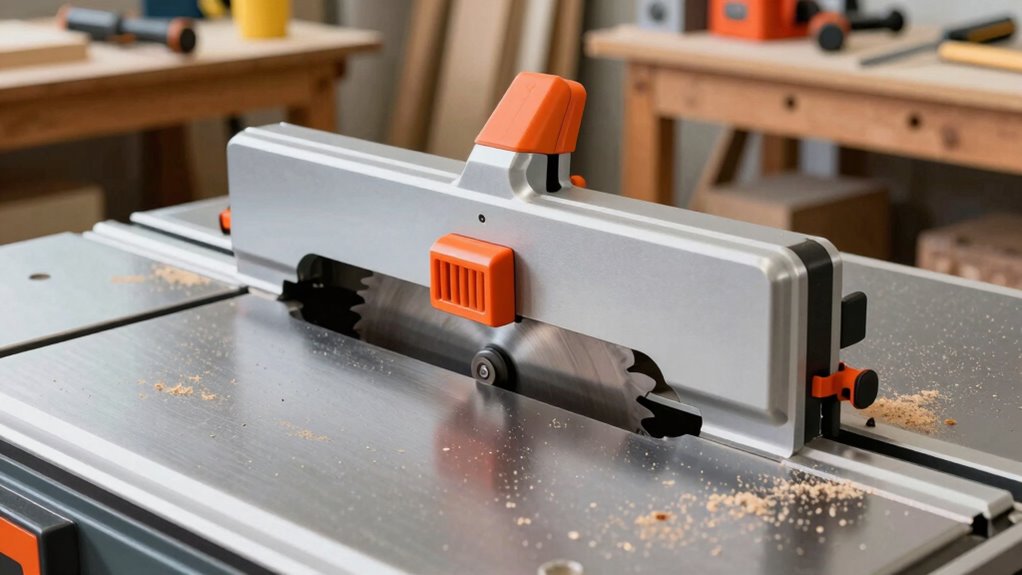
A properly adjusted blade guard is your first line of defense against accidents, so taking the time to set it up correctly is essential for safe operation. To guarantee ideal blade guard setup, start by lowering or raising the guard so it sits snugly above the material without dragging or wobbling. Check that the guard moves freely and stays in place during cuts. Adjust the splitter or riving knife to align closely with the blade, reducing kickback risks. Always verify that safety equipment, like the guard and anti-kickback pawls, are securely attached and functioning properly. Proper setup minimizes exposure to the blade, keeping your hands safe. Regularly inspecting and maintaining your safety equipment ensures it operates effectively, providing household safety and peace of mind. Remember, a well-maintained blade guard isn’t just a convenience—it’s a critical safety measure you can’t afford to ignore. Additionally, understanding table saw safety protocols enhances overall workshop safety and helps prevent accidents. Ensuring your cabling connections are secure and properly routed also reduces tripping hazards and equipment failures. Performing routine safety checks helps identify potential issues before they lead to accidents. Incorporating proper maintenance practices ensures that safety features remain reliable over time.
Why Accurate Fence Alignment Matters for Precise Cuts
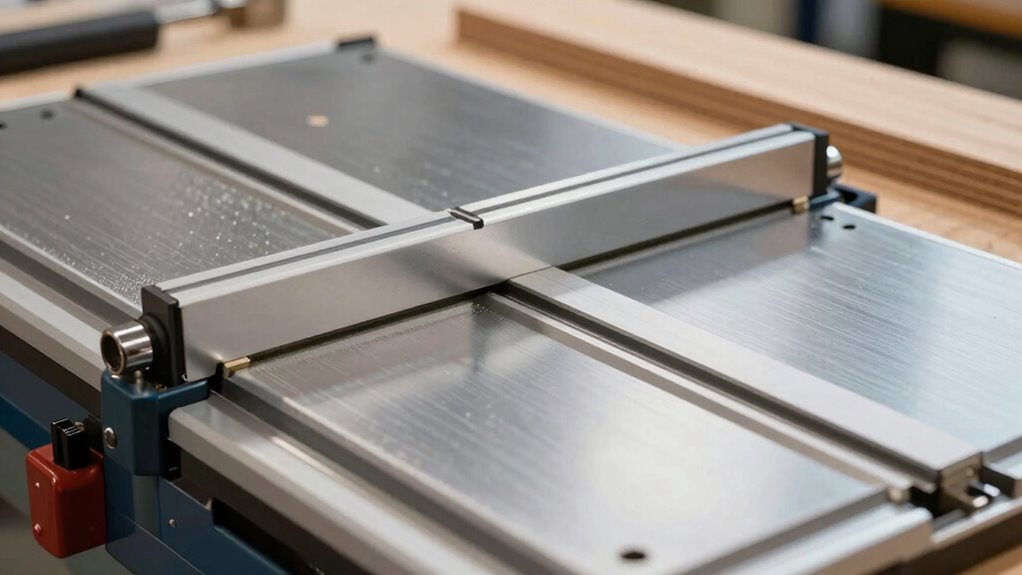
When your fence isn’t aligned accurately, your cuts can become uneven and unsafe. Proper fence calibration ensures your measurements are precise, leading to cleaner, more accurate results. Misalignment can cause waste, frustration, and even dangerous kickbacks. By prioritizing alignment accuracy, you guarantee each cut is consistent and safe. Think about how frustrating it is to redo work because of a crooked cut—poor fence setup can cause that. Regularly checking and adjusting your fence helps maintain peak performance and safety. When you focus on fence calibration, you’re investing in precision and peace of mind. Remember, a well-aligned fence isn’t just about better cuts; it’s about working smarter and safer every time. Keep your fence true, and your projects will turn out perfect.
Prevent Kickback: Common Setup Errors to Watch For
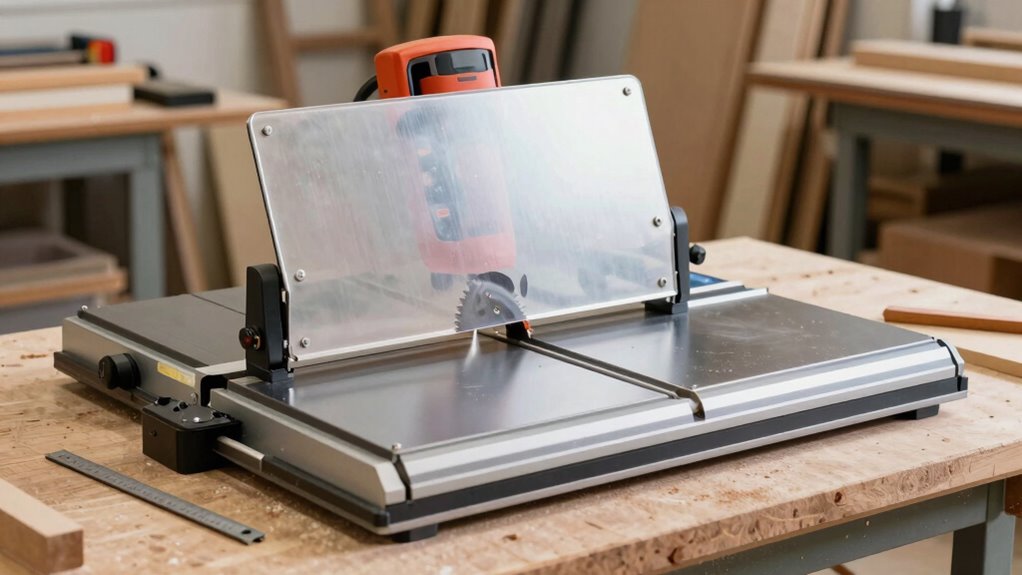
To prevent kickback, it’s crucial to identify and correct common setup errors before starting your cut. First, ensure your blade alignment is accurate; a misaligned blade can cause the wood to catch and throw back. Double-check that the blade is square to the table and fence. Also, clear dust buildup and ensure your dust collection system is functioning properly, as dust can obscure blade visibility and lead to improper cuts. Keep the workpiece securely supported and pushed through smoothly, avoiding force that could cause binding or kickback. Regularly inspect your saw for loose parts or misadjustments. By maintaining proper blade alignment and managing dust collection, you reduce the risk of dangerous kickback and ensure safer, cleaner cuts.
What Personal Protective Equipment Should You Always Wear?

Always wear essential personal protective equipment (PPE) to stay safe while operating a table saw. Protect your eyes from flying debris with sturdy protective eyewear—it’s your first line of defense. Use respiratory masks to prevent inhaling harmful sawdust and airborne particles, which can cause long-term health issues. Never underestimate the importance of PPE; it’s your barrier against injury.
- Shield your eyes with trusted protective eyewear, avoiding costly accidents
- Wear a respiratory mask to guard your lungs from dangerous dust
- Always keep your PPE on, even during quick cuts or adjustments
Your safety depends on consistent use of PPE. Stay alert, stay protected, and respect the power of your tools.
How Regular Maintenance Keeps Your Table Saw Safe and Reliable
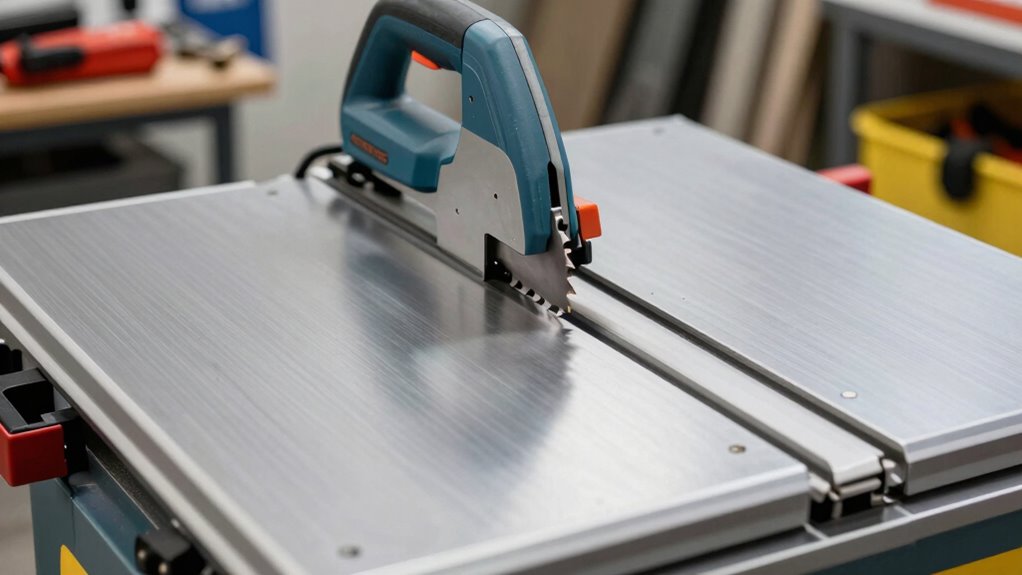
Regular maintenance is key to keeping your table saw safe and reliable. You should routinely check the blade to make sure it’s sharp and properly aligned, and don’t forget to lubricate moving parts to prevent rust and sticking. Staying on top of these tasks helps you avoid accidents and keeps your saw running smoothly.
Regular Blade Checks
Performing consistent blade checks is essential for keeping your table saw safe and functioning properly. Regular inspections ensure your blade remains clean, sharp, and free of debris, which directly impacts cut quality and safety. Pay close attention to blade cleanliness, removing pitch, resin, and dust buildup that can cause binding or kickback. Check the blade material—steel, carbide, or composite—to ensure it’s in good condition and suitable for your projects. A dull or damaged blade increases the risk of accidents and damages your saw. Staying vigilant with blade checks gives you confidence, prevents costly repairs, and prolongs your tool’s lifespan.
- Feel the thrill of perfectly smooth cuts every time
- Avoid dangerous kickbacks that could cause injury
- Keep your workspace safe and your saw reliable
Lubricate Moving Parts
Lubricating the moving parts of your table saw is essential for smooth operation and safety. Regular moving part maintenance prevents rust, reduces friction, and minimizes wear on components like the arbor and blade elevation mechanisms. Focus on blade lubrication, ensuring the blade spins freely and doesn’t stick. Use a suitable lubricant designed for power tools to avoid buildup that can attract sawdust. Check and lubricate the trunnions, gears, and guide rails periodically to keep everything moving smoothly. Proper lubrication not only extends the life of your saw but also helps maintain accurate cuts. Remember, a well-lubricated saw operates more safely, reducing the risk of sudden jams or kickbacks. Incorporate routine blade lubrication and moving part maintenance into your regular tool care to keep your saw reliable.
Building Safe Habits: Tips for Staying Vigilant While Using Your Table Saw

Staying safe at your table saw starts with maintaining focus at all times; distraction can lead to accidents. Always wear the appropriate safety gear, like eye and ear protection, to shield yourself from hazards. By building these habits into your routine, you reduce the risk of mistakes and keep yourself safe while working.
Maintain Focus Consistently
Maintaining focus at all times is essential for safe table saw operation. When you stay alert, you can better manage table saw ergonomics and ensure proper dust collection, reducing hazards. Distractions can lead to dangerous slips or misaligned cuts, risking injury. To stay focused:
- Keep your workspace tidy; clutter can distract you.
- Take regular breaks to avoid fatigue that dulls your concentration.
- Stay aware of your environment, including dust collection systems that keep your area clear and visible.
Remaining vigilant helps you respond quickly to unexpected issues. It’s easy to become complacent, but consistent focus keeps you in control and minimizes mistakes. Building this habit creates a safer, more efficient work environment, where every cut is precise and your safety is prioritized.
Use Safety Gear
Using the right safety gear is essential for protecting yourself and maintaining focus while operating a table saw. Wearing protective eyewear shields your eyes from flying debris, while ear protection reduces noise-induced fatigue. Proper gear creates a safe environment and helps you stay alert. Visualize your safety setup with this table:
| Safety Gear | Purpose | Benefits |
|---|---|---|
| Protective Eyewear | Protects eyes from debris | Prevents injuries, enhances visibility |
| Ear Protection | Reduces loud noise | Prevents hearing damage |
| Dust Mask | Keeps dust out of lungs | Maintains clear breathing |
Always double-check your gear before starting. Staying vigilant with the right safety equipment minimizes accidents and keeps your focus sharp.
Frequently Asked Questions
How Often Should I Inspect My Table Saw for Safety Issues?
You should inspect your table saw for safety issues before every use and perform more thorough safety inspections weekly. During these checks, focus on blade maintenance, ensuring the blade is sharp, aligned, and free of damage. Regular safety inspections help catch potential problems early, keeping your workspace safe. Don’t forget to also check the safety guards and switches regularly to prevent accidents and maintain peak performance.
What Are Signs That My Table Saw Needs Professional Repair?
Your table saw is screaming for help if you notice extreme blade misalignment or if the motor noise becomes unbearable. These signs indicate it’s past simple troubleshooting and needs professional repair. When the blade isn’t lining up properly or if vibrations increase, it’s a clear warning. Don’t ignore these symptoms—they could lead to dangerous kickbacks or damage. Act quickly to guarantee safe, precise cuts and prolong your saw’s lifespan.
Can Improper Dust Collection Affect Safety and Performance?
Improper dust collection can substantially impact safety and performance. When dust buildup occurs, it can clog the saw’s mechanisms, reducing cutting accuracy and increasing the risk of kickback. Poor air filtration allows dust particles to linger, posing respiratory hazards. You should regularly clean your saw and make sure your dust collection system works properly. Good airflow keeps the workspace safe, improves saw performance, and prolongs your tool’s lifespan.
How Do I Choose the Right Blade for Different Materials?
To choose the right blade, focus on blade selection and material compatibility. For softer woods, use a fine-toothed blade for a clean cut, while harder woods require a more durable, carbide-tipped blade. When cutting metals or plastics, pick blades designed specifically for those materials. Always check manufacturer recommendations and select blades that match your material’s hardness and density to guarantee safety, efficiency, and quality cuts.
Is It Safe to Use a Table Saw Without a Safety Switch?
A stitch in time saves nine, so don’t take shortcuts. It’s not safe to use a table saw without safety features like blade guards and a safety switch. These components protect you from accidental contact and kickback. Always verify your saw has a functional safety switch, and never operate it without proper safety features. Your safety depends on following these precautions to prevent injuries and keep your workspace secure.
Conclusion
Think of your table saw as a trusted compass on your woodworking journey. When you stay vigilant, follow safety practices, and respect its power, you steer clear of hazards and open the path to successful projects. Each safe choice is a guiding star, illuminating your skills and confidence. Keep your focus sharp, and let safety be the beacon that leads you home—building not just wood, but your reputation as a skilled, cautious craftsman.