
Choosing between a smart WiFi baby monitor and a non-WiFi model depends on how much security you prioritize. WiFi monitors offer convenience but can be vulnerable if not properly secured, risking unauthorized access. Non-WiFi monitors use analog signals, reducing hacking risks but limiting remote features. By understanding encryption, access controls, and network security options, you can make a safer choice for your home. If you want to see the key differences, keep exploring what options fit your needs.
Key Takeaways
- Non-WiFi monitors eliminate wireless transmission risks, reducing exposure to hacking and interception.
- WiFi monitors offer remote access but require strong security measures like encryption and password management.
- Non-WiFi models typically use analog signals, which are less vulnerable to cyber threats than digital WiFi streams.
- Secured WiFi monitors with regular firmware updates and encrypted networks can be as safe as non-WiFi options.
- The safest choice depends on proper security practices regardless of monitor type, including secure network setup and device updates.
What Safety and Privacy Features Should You Look for in a Baby Monitor
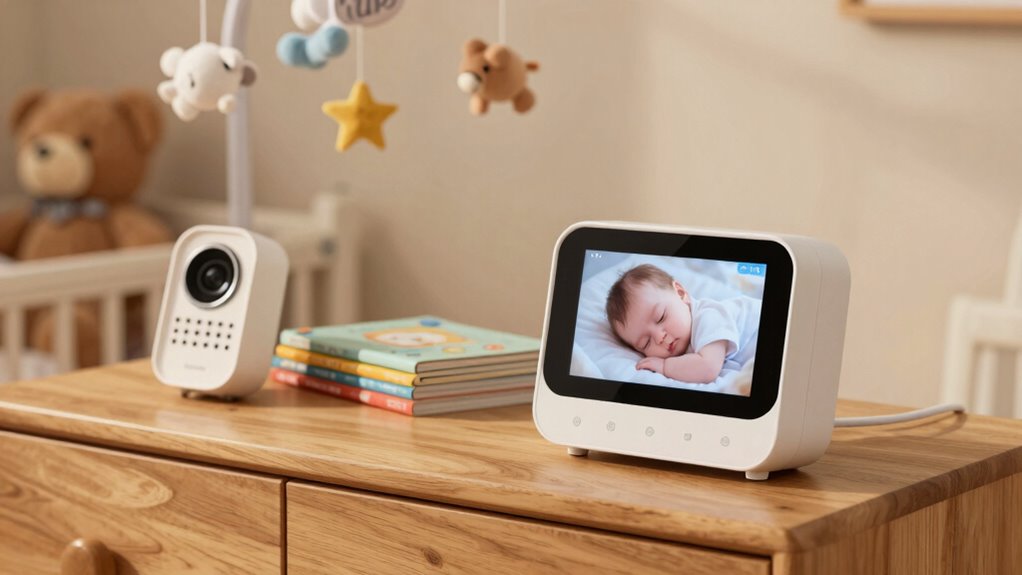
When choosing a baby monitor, prioritizing safety and privacy features is essential to protect your child and your family’s information. Start by checking camera placement; ensure the camera is securely mounted out of your child’s reach and doesn’t expose sensitive areas. Good camera placement minimizes the risk of accidental tampering or theft. Next, consider sound sensitivity; a monitor with adjustable sound sensitivity allows you to pick up necessary noises without constant background noise, reducing false alarms and preserving your privacy. Look for models that offer encrypted transmission to prevent hacking. Always verify that the monitor has secure, privacy-focused features to safeguard your family’s data. Understanding security features can help you select a monitor that better protects your family’s digital privacy. Additionally, choosing a monitor with firmware updates ensures your device stays protected against emerging security threats. Incorporating privacy settings can further enhance the confidentiality of your child’s monitored environment. Implementing secure network connections can significantly reduce the risk of unauthorized access. Regularly checking for software updates helps maintain optimal security levels. Combining thoughtful camera placement with controlled sound sensitivity helps create a safer, more private environment for your child.
Are WiFi Baby Monitors Safe? Risks and Concerns
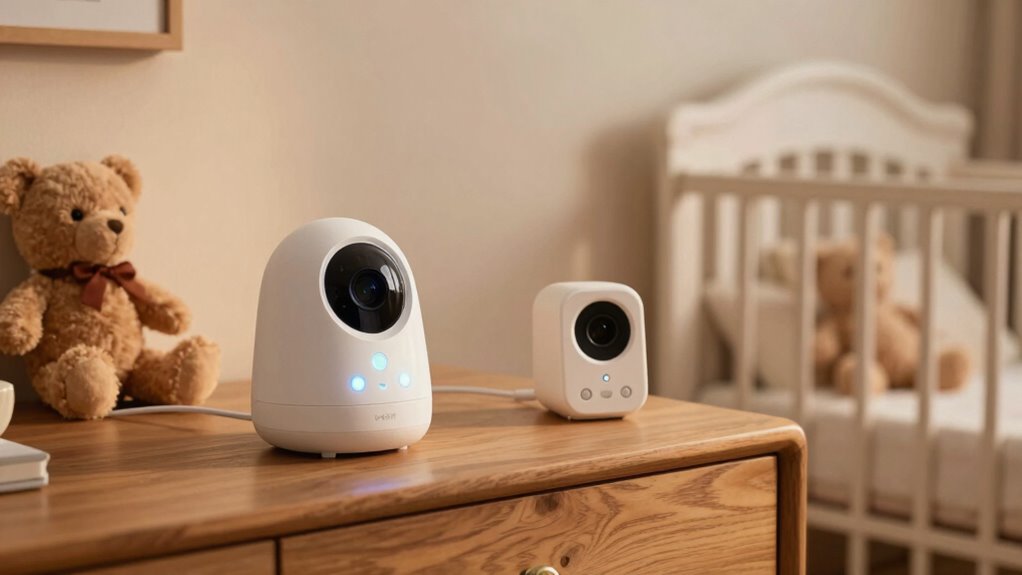
WiFi baby monitors can be vulnerable to hacking because of their wireless signals, which might expose your baby’s privacy. Data privacy concerns also arise if the information stored or transmitted isn’t properly protected. It’s important to understand these risks so you can make informed decisions about using WiFi-enabled devices. Additionally, high refresh rates in device connectivity can improve real-time monitoring, but they may also increase the potential for security breaches if not properly secured. Regular updates and strong passwords are essential to maintain device security and safeguard sensitive data. Ensuring proper network encryption can further reduce the risk of unauthorized access and protect your family’s privacy. Being aware of device vulnerabilities helps in choosing safer monitoring options, especially when considering the security features of different devices.
Wireless Signal Vulnerabilities
While WiFi baby monitors offer convenient remote access, their wireless signals can be vulnerable to hacking and unauthorized interception. Wireless signal vulnerabilities arise because these devices transmit data over radio frequency bands that can be intercepted by malicious actors. Additionally, radio frequency interference from other electronics or nearby WiFi networks can disrupt the monitor’s performance, potentially causing delays or loss of audio and video. These vulnerabilities may expose your baby’s environment to outsiders if proper security measures aren’t in place. To minimize risks, ensure your monitor uses strong encryption, change default passwords, and keep firmware updated. Being aware of these vulnerabilities helps you make informed choices and take necessary precautions to protect your home and your child.
Data Privacy Concerns
Despite the convenience of remote access, WiFi baby monitors raise significant data privacy concerns. Because these devices connect to the internet, your private audio and video feeds could be vulnerable to data breaches if security measures aren’t robust. Hackers might exploit weak passwords or security flaws to access sensitive information, putting your child’s safety and your privacy at risk. Additionally, some manufacturers collect and store data, raising questions about how your information is used and protected. If a data breach occurs, personal details could be exposed or misused. To minimize these privacy concerns, verify your monitor has strong encryption, change default passwords, and keep firmware updated. Being vigilant helps safeguard your home from potential privacy violations. Device security is critical to protecting your family’s privacy when using WiFi baby monitors. Implementing security best practices can further reduce the risk of unauthorized access and ensure your data remains protected.
How Non-WiFi Baby Monitors Reduce Connectivity and Security Risks
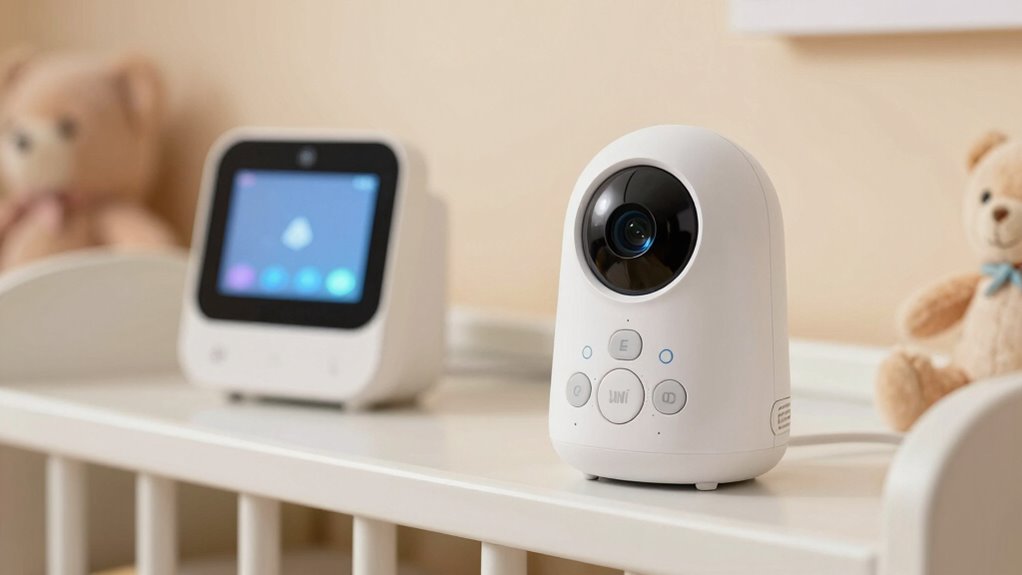
Non-WiFi baby monitors inherently minimize connectivity and security risks by avoiding internet access altogether. Without relying on WiFi, there’s no chance for hackers to intercept your baby’s video or audio streams remotely. This also reduces concerns about wireless interference disrupting the connection, ensuring a more stable feed. Plus, since these monitors don’t connect to the internet, you avoid vulnerabilities associated with online breaches. Many models feature parental controls that limit local access, giving you peace of mind. You control who can view or hear the feed, often through physical buttons or secure local connections. By eliminating internet dependence, non-WiFi monitors considerably lower the risk of unauthorized access, making them a safer choice for your home’s security. Additionally, understanding the concept of Free Floating technology can help you appreciate how these monitors operate independently of external networks for enhanced safety. Implementing local data processing further enhances security by keeping sensitive information within the device. Moreover, these monitors often utilize dedicated radio frequencies, reducing the likelihood of signal interference and improving reliability.
How Do Encryption and Access Controls Protect Your Baby’s Privacy?
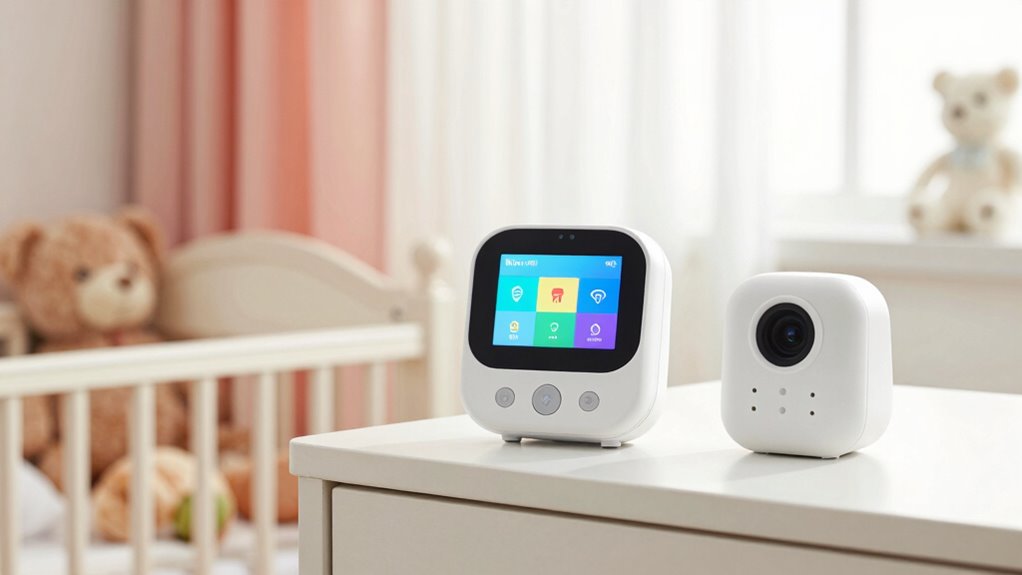
Encryption and access controls work together to keep your baby’s video and audio streams private by preventing unauthorized viewing. Encryption protocols scramble your data, making it unreadable to anyone without the correct decryption key. This guarantees that even if someone intercepts the stream, they can’t access its contents. Understanding encryption is essential for grasping how your data remains protected. Additionally, user permissions and multi-factor authentication strengthen access controls, providing an extra layer of security. Implementing these security protocols is crucial for maintaining privacy in connected devices. Properly managing device security settings helps prevent vulnerabilities that could be exploited by hackers. Combined, these security measures create a strong barrier against hacking or unauthorized access, safeguarding your baby’s privacy. By understanding and utilizing encryption protocols and access controls, you greatly reduce the risk of privacy breaches and ensure your little one’s safety remains protected.
Tips to Keep Your Baby Monitor Secure, No Matter Which Type You Choose
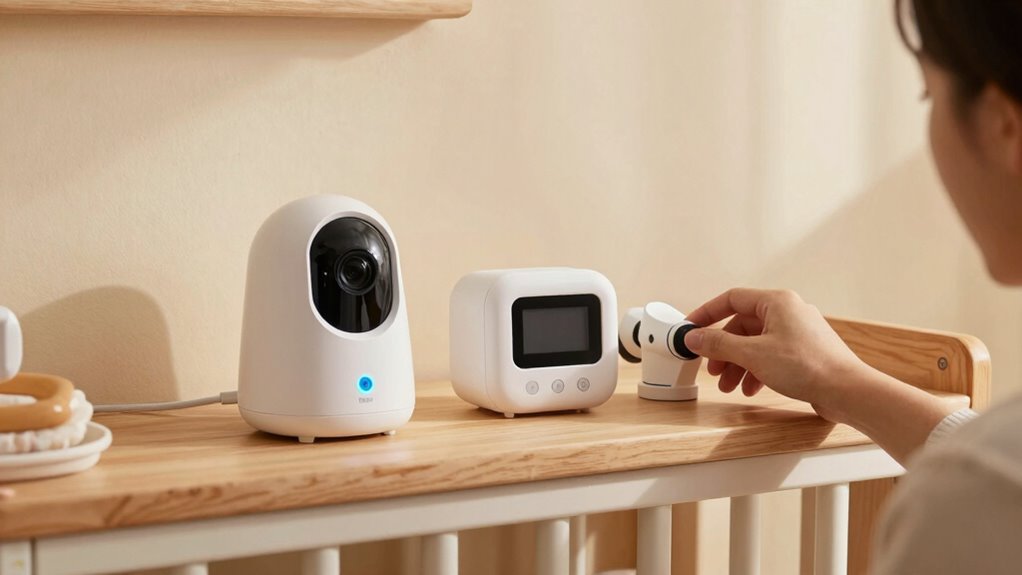
To keep your baby monitor secure, start by changing default passwords to something strong and unique. Make sure your WiFi network is protected with a solid password and encryption, so unwanted visitors can’t access your devices. Additionally, regularly update your monitor’s firmware to patch any security vulnerabilities and stay protected. Being aware of affiliate disclosure policies can also help you understand how your data may be used when using certain devices. Educating yourself about internet safety practices can further enhance your overall digital security. Incorporating Romanian folklore-inspired decorations into your home can add cultural richness while maintaining a secure environment. Using encrypted WiFi networks for your smart devices can provide an extra layer of security against potential breaches.
Change Default Passwords
Have you updated the default password on your baby monitor? Default passwords are a common security vulnerability that can leave your device exposed. Change them immediately to strengthen your security protocols and prevent unauthorized access. Use a strong, unique password that combines letters, numbers, and symbols. Avoid obvious choices like “admin” or “password,” which hackers can easily guess. Regularly updating passwords adds an extra layer of protection, especially if your monitor is connected to WiFi. Even non-WiFi models benefit from this practice, as some can be accessed via local networks. Making this simple change helps safeguard your privacy and your child’s safety. Remember, strong, unique passwords are your first line of defense against potential security breaches.
Secure WiFi Networks
Securing your WiFi network is a vital step in protecting your baby monitor from unauthorized access. A secure network ensures that data, especially with encrypted transmission, stays private. Start by changing default passwords on your router to prevent intruders. Use a strong, unique password and enable WPA3 encryption if available. Consider creating a separate network for your smart devices, isolating sensitive data from general internet traffic.
| Secure Network Tips | Emotional Impact |
|---|---|
| Use strong, unique passwords | Peace of mind for your family |
| Enable encryption (WPA3) | Confidence in your setup |
| Create a guest network | Protects your privacy |
A secure WiFi network safeguards your monitor, giving you confidence and peace knowing your child’s safety isn’t compromised.
Regular Firmware Updates
Regular firmware updates are essential for keeping your baby monitor secure because manufacturers often release patches that fix firmware vulnerabilities and improve device compatibility. Without these updates, your monitor may remain exposed to security flaws that hackers can exploit. Staying current with firmware ensures that known vulnerabilities are addressed promptly, reducing the risk of unauthorized access. It’s important to regularly check for updates from the manufacturer and install them as soon as they’re available. This proactive approach not only enhances security but also ensures your device functions correctly with other smart home components. Remember, outdated firmware can compromise the safety of your baby’s monitor, so make firmware updates a routine part of your home security maintenance.
Which Baby Monitor Is Safer: WiFi or Non-WiFi? Making an Informed Choice
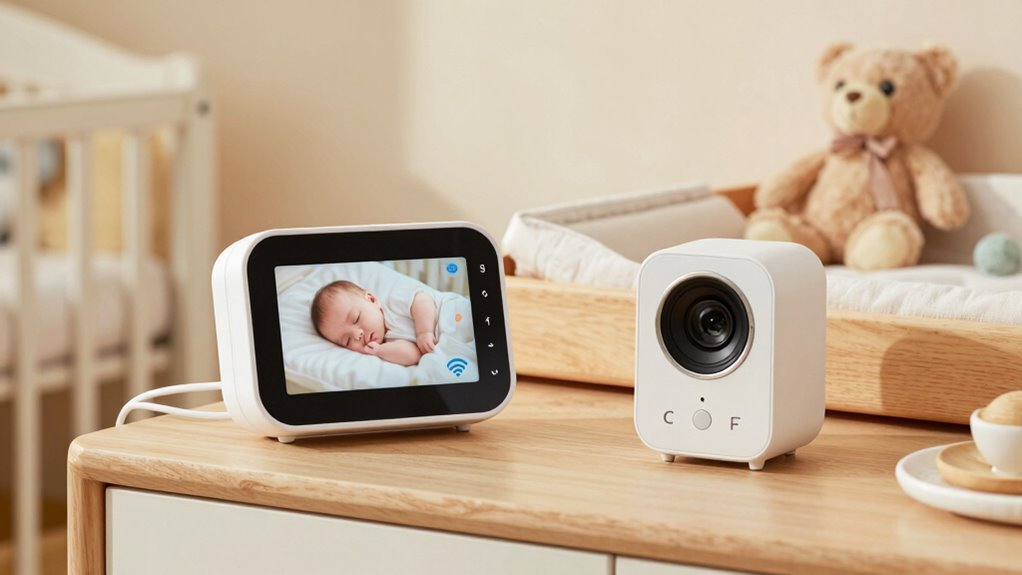
Choosing between a WiFi and a non-WiFi baby monitor involves considering safety as a top priority. WiFi monitors can connect to your smart home system, offering features like video surveillance accessible from anywhere. However, they may be vulnerable to hacking if not properly protected, posing privacy risks. Non-WiFi monitors, on the other hand, typically use analog signals, making them less susceptible to cyber threats. While they might lack remote access, they provide a more straightforward, privacy-focused option. Your choice depends on balancing convenience and security. If you prioritize a secure environment, a non-WiFi monitor might be safer. But if you want seamless integration with your smart home setup, ensure your WiFi monitor has robust encryption and security features to minimize risks.
Frequently Asked Questions
Can Non-Wifi Monitors Be Hacked More Easily Than Wifi Models?
Non-WiFi monitors generally face fewer security vulnerabilities, making them less prone to hacking risks compared to WiFi models. Since they don’t connect to the internet, hackers have fewer entry points to exploit. However, if non-WiFi monitors rely on Bluetooth or other wireless connections, they still could be vulnerable. Overall, WiFi models tend to have more security vulnerabilities, so they might be easier to hack if not properly secured.
Do Wifi Monitors Offer Better Video Quality Than Non-Wifi Options?
WiFi monitors generally offer better video clarity and streaming stability than non-WiFi options. You’ll notice sharper images and smoother playback, which helps you keep a close eye on your baby. Non-WiFi monitors usually rely on analog signals, so their video quality is lower and prone to interference. If clear, reliable video is a priority, a WiFi monitor is the better choice for your home.
Are There Any Health Concerns Related to Constant Wifi Exposure Near Babies?
You might wonder if constant WiFi exposure near your baby poses health risks. While electromagnetic exposure from WiFi devices is low, some studies suggest potential developmental risks with prolonged exposure. To minimize concerns, keep WiFi monitors at a safe distance and limit usage when possible. Staying informed and cautious can help protect your baby from unnecessary electromagnetic exposure, supporting healthier development and peace of mind.
How Do Battery Life and Power Sources Compare Between Wifi and Non-Wifi Monitors?
They say “a stitch in time saves nine,” and when comparing battery life and power sources, it’s true. Non-WiFi monitors often have better battery endurance and don’t rely on constant power, making them more adaptable for long-term use. WiFi monitors need continuous power and may drain batteries faster, requiring frequent recharging or connection to power outlets. Choose based on your need for reliability and convenience, keeping safety in mind.
Can a Wifi Monitor Connect to Multiple Devices Simultaneously?
Yes, a WiFi monitor can connect to multiple devices simultaneously through multi device connectivity. This feature allows you to stream live video and audio on different devices at once, making it easier for family members to stay connected. With simultaneous streaming, everyone can check in on your baby without interruptions. Just make certain your WiFi network has enough bandwidth to support multiple streams without lag or buffering.
Conclusion
Ultimately, choosing between WiFi and non-WiFi monitors boils down to balancing benefits and barriers. By prioritizing privacy, practicing proper security steps, and understanding risks, you can confidently choose a safer, more secure solution. Remember, security starts with small steps—staying vigilant, safeguarding settings, and staying informed. With mindful management, you’ll master monitoring your little one’s safety, turning technology into a trustworthy tool rather than a risky risk.