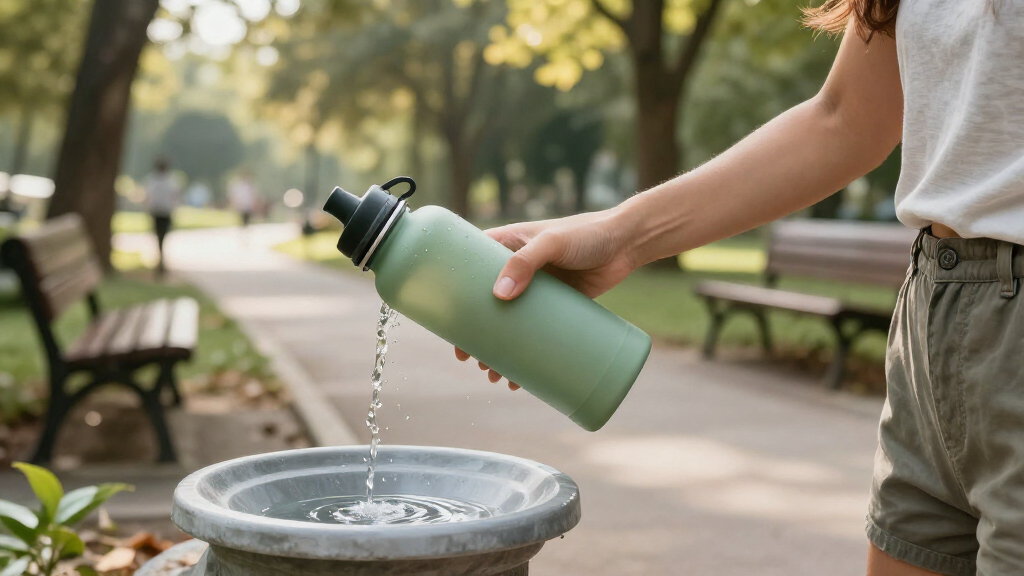

Plant-based water bottles vary more than the label suggests: some blend agricultural material with conventional plastic, while others use plant-derived material in a larger, cycling-focused design. I rank the ELITE Jet 750 ml first for riders who want more capacity and a high-flow valve, and the CamelBak Pivot 32 oz as the most versatile everyday pick thanks to its larger volume and dishwasher-safe vessel and cap. For a bike-specific bottle that squeezes easily, the MountainFLOW Geo Range is my focused choice.

Get your next haul delivered free with Prime
- Fast, free delivery on millions of items
- Prime Video, Amazon Music and more included
- Member-only deals all year
The main tradeoff is plant-derived content versus practical performance. The wheat-based models in this lineup are specified as 70% wheat material and 30% LDPE, rather than fully plant-based. The Pivot contains 10% renewable plant-based material but offers a larger general-use format, while the ELITE bottle uses sugar-cane-based biodegradable material and a cycling valve. I’ve ranked these options by how clearly their material claims are described, how well their format suits the intended use, and how manageable their care and capacity are.
Complete the kit


Key Takeaways
- The ELITE Jet is the strongest cycling choice when 750 ml capacity and a high-flow push-pull valve matter more than a fully plant-derived bottle.
- CamelBak Pivot holds 32 oz and suits everyday or multi-sport use, but its stated renewable plant-based content is 10%, lower than the wheat-based bottles’ 70%.
- Trail One, MountainFLOW Geo Range, and PNW Components share a 70% wheat-based and 30% LDPE material blend; their main differences are general-use versatility, squeeze-and-flow performance, and opening and valve design.
- The PNW bottle has the most useful described opening for adding ice or drink mix, while its care guidance favors hand washing and low-heat top-rack dishwashing.
- A plant-based material claim does not mean a bottle is entirely plant-made or that the whole bottle is compostable; check the stated material blend and end-of-life details.
| ELITE Jet Sugar Cane Cycling Water Bottle, 750 ml |  | Best for cycling capacity and fast hydration | Capacity: 750 ml | Material: Polyethylene terephthalate; described as sugar-cane-based | Material claim: Biodegradable and BPA-free | VIEW LATEST PRICE | See Our Full Breakdown |
| CamelBak Pivot Water Bottle, 32 oz, Leaf |  | Best overall for everyday and multi-sport use | Capacity: 32 oz | Material: Echo plastic with 10% renewable plant-based material | Weight: 177 g | VIEW LATEST PRICE | See Our Full Breakdown |
| MountainFLOW Plant-Based Bike Water Bottle, Geo Range, 600 ml |  | Best bike bottle for soft-squeeze hydration | Capacity: 600 ml | Material: 70% wheat-based plastic and 30% LDPE | Weight: 2.4 oz | VIEW LATEST PRICE | See Our Full Breakdown |
| PNW Components Plant-Based Water Bottle, 600 ml |  | Best for ice, drink mixes, and easier filling | Capacity: 600 ml | Material: 70% wheat-processing byproduct and 30% BPA-free LDPE | Valve: Push-pull bite valve | VIEW LATEST PRICE | See Our Full Breakdown |
| Trail One Plant-Based Mountain Flow Water Bottle, 600 ml |  | Best straightforward wheat-blend option for everyday outings | Capacity: 600 ml | Material: 70% wheat and 30% LDPE | Safety: BPA-free | VIEW LATEST PRICE | See Our Full Breakdown |
| plant-based water bottle | Capacity | Material | Care | Weight |
|---|---|---|---|---|
| ELITE Jet Sugar Cane Cycling W | 750 ml | Polyethylene terephthalate; described as sugar-cane-based | Dishwasher safe | 3.2 ounces |
| CamelBak Pivot Water Bottle | 32 oz | Echo plastic with 10% renewable plant-based material | Cap and vessel top-rack dishwasher safe | 177 g |
| MountainFLOW Plant-Based Bike | 600 ml | 70% wheat-based plastic and 30% LDPE | Machine washable | 2.4 oz |
| PNW Components Plant-Based Wat | 600 ml | 70% wheat-processing byproduct and 30% BPA-free LDPE | Hand wash recommended; top-rack dishwasher safe on low heat | — |
| Trail One Plant-Based Mountain | 600 ml | 70% wheat and 30% LDPE | Dishwasher safe | — |
More Details on Our Top Picks
ELITE Jet Sugar Cane Cycling Water Bottle, 750 ml
The ELITE Jet earns my top spot for riders who want plant-derived material alongside a bottle built for quick drinking on the move. Its 750 ml capacity is the largest listed here, giving it an advantage over the 600 ml Trail One, MountainFLOW, and PNW bottles when a ride or workout calls for fewer refills. The high-flow push-pull valve is also a better match for cycling than a basic opening: it is designed to deliver water quickly without requiring a separate cap to unscrew during a ride.
Its plant-based story differs from the wheat-blend bottles. ELITE describes its material as sugar-cane-based and biodegradable, while the three wheat options specify a blend of 70% wheat material and 30% LDPE. That makes the Jet attractive if sugar-cane-derived material is the feature you’re seeking, but it does not mean the bottle is made entirely from plant material or that disposal can be handled in ordinary compost. The listed material is polyethylene terephthalate, so I would read the biodegradable claim alongside any local disposal guidance rather than assume a particular end-of-life route.
Compared with the CamelBak Pivot, the Jet is far more specialized: it has a cycling valve and a narrower sport focus, while CamelBak offers a 32 oz standard bottle for broader everyday use. The Jet is also only 750 ml, which may still be limiting on long rides, despite being the largest of these five. Its dishwasher-safe care is convenient, and the stated 3.2-ounce weight keeps the bottle light. I rank it first for bike-focused buyers, not for someone seeking a fully plant-made bottle or a general-purpose bottle with a more conventional drinking opening.
Pros:- Largest stated capacity in this lineup at 750 ml
- High-flow push-pull valve suits quick hydration while riding
- Sugar-cane-based material is described as biodegradable and BPA-free
- Dishwasher safe and listed at 3.2 ounces
Cons:- Still may not hold enough water for longer rides
- Cycling-specific format is less versatile for everyday carry
- The biodegradable description does not specify disposal conditions
Best for: Cyclists and workout users who want a high-flow push-pull valve, sugar-cane-based material, and more capacity than the 600 ml bike bottles.
Not ideal for: Buyers who need a bottle for extended outings without refills, want a documented fully plant-based construction, or prefer a general-purpose bottle rather than cycling equipment.
- Capacity:750 ml
- Material:Polyethylene terephthalate; described as sugar-cane-based
- Material claim:Biodegradable and BPA-free
- Valve:High-flow push-pull
- Weight:3.2 ounces
- Dimensions:2.9 in W × 9.4 in H
- Care:Dishwasher safe
- Sport:Cycling
Our verdict“I recommend the ELITE Jet for cyclists who prioritize quick access to a larger serving and accept that plant-derived material does not mean fully plant-made construction.”
CamelBak Pivot Water Bottle, 32 oz, Leaf
The CamelBak Pivot is my best overall pick for buyers who want a plant-based component in a bottle they can use beyond cycling. Its 32 oz capacity is substantially larger than the 600 ml bottles from Trail One, MountainFLOW, and PNW, so it is better suited to desk use, errands, or activities where a bike-cage fit is not the deciding factor. At 177 g, it is described as lightweight, and its round standard-bottle shape should feel more familiar for general hydration than the cycling-specific valve bottles.
The important qualification is its material content: the Echo material contains 10% renewable plant-based material. That is a smaller stated plant-based share than the 70% wheat component in the Trail One, MountainFLOW, and PNW bottles. I rank CamelBak highly because of its broader use, larger volume, and practical care details, not because it has the highest plant-derived content. Buyers whose main priority is the largest disclosed renewable fraction should look instead at one of the wheat-blend options, while recognizing that each also contains 30% LDPE.
The Pivot is BPA-, BPS-, and BPF-free, and the bottle is described as resisting odors and stains. Its cap and vessel are top-rack dishwasher safe, which makes routine cleaning more convenient than the PNW bottle’s hand-wash recommendation. The supplied care detail applies specifically to the cap and vessel; I would not extend that instruction to any parts not named. Compared with the ELITE Jet, the Pivot trades the fast cycling valve for a more general bottle format and a larger stated capacity. This is the most balanced option for daily hydration, but it is not the strongest pick for riders needing a bottle-cage-ready squeeze bottle or a high plant-based percentage.
Pros:- 32 oz capacity suits longer stretches between refills
- Lightweight, durable, and described as odor- and stain-resistant
- Cap and vessel are top-rack dishwasher safe
- Free of BPA, BPS, and BPF
Cons:- Contains 10% renewable plant-based material, less than the 70% wheat component in three alternatives
- Not described with a cycling-specific valve or bike-cage fit
- Dishwasher guidance is specified for the cap and vessel only
Best for: People who want a larger standard bottle for work, everyday hydration, and varied activities, with a modest renewable plant-based component.
Not ideal for: Buyers seeking the highest stated plant-derived material share, a quick-flow cycling valve, or a bottle explicitly designed to fit a bike cage.
- Capacity:32 oz
- Material:Echo plastic with 10% renewable plant-based material
- Weight:177 g
- Bottle type:Standard bottle
- Free of:BPA, BPS, and BPF
- Care:Cap and vessel top-rack dishwasher safe
- Color:Leaf
- Sport:Multi-sport
Our verdict“I’d choose the Pivot for versatile daily use and larger capacity, while buyers prioritizing a higher plant-derived share should compare it with the wheat-blend bottles.”
MountainFLOW Plant-Based Bike Water Bottle, Geo Range, 600 ml
For a bike bottle that is meant to be squeezed rather than simply carried, the MountainFLOW Geo Range is the clearest fit in this group. Its body is described as soft-squeeze, paired with a quick-flow nozzle, so riders can move water with less effort while keeping attention on the route. The 600 ml capacity is a familiar middle ground for cycling, and its cylindrical shape is described as fitting most standard bottle cages.
Its material blend is also stated more precisely than a broad “plant-based” label: 70% wheat-based material and 30% LDPE. That gives it a much larger listed plant-derived share than the CamelBak Pivot’s 10% renewable content, though the Pivot is the better option if a larger everyday bottle matters more than bike-specific dispensing. The LDPE portion means the MountainFLOW bottle is not entirely plant-based, a distinction I would keep in mind when comparing sustainability claims.
MountainFLOW is listed as BPA-free and food-grade, and it is machine washable. That is a simpler care description than the PNW bottle, which recommends hand washing and limits dishwasher use to a low-heat top rack. The tradeoff is that the PNW has a large opening for ice and drink mixes, while the MountainFLOW description emphasizes squeeze and flow instead. Its 600 ml capacity is smaller than the ELITE Jet’s 750 ml, and the product is aimed at biking rather than general-purpose use. I rank it above the other 600 ml options for riders who value a responsive squeeze body, but not for those who want a wider opening or more water per bottle.
Pros:- 70% wheat-based material with the blend clearly specified
- Soft-squeeze body and quick-flow nozzle support on-bike drinking
- 600 ml cylindrical format fits most standard bottle cages
- BPA-free, food-grade, and machine washable
Cons:- Contains 30% LDPE rather than being entirely plant-based
- 600 ml may require refills on longer rides
- Bike-focused shape and dispensing are less suited to general daily use
Best for: Cyclists looking for a lightweight, cage-compatible 600 ml bottle with an easy-squeeze body and quick-flow nozzle.
Not ideal for: People who want a larger serving, a wide opening for ice and drink mixes, or a bottle whose use is not centered on biking.
- Capacity:600 ml
- Material:70% wheat-based plastic and 30% LDPE
- Weight:2.4 oz
- Shape:Cylindrical
- Bottle type:Standard bottle
- Valve and body:Quick-flow nozzle; soft-squeeze body
- Safety:BPA-free and food-grade
- Care:Machine washable
Our verdict“I’d pick the MountainFLOW over the more general Trail One when squeeze-and-drink performance on a bike matters most.”
PNW Components Plant-Based Water Bottle, 600 ml
The PNW Components bottle stands out among the 600 ml cycling options for its opening and valve rather than its capacity. Its large opening is described as making it easier to add ice or drink mixes, and it also gives more room for cleaning than a narrow-neck design. A soft push-pull bite valve handles dispensing, a practical setup for riders who want controlled access while moving. The bottle is made with 70% wheat-processing byproduct and 30% BPA-free LDPE, giving the material claim useful specificity while making clear that the product is a blend.
Compared with the MountainFLOW Geo Range, PNW gives more attention to filling and cleaning access, while MountainFLOW emphasizes its soft-squeeze body and quick-flow nozzle. The two share a 600 ml capacity and a 70/30 wheat-and-LDPE composition, so the choice comes down to how you expect to use them. Choose MountainFLOW if squeezing and quick delivery are your main concerns; the PNW is the more appealing fit if you regularly add ice, powder, or other fluids.
The main drawback is care. PNW recommends hand washing, with top-rack dishwasher use allowed on a low-heat setting, so it asks more attention than the machine-washable MountainFLOW or dishwasher-safe Trail One. Its cage fit is described as suitable for most bottle cages, not all, which leaves some uncertainty for unusual or tightly sized setups. I place it below MountainFLOW because its cleaning guidance is less convenient and its fit caveat is explicit, but it is a strong option for riders who value a roomy opening and an easy-open bite valve. It is still a 600 ml bottle, so riders covering longer distances may prefer the ELITE Jet’s 750 ml capacity.
Pros:- Uses 70% wheat-processing byproduct and 30% BPA-free LDPE
- Large opening helps with filling, adding ice, and cleaning
- Push-pull bite valve is designed for easy dispensing
- Can be hand washed or washed on the top rack at low heat
Cons:- Hand washing is recommended
- Cage compatibility is described for most, not all, bottle cages
- 600 ml capacity is below the ELITE Jet’s 750 ml
Best for: Cyclists who use drink mixes or ice and want a wide opening, a push-pull bite valve, and a wheat-processing byproduct blend.
Not ideal for: Buyers who want the simplest dishwasher routine, need confirmed fit for a specific nonstandard cage, or prefer more than 600 ml capacity.
- Capacity:600 ml
- Material:70% wheat-processing byproduct and 30% BPA-free LDPE
- Valve:Push-pull bite valve
- Opening:Large opening for filling and cleaning
- Shape:Cylindrical
- Recommended use:Biking
- Care:Hand wash recommended; top-rack dishwasher safe on low heat
- Color:Obsidian black
Our verdict“I recommend the PNW for riders who want easier filling and a useful bite valve, provided they are comfortable with its more careful cleaning instructions.”
Trail One Plant-Based Mountain Flow Water Bottle, 600 ml
The Trail One Mountain Flow is the most straightforward pick among the wheat-blend bottles. It holds 600 ml and is made from a stated 70% wheat and 30% LDPE blend, while its intended uses span sports, travel, hiking, and everyday hydration. That broader use description sets it apart from the MountainFLOW and PNW bottles, both of which are explicitly framed around biking. If you want a plant-material blend for varied outings rather than a bottle built around a bike valve or cage, Trail One is the easier match.
Its practical appeal is the combination of BPA-free construction and dishwasher-safe care. That is less particular than the PNW’s hand-wash recommendation and more convenient for buyers who want a simple routine after a hike or workout. The tradeoff is that the product details do not describe the same bike-specific squeeze and nozzle features as MountainFLOW, nor the large opening and bite valve on PNW. Those differences make Trail One a less compelling choice for riders who need fast on-bike access.
At 600 ml, it also holds less than the CamelBak Pivot’s 32 oz and the ELITE Jet’s 750 ml. The Pivot is the more versatile large-volume standard bottle, but its listed renewable content is only 10%; Trail One gives a higher stated wheat component while keeping a more compact format. Its description says it has no petroleum-based material claimed, yet also lists 30% LDPE. I would rely on the stated blend rather than interpret that broader claim as meaning the bottle is entirely plant-based. I rank Trail One fifth because its use and care profile are appealing but less distinctive than the specific valve, squeeze, opening, or capacity advantages offered by the other picks.
Pros:- Material is specified as 70% wheat and 30% LDPE
- Dishwasher safe and BPA-free
- Use description covers sports, travel, hiking, and everyday needs
- Reusable format with a straightforward round shape
Cons:- 600 ml capacity may be limited for longer outings
- Contains 30% LDPE rather than being fully plant-based
- No bike-specific valve or soft-squeeze feature is stated
Best for: Hikers, travelers, and everyday users who want a dishwasher-safe 600 ml bottle with a clearly stated wheat-based blend.
Not ideal for: Cyclists who want a described quick-flow nozzle or bite valve, people needing a larger bottle, or buyers seeking a bottle made entirely from plant material.
- Capacity:600 ml
- Material:70% wheat and 30% LDPE
- Safety:BPA-free
- Care:Dishwasher safe
- Finish:Glossy
- Shape:Round
- Manufactured in:USA
- Recommended uses:Sports, travel, hiking, and everyday use
Our verdict“I’d choose Trail One for varied outings and easy dishwasher care, but cyclists get more purpose-built drinking features from MountainFLOW or PNW.”
How We Picked
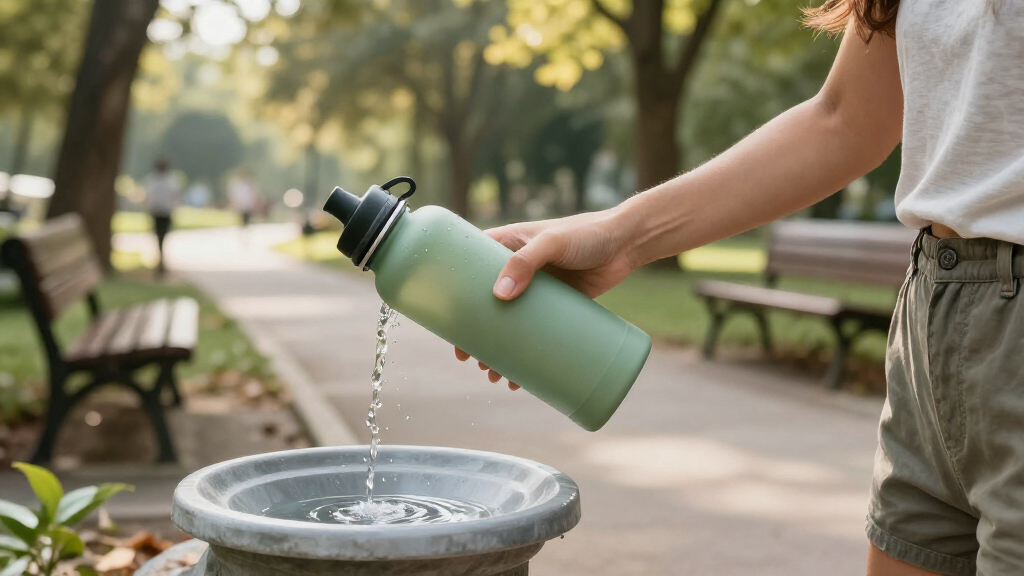
I compared these five bottles against the promise of a plant-based water bottle, not just as generic hydration gear. The source details identify three different material approaches: CamelBak’s Echo plastic with 10% renewable plant-based material, three bottles made from a 70% wheat-based component and 30% LDPE, and ELITE’s sugar-cane-based biodegradable material. Those percentages and descriptions matter because “plant-based” can refer to a partial blend, not a bottle made entirely from renewable feedstock.
My ranking also reflects the job each bottle appears built to do. Capacity, shape, valve style, squeeze behavior, bottle-cage fit, and care instructions all affect whether a bottle works for daily carry or active use. I give the ELITE Jet the lead for combining the lineup’s largest stated capacity with a cycling-oriented high-flow valve. The CamelBak Pivot ranks highly as a practical all-rounder, though its renewable content is lower. The other three wheat-blend options rank by how specific their stated use and handling features are: the MountainFLOW bike bottle has a soft-squeeze body, the PNW adds a wide opening and push-pull bite valve, and Trail One offers a simpler dishwasher-safe general-use format.
I have not treated claims such as “biodegradable” as a substitute for verified disposal instructions, nor inferred that a bottle is compostable from its material description. Where a product has a clear limitation—such as a partial LDPE blend, limited capacity, or narrower sport fit—I include it so the ranking helps buyers choose rather than simply praise every option.
| plant-based water bottle | Care | Shape |
|---|---|---|
| ELITE Jet Sugar Cane Cycling W | Dishwasher safe | — |
| CamelBak Pivot Water Bottle | Cap and vessel top-rack dishwasher safe | — |
| MountainFLOW Plant-Based Bike | Machine washable | Cylindrical |
| PNW Components Plant-Based Wat | Hand wash recommended; top-rack dishwasher safe on low heat | Cylindrical |
| Trail One Plant-Based Mountain | Dishwasher safe | Round |
Factors to Consider When Choosing Best Plant-based Water Bottles
The right choice depends on whether you value a larger plant-derived share, everyday capacity, or cycling-specific access. I’d compare the material claim and the drinking design together: a bottle that suits your route but is awkward to clean may be a poor daily fit.Read the plant-based percentage closely
These bottles do not share a single material recipe. CamelBak lists 10% renewable plant-based material in its Echo plastic; Trail One, MountainFLOW, and PNW specify 70% wheat material or wheat-processing byproduct with 30% LDPE; ELITE describes a sugar-cane-based biodegradable material. Those figures give a more useful comparison than a broad plant-based label alone. A 70% wheat component is a larger stated plant-derived share than CamelBak’s 10%, but it still does not make those bottles entirely plant-based. Similarly, “biodegradable” should not be read as a promise that a bottle can go into a home compost bin. Check the manufacturer’s disposal guidance if end-of-life handling is a deciding factor.
Match bottle style to your activity
For commuting, desk use, and activities where a standard opening is acceptable, the CamelBak Pivot is the most general-purpose format. Its 32 oz capacity is far larger than the cycling bottles listed here. For riding, the valve and body can matter more than a familiar bottle shape: MountainFLOW emphasizes a soft-squeeze body and quick-flow nozzle, PNW adds a push-pull bite valve, and ELITE uses a high-flow push-pull valve. Trail One covers sports and outdoor use broadly, but its details do not specify the same cycling-focused dispensing features. I’d prioritize a valve that fits how you drink while moving rather than choose by material claim alone.
Decide how much capacity you need
The 32 oz Pivot is the volume leader for everyday hydration, while the ELITE Jet’s 750 ml is the largest of the cycling-oriented options. Trail One, MountainFLOW, and PNW each hold 600 ml. A smaller bottle may be easier to fit into a cage or carry on a short trip, but can mean more refill stops. For a long ride or hike, consider your route, water access, and the number of bottles you can carry; none of the listed capacities by itself guarantees enough water for every outing.
Check cleaning instructions against your routine
Care guidance is not interchangeable across this group. Trail One is described as dishwasher safe, and MountainFLOW is machine washable. ELITE is dishwasher safe, while CamelBak specifies top-rack dishwasher use for the cap and vessel. PNW recommends hand washing, with top-rack dishwasher use allowed on a low-heat setting. If you frequently use drink mixes, a wide opening can help with access, which is a notable advantage of the PNW bottle. For buyers who want fewer care restrictions, Trail One or MountainFLOW has the simpler stated routine; follow the instructions for the specific parts of your bottle.
Treat cage fit and valve details as practical limits
A cycling bottle that does not fit your cage is not useful on a ride. MountainFLOW is described as fitting most standard bottle cages; PNW similarly says it fits most, not all, cages. Those qualifications are not a guarantee for every frame or holder, so check dimensions and your setup if fit is uncertain. The descriptions for the ELITE Jet and Trail One do not provide the same cage-fit detail. Valve type also changes how much effort drinking takes: a high-flow or push-pull valve aims to support quick hydration, while a standard bottle may suit slower, off-bike use better.
Frequently Asked Questions
Are these bottles made entirely from plant material?
No. The material descriptions show partial plant-derived content in several cases. CamelBak lists 10% renewable plant-based material in Echo plastic, while Trail One, MountainFLOW, and PNW list a blend containing 70% wheat material and 30% LDPE. ELITE describes its material as sugar-cane-based and biodegradable, but that does not establish that every component is plant-derived. I would compare the stated composition rather than assume that “plant-based” means fully plant-made.
Which bottle has the largest capacity?
The CamelBak Pivot has the largest stated capacity overall at 32 oz, making it the strongest choice for general use when fewer refills matter. Among the cycling-focused bottles, ELITE’s Jet holds 750 ml, compared with 600 ml for Trail One, MountainFLOW, and PNW. Capacity needs depend on your activity and access to refills, so a larger bottle may be preferable for longer stretches without water.
Which option is best for cycling?
I’d choose based on the kind of drinking access you prefer. ELITE Jet combines the largest cycling capacity here with a high-flow push-pull valve. MountainFLOW emphasizes a soft-squeeze body and quick-flow nozzle, while PNW offers a push-pull bite valve and a large opening for mixes or ice. Trail One is a reasonable outdoor bottle, but its provided details do not specify the same bike-focused valve features.
Can these bottles go in the dishwasher?
The stated care instructions vary. Trail One and ELITE are described as dishwasher safe, and MountainFLOW is listed as machine washable. CamelBak specifies that the cap and vessel are top-rack dishwasher safe. PNW recommends hand washing, with top-rack dishwasher use permitted on a low-heat setting. I’d follow each product’s specific instructions rather than assume every lid, valve, or component can be washed the same way.
Does biodegradable mean I can compost the ELITE Jet at home?
Not based on the product details provided. ELITE describes its sugar-cane-based material as biodegradable, but no conditions, time frame, or disposal route are stated here. That is not the same as a claim that the bottle is suitable for home composting. If disposal is a priority, check the manufacturer’s current instructions and local waste guidance before choosing a bottle on that basis.
Conclusion
My recommendations depend on what you need most. For cycling capacity and fast access, I’d choose the ELITE Jet; for a larger bottle that works across everyday activities, the CamelBak Pivot is the most versatile pick, though its plant-based share is the lowest stated here. Riders who want a 600 ml squeeze bottle should look at MountainFLOW, while the PNW is the better fit for drink mixes, ice, and a larger opening. Trail One makes the most sense for someone who wants a simpler dishwasher-safe bottle for hiking, travel, and everyday outings. Before deciding, compare the stated material blend, your required capacity, and the care routine you are willing to follow.