
To get your mini split size right, start with the simple rule of approximately 20 BTUs per square foot for well-insulated rooms. Keep in mind, factors like sunlight, ceiling height, and occupancy can change this estimate. Choosing the right size prevents short cycling, uneven temperatures, and higher energy bills. Getting it right now can save you headaches later—if you want to learn more about perfect sizing, keep going.

Get your next haul delivered free — and shop member deals
- Fast, free delivery on millions of items
- Access to Prime Big Deal Days deals on October 6–7
- Prime Video, Amazon Music and more included
Key Takeaways
- Use the 20 BTUs per square foot guideline as a starting point for accurate mini split sizing.
- Adjust capacity based on factors like insulation, sun exposure, ceiling height, and occupancy.
- Proper placement of indoor and outdoor units enhances airflow and system efficiency.
- Consult professionals for precise sizing to prevent uneven heating/cooling and reduce future costs.
- Oversized or undersized units lead to inefficiency, increased wear, and higher utility bills.
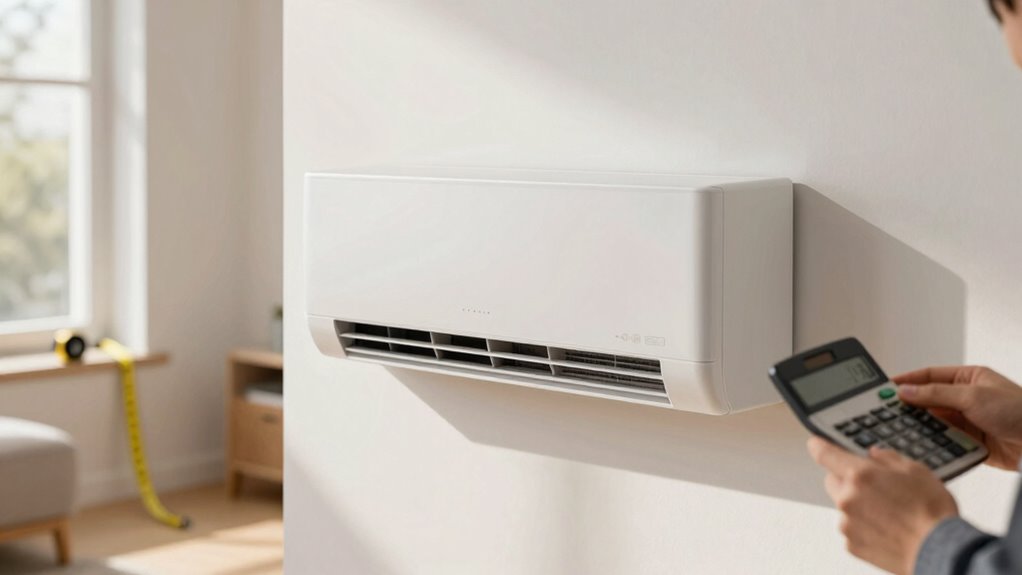
Have you ever wondered how to determine the right size for a mini split system? It’s a common question, and getting it right makes all the difference in comfort, efficiency, and long-term savings. When sizing a mini split, you need to take into account more than just square footage. Proper sizing guarantees maximum ductless efficiency, meaning your system won’t waste energy or struggle to keep your space comfortable. An undersized unit won’t generate enough cooling or heating, forcing it to run constantly and raising your energy bills. Conversely, an oversized unit will cycle on and off too frequently, leading to uneven temperatures and increased wear on components.
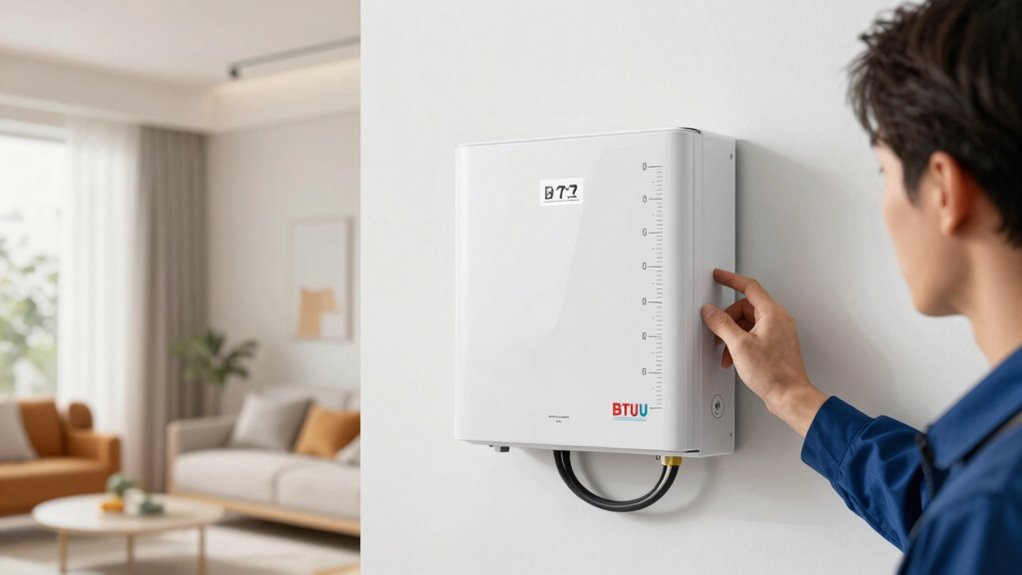
To find the right size, start with the BTU rule — a simple guideline that helps you match your mini split’s capacity to your space. Typically, you’ll need around 20 BTUs per square foot for a well-insulated room. For instance, a 300-square-foot room might require a 6,000 BTU mini split. However, this is just a starting point. You should also factor in other considerations like ceiling height, sun exposure, and room occupancy. Rooms with high ceilings or lots of windows may need more capacity, while well-shaded or insulated spaces might need less.
Installation considerations play a crucial role in sizing as well. Proper placement of the indoor and outdoor units ensures optimal airflow and temperature control. If the system is installed in an area with poor insulation or in a space that’s difficult to ventilate, you might need a slightly larger unit to compensate. Similarly, the layout of your space affects ductless efficiency—an open-concept design allows for smaller units, while segmented or partitioned areas may require multiple smaller systems or larger units to maintain consistent comfort. Additionally, understanding installation challenges can help prevent future issues like uneven cooling or heating, increased energy costs, and more frequent repairs. Properly assessing airflow dynamics during planning can significantly improve overall system performance. Moreover, consulting with a professional can help you make the most informed decision based on your specific space and needs. Considering long-term operational costs can also influence your sizing choice, ensuring your investment remains cost-effective over time.
Another important aspect is how easy or complex the installation will be. If you’re working in an older home or a space with limited access, you’ll want to choose a system size that accommodates these constraints. Proper installation not only affects comfort but also impacts the system’s longevity and efficiency. Proper planning and professional guidance can make the process smoother and ensure your system operates optimally.
mini split air conditioner 6000 BTU
As an affiliate, we earn on qualifying purchases.
As an affiliate, we earn on qualifying purchases.
Frequently Asked Questions
How Does Insulation Affect Mini Split Sizing Requirements?
Insulation directly impacts your mini split’s sizing requirements by improving thermal insulation, which helps retain heat in winter and keep cool air in summer. If your space has good insulation, you’ll need a smaller unit, boosting energy efficiency and reducing costs. Poor insulation means more heat transfer, so you’ll need a larger system to compensate. Proper insulation guarantees your mini split operates efficiently, saving energy and maintaining consistent comfort.
Can Multiple Mini Splits Be Used for Larger Spaces?
You can definitely use multiple mini splits for larger spaces, and it’s a smart move—think of it as “divide and conquer.” When doing DIY installation, spreading out units improves energy efficiency by avoiding overworking a single system. Plus, it allows you to customize comfort in different zones. Just make certain each unit is properly sized, and you’ll enjoy efficient cooling or heating without headaches or wasted energy.
What Is the Impact of Window Size on BTU Calculations?
Your window size impacts BTU calculations because larger windows let in more heat, requiring a BTU adjustment. When you measure window dimensions, you determine how much heat transfer occurs through the glass. If your windows are big, you’ll need to increase the BTU capacity of your mini split to maintain comfort. Conversely, smaller windows need less BTU adjustment, helping you choose the right size for efficient cooling or heating.
How Often Should Mini Split Units Be Serviced?
You should service your mini split units at least once a year to maintain ideal performance and prevent issues. Regular maintenance frequency helps identify potential problems early, reducing the risk of costly repairs or replacements. Neglecting maintenance can lead to increased replacement costs over time, so schedule professional inspections and cleanings annually. Staying consistent with maintenance keeps your system running efficiently and extends its lifespan, saving you money in the long run.
Are There Specific Brands Known for Better Efficiency?
Are you wondering which brands outperform others in efficiency? You’ll find that brands like Mitsubishi, Daikin, and LG often lead in efficiency ratings, making them reliable choices. A quick brand comparison shows these manufacturers prioritize energy-saving features, which can lower your utility bills. Don’t just choose based on price—look for those with higher SEER ratings for better performance and energy efficiency, ensuring you get the most out of your mini split system.
ductless mini split system for small room
As an affiliate, we earn on qualifying purchases.
As an affiliate, we earn on qualifying purchases.
Conclusion
Getting your mini split size just right might seem tricky, but following the BTU rule will save you from endless headaches. When you choose the perfect size, you’ll enjoy cool comfort without the monster-sized energy bills or inadequate cooling. Think of it like fitting a key into a lock—perfectly aligned and effortless. Trust this rule, and you’ll have your perfect climate control, making your home feel like a slice of paradise in no time.
As an affiliate, we earn on qualifying purchases.
energy efficient mini split unit
As an affiliate, we earn on qualifying purchases.
As an affiliate, we earn on qualifying purchases.
Fall Picks
fall essentials
As an affiliate, we earn on qualifying purchases.