

Edge AI is revolutionizing how devices handle data by processing it locally instead of relying on the cloud. This means faster responses, better security, and improved energy efficiency, especially for applications like autonomous vehicles or wearable tech. With advancements in hardware, devices become smarter and more autonomous, reducing network traffic and dependence on constant internet access. If you keep exploring, you’ll discover how these innovations are shaping a more connected and efficient future.
Key Takeaways
- Edge AI enables devices to process data locally, reducing reliance on cloud computing and enabling instant decision-making.
- Advances in hardware improve device processing power, making Edge AI more capable and widespread across industries.
- Local processing enhances privacy and security by minimizing data transmission and exposure risks.
- Energy-efficient edge devices extend battery life and reduce environmental impact through decreased network usage.
- Increased reliability and reduced network congestion support real-time applications and critical systems.

As technology advances, Edge AI is transforming how devices process data by enabling intelligence right at the source. Instead of sending all information to a centralized cloud, your devices now analyze data locally, making decisions instantly. This shift not only speeds things up but also enhances privacy, since less sensitive data needs to leave the device. You won’t have to worry as much about privacy concerns because your device can filter out or anonymize data before it’s shared, reducing the risk of breaches or unauthorized access. With Edge AI, your smart devices become more autonomous, capable of acting on information in real-time without waiting for cloud responses. This immediacy is especially essential in applications like autonomous vehicles, industrial automation, or health monitoring, where delays could be costly or dangerous.
Another significant advantage of Edge AI is its focus on energy efficiency. Traditional cloud-based processing requires constant data transmission, which consumes a lot of energy and puts a strain on network infrastructure. By processing data locally, your devices use less power because they don’t need to communicate as often or as extensively with distant servers. This makes Edge AI not only more environmentally friendly but also practical for battery-powered devices like wearables or remote sensors. You’ll notice longer battery life and less energy waste, which is fundamental in many applications where power sources are limited or difficult to access. Furthermore, local processing reduces network congestion, allowing your devices and the entire system to operate more smoothly and reliably. Additionally, advancements in edge hardware are continuously improving processing capabilities directly on devices, making Edge AI more accessible and efficient.
Implementing Edge AI also means your devices can operate more securely. Since data stays on the device longer, there’s less risk of interception during transmission. This makes your smart home, security cameras, or industrial equipment safer from cyber threats. And because decisions are made locally, your system can continue functioning even if the internet connection drops, ensuring continuous operation without interruption. This resilience is increasingly important as more critical systems rely on real-time data processing.
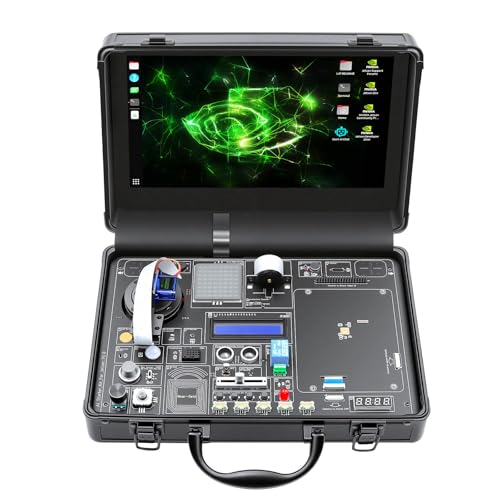
ELECROW AI Starter Kit for Jetson Orin Nano, 30 Sensors No Soldering Board, 8MP IMX219 Gimbal Camera, 11.6" IPS Screen, 38 Python Tutorials with AI Voice Interaction (Without Jetson Orin Nano Board)
- No-Solder Sensor Board: 30 integrated sensors for easy setup
- Includes Accessories: 128G SD card, adapter, mounting plates
- 8MP Gimbal Camera: Supports face and target tracking
As an affiliate, we earn on qualifying purchases.
As an affiliate, we earn on qualifying purchases.
Frequently Asked Questions
How Does Edge AI Impact Data Privacy and Security?
Edge AI enhances your data privacy and security by processing information locally on your devices, reducing the need to send data to the cloud. This minimizes risks of data breaches and helps maintain user anonymity. With data encryption at the device level, your sensitive information stays protected. You have better control over your data, ensuring privacy while still benefiting from AI-powered features without exposing your personal details to external servers.
What Industries Benefit Most From Edge AI Deployment?
Think of industries as a race car on a track, speeding ahead with edge AI fueling their engines. You’ll see autonomous vehicles benefit from real-time decision-making, improving safety and efficiency. Industrial automation also thrives, enabling machines to respond instantly to changes. These sectors gain a competitive edge, boosting productivity and innovation by processing data locally. Edge AI transforms how industries operate, making them faster, smarter, and more responsive.
How Is Energy Consumption Managed in Edge AI Devices?
You manage energy consumption in edge AI devices by focusing on battery efficiency and power optimization. You can implement low-power hardware components, optimize algorithms for minimal energy use, and utilize sleep modes when devices are idle. Additionally, deploying adaptive power management techniques helps extend battery life, ensuring your devices operate efficiently without sacrificing performance. This approach keeps energy consumption in check while maintaining effective edge AI functionality.
What Are the Limitations of Current Edge AI Hardware?
You face hardware constraints that limit your device’s capabilities, creating a bottleneck in performance. Processing limitations restrict how quickly your edge AI can analyze data, making complex tasks challenging. Small form factors, limited power, and thermal issues further hinder your hardware. These constraints keep your device from reaching its full potential, forcing you to balance power, size, and efficiency while trying to optimize performance within these boundaries.
How Does Edge AI Integrate With Cloud-Based Systems?
You integrate edge AI with cloud-based systems through distributed processing, enabling data to be processed locally on devices to reduce latency and improve response times. This setup allows you to send only essential information to the cloud for deeper analysis, saving bandwidth. By balancing local processing and cloud resources, you optimize performance, ensuring real-time decision-making while maintaining the power of cloud-based analytics.

CrewAI with Ollama: Build Local AI Agents, Autonomous Workflows, and Private LLM Systems on Your Machine (CrewAI with Ollama Series Book 1)
As an affiliate, we earn on qualifying purchases.
As an affiliate, we earn on qualifying purchases.
Conclusion
As you embrace the future of technology, remember that Edge AI puts processing power right in your hands—much like a modern-day alchemist’s toolkit, but in your device. No more waiting for the cloud’s distant servers; instead, you get instant insights, just like a scientist in the lab. With this evolution, your devices become smarter and more autonomous, transforming everyday moments into glimpses of a sci-fi dream—only this time, it’s real and happening now.
energy-efficient edge AI hardware
As an affiliate, we earn on qualifying purchases.
As an affiliate, we earn on qualifying purchases.
autonomous vehicle edge processors
As an affiliate, we earn on qualifying purchases.
As an affiliate, we earn on qualifying purchases.