

Families are taking proactive steps by using parental monitoring tools to track online activity and spot risks early. They set clear rules for sharing personal information and encourage responsible posting habits. Adjusting privacy settings on social media helps limit exposure, while ongoing conversations teach children about online consequences. Combining technical safeguards with open communication builds a secure environment. Keep exploring to discover more practical ways to protect your child’s privacy and foster safe digital habits.
Key Takeaways
- Implementing parental monitoring apps to track online activity and detect potential risks early.
- Educating children about responsible online sharing and the long-term impact of digital footprints.
- Adjusting social media privacy settings to limit public exposure and unwanted contact.
- Encouraging open communication to discuss online experiences and reinforce safety boundaries.
- Teaching digital literacy and cybersecurity practices to foster informed and safe online behavior.
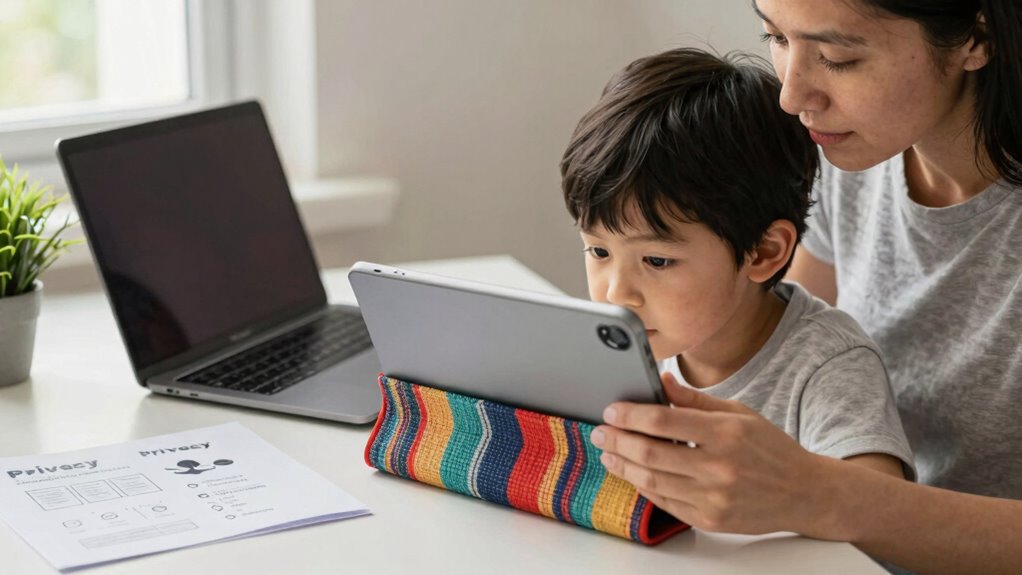
In today’s digital age, protecting your child’s online privacy is more important than ever. Kids are growing up in a world where their every move online can leave a lasting mark—what’s called a digital footprint. This footprint includes everything from social media posts to the websites they visit, and once it’s out there, it’s hard to fully erase. As a parent, you need to take an active role in managing and limiting this footprint to help shield your child from potential risks. That’s where parental monitoring becomes essential. By staying aware of your child’s online activities, you can guide them toward safer habits and prevent them from sharing too much personal information.
Many families are now using specialized tools and apps to keep a closer eye on what their children do online. Parental monitoring software allows you to see which sites your child visits, who they’re communicating with, and what kind of content they’re engaging with. This doesn’t mean invading their privacy, but rather establishing boundaries and ensuring they understand the importance of privacy and safety. Monitoring helps you identify signs of cyberbullying, inappropriate content, or risky behavior early on, giving you a chance to intervene before problems escalate. It also encourages open dialogue, so your child feels comfortable approaching you if they encounter issues or have questions about their online experiences.
Using monitoring tools helps parents spot risks early and fosters open conversations about online safety and privacy.
Beyond technology, many families are fostering conversations about digital footprints and privacy from a young age. Teaching your children about what they post and share online helps them understand the consequences of their actions. Encourage them to think before they click “send” or “post,” and remind them that once something is online, it can stay there permanently. This awareness can help them develop responsible online habits, which are crucial as they grow and navigate more complex digital environments. It’s also wise to set clear rules about what personal information they can share and with whom, reinforcing the idea that their privacy should always be a priority. Additionally, understanding the importance of biodiversity can help instill a broader appreciation for the interconnectedness of living things and the environment, fostering responsible digital citizenship that respects both online and offline worlds. Recognizing how digital footprints are formed can also help children grasp how their online actions affect their reputation and future opportunities.
Finally, some families are opting for privacy settings and account restrictions on social media platforms to limit exposure. Adjusting privacy controls can help prevent strangers from accessing your child’s information and reduce the chances of unwanted contact. Combining these technical measures with ongoing conversations about online safety creates a comprehensive approach to protecting your child’s digital identity. It’s also beneficial to educate children about cybersecurity, so they understand how to protect their devices and personal information from potential threats. Being proactive about these measures can also serve as a valuable educational tool to teach children about the importance of online safety from an early age. Moreover, understanding the concept of digital literacy can empower your child to make informed decisions and navigate the digital world responsibly. Ultimately, by actively engaging in your child’s digital life and setting appropriate boundaries, you help them build a safer, more mindful online presence—one that respects their privacy and supports their growth in this connected world.

Kids Tablet,Android 16 Tablet for Kids 10 inch with Case,24GB RAM 64GB ROM
- Screen Size: 10-inch HD IPS display with low blue light
- Operating System: Android 16.0 for faster, safer use
- Storage Capacity: 24GB RAM, 64GB ROM, expandable up to 1TB
As an affiliate, we earn on qualifying purchases.
As an affiliate, we earn on qualifying purchases.
Frequently Asked Questions
How Can I Monitor My Child’s Online Activity Effectively?
You can monitor your child’s online activity effectively by setting up parental controls on devices and apps they use. Regularly check their digital footprint to understand what information they share online. Keep open communication about internet safety, and encourage your child to come to you with concerns. Using parental controls helps you limit access to inappropriate content, while monitoring their digital footprint guarantees they’re aware of how their online actions impact their privacy.
What Are the Best Privacy Settings for Children’s Apps?
You should set the app permissions to restrict access to sensitive features like location, camera, and contacts, reducing exposure of child data. Always choose privacy settings that limit who can see or contact your child. Regularly review and update these settings to stay ahead of new risks. By controlling app permissions and privacy options, you help protect your child’s data from unauthorized access and keep their online experience safer.
How Do I Talk to My Child About Online Privacy?
Start with a sincere, simple chat about digital footprint and online reputation. Use clear, caring language to convey why privacy matters, emphasizing the importance of responsible sharing. Encourage your child to ask questions and express concerns, creating a safe space for dialogue. By building trust through transparency, you help your child understand how their online actions can shape future opportunities, fostering mindful, motivated, and responsible digital citizens.
Are There Legal Protections for Children’s Online Data?
Yes, there are legal protections for children’s online data. Legal frameworks like COPPA (Children’s Online Privacy Protection Act) in the U.S. require websites and apps to obtain parental consent before collecting personal information from kids under 13. These laws aim to safeguard data privacy, ensuring companies handle children’s data responsibly. As a parent, you can rely on these protections, but it’s also essential to stay informed and set clear boundaries online.
How Can I Identify Signs of Online Privacy Violations?
You might notice unusual activity or sudden changes in your child’s digital footprint, which can be signs of privacy breaches. Keep an eye out for unexpected messages, unfamiliar accounts, or personal info appearing online. These coincidences suggest someone may be accessing your child’s data. Regularly review privacy settings, monitor online interactions, and talk openly about privacy to help identify early signs of online privacy violations.

The Social Media Gospel: Sharing the Good News in New Ways, Second Edition
As an affiliate, we earn on qualifying purchases.
As an affiliate, we earn on qualifying purchases.
Conclusion
So, as you navigate the digital world with your family, remember that safeguarding your child’s privacy isn’t just a task—it’s a promise to protect their future. Think of it as planting seeds today for a secure tomorrow. By setting boundaries, staying informed, and fostering open conversations, you create a shield that’s stronger than any password. Because in this online age, your vigilance is the key to revealing a safer, brighter future for your children.

Cyber Explorers: Security & Artificial Intelligence in the 21st Century: A Kid’s Guide to Being Smart, Safe and Cool Online
As an affiliate, we earn on qualifying purchases.
As an affiliate, we earn on qualifying purchases.

JrTrack 5 Kids Smart Watch by Cosmo | Best Kid-Safe Phone Watch | Precision Real-Time GPS Tracking | Call, Text, Activity, School Settings | Spotify Music | Parental Controls | SOS & Safety Alerts
- Best Kid-Safe Smartwatch: Safety and connection for kids 6+
- Real-Time GPS Tracking: Accurate HaloGPS technology
- Secure Calling & Messaging: Family-safe calls and texts
As an affiliate, we earn on qualifying purchases.
As an affiliate, we earn on qualifying purchases.