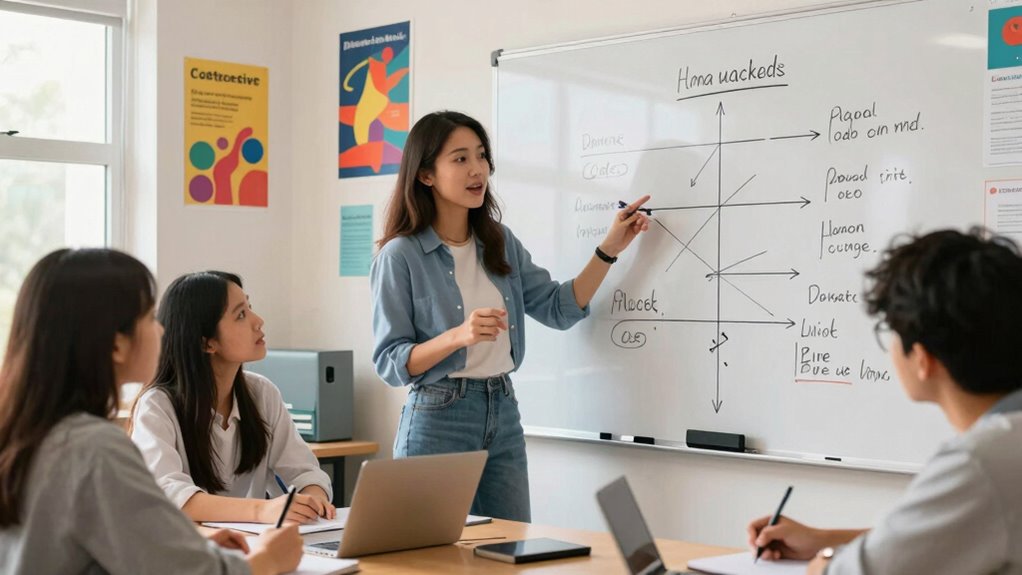

To learn faster by teaching what you know, actively explain concepts and organize ideas, which deepens your understanding and reveals gaps. Collaborate with peers to gain new perspectives, challenge your thinking, and improve your confidence. Use group discussions, problem-solving, and feedback to refine your knowledge. Teaching turns passive listening into engaging learning, reinforcing memory and skills. Keep exploring this approach to discover more ways to boost your learning efficiency and mastery.
Key Takeaways
- Explaining concepts reinforces your understanding and highlights gaps, enabling targeted and efficient learning.
- Teaching others transforms passive study into active engagement, boosting memory retention.
- Peer collaboration exposes you to different perspectives, enhancing comprehension and problem-solving skills.
- Providing feedback and receiving questions clarify complex topics and solidify knowledge.
- Regular teaching encourages responsibility and accountability, accelerating mastery of material.
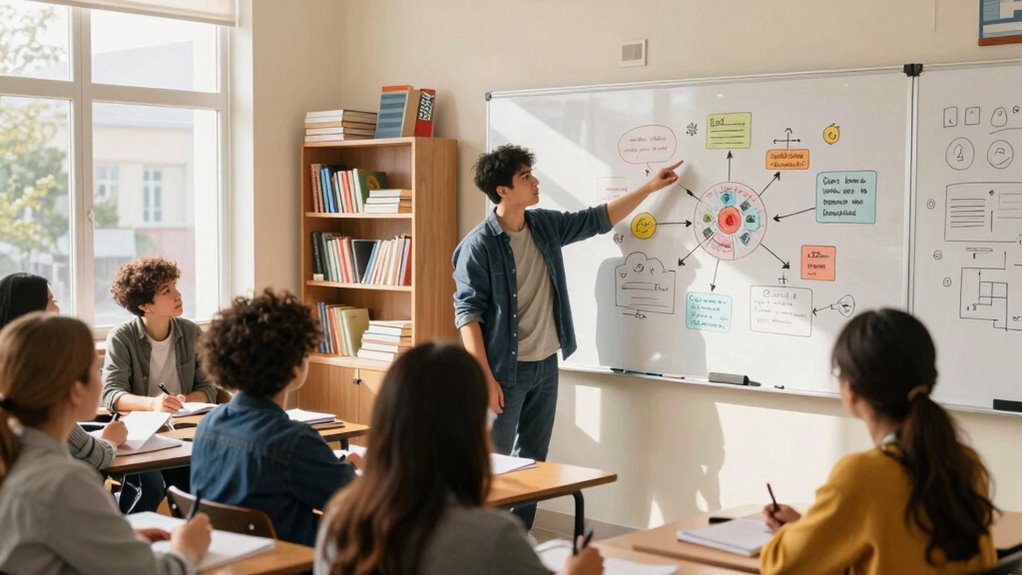
Ever wondered how teaching others can actually accelerate your own learning? When you take on the role of an instructor, you engage in interactive methods that deepen your understanding. Instead of passively absorbing information, you actively process what you know by explaining concepts, answering questions, and clarifying ideas. This active engagement makes the material stick better and helps identify gaps in your knowledge. The process of teaching forces you to organize your thoughts clearly, which reinforces your memory and comprehension.
Teaching others deepens understanding, highlights gaps, and reinforces memory through active explanation and organization of ideas.
Peer collaboration plays a vital role in this learning approach. When you work with others, you’re exposed to different perspectives and ways of thinking. Discussing topics with peers challenges you to articulate your ideas and defend your understanding, which solidifies your grasp of the subject. Collaborative learning creates a dynamic environment where ideas bounce back and forth, prompting you to think critically and adapt your explanations. This interaction not only enhances your knowledge but also boosts your confidence in the material. Understanding the importance of active engagement in learning can significantly boost your ability to retain information and develop practical skills.
Using interactive methods during peer collaboration makes the experience even more effective. Techniques like group discussions, teaching sessions, or problem-solving exercises turn passive learning into an active process. When you teach, you’re not just repeating information; you’re engaging with it on a deeper level. For example, explaining a complex concept to someone else requires you to break it down into simpler terms, which clarifies your own understanding. As you navigate questions and challenges from your peers, you learn to think on your feet and refine your knowledge. Additionally, incorporating collaborative learning strategies can create a more cohesive and motivated group dynamic, which enhances overall learning outcomes.
Furthermore, peer collaboration fosters accountability. When you teach others, you’re more motivated to master the material, knowing that you’ll need to explain it clearly. This creates a sense of responsibility that encourages you to prepare thoroughly. Plus, giving and receiving feedback within a peer group helps you identify misconceptions early and correct them. This continuous cycle of teaching, questioning, and refining accelerates your learning process. Additionally, understanding the value of interactive methods in learning can significantly boost your ability to retain information and develop practical skills.
In the end, integrating interactive methods and peer collaboration into your study routine transforms passive study sessions into lively, engaging experiences. Teaching what you know becomes a powerful tool for mastering new skills faster. You’re not just memorizing facts—you’re actively constructing knowledge, reinforcing your understanding, and developing the confidence to apply what you’ve learned. This approach turns learning into a collaborative journey, where sharing knowledge is the key to learning more efficiently and effectively.
As an affiliate, we earn on qualifying purchases.
Frequently Asked Questions
Can Teaching Others Improve My Own Understanding?
Yes, teaching others can considerably improve your understanding. When you explain concepts, you actively engage with the material, reinforcing your knowledge. Using teaching tools like diagrams or analogies helps clarify ideas, while peer feedback highlights areas needing improvement. This process deepens your comprehension and uncovers gaps. As you teach, you solidify your grasp, making it easier to recall and apply information effectively.
What Are the Best Methods to Teach Others Effectively?
Think of teaching as planting seeds for growth. To do it effectively, use interactive methods like discussions, quizzes, or demonstrations to engage your learners actively. Incorporate feedback strategies such as asking open-ended questions or providing constructive critique to guide improvement. These techniques foster deeper understanding and keep learners motivated. By making the process lively and responsive, you guarantee your teaching leaves a lasting impact and helps both you and your students grow.
How Much Teaching Is Needed to See Learning Benefits?
You’ll see learning benefits with just a few focused teaching sessions, but consistent teaching accelerates progress. Aim for short, frequent sessions—about 15-30 minutes—spread over days or weeks to reinforce your understanding. The right teaching frequency depends on your learning duration goals. Regularly explaining concepts helps solidify knowledge, so incorporating teaching into your routine guarantees faster mastery and deeper retention over time.
Does Teaching Reinforce Memory Better Than Studying Alone?
Teaching reinforces memory better than studying alone because it actively engages your mind, deepens knowledge transfer, and solidifies understanding. When you teach, you process information multiple times, reinforcing neural connections and improving long-term memory retention. This active involvement transforms passive learning into dynamic application, making concepts stick. By sharing what you know, you not only clarify your understanding but also create stronger, lasting memories, cementing your learning more effectively than solitary study.
Can Teaching Help Overcome Learning Plateaus?
Yes, teaching can help you overcome learning plateaus by boosting your learning motivation. When you teach others, you actively engage with the material, which reinforces your understanding. Incorporate effective teaching strategies like breaking concepts into simpler parts or using real-life examples. This active approach keeps your mind challenged and motivated, helping you push through stagnant phases in your learning journey and achieve new levels of mastery.
peer collaboration learning tools
As an affiliate, we earn on qualifying purchases.
As an affiliate, we earn on qualifying purchases.
Conclusion
Teaching what you know might seem like a simple way to learn faster, but it’s actually a powerful tool that transforms your understanding. While studying alone can feel isolating, teaching connects you with others, making learning lively and interactive. The contrast between solo study and teaching highlights how sharing knowledge deepens your grasp. So, don’t just learn — teach. It’s the unexpected shortcut that turns learning into an ongoing, engaging conversation.
As an affiliate, we earn on qualifying purchases.
learning reinforcement quiz apps
As an affiliate, we earn on qualifying purchases.
As an affiliate, we earn on qualifying purchases.