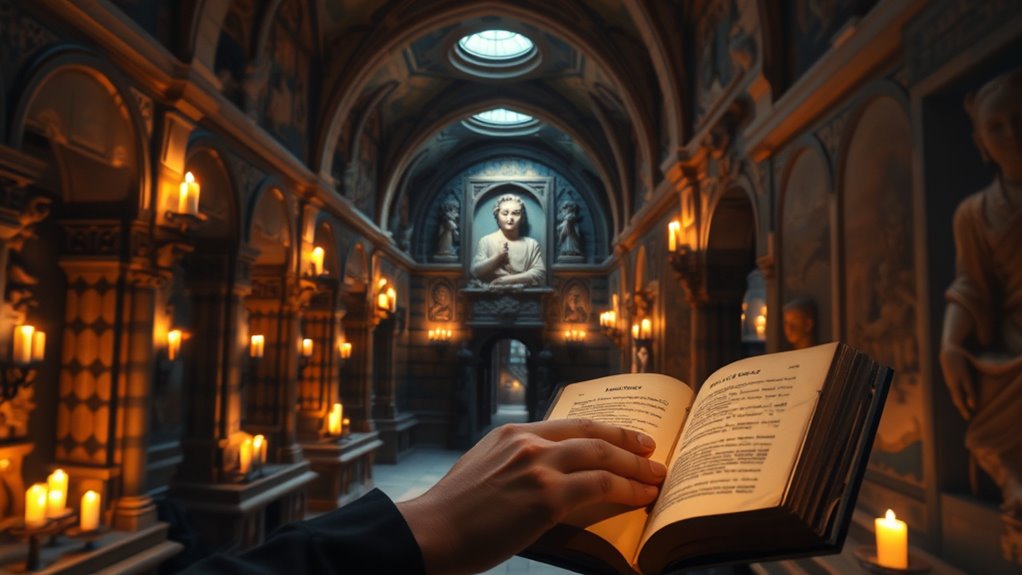

Memory palaces are ancient techniques that modern learners can use to dramatically improve recall. By creating a vivid mental map of a familiar space, you assign information to specific locations, making retrieval easier. Using mnemonic images and spatial visualization, you turn passive memorization into an active, engaging process. This method leverages your brain’s natural ability to remember places and images, so if you keep exploring, you’ll discover how to master this powerful technique.
Key Takeaways
- Memory palaces are ancient mnemonic techniques that utilize spatial visualization and vivid imagery to enhance modern learning and memorization.
- They involve constructing mental environments based on familiar spaces, assigning information to specific locations for easier recall.
- Mnemonic devices like stories or visual cues are integrated within the palace to strengthen memory retention.
- Navigating through the mental space activates natural spatial memory pathways, making retrieval more efficient.
- These techniques are adaptable for memorizing large datasets, complex concepts, or mastering skills in contemporary education.
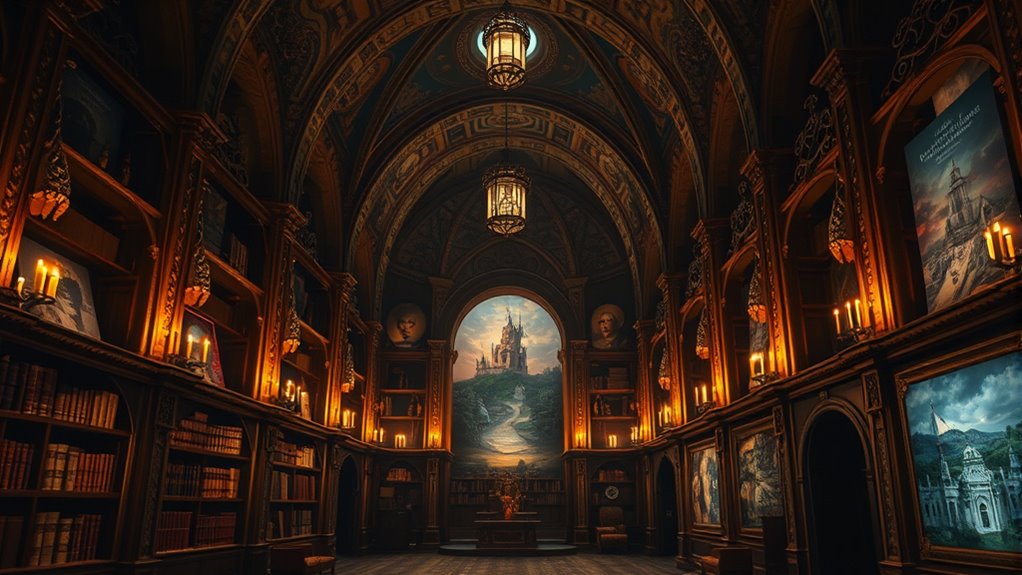
Memory palaces have stood the test of time as a powerful technique for enhancing learning, and today they’re more relevant than ever. This ancient method leverages mnemonic devices—tools that help you encode and recall information more effectively. By creating vivid mental associations, you can transform abstract data into memorable images. When you combine these mnemonic devices with spatial visualization, you develop a mental map that makes retrieving information feel natural and effortless. Instead of rote memorization, you’re engaging your brain’s natural ability to remember spatial relationships and visual cues.
Memory palaces transform learning by combining mnemonic tools with spatial visualization for effortless recall.
As you build your memory palace, you’re fundamentally constructing a mental space that mirrors real-world environments. Imagine walking through a familiar house or a place you know well, and as you do, you assign pieces of information to specific locations within that space. This technique is rooted in the brain’s ability to remember spatial relationships, which is why spatial visualization is so essential. Your mind is wired to recognize and recall spatial context, making it easier to retrieve associated data when needed. For example, you might place historical dates in the living room or scientific concepts in the kitchen, creating a logical layout that guides your recall process.
Using mnemonic devices within your memory palace helps anchor information further. You might associate a vivid image, a rhyme, or a mental story with each piece of data, making it more distinctive and less likely to be forgotten. The more creative and detailed your visualizations, the stronger your memory becomes. Spatial visualization plays a fundamental role because it allows you to mentally navigate your palace, jumping from one “room” to another, accessing stored knowledge seamlessly. This spatial aspect turns learning into an active, engaging process rather than passive memorization.
Additionally, understanding the brain’s reliance on spatial relationships can help you tailor your memory palaces for maximum effectiveness. By practicing this technique regularly, you’ll notice your ability to memorize large amounts of information improves dramatically. Instead of struggling with lists or complex concepts, you’ll rely on your mental map to guide you through the data. Over time, your memory palace becomes a personalized library, where retrieval happens quickly and with minimal effort. You’re not just memorizing; you’re creating an interconnected web of visual and spatial cues that make recall more intuitive.
Inherently, combining mnemonic devices and spatial visualization transforms learning from a tedious task into a dynamic mental adventure. It taps into your brain’s natural strengths, making information stick where it counts. Whether you’re studying for exams, learning a new language, or mastering a skill, memory palaces provide a powerful, time-tested way to boost your memory and enhance your understanding of complex material.
As an affiliate, we earn on qualifying purchases.
Frequently Asked Questions
How Can Beginners Effectively Start Building Their First Memory Palace?
To effectively start building your first memory palace, focus on mental organization and clear spatial visualization. Choose a familiar place, like your home, and mentally walk through it, noting specific rooms and details. As you add information, associate each item with a distinct location. Practice visualizing these spaces vividly, strengthening your mental map. This approach helps you systematically encode and recall information, making your memory palace a powerful learning tool.
Are There Digital Tools That Assist in Creating Memory Palaces?
You might think digital tools can’t match traditional methods, but virtual reality and digital mapping actually enhance your memory palace experience. These tools let you create immersive, customizable environments, making it easier to visualize and remember information. By exploring virtual reality platforms or digital mapping apps, you can build detailed, interactive memory palaces that boost your learning efficiency and engagement, blending ancient techniques with modern technology seamlessly.
How Long Does It Typically Take to See Results With Memory Palace Techniques?
When asking how long it takes to see results with memory palace techniques, you’re looking at a timeframe that varies based on your practice frequency and complexity of information. Typically, you might notice progress indicators within a few days to weeks, especially if you practice consistently. Keep in mind, patience is key; regular use enhances your ability to recall, and the more you practice, the faster your progress becomes evident.
Can Memory Palaces Be Adapted for Visual or Auditory Learners?
You can definitely adapt memory palaces for visual or auditory learners by emphasizing multisensory integration. Visual learners benefit from vivid imagery and spatial cues, while auditory learners can incorporate sounds or verbal cues into their mental journeys. Personalizing your memory palace to match your preferred learning style makes it more effective, helping you retain information better through multisensory experiences tailored to your needs.
What Are Common Mistakes to Avoid When Using Memory Palaces?
When using memory palaces, avoid overconfidence pitfalls by not assuming you’ll remember everything perfectly. Inconsistent practice is another common mistake—regularly revisit your palace to strengthen connections. Don’t rush through creating vivid, detailed images; doing so hampers recall. Stay patient and disciplined, and don’t underestimate the importance of consistency. These habits will help you maximize the technique’s effectiveness and prevent common pitfalls that hinder long-term memory retention.
As an affiliate, we earn on qualifying purchases.
Conclusion
By mastering the art of memory palaces, you’re building a mental city where knowledge easily finds its home. Like a skilled architect, you design pathways that turn chaos into clarity, making learning feel effortless. As you walk through your mental corridors daily, you’ll find information neatly stored, ready to be retrieved at a moment’s notice. Embrace this ancient technique, and watch your mind transform into a vibrant, well-organized universe of understanding.
As an affiliate, we earn on qualifying purchases.
As an affiliate, we earn on qualifying purchases.