
For a straightforward daily option, Pure Encapsulations Zinc 15 mg stands out for its lower dose, while Thorne Zinc Picolinate 30 mg offers a middle-ground dose in a focused formula. Nutricost Zinc Picolinate 50 mg suits shoppers who prioritize a large capsule supply, though its dose is higher than many people need for routine use. This lineup spans several zinc forms, doses from 15 mg to 100 mg, and formulas with added ingredients, so the best choice depends on your intended intake and tolerance for extras. I give more weight to a clearly stated dose and practical daily use than to the biggest number on the label. Continue reading for the full comparison, selection criteria, and guidance on choosing a dose and form with a clinician when appropriate.

Get your next haul delivered free — and shop member deals
- Fast, free delivery on millions of items
- Access to Prime Big Deal Days deals on October 6–7
- Prime Video, Amazon Music and more included
Key Takeaways
- Lower-dose choices are available: Pure Encapsulations Zinc 15 mg and Thorne Zinc Picolinate 15 mg give beginners and people seeking a modest supplement dose alternatives to the many 30 mg and 50 mg products.
- Several picks use 50 mg or more: Nutricost, Life Extension, Sports Research, Nature‘s Bounty, and Horbäach list high doses; the largest number does not make a better everyday choice.
- Zinc form varies across the lineup: Picolinate, citrate, and glycinate or bisglycinate labels let shoppers compare formulation preferences, though the label alone cannot predict an individual’s response.
- Some products add ingredients: NOW pairs zinc with pumpkin seed oil, Dr. Berg lists a 7-in-1 formula, and the quercetin product combines ingredients, making those picks less direct for buyers who want zinc alone.
- Supply size and dose are separate tradeoffs: Large counts such as Solgar‘s 250 tablets or Nutricost’s 240 capsules may reduce reordering, but serving size and dose should guide the choice first.
| Nutricost Zinc Picolinate 50mg, 240 Vegetarian Capsules |  | Best for a Large Supply | Zinc per serving: 50 mg | Form: Zinc picolinate | Capsules per bottle: 240 | VIEW LATEST PRICE | See Our Full Breakdown |
| NOW Supplements Zinc Glycinate with Pumpkin Seed Oil, 120 Softgels |  | Best Zinc and Pumpkin Seed Oil Blend | Zinc per serving: 30 mg | Pumpkin seed oil per serving: 250 mg | Zinc form: Glycinate, chelated | VIEW LATEST PRICE | See Our Full Breakdown |
| Life Extension Zinc Caps, 50 mg, Zinc Citrate, 90 Vegetarian Capsules |  | Best for a Zinc Citrate Capsule | Brand: Life Extension | Zinc amount: 50 mg | Listed zinc form: Zinc citrate | VIEW LATEST PRICE | See Our Full Breakdown |
| Dr. Berg Zinc 30 mg – 7-in-1 Chelated Zinc Immune Support Supplement (60 Capsules) | 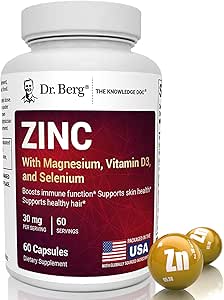 | Best Multi-Nutrient Formula | Zinc per serving: 30 mg | Count: 60 capsules | Form: Capsule | VIEW LATEST PRICE | See Our Full Breakdown |
| Thorne Zinc Picolinate 30 mg, 180 Capsules |  | Best for Third-Party Certification | Form: Zinc picolinate | Zinc per capsule: 30 mg | Quantity: 180 capsules | VIEW LATEST PRICE | See Our Full Breakdown |
| Solgar Chelated Zinc, 250 Tablets |  | Best for Long-Term Pantry Stock | Form: Tablets | Count: 250 tablets | Zinc per tablet: 22 mg | VIEW LATEST PRICE | See Our Full Breakdown |
| Sports Research Zinc Picolinate 50mg with Organic Coconut Oil, 60 Softgels |  | Best for Buyers Seeking a High-Dose Softgel | Form: Liquid softgel | Zinc type: Zinc picolinate | Zinc per capsule: 50 mg | VIEW LATEST PRICE | See Our Full Breakdown |
| Pure Zinc Supplement, 25 mg Chelated Zinc Bisglycinate, 120 Capsules |  | Best for a Specified Chelate and Simple Formula | Form: Zinc bisglycinate chelate (TRAACS) | Zinc per capsule: 25 mg (227% DV) | Serving: 1 capsule daily with food | VIEW LATEST PRICE | See Our Full Breakdown |
| Pure Encapsulations Zinc 15 mg, 60 Capsules |  | Best Lower-Dose Pick | Brand: Pure Encapsulations | Supplement: Zinc | Dosage: 15 mg | VIEW LATEST PRICE | See Our Full Breakdown |
| Pure Encapsulations Zinc 30 mg, 180 Capsules |  | Best Zinc Picolinate Capsule Supply | Form: Capsules | Quantity: 180 capsules | Zinc per serving: 30 mg | VIEW LATEST PRICE | See Our Full Breakdown |
| Nature Made Zinc 30 mg Tablets, 100 Count |  | Best for a Straightforward Daily Dose | Brand: Nature Made | Active ingredient: Zinc | Amount per tablet: 30 mg | VIEW LATEST PRICE | See Our Full Breakdown |
| Zinc Quercetin Immune Support Supplement, 120 Vegetarian Capsules |  | Best Zinc and Quercetin Combination | Form: Vegetarian capsules | Quantity: 120 capsules | Suggested serving: 2 capsules daily | VIEW LATEST PRICE | See Our Full Breakdown |
| Nature’s Bounty Zinc 50mg Caplets, Immune Support, 250 Count |  | Best High-Count Supply | Brand: Nature’s Bounty | Form: Caplets | Zinc per caplet: 50 mg | VIEW LATEST PRICE | See Our Full Breakdown |
| Horbäach Chelated Zinc Supplement, 100 mg, 250 Tablets |  | Best for Allergen Exclusions | Mineral: Zinc | Form: Chelated tablets | Stated strength: 100 mg | VIEW LATEST PRICE | See Our Full Breakdown |
| Thorne Zinc Picolinate 15 mg, 60 Capsules |  | Best Lower-Dose Picolinate | Form: Zinc picolinate | Dosage: 15 mg per capsule | Count: 60 capsules | VIEW LATEST PRICE | See Our Full Breakdown |
| zinc supplement | Form | Count |
|---|---|---|
| Nutricost Zinc Picolinate 50mg | Zinc picolinate | — |
| NOW Supplements Zinc Glycinate | — | 120 softgels |
| Life Extension Zinc Caps | — | 90 capsules |
| Dr. Berg Zinc 30 mg | Capsule | 60 capsules |
| Thorne Zinc Picolinate 30 mg | Zinc picolinate | — |
| Solgar Chelated Zinc | Tablets | 250 tablets |
| Sports Research Zinc Picolinat | Liquid softgel | 60 softgels |
| Pure Zinc Supplement | Zinc bisglycinate chelate (TRAACS) | 120 capsules |
| Pure Encapsulations Zinc 15 mg | Capsules | 60 capsules |
| Pure Encapsulations Zinc 30 mg | Capsules | — |
| Nature Made Zinc 30 mg Tablets | — | 100 tablets |
| Zinc Quercetin Immune Support | Vegetarian capsules | — |
| Nature’s Bounty Zinc 50mg Capl | Caplets | 250 caplets |
| Horbäach Chelated Zinc Supplem | Chelated tablets | — |
| Thorne Zinc Picolinate 15 mg | Zinc picolinate | 60 capsules |
More Details on Our Top Picks
Nutricost Zinc Picolinate 50mg, 240 Vegetarian Capsules
Nutricost’s 240-capsule bottle stands out for buyers who want a substantial supply of zinc picolinate in a vegetarian formula. Each capsule provides 50 mg of zinc, a high amount that may suit someone following clinician guidance, but can be more than many people need for routine use. Compared with Thorne Zinc Picolinate 30 mg, Nutricost provides a larger amount per capsule and more capsules, while Thorne offers third-party certification and a lower zinc amount. The tradeoff is clear: Nutricost’s long supply and dietary features come with a dose that deserves careful consideration. Its listed NSF certified, GMP compliant, FDA registered manufacturing facility adds useful production context, though it does not make the dose appropriate for everyone.
Pros:- 240 vegetarian capsules provide a substantial supply.
- Zinc picolinate form.
- Gluten-free and GMO-free.
- Made in an NSF certified, GMP compliant, FDA registered facility.
Cons:- 50 mg per capsule is a high amount for routine self-directed use.
- The supplied product details do not describe third-party testing of the finished supplement.
Best for: Adults whose clinician has recommended a higher-dose zinc supplement and who want a long-lasting vegetarian capsule supply.
Not ideal for: People seeking a modest daily amount or choosing a supplement without medical guidance, since each capsule contains 50 mg of zinc.
- Zinc per serving:50 mg
- Form:Zinc picolinate
- Capsules per bottle:240
- Servings per bottle:240
- Capsule type:Vegetarian
- Dietary features:Gluten-free, GMO-free
- Facility:NSF certified, GMP compliant, FDA registered
Our verdict“Choose Nutricost if you have guidance for a higher zinc amount and value a large vegetarian supply; otherwise, consider a lower-dose option such as Thorne Zinc Picolinate 30 mg.”
NOW Supplements Zinc Glycinate with Pumpkin Seed Oil, 120 Softgels
NOW Supplements pairs 30 mg of zinc glycinate with 250 mg of pumpkin seed oil, giving this pick a distinct combination compared with single-ingredient options such as Life Extension Zinc Caps 50 mg. The glycinate is chelated, and the softgel format may appeal to people who find capsules or tablets less comfortable to take. Pumpkin seed oil also makes the formula a more specialized choice, though buyers looking for zinc alone may prefer a simpler product. Its nut-free classification helps narrow the fit for some dietary needs. At 30 mg per serving, it has less zinc than Life Extension’s 50 mg capsules, but the product details do not provide a specific testing report or clarify the amount of zinc relative to the full softgel serving.
Pros:- Chelated zinc glycinate form.
- Includes 250 mg of pumpkin seed oil per serving.
- Softgel format may suit people who prefer it to hard capsules.
- Listed as nut-free, with GMP quality assurance.
Cons:- The pumpkin seed oil makes it less suitable for buyers seeking zinc alone.
- The listed 30 mg zinc amount may be more than some buyers want.
- The supplied details do not specify third-party testing results or vegetarian status.
Best for: Adults who want a softgel with 30 mg of chelated zinc and pumpkin seed oil in the same serving.
Not ideal for: Buyers who want a zinc-only formula, a clearly stated vegetarian capsule, or a lower-dose supplement.
- Zinc per serving:30 mg
- Pumpkin seed oil per serving:250 mg
- Zinc form:Glycinate, chelated
- Dosage form:Softgel
- Count:120 softgels
- Quality assurance:GMP Quality Assured
- Dietary classification:Nut-free
Our verdict“Pick NOW if you specifically want a zinc glycinate softgel with pumpkin seed oil; choose a simpler product if you want zinc by itself.”
Life Extension Zinc Caps, 50 mg, Zinc Citrate, 90 Vegetarian Capsules
Life Extension Zinc Caps are a straightforward choice for buyers who specifically want a vegetarian zinc citrate supplement. Each capsule provides 50 mg of zinc, matching Nutricost Zinc Picolinate’s amount while using a different listed zinc form and offering 90 capsules rather than Nutricost’s 240. That smaller count may suit someone who does not need a large bottle, but it does not reduce the high amount per capsule. Life Extension lists gluten-free and non-GMO attributes and says a Certificate of Analysis is available for each product, giving buyers a route to product-specific documentation. The supplied details do not state how much of the zinc is citrate, so shoppers comparing exact form quantities should look elsewhere or check the product documentation.
Pros:- Vegetarian capsule format.
- Lists zinc citrate as the zinc form.
- Gluten-free and non-GMO.
- Certificate of Analysis available for each product.
Cons:- 50 mg per capsule is a high amount for routine self-directed use.
- The supplied information does not specify the amount of zinc citrate.
- 90 capsules are fewer than Nutricost Zinc Picolinate’s 240.
Best for: Adults who want vegetarian zinc capsules, prefer a product listing zinc citrate, and value access to a Certificate of Analysis.
Not ideal for: People seeking a lower amount per capsule, a large bottle, or a clearly specified quantity of zinc citrate.
- Brand:Life Extension
- Zinc amount:50 mg
- Listed zinc form:Zinc citrate
- Count:90 capsules
- Capsule type:Vegetarian
- Dietary attributes:Gluten-free, non-GMO
- Product documentation:Certificate of Analysis available
Our verdict“Choose Life Extension for a documented, vegetarian zinc citrate option if 50 mg per capsule fits your clinician-guided plan.”
Dr. Berg Zinc 30 mg – 7-in-1 Chelated Zinc Immune Support Supplement (60 Capsules)
Dr. Berg combines 30 mg of chelated zinc with several additional nutrients, including vitamin D, selenium, magnesium, and vitamin B6. That makes it a more involved formula than Thorne Zinc Picolinate 30 mg, which centers on zinc alone, and may appeal to buyers who want these ingredients together. The tradeoff is less control over each nutrient: someone already taking a multivitamin or separate supplements may not want overlap, and the supplied details do not give amounts for the added nutrients. The product description also lists four rounds of lab testing for purity, heavy metals, and microbial safety, plus cGMP-certified US manufacturing. Its 60-capsule count is smaller than the 180-capsule Thorne bottle, so it is a more compact commitment to a multi-ingredient formula.
Pros:- Chelated zinc provides 30 mg per serving.
- Combines zinc with vitamin D, selenium, magnesium, and vitamin B6.
- Described as four-times lab tested for purity and safety measures.
- Made in the USA in cGMP-certified facilities, with no fillers listed.
Cons:- The supplied details do not give amounts for the added nutrients.
- A multi-nutrient blend can make it harder to manage overlap with other supplements.
- 60 capsules are fewer than Thorne Zinc Picolinate 30 mg’s 180.
Best for: Adults who want 30 mg of chelated zinc combined with vitamin D, selenium, magnesium, and vitamin B6 in one product.
Not ideal for: People who want zinc alone, need to control the amounts of added nutrients, or already use overlapping supplements.
- Zinc per serving:30 mg
- Count:60 capsules
- Form:Capsule
- Zinc type:Amino acid-chelated
- Additional nutrients:Vitamin D, selenium, magnesium, vitamin B6
- Testing:Four-times lab tested for heavy metals, purity, and microbial safety
- Additives:No fillers listed
- Manufacturing:Made in the USA in cGMP-certified facilities
Our verdict“Choose Dr. Berg if you want several listed nutrients alongside chelated zinc and are comfortable with a combined formula.”
Thorne Zinc Picolinate 30 mg, 180 Capsules
Thorne Zinc Picolinate offers 30 mg per capsule in a single-ingredient format, with third-party testing and certification for label accuracy and contaminant levels. That makes it a more measured alternative to the 50 mg capsules from Nutricost Zinc Picolinate and Life Extension Zinc Caps, while keeping the same listed picolinate form as Nutricost. Its 180-capsule count is substantial, though below Nutricost’s 240. The main tradeoff is that 30 mg may still be more than a buyer wants, and the supplied product details do not include dosage instructions. Shoppers seeking zinc alongside other nutrients may prefer Dr. Berg’s blend; those who want a focused formula with stated third-party certification have a clearer fit here.
Pros:- Provides 30 mg of zinc picolinate per capsule.
- Third-party tested and certified for label accuracy and contaminant levels.
- 180-capsule bottle.
- Single-ingredient format compared with Dr. Berg’s multi-nutrient blend.
Cons:- 30 mg may be more than some buyers want for routine use.
- The supplied details do not provide dosage instructions.
- Contains no added nutrients for buyers seeking a combination formula.
Best for: Adults looking for a single-ingredient zinc picolinate capsule with third-party certification and a substantial count.
Not ideal for: People who want a low-dose option, need dosage instructions from the supplied product details, or prefer zinc blended with other nutrients.
- Form:Zinc picolinate
- Zinc per capsule:30 mg
- Quantity:180 capsules
- Testing:Third-party tested and certified
- Certification scope:Label accuracy and contaminant levels
- Dosage instructions:Not specified in the supplied product details
Our verdict“Pick Thorne for a certified, single-ingredient 30 mg zinc picolinate capsule; choose a lower-dose product if that amount is not right for you.”
Solgar Chelated Zinc, 250 Tablets
Solgar’s 250-tablet bottle suits buyers who want a chelated zinc option in a large supply. Each tablet provides 22 mg, a middle ground between Pure Encapsulations Zinc 15 mg and the higher-dose Sports Research Zinc Picolinate 50mg. That makes it a more moderate pick than Sports Research while still providing more zinc per tablet than Pure Encapsulations’ lower-dose capsule. The formula is listed as vegan, non-GMO, gluten-free, and kosher, with several common ingredients excluded. The tradeoff is that the product information does not identify the specific chelate or give directions for use, so buyers seeking a named zinc form or clear serving guidance may prefer Pure Zinc Supplement’s specified bisglycinate formula. Its large tablet count also favors planned, regular use over trying a small supply first.
Pros:- Provides 22 mg of zinc per tablet
- 250 tablets per bottle
- Listed as vegan, non-GMO, gluten-free, and kosher
- Free from wheat, dairy, soy, yeast, sugar, sodium, and artificial flavors and sweeteners
Cons:- The specific chelated zinc compound is not identified in the provided product details
- Usage directions and potential cautions are not specified in the provided details
Best for: Buyers seeking a vegan-friendly, moderate-dose zinc tablet in a large-count bottle
Not ideal for: Shoppers who want a clearly named chelate, detailed usage directions, or a smaller supply to try first
- Form:Tablets
- Count:250 tablets
- Zinc per tablet:22 mg
- Daily value per tablet:200%
- Dietary suitability:Vegan, non-GMO, gluten-free, kosher
- Free from:Wheat, dairy, soy, yeast, sugar, sodium, artificial flavors, artificial sweeteners
Our verdict“Choose Solgar if you want a vegan-friendly 22 mg tablet and a large supply, and skip it if you need a named zinc form or detailed directions.”
Sports Research Zinc Picolinate 50mg with Organic Coconut Oil, 60 Softgels
Sports Research stands apart with 50 mg of zinc picolinate in a once-daily softgel. That is a much higher amount per serving than Pure Encapsulations Zinc 15 mg or Solgar Chelated Zinc’s 22 mg tablet, so it fits buyers specifically seeking a high-dose option rather than those who want a modest daily amount. The liquid softgel with organic coconut oil offers an alternative to the capsules and tablets elsewhere in this lineup; the product description also cites clinical trials comparing its absorption with zinc citrate and gluconate. The tradeoffs are the substantial dose, the coconut oil, and the softgel format, which may rule it out for buyers avoiding coconut or animal-derived softgels. Its 60-count bottle is also a shorter supply than Solgar’s 250 tablets.
Pros:- Provides 50 mg of zinc picolinate per softgel
- Once-daily serving
- Liquid softgel includes organic coconut oil
- Made in the United States in cGMP-compliant facilities
Cons:- The 50 mg serving is substantially higher than the 15 mg and 22 mg options in this batch
- Softgel format may not suit buyers who prefer tablets or vegan capsules
- Contains coconut oil, which may be unsuitable for some buyers
Best for: Adults specifically seeking a once-daily, high-dose zinc picolinate softgel
Not ideal for: Buyers seeking a lower-dose option, a tablet or vegan capsule, or a formula without coconut oil
- Form:Liquid softgel
- Zinc type:Zinc picolinate
- Zinc per capsule:50 mg
- Serving size:1 capsule per day
- Count:60 softgels
- Other ingredient:Organic coconut oil
- Manufacturer:Sports Research
- Made in:United States; cGMP-compliant facilities
Our verdict“Pick Sports Research if you specifically want a 50 mg zinc picolinate softgel, and choose a lower-dose option if that serving is more than you need.”
Pure Zinc Supplement, 25 mg Chelated Zinc Bisglycinate, 120 Capsules
Pure Zinc gives buyers a clearly named form: 25 mg of zinc as TRAACS zinc bisglycinate chelate per capsule. Compared with Solgar Chelated Zinc, which does not identify its specific chelate in the supplied details, this formula makes the zinc form explicit. It also has a single-ingredient, one-capsule serving and is described as third-party tested, giving it a straightforward profile for buyers who want to limit extras. Its 25 mg serving sits between Pure Encapsulations Zinc 15 mg and Sports Research Zinc Picolinate 50mg, though those products use different forms and serving amounts. The tradeoffs are the instruction to take it with food and its adult-only positioning. Buyers who want a lower-dose capsule or a softgel should compare other options in the lineup.
Pros:- Provides 25 mg of zinc as TRAACS zinc bisglycinate chelate
- One capsule daily
- Single-ingredient formula without common allergens or unnecessary additives
- Third-party tested and made in certified facilities
Cons:- Directions call for taking it with food
- Intended for adults
- Capsule format may not suit buyers who prefer softgels or tablets
Best for: Adults who want a single-ingredient zinc bisglycinate capsule with a specified form and third-party testing
Not ideal for: Buyers who need a lower-dose option, prefer softgels, or do not want to take a capsule with food
- Form:Zinc bisglycinate chelate (TRAACS)
- Zinc per capsule:25 mg (227% DV)
- Serving:1 capsule daily with food
- Capsule size:20 mm
- Count:120 capsules
- Supply:120 days
- Free from:Gluten, dairy, wheat, nuts, eggs, GMOs, magnesium stearate, artificial flavors, preservatives
- Manufacturing and testing:Made in the USA in cGMP and ISO17025 certified facilities; third-party tested
Our verdict“Choose Pure Zinc if you want a clearly identified bisglycinate form in a simple capsule, and pass if you need a lower-dose or food-free routine.”
Pure Encapsulations Zinc 15 mg, 60 Capsules
Pure Encapsulations Zinc 15 mg is the lower-dose choice in this batch, making it a better fit for buyers who do not want the 25 mg, 30 mg, or 50 mg servings offered by other options. Its capsule format and stated exclusions for common allergens, artificial ingredients, and GMOs also suit shoppers looking for a pared-back product. Compared with Pure Zinc Supplement’s 25 mg bisglycinate capsule, this delivers less zinc per serving, while the supplied details do not name its zinc form. That makes this pick less suited to anyone comparing specific chelates or looking for a higher amount in one capsule. The bottle contains 60 capsules, half the count of Pure Zinc Supplement’s 120. Buyers should choose it for its lower stated dose and simple ingredient profile, not for a named zinc form.
Pros:- Provides 15 mg of zinc per capsule
- Capsule format
- Described as free from common allergens, artificial ingredients, and GMOs
Cons:- Lower zinc amount than the 22 mg, 25 mg, 30 mg, and 50 mg options in this batch
- The zinc form is not specified in the provided product details
- 60-capsule count is smaller than Pure Zinc Supplement’s 120-capsule bottle
Best for: Adults seeking a lower-dose zinc capsule with a formula described as free from common allergens and artificial ingredients
Not ideal for: Buyers seeking a higher zinc amount per capsule, a specified zinc form, or a larger-count bottle
- Brand:Pure Encapsulations
- Supplement:Zinc
- Dosage:15 mg
- Count:60 capsules
- Form:Capsules
- Free from:Common allergens, artificial ingredients, GMOs
- ASIN:B0017QCNUQ
Our verdict“Choose Pure Encapsulations Zinc 15 mg if a lower stated dose is your priority, and look elsewhere if you want a named zinc form or more zinc per capsule.”
Pure Encapsulations Zinc 30 mg, 180 Capsules
Pure Encapsulations Zinc 30 mg pairs a named zinc form—picolinate—with a 180-capsule bottle. That gives it a distinct place between the 15 mg Pure Encapsulations capsule and Sports Research Zinc Picolinate 50mg: it shares the latter’s listed form while providing less zinc per serving. Buyers who want a capsule and a larger supply may favor it over Sports Research’s 60-softgel bottle. The supplied details also describe the formula as free from common allergens, GMOs, and artificial or unnecessary ingredients. The main tradeoff is its 30 mg serving, which is twice the amount in the 15 mg Pure Encapsulations option, so it will not suit everyone seeking a lower amount. The product information does not specify serving directions or the count per serving beyond the listed 180 capsules.
Pros:- Provides 30 mg of zinc per serving
- Uses zinc picolinate
- 180 capsules per bottle
- Described as free from common allergens, GMOs, and artificial or unnecessary ingredients
Cons:- Provides twice as much zinc per serving as Pure Encapsulations Zinc 15 mg
- Serving directions are not specified in the provided details
- Capsule count per serving is not specified in the provided details
Best for: Adults seeking zinc picolinate in capsule form with a 180-capsule bottle
Not ideal for: Buyers seeking a lower-dose capsule, a softgel, or detailed serving directions in the supplied product information
- Form:Capsules
- Quantity:180 capsules
- Zinc per serving:30 mg
- Zinc type:Zinc picolinate
- Free from:Common allergens, GMOs, artificial or unnecessary ingredients
- Brand:Pure Encapsulations
- ASIN:B000H7Y9A8
Our verdict“Choose this Pure Encapsulations option if you want 30 mg zinc picolinate capsules in a 180-capsule bottle, and skip it if you need a lower dose or clearer directions.”
Nature Made Zinc 30 mg Tablets, 100 Count
For shoppers who want a single-ingredient zinc tablet at a middle-range dose, Nature Made’s 30 mg is a simpler daily option than Nature’s Bounty’s 50 mg caplet. Each tablet supplies 30 mg, and the USP Verified designation gives buyers a clear quality marker alongside the stated amount. Its gluten-free formula has no added colors, artificial flavors, or preservatives, and 100 tablets make the daily routine easy to track. The tradeoff is that the product data calls for taking it with a meal and water, and 30 mg may not suit someone seeking a lower-dose supplement. Unlike the combination product from Zinc Quercetin Immune Support, this keeps the ingredient list focused, but it does not add quercetin.
Pros:- Provides a stated 30 mg of zinc per tablet
- USP Verified
- 100 tablets provide a stated 100-day supply
- Gluten-free with no added colors, artificial flavors, or preservatives
Cons:- Suggested use calls for taking it with water and a meal
- The 30 mg dose may be more than buyers seeking a lower daily amount want
Best for: Adults looking for a clearly specified, single-ingredient zinc tablet at 30 mg per day
Not ideal for: Shoppers who prefer capsules, want a lower-dose option, or want zinc combined with quercetin
- Brand:Nature Made
- Active ingredient:Zinc
- Amount per tablet:30 mg
- Count:100 tablets
- Stated supply:100 days
- Suggested use:Adults take one tablet daily with water and a meal
- Dietary information:Gluten-free
- Verification:USP Verified
Our verdict“Choose this if you want a verified, single-ingredient 30 mg tablet with a clearly stated daily routine.”
Zinc Quercetin Immune Support Supplement, 120 Vegetarian Capsules
This pick is for buyers who want zinc alongside quercetin in a vegetarian capsule, rather than the single-ingredient approach of Nature Made Zinc 30 mg. Its manufacturing and testing details are a plus: the product is third-party tested and made in an NSF-GMP certified California facility. The formula is also gluten-free, soy-free, and dairy-free. The key drawback for comparison shopping is that the supplied product information does not state how much zinc or quercetin each two-capsule serving contains, making it hard to judge dose against Nature’s Bounty’s clearly labeled 50 mg caplet or other single-mineral options. A two-capsule daily serving also asks more of the routine than a one-tablet product. Choose it for the combination and dietary attributes only if the label provides the dose details you need.
Pros:- Combines zinc with quercetin
- Third-party tested
- Made in an NSF-GMP certified facility in California
- Vegetarian and free of gluten, soy, and dairy
Cons:- Product information does not state the zinc or quercetin amount per serving
- Suggested serving requires two capsules daily
Best for: Vegetarian capsule users who specifically want a zinc-and-quercetin combination and can confirm the dose on the label
Not ideal for: Dose-focused buyers who need a clearly stated zinc amount or want a one-capsule daily routine
- Form:Vegetarian capsules
- Quantity:120 capsules
- Suggested serving:2 capsules daily
- Stated supply:2 months
- Additional ingredient:Quercetin
- Testing:Third-party tested
- Manufacturing:NSF-GMP certified facility in California, USA
- Dietary attributes:Gluten-free, soy-free, dairy-free
Our verdict“Consider this combination if quercetin and dietary exclusions matter more to you than having the zinc dose stated in the supplied details.”
Nature’s Bounty Zinc 50mg Caplets, Immune Support, 250 Count
Among these picks, Nature’s Bounty offers the largest stated count: 250 caplets, each providing 50 mg of zinc. That high-count bottle and one-caplet daily direction suit buyers who want a long supply in a vegetarian, gluten-free format. The dose is also substantially higher than Nature Made Zinc 30 mg and Thorne Zinc Picolinate 15 mg, so this makes more sense for shoppers whose intended intake calls for that amount than for someone simply seeking a modest daily supplement. Its formula is sugar-free and has no artificial flavors or sweeteners, but the product data does not provide a third-party verification detail like Nature Made’s USP Verified status. The main tradeoff is clear: capacity is generous, while the 50 mg per caplet may be more zinc than some buyers want.
Pros:- Provides 50 mg of zinc per caplet
- 250 caplets in the bottle
- Vegetarian, gluten-free, and sugar-free
- No artificial flavors or sweeteners
Cons:- The 50 mg dose is higher than the 15 mg and 30 mg options in this batch
- The supplied product details do not list a third-party contents certification
Best for: Buyers seeking a vegetarian 50 mg caplet in a large 250-count bottle
Not ideal for: People seeking a lower-dose daily option or a product with a stated USP or third-party contents certification
- Brand:Nature’s Bounty
- Form:Caplets
- Zinc per caplet:50 mg
- Count:250 caplets
- Suggested use:One caplet daily, preferably with a meal
- Dietary information:Gluten-free, sugar-free, vegetarian
- Additives:No artificial flavors or sweeteners
Our verdict“Pick this for a large bottle of 50 mg vegetarian caplets if that higher dose fits your needs.”
Horbäach Chelated Zinc Supplement, 100 mg, 250 Tablets
Horbäach stands apart for its chelated zinc format and broad list of excluded ingredients: the product is listed as free from gluten, wheat, yeast, milk, lactose, soy, artificial colors, and artificial flavors. It is also non-GMO and laboratory tested. Compared with Nature Made Zinc 30 mg, however, the stated 100 mg strength is much higher, and the product data does not say whether that amount is per tablet or per serving. It also omits a suggested serving size, leaving buyers without the daily-use clarity Nature’s Bounty provides. The 250-tablet count is substantial, but it does not resolve those labeling gaps. This is a niche fit for shoppers prioritizing exclusions and chelation who can verify the serving details on the package.
Pros:- Chelated zinc tablet form
- Listed free from gluten, wheat, yeast, milk, lactose, and soy
- No artificial colors or flavors
- Non-GMO and laboratory tested
Cons:- The stated 100 mg strength is not clearly identified as per tablet or per serving
- Serving size and suggested use are not provided in the supplied details
Best for: Buyers who need to avoid several listed allergens and can confirm the serving size and dose on the product label
Not ideal for: Dose-conscious shoppers who need a clearly defined amount per tablet and a stated daily serving
- Mineral:Zinc
- Form:Chelated tablets
- Stated strength:100 mg
- Quantity:250 tablets
- Free from:Gluten, wheat, yeast, milk, lactose, soy, artificial colors, and artificial flavors
- Non-GMO:Yes
- Testing:Laboratory tested
Our verdict“Choose this only if its exclusions and chelated format fit your needs and the package clarifies the serving information.”
Thorne Zinc Picolinate 15 mg, 60 Capsules
Thorne’s 15 mg capsule is the lower-dose picolinate choice in this batch, set apart from the brand’s own 30 mg picolinate product and the 50 mg options from Nature’s Bounty and others. That makes the stated dose easier to distinguish for buyers who prefer a smaller amount per capsule. The product is third-party contents certified, giving shoppers a label-accuracy check noted in the supplied details. Its 60-capsule count is also smaller than the 180-count Thorne 30 mg bottle, so it offers less supply at one capsule daily. The tradeoff is straightforward: this is not the pick for someone looking for a higher-dose capsule or a large bottle. It suits buyers who specifically want 15 mg in picolinate form and value contents certification.
Pros:- Provides 15 mg of zinc per capsule
- Uses zinc picolinate
- Third-party contents certified
- Capsule format
Cons:- Lower dose per capsule than the 30 mg and 50 mg options in the roundup
- 60 capsules means a smaller bottle than Thorne Zinc Picolinate 30 mg
Best for: Adults seeking a 15 mg zinc picolinate capsule with third-party contents certification
Not ideal for: Buyers who need a higher stated dose per capsule or prefer a larger bottle like Thorne’s 180-count 30 mg option
- Form:Zinc picolinate
- Dosage:15 mg per capsule
- Count:60 capsules
- Certification:Third-party contents certified
Our verdict“Choose this if you want a certified 15 mg picolinate capsule and do not need a higher-dose or larger-count bottle.”

How We Picked
I compared each product on label clarity, stated zinc dose and form, serving count, and formula simplicity. I also looked at whether the listed format and added ingredients make the supplement practical for a buyer who wants a predictable zinc routine. A large bottle or high dose can be useful for some shoppers, but neither earns a higher place on its own.
The ranking favors options that give buyers a clear way to match dose and formulation to their needs. Lower-dose, straightforward products rank well for flexible everyday use; higher-dose products remain useful for shoppers following a specific plan, but their broader appeal is more limited. Products with additional ingredients have a distinct role, yet rank below simple zinc formulas for buyers who want to control each supplement separately. These are comparisons of product labels and formats, not claims that one form will work better for everyone.
Factors to Consider When Choosing Best Zinc Supplements
I would start with the amount you intend to take and the reason for taking it, then compare form, serving size, and extras. A supplement label can help you compare options, but it cannot establish that you need zinc or replace advice from a qualified clinician.
Match the dose to your plan
Do not choose a bottle by its milligram number alone. The products here range from 15 mg to 100 mg, so the difference between options is substantial even when the daily serving is one pill. Add zinc from other supplements and fortified products when reviewing your routine, since overlapping sources can raise total intake. If you are considering a high-dose product, ask a clinician whether that amount and duration suit you. A lower-dose supplement can be easier to fit into a measured plan, while a stronger option makes most sense when its dose has a clear rationale. The label is a starting point for that conversation, not a personalized recommendation.
Read the form without assuming it predicts results
Picolinate, citrate, glycinate, and bisglycinate describe different forms found across this roundup. Those names help distinguish formulas, but they do not tell you exactly how you will tolerate or respond to a supplement. If you already know that a certain form agrees with you, that preference can narrow the field. Otherwise, prioritize a clearly labeled dose and a product you can take consistently. Avoid treating a more technical sounding form as proof of superior results. When changing forms, keep the rest of your routine steady so you can identify what changed.
Decide whether you want a single ingredient
A zinc-only capsule or tablet gives you more control over other supplements in your routine. Combination formulas can be convenient if their added ingredients match a plan you already follow, but they make it harder to adjust zinc independently. Check the full ingredient panel rather than relying on the product name or front label. Added oils or blends may also matter if you avoid certain ingredients or have sensitivities. When comparing products, ask whether each extra ingredient serves a specific purpose for you. If not, a simple formula may make tracking your intake easier.
Compare serving size and pill format
Capsules, tablets, caplets, and softgels can feel different to take, even when they list a similar zinc dose. Check how many units make up a serving; a bottle count does not tell you how long the product lasts unless you know the serving size. A large bottle can reduce how often you reorder, but it may be an awkward choice if you are still figuring out which dose suits your plan. Choose a format you can take reliably, and review storage and expiration details before buying a long supply. If swallowing pills is difficult, format can matter more than a small difference in bottle count.
Treat high-dose options as a specific choice
Several products in this comparison list 50 mg or more per serving, including one labeled 100 mg. Those doses set them apart from the 15 mg and 30 mg choices, but a larger dose is not automatically a stronger everyday pick. Long-term high intake can create health concerns, including interference with copper status, so discuss sustained use with a clinician. Consider how long you expect to take the supplement and whether the dose has been recommended for you. If your need is uncertain, choose a product only after reviewing total intake and getting qualified guidance. The bigger bottle or bigger number should not make that decision for you.
Check how the supplement fits with your routine
Make a list of medicines and supplements before adding zinc, then ask a pharmacist or clinician about timing and possible interactions. Some medicines can interact with mineral supplements, and the right spacing depends on the specific product. If zinc causes stomach discomfort, a clinician or pharmacist can advise whether timing with food or a different plan may help. Do not take multiple zinc products just because they use different forms; their doses still add together. A simple routine with one clearly dosed product is easier to track than a collection of overlapping formulas. Keep the label or bottle available when asking for advice.
Frequently Asked Questions
Which zinc dose should I choose from this lineup?
Choose based on your intended total intake and any guidance from a clinician, not the highest dose on the shelf. This roundup includes 15 mg, 25 mg, 30 mg, 50 mg, and 100 mg options, so the labels represent meaningfully different choices. Include zinc from other supplements and fortified products in your calculation. If you are unsure whether you need a supplement or how much to take, ask a healthcare professional before starting a high-dose product. A lower number is not automatically right for everyone, but it can provide a more modest starting point for a clinician-guided plan.
Is zinc picolinate a better choice than citrate or glycinate?
The product names identify different zinc forms, but they do not establish which one will be best for you. This lineup includes picolinate, citrate, and glycinate or bisglycinate options, giving you room to compare labels and capsule formats. If you have tolerated a particular form before, that history may help guide your choice. Otherwise, focus first on dose, ingredients, and whether the product fits your routine. Ask a clinician or pharmacist for advice if you are switching because of side effects or a health concern.
Should I buy a 50 mg or 100 mg zinc supplement for daily use?
Do not use a high dose as a default simply because it is available. Several products in this roundup list 50 mg, and the Horbäach label lists 100 mg, while lower-dose choices include 15 mg and 25 mg. The right amount depends on your diet, other supplements, and health context. Sustained high zinc intake can affect copper status, so discuss it with a clinician before making it part of a long-term routine. If a professional has not recommended a high dose, pause to review your total intake before choosing one.
Are zinc combination formulas worth choosing over zinc alone?
A combination can simplify a routine when its extra ingredients are part of a plan that makes sense for you. In this group, products pair zinc with ingredients such as pumpkin seed oil or quercetin, while others list multi-ingredient blends. The tradeoff is less flexibility: you cannot adjust zinc without also changing the accompanying ingredients. Review every ingredient and serving amount, especially if you already take other supplements. If you want to keep your intake easy to track, a single-ingredient product may be the clearer choice.
What should I do if zinc upsets my stomach or I take medication?
Pause and ask a clinician or pharmacist how to handle the symptom and whether a different dose, timing, or product is appropriate. Mineral supplements can interact with some medicines, and spacing recommendations depend on the medicine involved. Do not assume that switching from a tablet to a capsule will solve the problem or change how a medicine is absorbed. Bring the zinc label and a list of your medicines and supplements to the conversation. Get individual advice before restarting or changing the dose.
Conclusion
Best overall: Pure Encapsulations Zinc 15 mg suits readers who want a modest, clearly stated dose in a simple formula. Best value: Nutricost Zinc Picolinate 50 mg offers a large capsule count, though its high dose makes it a better fit for shoppers with a specific plan than for casual daily use. Best premium: Thorne Zinc Picolinate 30 mg is a focused mid-dose option for buyers who prefer that brand and form. Best for beginners: Thorne Zinc Picolinate 15 mg gives newcomers a lower-dose alternative. For specific needs, compare NOW’s pumpkin seed oil softgels or the quercetin combination formula only if those added ingredients suit your routine; choose a clinician-guided high-dose product when a stronger amount has been recommended. Your dose and total intake should settle the choice before bottle size or added claims do.
Fall Picks
fall essentials
As an affiliate, we earn on qualifying purchases.