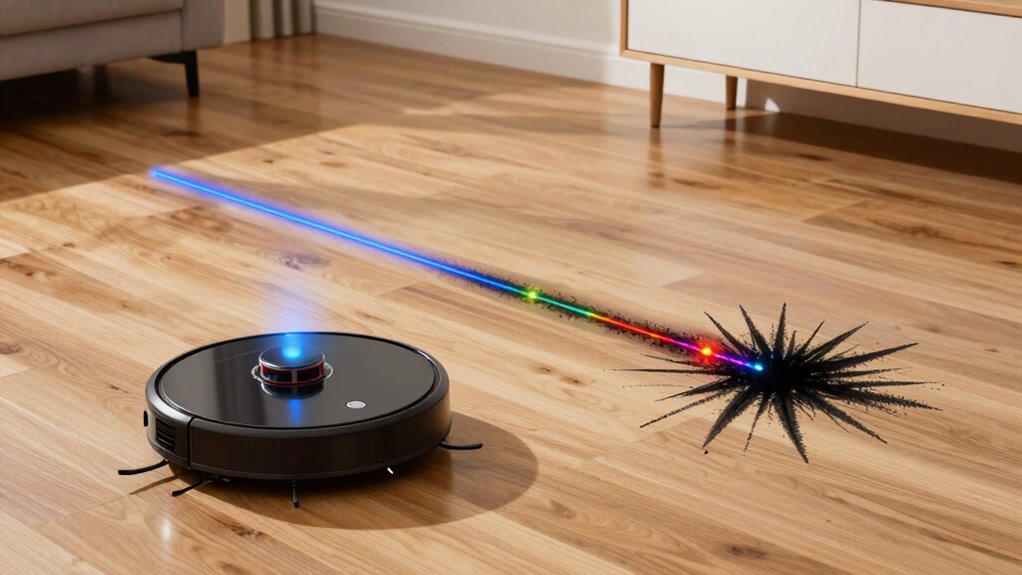

When choosing between LiDAR, camera, or random navigation for a robot vacuum, consider the benefits and limitations of each. LiDAR provides precise mapping and obstacle detection even in low light, making cleaning more efficient. Cameras offer environmental understanding by recognizing objects but can be affected by lighting conditions. Random movement is simple and inexpensive but less thorough. To get the full picture and decide what’s best for your home, explore the detailed differences further.
Key Takeaways
- LiDAR provides high-precision mapping and obstacle detection in low-light conditions, offering more thorough coverage.
- Cameras enable object recognition and environmental understanding but can be affected by lighting and calibration issues.
- Random movement is simple and cost-effective but less efficient, risking missed spots and double cleaning.
- Combining LiDAR and cameras enhances navigation accuracy and obstacle avoidance capabilities.
- Navigation method choice impacts cleaning efficiency, coverage accuracy, and system complexity.

Shark AV2501S AI Ultra Robot Vacuum, with Matrix Clean, Home Mapping, 30-Day Capacity HEPA Bagless Self Empty Base, Perfect for Pet Hair, Wifi, Dark Grey
- Powerful Suction: Effective on all floor types
- Matrix Clean Navigation: Ensures thorough, precise cleaning
- Self-Emptying Base: Holds 30 days of debris
As an affiliate, we earn on qualifying purchases.
As an affiliate, we earn on qualifying purchases.
How Do Robot Vacuums Find Their Way Around?
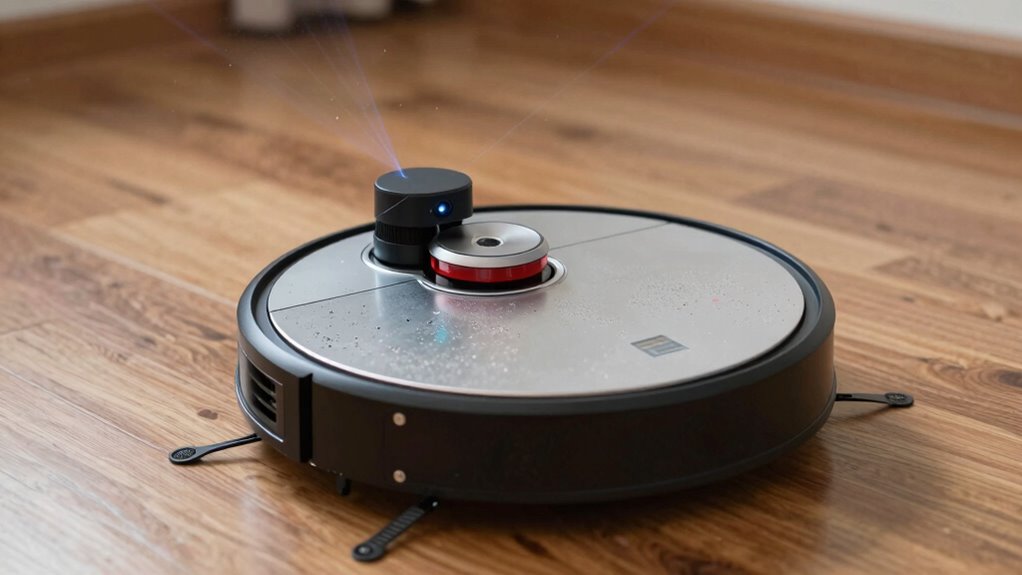
Have you ever wondered how robot vacuums navigate efficiently around your home? They rely on advanced sensors and algorithms to achieve high mapping accuracy and obstacle detection. These devices scan their environment carefully, creating a detailed map of your space. Accurate mapping helps them plan the most efficient cleaning routes, avoiding missed spots. Obstacle detection is vital; sensors identify furniture, walls, and other objects in real-time, allowing the vacuum to adjust its path instantly. Some vacuums use infrared or ultrasonic sensors, while others incorporate cameras or LiDAR. This combination ensures they move smoothly without bumping into things or getting stuck. By constantly updating their maps and detecting obstacles, robot vacuums can clean thoroughly with minimal user intervention. Sensor integration plays a crucial role in enhancing their navigation capabilities.
Shark AV2501S AI Ultra Robot Vacuum, with Matrix Clean, Home Mapping, 30-Day Capacity HEPA Bagless Self Empty Base, Perfect for Pet Hair, Wifi, Dark Grey
- Powerful Suction: Effective on all floor types
- Matrix Clean Navigation: Ensures thorough, precise cleaning
- Self-Emptying Base: Holds 30 days of debris
As an affiliate, we earn on qualifying purchases.
As an affiliate, we earn on qualifying purchases.
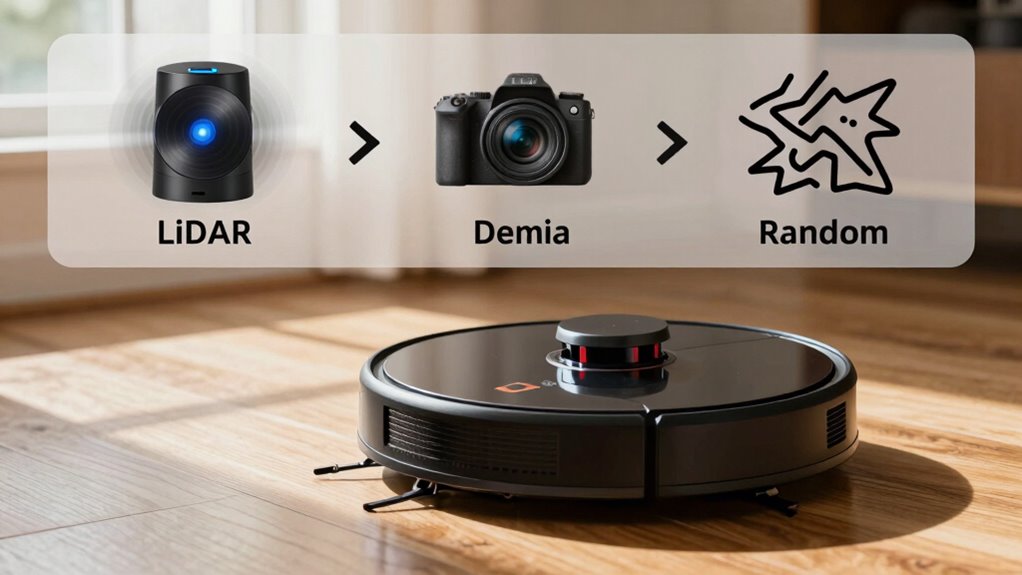
When comparing LiDAR and camera systems for robot vacuum navigation, each technology offers distinct advantages that impact performance. LiDAR provides higher mapping accuracy and better obstacle detection in low-light conditions, making it reliable for detailed planning. Cameras, however, excel at recognizing objects and textures, enhancing environmental understanding. Consider these key points:
- LiDAR offers precise mapping accuracy, ensuring thorough coverage.
- Cameras provide rich visual data, aiding in obstacle detection and identification.
- LiDAR performs consistently regardless of lighting, unlike cameras that depend on ambient light.
- Combining both can improve navigation, but choosing the right system depends on your home’s environment and cleaning needs.
- The choice between LiDAR and cameras also depends on the technology used in sensors, which directly affects navigation capabilities and performance. Additionally, advancements in sensors continue to enhance sensor accuracy and reliability, influencing future robot vacuum designs. As sensor durability improves, these systems will become even more dependable across various environments. Moreover, ongoing development in sensor integration is enabling smarter and more adaptable navigation solutions. For example, innovations in sensor fusion techniques are allowing these systems to better interpret complex environments, leading to improved obstacle avoidance and mapping precision.

ROPVACNIC Robot Vacuum and Mop Combo 5200Pa Suction Robotic Cleaner
- 2-in-1 Vacuum and Mop: Integrated vacuum and mopping technology
- Personalized Water Adjustment: Four-stage water control system
- Smart Control & Voice Commands: App and voice-activated cleaning modes
As an affiliate, we earn on qualifying purchases.
As an affiliate, we earn on qualifying purchases.
Pros and Cons of Random Movement Cleaning
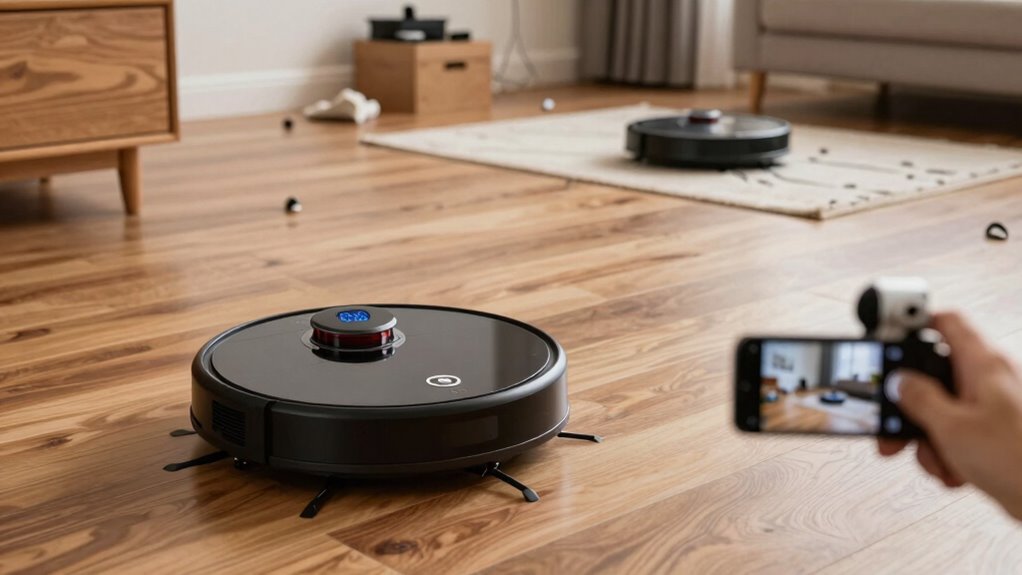
Random movement cleaning is a straightforward approach where the robot vacuum navigates unpredictably, changing direction upon encountering obstacles. This method relies on random wandering, which can simplify design and reduce costs. However, it often results in efficiency trade-offs, as the vacuum may miss spots or spend extra time covering the same area. You might find that cleaning takes longer and isn’t as thorough compared to more advanced methods. Despite its simplicity, this approach can be effective in cluttered or irregular spaces where systematic paths are less practical. The key advantage is ease of use without complex sensors or programming. Still, if you want quick, all-encompassing cleaning, you might prefer more deliberate navigation strategies. Also, the coverage pattern is inherently unpredictable, which can affect overall cleaning performance. Additionally, in areas with complex layouts, random movement may struggle to achieve complete coverage efficiently. The lack of an organized navigation strategy means it relies heavily on chance rather than precise mapping.
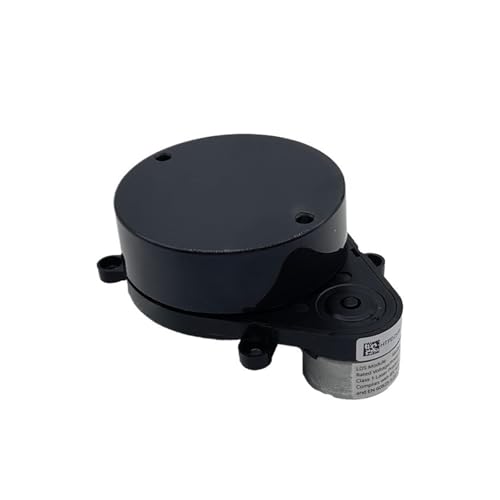
UKDNAEUF Compatible for Roborock S8 S85 S8. Distance Sensor Vacuum Cleaner LDS Replacement Accessories LDS06RR
- Environmental Stability: Operates well in dark or bright environments
- Enhanced Navigation: Improves room and obstacle recognition accuracy
- Obstacle Avoidance: Real-time detection and flexible obstacle navigation
As an affiliate, we earn on qualifying purchases.
As an affiliate, we earn on qualifying purchases.
Choosing the Best Navigation Method for Your Home
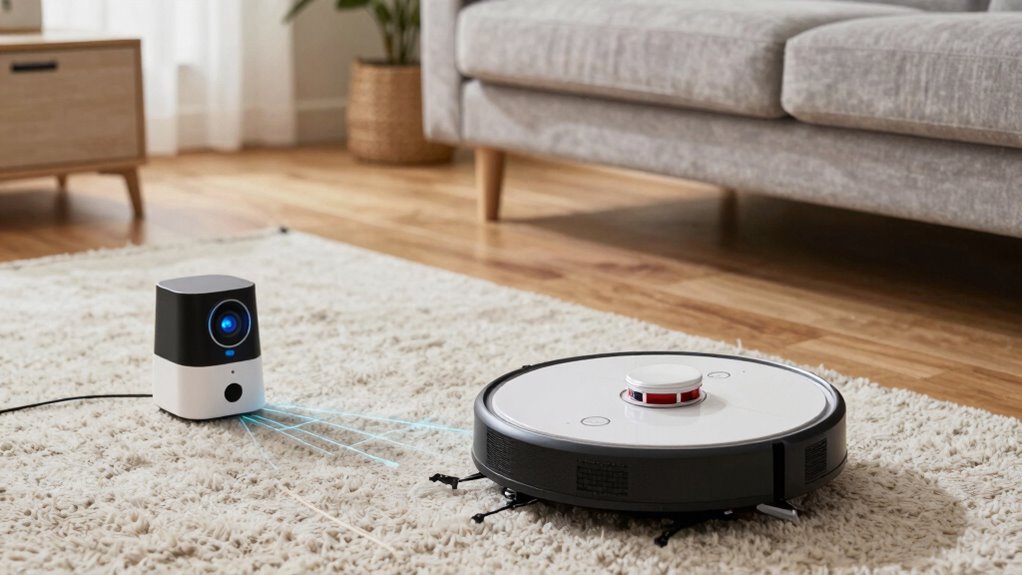
When selecting a navigation method, consider how well it covers your space and maintains accuracy to avoid missed spots. You’ll also want to weigh the costs and complexity, since advanced systems often come with a higher price tag and setup effort. Balancing these points helps you find a solution that fits your home and budget. Additionally, incorporating essential off-road gear tips, such as reliable sensors and proper calibration, can enhance your robot vacuum’s performance and longevity. Ensuring your vacuum uses navigation accuracy can reduce the need for manual intervention and improve cleaning efficiency. Furthermore, understanding the power requirements of different navigation systems can help you choose options that are both effective and energy-efficient. To optimize performance, understanding the impact of AI navigation on overall efficiency can help you select the most suitable system for your needs. Regularly updating the firmware can also improve navigation algorithms and overall functionality.
Accuracy and Coverage
Are you wondering how to guarantee your robot vacuum cleans every corner of your home effectively? Accuracy and coverage depend on the navigation method’s mapping precision and obstacle detection. To maximize cleaning, consider:
- The ability to create detailed maps that ensure thorough coverage.
- How well the system detects and avoids obstacles, preventing missed spots.
- The consistency of navigation paths, reducing overlaps and missed areas.
- The integration of sensors that adapt to changing environments for better coverage.
- The robustness of the navigation system’s accuracy and coverage in different home layouts. Additionally, the symbolic significance of certain shapes like circles and masks can metaphorically represent the concept of comprehensive coverage and protection within the space. Understanding the requirements traceability of your vacuum’s navigation features can help ensure it meets your specific home needs.
Cost and Complexity
Choosing a navigation method for your robot vacuum depends heavily on your budget and the complexity of your home. LiDAR systems tend to be more expensive but offer precise mapping with minimal sensor calibration, reducing ongoing setup efforts. Cameras, on the other hand, are usually more affordable but require careful sensor calibration and more complex software to interpret images accurately. Random navigation is the least costly and simplest but offers limited coverage and efficiency. Keep in mind that advanced navigation methods involve higher software complexity, which may demand frequent updates and troubleshooting. If you prefer a straightforward setup and lower costs, a camera-based or random system might suit you. For more reliable coverage and long-term performance, investing in LiDAR could be worthwhile despite the higher initial expense. Additionally, understanding the cost and complexity of each system can help you make a more informed decision tailored to your household needs. Recognizing the long-term maintenance implications can also influence your choice, especially if you desire a low-maintenance solution. Considering the software updates needed for each system can further help you plan for ongoing support and performance. Being aware of sensor calibration requirements can also save you time and effort during the initial setup and regular maintenance. Moreover, evaluating the installation process can help you determine how easily the system integrates into your home environment.
How Combining Navigation Technologies Enhances Cleaning
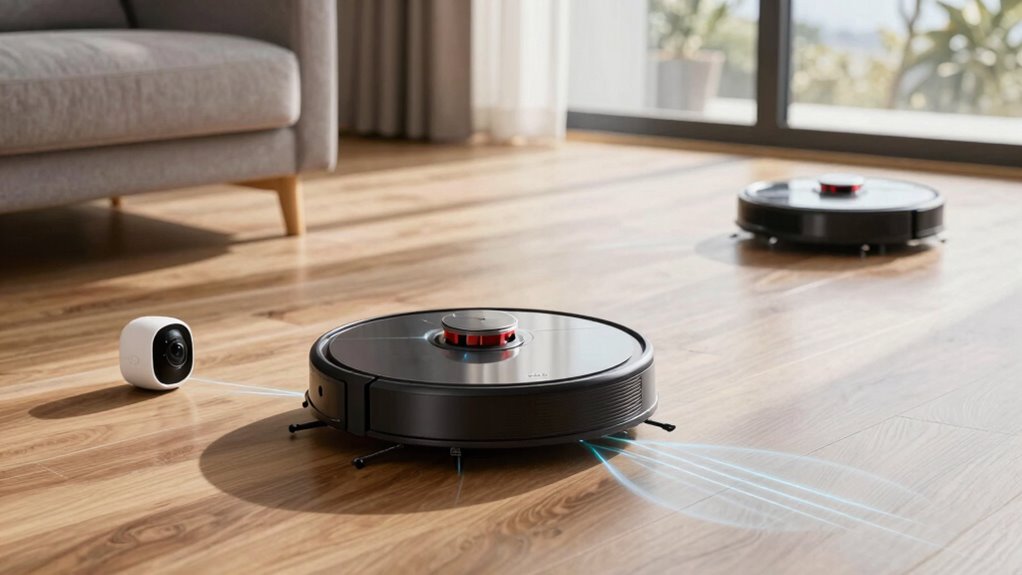
Combining different navigation technologies allows robot vacuums to clean more efficiently and thoroughly. By integrating multiple systems, you gain enhanced capabilities, such as more accurate mapping algorithms and obstacle detection. This product roundup ensures better coverage and fewer missed spots. Consider these benefits:
- Improved navigation accuracy, reducing overlaps and missed areas.
- Better obstacle detection, preventing collisions and damage.
- Faster cleaning routes, saving time and battery life.
- Adaptive learning, allowing the vacuum to adjust to changing environments.
Additionally, utilizing advanced engine upgrades can support these sophisticated navigation systems by providing more reliable power and responsiveness, further improving overall performance.
When these technologies work together, your vacuum can create a thorough map of your home, navigate complex layouts, and handle obstacles more intelligently. The result is a more reliable, effective clean that maximizes your device’s potential.
Factors to Consider When Picking a Robot Vacuum Navigation System
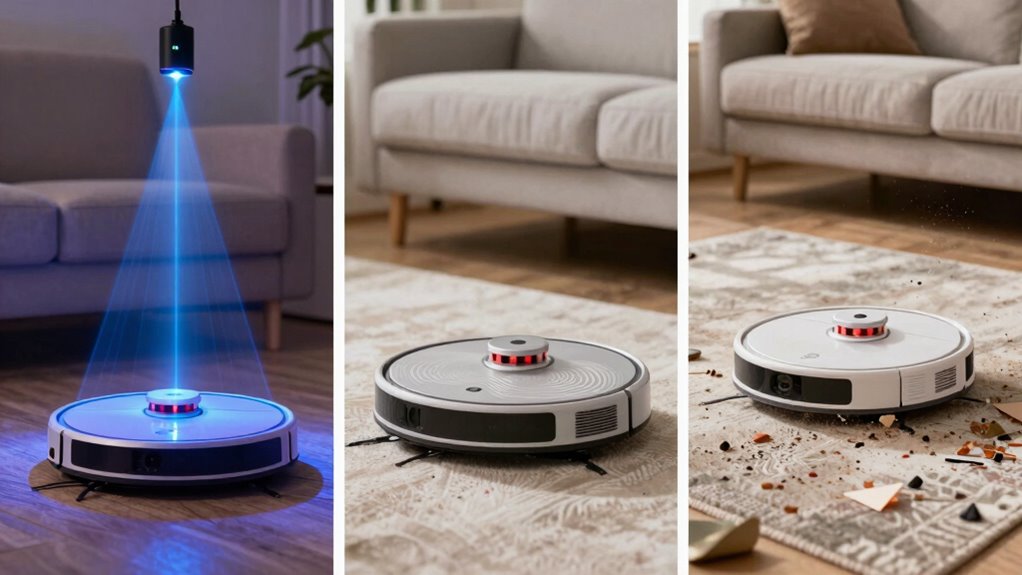
When choosing a robot vacuum, you need to take into account how well its sensors detect obstacles and navigate your space. Reliable sensors ensure the vacuum cleans thoroughly without getting stuck or missing spots. Additionally, look at how efficiently the system covers your home to save time and energy.
Sensor Accuracy and Reliability
Sensor accuracy and reliability are essential factors in selecting a robot vacuum navigation system because they directly impact the device’s ability to map your home and avoid obstacles effectively. Poor sensor calibration can lead to missed spots or collisions. Environmental interference, like bright sunlight or reflective surfaces, can distort sensor readings. To evaluate sensors, consider:
- How well they maintain calibration over time
- Their susceptibility to environmental interference
- The consistency of obstacle detection
- The ability to adapt to changing lighting or surface conditions
High-quality sensors provide more precise mapping and obstacle avoidance, ensuring your vacuum efficiently cleans without mishaps. Reliability depends on stable sensor performance, even in challenging conditions, making it a vital factor when choosing your system.
Navigation Efficiency and Coverage
Efficient navigation and extensive coverage are essential factors to contemplate when choosing a robot vacuum system because they determine how thoroughly your home gets cleaned in the shortest amount of time. High mapping precision ensures the robot accurately understands your space, reducing missed spots and unnecessary overlaps. Obstacle detection plays a critical role, preventing collisions and enabling smooth movement around furniture and narrow passages. Systems with superior navigation capabilities can create more detailed maps, allowing for smarter cleaning routes and customization options. This not only saves time but also improves overall cleaning quality. When evaluating options, prioritize those that balance mapping accuracy with reliable obstacle detection, ensuring your robot can efficiently cover all areas without getting stuck or missing sections.
Frequently Asked Questions
How Do Robot Vacuums Handle Moving Obstacles Like Pets or Children?
You’ll find that robot vacuums handle moving obstacles like pets or children through obstacle detection and real-time rerouting. They use sensors to identify sudden movements and adjust their path instantly, avoiding collisions. Some models combine LiDAR and cameras for better accuracy, allowing them to detect and navigate around dynamic obstacles smoothly. This proactive approach makes certain your space safe and ensures thorough cleaning without interruptions caused by moving objects.
What Is the Impact of Floor Type on Navigation Accuracy?
Like a painter adapting to different canvases, your robot vacuum’s navigation is affected by floor texture and surface variation. Smooth floors like hardwood or tile allow for precise mapping, while carpets and uneven surfaces can cause navigation errors or missed spots. The vacuum’s sensors struggle with inconsistent textures, making it harder to maintain accuracy. To keep your floors spotless, choose a model that adjusts well to various surface types.
Can Navigation Systems Improve Over Time With Updates?
Yes, your robot vacuum’s navigation systems can improve over time through software updates. These updates often enhance navigation algorithms, making your device smarter at avoiding obstacles, cleaning efficiently, and adapting to new floor types. By regularly installing updates, you guarantee your vacuum stays current with the latest features and performance improvements, giving you a more reliable and effective cleaning experience over its lifespan.
How Does Battery Life Influence Navigation Choices?
Battery life considerably influences your navigation choices because better battery efficiency allows the robot vacuum to cover more area without frequent recharges. With effective power management, you can opt for advanced systems like LiDAR or camera navigation that optimize cleaning routes and reduce energy consumption. If battery life is limited, simpler or randomized navigation might be preferable to conserve power, ensuring your vacuum completes its task before needing a recharge.
Are There Privacy Concerns With Camera-Based Navigation?
While camera-based navigation offers clear mapping benefits, it does raise some privacy concerns you should consider. Your camera security is crucial because sensitive images or videos might be inadvertently captured, leading to potential privacy issues. To stay safe, make sure your device has robust security features, such as encryption and secure access controls. Being aware of these privacy concerns helps you enjoy the convenience of camera navigation without compromising your personal space.
Conclusion
Choosing the right navigation system is like crafting a perfect map for your home’s unique landscape. Whether you prefer the precision of LiDAR, the visual awareness of a camera, or the simplicity of random movement, each method has its own adventure. By understanding these options, you can steer your robot vacuum toward a cleaner, more efficient future—like guiding a ship through familiar waters, ensuring every corner is reached and every mess is conquered with confidence.