For most mirrorless shooters, the DJI RS 4 is the best overall gimbal stabilizer for cameras in this lineup, balancing camera-focused controls and a broader working range than compact models. The DJI RS 4 Mini is a standout for creators who want a smaller rig, while the DJI RS 4 Pro suits heavier camera setups and demanding production work. The main tradeoff is portability versus payload and room to grow: a lighter gimbal is easier to carry, but may leave less capacity for a lens or accessories. Buyers also need to distinguish camera gimbals from phone-only options such as the DJI Osmo Mobile 8. Read on for the full breakdown and guidance on matching a stabilizer to your camera and shooting style.

Get your next haul delivered free with Prime
- Fast, free delivery on millions of items
- Prime Video, Amazon Music and more included
- Member-only deals all year
Key Takeaways
- The DJI RS 4 is the strongest all-around camera pick here; the Mini models trade some working headroom for a smaller, easier-to-carry setup.
- The DJI RS 4 Pro is the lineup’s heavy-duty choice, but its size and capacity make less sense for a light mirrorless kit.
- FeiyuTech’s SCORP range offers distinct alternatives: the SCORP-C targets DSLR and mirrorless users, while the SCORP Mini models span more camera types and add tracking features on select versions.
- Several names in the list refer to closely related versions, including the RS 4 Mini, Mini Bundle, and Mini Combo; compare included accessories and package contents before choosing.
- The Osmo Mobile 8 is for phones, not interchangeable-lens cameras, while the CRANE-M2 S and SCORP Mini-3-Pro offer broader format flexibility for compact creator kits.
| DJI RS 4 Camera Gimbal Stabilizer |  | Best Overall for Heavier Mirrorless Rigs | Brand: DJI | Model: RS 4 (P14C) | Payload capacity: 3 kg (6.6 lb) | VIEW ON AMAZON | See Our Full Breakdown |
| FeiyuTech SCORP-C Gimbal Stabilizer for Cameras DSLR and Mirrorless Cameras | 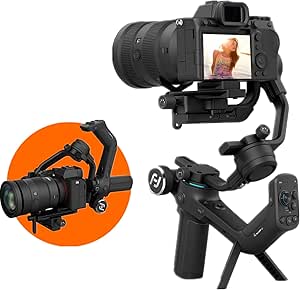 | Best for Payload Headroom | Payload: 5.5 lb | Battery life: 10–13 hours | Battery capacity: 2500mAh | VIEW ON AMAZON | See Our Full Breakdown |
| DJI RS 4 Mini Camera Gimbal Stabilizer Bundle with Carrying Case |  | Best Bundle for Travel | Brand: DJI | Model: RS 4 Mini | Maximum payload: 2 kg (4.4 lb) | VIEW ON AMAZON | See Our Full Breakdown |
| DJI Osmo Mobile 8 Gimbal Stabilizer for Phone, 3-Axis Stabilization |  | Best for Smartphone Video | Stabilization: 3-axis | Battery life: Up to 10 hours | Phone connection: DJI Mimo app | VIEW ON AMAZON | See Our Full Breakdown |
| DJI RS 4 Mini Gimbal Stabilizer |  | Best Compact Camera Gimbal | Brand: DJI | Model: RS 4 Mini | Maximum payload: 2 kg (4.4 lb) | VIEW ON AMAZON | See Our Full Breakdown |
| FeiyuTech SCORP Mini 2 3-Axis Camera Gimbal Kit with AI Tracking |  | Best for Mixed Camera Kits | Stabilization: 3-axis | Maximum payload: 1.2 kg | Weight: 852 g | VIEW ON AMAZON | See Our Full Breakdown |
| DJI RS 4 Mini Combo Gimbal Stabilizer |  | Best for Fast Setup and Vertical Video | Payload capacity: 2 kg (4.4 lb) | Camera compatibility: Canon, Sony, Nikon, and Fujifilm cameras | Axis locks: Automated | VIEW ON AMAZON | See Our Full Breakdown |
| FeiyuTech SCORP 2 3-Axis Camera Gimbal Stabilizer |  | Best for Heavier Camera Rigs | Stabilization: 3-axis | Payload capacity: 2.5 kg | Compatible cameras: Sony, Canon, Panasonic, and Nikon DSLR and mirrorless cameras | VIEW ON AMAZON | See Our Full Breakdown |
| Zhiyun CRANE-M2 S 3-Axis Handheld Gimbal Stabilizer Combo Kit |  | Best Compact Pick | Stabilization: 3-axis | Maximum payload: 2.2 lb | Weight: 459 g | VIEW ON AMAZON | See Our Full Breakdown |
| DJI RS 3 Mini 3-Axis Mirrorless Camera Gimbal Stabilizer (Renewed) |  | Best Lightweight Mirrorless Option | Stabilization: 3-axis | Weight: 795 g listed; 800 g in portrait mode | Maximum payload: 2 kg (4.4 lb) | VIEW ON AMAZON | See Our Full Breakdown |
| FeiyuTech SCORP Mini-3-Pro Gimbal Stabilizer for Camera, Smartphone, and Action Cameras | 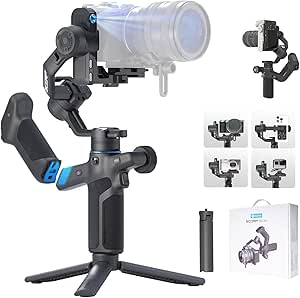 | Best for Multi-Camera Flexibility | Payload capacity: 4.4 lbs | Compatibility: Mirrorless cameras, compact cameras, smartphones, and action cameras | Tracking distance: 18 meters | VIEW ON AMAZON | See Our Full Breakdown |
| DJI RS 4 Pro 3-Axis Gimbal Stabilizer for DSLR & Cinema Cameras |  | Best for Professional Camera Rigs | Payload capacity: 4.5 kg (10 lbs) | Stabilization: 3-axis | Vertical shooting: Native support | VIEW ON AMAZON | See Our Full Breakdown |
| FeiyuTech SCORP 3 Gimbal Stabilizer for Camera with AI Tracking and Remote Control |  | Best for Tracked Vertical Video | Payload capacity: 3.5 kg | Stabilization algorithm: 2025 quaternion | Tracking: Built-in AI tracking | VIEW ON AMAZON | See Our Full Breakdown |
| DJI RS 3 Mini Camera Gimbal Stabilizer |  | Best Compact Pick | Weight: 795 g (1.75 lbs) in portrait mode; 850 g (1.8 lbs) with horizontal arm | Payload capacity: Up to 2 kg (4.4 lbs) | Payload range: 0.4–2 kg (0.8–4.4 lbs) | VIEW ON AMAZON | See Our Full Breakdown |
| gimbal stabilizers for camera | Stabilization | Payload capacity | Tracking |
|---|---|---|---|
| DJI RS 4 Camera Gimbal Stabili | — | 3 kg (6.6 lb) | — |
| FeiyuTech SCORP-C Gimbal Stabi | 3-axis | — | — |
| DJI RS 4 Mini Camera Gimbal St | — | — | Intelligent subject tracking |
| DJI Osmo Mobile 8 Gimbal Stabi | 3-axis | — | Native tracking |
| DJI RS 4 Mini Gimbal Stabilize | — | — | — |
| FeiyuTech SCORP Mini 2 3-Axis | 3-axis | — | Built-in AI tracking |
| DJI RS 4 Mini Combo Gimbal Sta | — | 2 kg (4.4 lb) | RS Intelligent Tracking Module included |
| FeiyuTech SCORP 2 3-Axis Camer | 3-axis | 2.5 kg | Built-in AI tracking with gesture controls |
| Zhiyun CRANE-M2 S 3-Axis Handh | 3-axis | — | — |
| DJI RS 3 Mini 3-Axis Mirrorles | 3-axis | — | — |
| FeiyuTech SCORP Mini-3-Pro Gim | 3-axis | 4.4 lbs | AI tracking with 360° infinite follow |
| DJI RS 4 Pro 3-Axis Gimbal Sta | 3-axis | 4.5 kg (10 lbs) | — |
| FeiyuTech SCORP 3 Gimbal Stabi | — | 3.5 kg | Built-in AI tracking |
| DJI RS 3 Mini Camera Gimbal St | Third-generation RS stabilization | Up to 2 kg (4.4 lbs) | — |
More Details on Our Top Picks
DJI RS 4 Camera Gimbal Stabilizer
I’d choose the DJI RS 4 when a camera setup needs more payload headroom than the compact RS 4 Mini can offer. Its 3 kg (6.6 lb) capacity suits a wider range of camera-and-lens combinations, while Teflon-coated axis arms help make balancing smoother. Native vertical shooting is useful for portrait-format work without an added conversion accessory, though switching orientations still calls for rebalancing. The BG21 grip and quick-release plate are included, and an RSA port allows extra control accessories. Compared with the FeiyuTech SCORP-C, the RS 4 has a lower stated payload but offers native vertical shooting and a clearly specified set of gimbal modes. The tradeoffs are the separate BG70 grip for extended runtime and DJI Ronin app installation outside Google Play.
Pros:- Supports camera and lens combinations up to 3 kg (6.6 lb)
- Native horizontal and vertical shooting
- Teflon-coated axes help reduce friction while balancing
- RSA port supports additional control accessories
Cons:- Requires rebalancing when changing between horizontal and vertical shooting
- BG70 extended battery grip is sold separately
- DJI Ronin app must be downloaded from DJI’s website rather than Google Play
Best for: Mirrorless and DSLR shooters who use heavier lens combinations and regularly switch between horizontal and vertical content.
Not ideal for: Travelers prioritizing the smallest handheld setup, or buyers who want longer battery runtime without purchasing a separate grip.
- Brand:DJI
- Model:RS 4 (P14C)
- Payload capacity:3 kg (6.6 lb)
- Shooting orientation:Horizontal and vertical
- Gimbal modes:PF, PTF, FPV
- Included battery grip:BG21
- Included accessories:Quick-release plate, extended grip/tripod, lens-fastening support, multi-camera control cable, USB-C charging cable, screw kit
Our verdict“Choose the RS 4 for a more substantial camera rig and native vertical shooting, but pick the RS 4 Mini if portability matters more than payload capacity.”
FeiyuTech SCORP-C Gimbal Stabilizer for Cameras DSLR and Mirrorless Cameras
The FeiyuTech SCORP-C is the payload-first choice here: its 5.5 lb capacity is higher than the DJI RS 4’s stated 6.6 lb? No—at 5.5 lb, it is lower, so its appeal is a broad DSLR and mirrorless compatibility list rather than leading capacity. It supports cameras including Sony α7 series, Canon 5D series, Nikon D7500, Fujifilm X-T3, and Panasonic GH5, making it a practical option for owners who want to check familiar camera families against one stabilizer. Its 10–13-hour battery-life claim and 18W fast charging suit longer shoots, while multiple modes offer flexibility. Compared with the RS 4 Mini, this is a heavier, more involved camera-oriented setup, not the easier carry. Setup complexity and weight are the main costs of choosing it.
Pros:- Supports a range of named DSLR and mirrorless camera families
- Battery life is listed at 10–13 hours
- 18W fast charging support
- Multiple shooting modes and adjustable center of gravity
Cons:- Setup can take practice for users new to camera gimbals
- Relatively heavy for extended handheld operation
- Its 5.5 lb payload is below the DJI RS 4’s stated 6.6 lb capacity
Best for: DSLR and mirrorless owners whose camera appears on the compatibility list and who value long operating sessions over a lightweight rig.
Not ideal for: Solo creators seeking a compact, quick-to-pack stabilizer or beginners who want the simplest balancing process.
- Payload:5.5 lb
- Battery life:10–13 hours
- Battery capacity:2500mAh
- Fast charging:18W
- Compatibility:Mirrorless and DSLR cameras, including Sony α7 series, Canon 5D series, Nikon D7500, Fujifilm X-T3, and Panasonic GH5
- Stabilization:3-axis
Our verdict“Pick the SCORP-C if your compatible DSLR or mirrorless setup benefits from long battery life and you can accept a heavier, more hands-on rig.”
DJI RS 4 Mini Camera Gimbal Stabilizer Bundle with Carrying Case
This RS 4 Mini bundle is the travel-ready pick for creators who want camera stabilization with a protective case in the same package. At 2 kg (4.4 lb) payload capacity, it is aimed at lighter camera setups rather than the heavier rigs suited to the DJI RS 4. Automatic axis locks can speed up packing and setup, while subject tracking helps keep a moving person framed without constant manual correction. The bundle adds a tripod and a water-resistant, shockproof case, a practical advantage over the standard RS 4 Mini listing, which specifies a tripod and mounting accessories but not this case. The capacity ceiling is the key compromise: check the combined camera-and-lens weight before buying, especially if you plan to add accessories.
Pros:- Automatic axis locks help speed up setup and packing
- Supports horizontal and vertical shooting
- Intelligent tracking helps keep subjects framed
- Bundle includes a water-resistant, shockproof carrying case
Cons:- Maximum payload is limited to 2 kg (4.4 lb)
- Less suited to heavier camera rigs than the DJI RS 4
- Bundle case adds little value for buyers who already have protective storage
Best for: Traveling vloggers and lightweight mirrorless-camera owners who want a compact stabilizer bundled with protective storage.
Not ideal for: Filmmakers using heavier camera-and-lens combinations above 2 kg, or buyers who already own a suitable carrying case.
- Brand:DJI
- Model:RS 4 Mini
- Maximum payload:2 kg (4.4 lb)
- Shooting orientation:Horizontal and vertical
- Axis locks:Automatic
- Tracking:Intelligent subject tracking
- Bundle contents:Gimbal, tripod, accessories, carrying case
- Carrying case:Gray, water-resistant, shockproof
Our verdict“Choose this bundle over the standard RS 4 Mini if you want a case included and your camera setup stays within its 2 kg payload limit.”
DJI Osmo Mobile 8 Gimbal Stabilizer for Phone, 3-Axis Stabilization
The DJI Osmo Mobile 8 belongs on this list for phone filmmakers, not for buyers stabilizing a DSLR or mirrorless camera. Its 3-axis smartphone stabilization, native tracking, and included multifunctional module combine filming support with lighting and audio features, while the built-in tripod and extension rod help with solo recording. A 360° pan rotation adds room for continuous camera movement, and the stated 10-hour battery life supports extended phone shoots. Compared with the camera-focused DJI RS 4 Mini, the Osmo Mobile 8 is built around a smartphone workflow and is easier to carry, but it cannot replace a camera gimbal for interchangeable-lens setups. The DJI Mimo app dependency may also complicate setup for some users, particularly Android users who need to download it from DJI’s website.
Pros:- 3-axis stabilization is designed for smooth smartphone footage
- Native tracking works alongside included lighting and audio features
- Built-in tripod and extension rod support solo filming
- Stated battery life is up to 10 hours
Cons:- Designed for smartphones rather than DSLR or mirrorless camera payloads
- DJI Mimo app has platform compatibility limitations
- App must be downloaded from DJI’s website because it is unavailable on Google Play
Best for: Phone-first vloggers, livestreamers, and solo creators who want tracking, lighting, and a built-in tripod in one handheld stabilizer.
Not ideal for: Photographers or filmmakers who need to stabilize a mirrorless camera, DSLR, or other non-phone camera.
- Stabilization:3-axis
- Battery life:Up to 10 hours
- Phone connection:DJI Mimo app
- Tracking:Native tracking
- Pan rotation:360°
- Included accessories:Multifunctional Module, Magnetic Phone Clamp
- Additional features:Built-in tripod, extension rod, lighting, audio support
Our verdict“Buy the Osmo Mobile 8 for a feature-rich smartphone filming kit, but choose the RS 4 Mini if your camera is a mirrorless model.”
DJI RS 4 Mini Gimbal Stabilizer
For creators who want a smaller camera gimbal without giving up features such as vertical shooting, the DJI RS 4 Mini is the compact pick. Its 2 kg (4.4 lb) payload covers compatible lightweight mirrorless cameras, vlog cameras, and smartphones, while automated axis locks make setup and packing less fiddly. Teflon-enhanced balancing and responsive follow mode support smoother operation; intelligent tracking is another draw for solo creators. Compared with the full-size DJI RS 4, this model is easier to carry but gives up payload capacity, so larger camera-and-lens combinations are a poor fit. Its included tripod, quick-release plate, cables, and screw kit make it ready for a range of small setups. The main software drawback is the Ronin app’s off-Play-Store installation requirement.
Pros:- Compact design supports lighter camera and smartphone setups
- Automated axis locks speed up setup
- Native vertical shooting and responsive follow mode
- Intelligent tracking helps keep subjects framed
Cons:- Maximum payload is limited to 2 kg (4.4 lb), well below the DJI RS 4
- Ronin app must be downloaded from DJI’s website rather than Google Play
Best for: Traveling creators and solo operators with a lightweight mirrorless camera, vlog camera, or smartphone who need native vertical shooting.
Not ideal for: Camera operators using heavier lenses or accessories that push their complete setup beyond 2 kg.
- Brand:DJI
- Model:RS 4 Mini
- Maximum payload:2 kg (4.4 lb)
- Compatible devices:Mirrorless cameras, vlog cameras, and smartphones
- Orientation:Native vertical shooting
- Features:Automated axis locks, intelligent tracking, Teflon-enhanced balancing, responsive follow mode
- Included items:Gimbal, tripod, quick-release plate, cables, screw kit
- Warranty:2 years
Our verdict“Choose the RS 4 Mini for portability and lightweight camera setups; step up to the RS 4 if your lens and accessories need more payload headroom.”
FeiyuTech SCORP Mini 2 3-Axis Camera Gimbal Kit with AI Tracking
The SCORP Mini 2 makes the most sense when one stabilizer needs to serve several camera types. Its 1.2 kg payload and included phone clamp and GoPro adapter cover lightweight mirrorless setups, smartphones, and action cameras, while built-in AI tracking works without an app connection. That makes it more adaptable out of the box than the camera-focused FeiyuTech SCORP 2, which supports a heavier payload but is aimed at DSLR and mirrorless cameras. The Mini 2 also includes a fill light, extension rod, tripod, and case, reducing the need to source basic accessories separately. Its tradeoff is headroom: heavier camera-and-lens combinations may exceed its payload limit, and its 852 g body is not the lightest option here. Choose it for flexibility, not for a large rig.
Pros:- Supports mirrorless cameras, smartphones, DSLR cameras, and action cameras
- Built-in AI tracking can operate without an app connection
- 1.3-inch touchscreen and Bluetooth or cable controls
- Kit includes a fill light, extension rod, tripod, and carrying case
Cons:- 1.2 kg maximum payload limits heavier camera setups
- At 852 g, it weighs more than some compact gimbals intended for small cameras
- Its broad compatibility does not remove the need to check the balance and control fit of each camera
Best for: Creators switching between a smartphone, action camera, and lightweight mirrorless camera who want tracking and useful kit accessories in one package.
Not ideal for: Filmmakers using heavier DSLR or mirrorless camera-and-lens combinations, since the 1.2 kg payload leaves less room than the SCORP 2.
- Stabilization:3-axis
- Maximum payload:1.2 kg
- Weight:852 g
- Screen:1.3-inch touchscreen
- Compatible devices:Mirrorless cameras, smartphones, DSLR cameras, and action cameras
- Tracking:Built-in AI tracking
- Included accessories:Carrying case, wireless fill light, extension rod, tripod, smartphone clamp, GoPro adapter, cables, and fixed plate
Our verdict“Choose the SCORP Mini 2 if you want one accessory-rich gimbal for several lightweight camera types, but skip it for heavier rigs.”
DJI RS 4 Mini Combo Gimbal Stabilizer
The DJI RS 4 Mini Combo is the clearest fit for creators who want a small camera gimbal that is quick to set up and ready for portrait-oriented work. Automated axis locks simplify packing and setup, while native vertical shooting avoids an improvised mounting arrangement for social video. Its 2 kg payload gives it more room for mirrorless camera combinations than the FeiyuTech SCORP Mini 2, and the Combo adds a tracking module and briefcase handle for framing subjects or shooting from a lower, wider grip. The tradeoff is that this is a camera-centered kit, not the cross-device option the SCORP Mini 2 aims to be. Buyers should also note the Android app installation requirement: DJI’s Ronin app must be downloaded from DJI’s website rather than the usual app store route.
Pros:- Automated axis locks speed up setup and packing
- Native vertical shooting suits portrait video
- 2 kg payload exceeds the SCORP Mini 2’s 1.2 kg limit
- Combo includes an intelligent tracking module and briefcase handle
Cons:- Android users must download the Ronin app from DJI’s website
- Camera compatibility is listed for select Canon, Sony, Nikon, and Fujifilm systems
- More camera-focused than the SCORP Mini 2 for users who also want phone and action-camera support
Best for: Mirrorless-camera creators who frequently shoot portrait video and want fast setup, subject tracking, and a briefcase handle in the kit.
Not ideal for: Buyers seeking a gimbal for a mix of phones, action cameras, and heavier rigs, or Android users who prefer installing apps only through the usual app store.
- Payload capacity:2 kg (4.4 lb)
- Camera compatibility:Canon, Sony, Nikon, and Fujifilm cameras
- Axis locks:Automated
- Vertical shooting:Native vertical shooting
- Tracking:RS Intelligent Tracking Module included
- Included items:Gimbal, tripod, tracking module, briefcase handle, quick-release plate, cables, and screw kit
Our verdict“Pick the RS 4 Mini Combo if quick setup and native vertical shooting matter more than broad device compatibility.”
FeiyuTech SCORP 2 3-Axis Camera Gimbal Stabilizer
Among the FeiyuTech options here, the SCORP 2 is the stronger choice for a DSLR or mirrorless setup that needs more payload capacity. Its 2.5 kg limit gives it considerably more room than the SCORP Mini 2, making it better suited to camera-and-lens combinations that would push the smaller model too far. Built-in AI tracking and gesture controls add subject-following without relying solely on an app, while the touchscreen, control knob, and wired or Bluetooth connections offer several ways to adjust or trigger a compatible camera. The compromise is its narrower device focus: unlike the Mini 2, it is specified for DSLR and mirrorless cameras rather than phones and action cameras. Some camera-control features depend on the camera model, and app-based adjustments add another compatibility step.
Pros:- 2.5 kg payload provides more headroom than the SCORP Mini 2
- Built-in AI tracking includes gesture controls
- Quick-install support for vertical shooting
- 1.3-inch touchscreen, control knob, and wired or Bluetooth camera control
Cons:- Specified for DSLR and mirrorless cameras rather than a broad range of device types
- Camera-control functions depend on compatibility with the specific camera
- Some adjustments require the companion app
Best for: DSLR and mirrorless shooters with camera-and-lens setups that need more payload headroom and want built-in tracking controls.
Not ideal for: Creators looking for a single gimbal for smartphones and action cameras as well as cameras, or anyone whose camera functions are not supported through its connection options.
- Stabilization:3-axis
- Payload capacity:2.5 kg
- Compatible cameras:Sony, Canon, Panasonic, and Nikon DSLR and mirrorless cameras
- Tracking:Built-in AI tracking with gesture controls
- Screen:1.3-inch touchscreen
- Camera connection:Control cable or Bluetooth
- Vertical shooting:Quick-install vertical shooting support
- App:Feiyu SCORP App
Our verdict“Choose the SCORP 2 for a heavier DSLR or mirrorless setup; choose the SCORP Mini 2 instead if cross-device flexibility matters more.”
Zhiyun CRANE-M2 S 3-Axis Handheld Gimbal Stabilizer Combo Kit
At 459 g, the Zhiyun CRANE-M2 S is the portability-first choice in this group. It can handle compact cameras, phones, and action cameras, so it offers some of the cross-device flexibility of the SCORP Mini 2 in a lighter body. The built-in LED light can help with close-range fill, and the combo’s mini tripod and backpack make it a tidy kit for travel or small creator setups. The tradeoff is capacity: its 2.2 lb maximum payload is far below the SCORP 2’s 2.5 kg limit, so it is not the pick for a substantial camera-and-lens rig. It is also not water resistant, which makes wet-weather shooting a poor fit. Choose it when low carrying weight matters more than payload headroom.
Pros:- 459 g weight is the lightest listed among these five products
- Supports compact cameras, smartphones, and action cameras
- Built-in LED light adds a small source of fill illumination
- Combo includes a smartphone clamp, mini tripod, and carrying backpack
Cons:- 2.2 lb payload is limited compared with the SCORP 2’s 2.5 kg capacity
- Not water resistant
- Compact-camera compatibility does not mean every camera and lens combination will fit within the payload
Best for: Travel creators and smartphone or compact-camera shooters who want a lightweight stabilizer with a small light and carry kit.
Not ideal for: DSLR or mirrorless users with heavier lenses, and outdoor shooters who need water resistance.
- Stabilization:3-axis
- Maximum payload:2.2 lb
- Weight:459 g
- Dimensions:9.45 × 5.91 × 2.68 in
- Compatible devices:Cameras, smartphones, and action cameras
- Connectivity:Bluetooth 5
- Charging:PD fast charging
- Included accessories:Smartphone clamp, mini tripod, and TransMount EasyGo Backpack
Our verdict“Choose the CRANE-M2 S for a light travel kit built around small cameras or a phone, not for a heavier camera rig.”
DJI RS 3 Mini 3-Axis Mirrorless Camera Gimbal Stabilizer (Renewed)
The DJI RS 3 Mini suits mirrorless shooters who want a light handheld gimbal without stepping up to the RS 4 Mini Combo. At a listed 795 g, it is lighter than that Combo’s feature-rich setup, and its 2 kg payload covers compatible camera-and-lens combinations that exceed the Zhiyun CRANE-M2 S’s 2.2 lb limit. Native vertical shooting also gives portrait-content creators a direct path to that orientation. This model is less compelling for buyers who want tracking accessories included: the RS 4 Mini Combo specifies a tracking module and briefcase handle, while this listing focuses on stabilization and Bluetooth shutter control. It is also a renewed product with a 90-day limited warranty, so buyers should weigh that shorter stated coverage against new-product alternatives.
Pros:- Listed weight of 795 g supports a lighter handheld setup
- 2 kg payload exceeds the CRANE-M2 S’s 2.2 lb limit
- Native vertical shooting supports portrait content
- Bluetooth shutter control enables capture control from the gimbal
Cons:- Renewed condition comes with a 90-day limited warranty
- Compatibility depends on the specific camera model and lens combination
- Listed weight varies by configuration, with 800 g given for portrait mode
Best for: Mirrorless-camera travelers who want a lightweight gimbal with native vertical shooting and a 2 kg payload, and are comfortable buying a renewed unit.
Not ideal for: Buyers who need an included tracking module, broad phone and action-camera compatibility, or a longer stated warranty.
- Stabilization:3-axis
- Weight:795 g listed; 800 g in portrait mode
- Maximum payload:2 kg (4.4 lb)
- Camera control:Bluetooth shutter control
- Shooting mode:Native vertical shooting
- Condition:Renewed
- Warranty:90-day limited warranty
Our verdict“Pick the renewed RS 3 Mini for a light, vertical-ready mirrorless setup if its camera compatibility and 90-day warranty suit you.”
FeiyuTech SCORP Mini-3-Pro Gimbal Stabilizer for Camera, Smartphone, and Action Cameras
I’d pick the SCORP Mini-3-Pro when one stabilizer needs to serve a mirrorless camera, phone, and action camera. Its 4.4 lb payload covers lighter camera setups, while AI tracking and 360-degree infinite follow can keep a moving subject in frame without relying on a dedicated camera operator. The detachable remote handle adds options for filming from a distance, a practical difference from the more camera-focused DJI RS 3 Mini.
That flexibility comes with more setup choices to learn, and the payload ceiling rules out many heavier professional rigs. The listed information also gives no battery runtime, so I wouldn’t choose it for a long shoot without checking that detail. It suits creators who switch devices often better than operators committed to a large camera build.
Pros:- Works with mirrorless cameras, compact cameras, smartphones, and action cameras.
- AI tracking supports subject-following shots, with a stated 18-meter tracking distance.
- Detachable remote handle adds flexibility for long-distance filming.
- Modular design supports switching between horizontal and vertical shooting.
Cons:- The 4.4 lb payload excludes many heavier camera-and-lens combinations.
- Its multiple features may take time for new gimbal users to learn.
- Battery runtime is not specified in the provided product information.
Best for: Creators who alternate among a compact mirrorless camera, smartphone, and action camera and want tracking plus remote operation in one gimbal.
Not ideal for: Videographers using heavier cinema-camera rigs or buyers who want a simpler stabilizer with clearly stated battery runtime.
- Payload capacity:4.4 lbs
- Compatibility:Mirrorless cameras, compact cameras, smartphones, and action cameras
- Tracking distance:18 meters
- Response time:0.003 seconds
- Stabilization:3-axis
- Tracking:AI tracking with 360° infinite follow
- Remote handle:Detachable
- Weight:Not specified
Our verdict“Choose the SCORP Mini-3-Pro if you want one tracking gimbal for several light camera types, but not for a heavy cinema rig.”
DJI RS 4 Pro 3-Axis Gimbal Stabilizer for DSLR & Cinema Cameras
For a heavier DSLR or cinema-camera build, I’d put the DJI RS 4 Pro ahead of the lighter DJI RS 3 Mini: its 10 lb payload and increased motor torque are aimed at demanding camera-and-lens combinations. Native vertical shooting also makes it easier to produce portrait-format footage without treating that format as an afterthought. For focus-critical work, the LiDAR focus system offers advanced control beyond the compact, simpler setup of the RS 3 Mini.
This capacity and control come with more complexity, so it’s a poor first gimbal for someone who wants quick setup. The listed 29-hour runtime is tied to the BG30 battery grip, which the product information says may need to be purchased separately for extended runtime. I’d choose it for planned professional shoots, not for travel where lower weight matters more.
Pros:- 10 lb payload supports heavier professional camera and lens combinations.
- Native vertical shooting supports portrait-format production.
- LiDAR focus control offers advanced focus assistance.
- Listed battery runtime reaches up to 29 hours with the BG30 battery grip.
Cons:- Setup and advanced controls may be challenging for beginners.
- The BG30 battery grip may require a separate purchase for the stated extended runtime.
- App compatibility issues may require updates from DJI’s website.
Best for: Professional videographers using heavier DSLR or cinema-camera setups who need high payload capacity, vertical shooting, and advanced focus control.
Not ideal for: New gimbal users, travel shooters prioritizing low carry weight, or buyers unwilling to manage a complex setup and battery-grip requirements.
- Payload capacity:4.5 kg (10 lbs)
- Stabilization:3-axis
- Vertical shooting:Native support
- Motor torque:20% increase
- Battery runtime:Up to 29 hours
- Focus control:LiDAR autofocus with 76,800 ranging points
- Included accessories:Gimbal, BG30 Battery Grip, Quick-Release Plate
Our verdict“Choose the RS 4 Pro for a heavier professional rig and advanced focus needs, rather than the lighter, simpler DJI RS 3 Mini.”
FeiyuTech SCORP 3 Gimbal Stabilizer for Camera with AI Tracking and Remote Control
The SCORP 3 combines a substantial 3.5 kg payload with built-in AI tracking, gesture control, and quick vertical shooting. That makes it a better match than the SCORP Mini-3-Pro for users whose camera setup is too heavy for the Mini-3-Pro’s 4.4 lb limit, while retaining tracking tools for solo filming. Its detachable remote and touchscreen also give operators more ways to adjust a shot without staying directly behind the camera.
Those controls add flexibility, but they also raise the learning curve; the product information warns that beginners may find it complex. Its weight may also become tiring during extended handheld shoots. Compared with the DJI RS 4 Pro, the SCORP 3 emphasizes AI tracking and gesture control, while the RS 4 Pro has a higher stated payload and specified LiDAR focus features.
Pros:- 3.5 kg payload supports heavier camera setups than the SCORP Mini-3-Pro.
- Built-in AI tracking and gesture control support solo filming.
- Quick vertical shooting suits portrait-format content.
- Detachable remote and touchscreen offer flexible control.
Cons:- The feature set may be complex for beginners to operate.
- Its weight may cause fatigue during long handheld sessions.
- Its 3.5 kg payload is lower than the DJI RS 4 Pro’s 4.5 kg capacity.
Best for: Solo creators and small production teams using moderately heavy camera setups who want built-in tracking, remote control, and vertical video support.
Not ideal for: New gimbal users seeking straightforward operation, or operators who need the highest payload capacity and LiDAR focus features.
- Payload capacity:3.5 kg
- Stabilization algorithm:2025 quaternion
- Tracking:Built-in AI tracking
- Gesture control:Supported
- Remote:Detachable
- Vertical shooting:Supported
- Control:Touchscreen
Our verdict“Pick the SCORP 3 if tracking and vertical shooting matter for a moderately heavy rig, but choose the RS 4 Pro for greater payload headroom.”
DJI RS 3 Mini Camera Gimbal Stabilizer
The DJI RS 3 Mini is the most travel-minded choice here for mirrorless users: it weighs 795 g in portrait mode and supports cameras up to 2 kg. That lighter form makes it easier to carry between locations than the DJI RS 4 Pro, though it gives up the Pro’s higher payload and LiDAR focus control. Native vertical shooting, a touchscreen, and Bluetooth shutter control keep common filming tasks close at hand without requiring a larger professional rig.
The tradeoff is a firm ceiling on camera weight, so I’d check the combined camera-and-lens setup before buying. Activation and full functionality require the DJI Ronin app, and the provided information says the app is unavailable through Google Play. This is a focused option for compatible mirrorless kits, not a universal gimbal for phones, action cameras, or heavier cinema builds.
Pros:- Lightweight design weighs 795 g in portrait mode.
- Supports compatible camera setups up to 2 kg.
- Native vertical shooting supports portrait-format footage.
- Touchscreen and Bluetooth shutter control provide convenient on-gimbal operation.
Cons:- The 2 kg payload limit excludes heavier camera-and-lens combinations.
- Activation and full functionality require the DJI Ronin app.
- The provided product information says the app is unavailable through Google Play.
Best for: Traveling mirrorless-camera shooters with a camera-and-lens combination under 2 kg who want a compact gimbal and native portrait shooting.
Not ideal for: Users with heavier camera rigs, people who need a gimbal for smartphones or action cameras, or Android users who cannot access the required app.
- Weight:795 g (1.75 lbs) in portrait mode; 850 g (1.8 lbs) with horizontal arm
- Payload capacity:Up to 2 kg (4.4 lbs)
- Payload range:0.4–2 kg (0.8–4.4 lbs)
- Display:1.4-inch full-color touchscreen
- Connectivity:Bluetooth shutter control
- Shooting modes:Native vertical shooting
- Stabilization:Third-generation RS stabilization
- Included items:Quick-release plate, tripod, USB-C charging cable, multi-camera control cable, mounting screw
Our verdict“Choose the RS 3 Mini for a compatible, lightweight mirrorless kit and travel-friendly vertical video, not for heavy rigs or app-averse users.”

How We Picked
I ranked these stabilizers around the job a buyer needs them to do: support the intended camera and lens, provide useful stabilization and control, remain manageable during a real shoot, and offer a feature set that fits the user’s workflow. Camera compatibility and payload came first, since an under-capacity gimbal or a phone-only model cannot serve as a substitute for a camera rig. I then weighed portability, setup demands, tracking and control features, and practical extras such as a case or bundled accessories.
The order favors versatile camera gimbals that suit a wide range of mirrorless work, followed by lighter or more specialized options and then larger, narrower-use models. Closely related packages are separated by their intended buyer and what the bundle adds, rather than treated as entirely different classes of stabilizer. I also accounted for tradeoffs: a feature-rich model may add bulk, and an affordable or compact option may offer less room for heavier rigs or future accessories. The phone-only Osmo Mobile 8 is included for readers comparing creator stabilization formats, but it is not ranked as a camera-gimbal replacement.
| gimbal stabilizers for camera | Tracking |
|---|---|
| DJI RS 4 Camera Gimbal Stabili | — |
| FeiyuTech SCORP-C Gimbal Stabi | — |
| DJI RS 4 Mini Camera Gimbal St | Intelligent subject tracking |
| DJI Osmo Mobile 8 Gimbal Stabi | Native tracking |
| DJI RS 4 Mini Gimbal Stabilize | — |
| FeiyuTech SCORP Mini 2 3-Axis | Built-in AI tracking |
| DJI RS 4 Mini Combo Gimbal Sta | RS Intelligent Tracking Module included |
| FeiyuTech SCORP 2 3-Axis Camer | Built-in AI tracking with gesture controls |
| Zhiyun CRANE-M2 S 3-Axis Handh | — |
| DJI RS 3 Mini 3-Axis Mirrorles | — |
| FeiyuTech SCORP Mini-3-Pro Gim | AI tracking with 360° infinite follow |
| DJI RS 4 Pro 3-Axis Gimbal Sta | — |
| FeiyuTech SCORP 3 Gimbal Stabi | Built-in AI tracking |
| DJI RS 3 Mini Camera Gimbal St | — |
Factors to Consider When Choosing Gimbal Stabilizers For Cameras
Before choosing a model, match the gimbal to the complete shooting setup—not just the camera body. A stabilizer can be a poor fit even when the body alone seems light enough, and extra features matter only if they support the way you film. These checks help narrow the field before comparing individual models.
Match Payload to Your Full Camera Rig
Use the camera, lens, plate, microphone, and any other attached accessories as the unit you need to balance. A body-only weight comparison can be misleading because a longer or heavier lens changes both the load and how that weight sits on the gimbal. Leave some capacity headroom if you expect to change lenses or add a monitor later; buying right at the limit can make a setup less flexible. Check the maker’s payload guidance and confirm that your camera can be mounted and balanced in the intended orientation. If your kit is deliberately lightweight, a compact model may be easier to carry than a larger stabilizer built for heavier rigs.
Check Camera Fit, Not Just the Gimbal’s Label
“For mirrorless” or “for DSLR” is only a starting point: camera body shape, lens dimensions, ports, and screen position can all affect clearance and balancing. Look for compatibility information for your specific camera, especially if you rely on autofocus, recording controls, or remote operation from the gimbal handle. A lens that extends far forward may create clearance problems even when the total load is within the stated limit. Also check whether the camera can be mounted vertically if you make social video. Don’t treat a phone gimbal as a smaller camera gimbal; the Osmo Mobile 8 is designed for phones, not interchangeable-lens camera rigs.
Choose Portability for Your Actual Shoot
A compact stabilizer helps when you walk between locations, travel with limited luggage, or shoot for long stretches without a support crew. Larger models can provide more room for heavier camera builds, but that capability comes with more bulk to carry and manage. Think about the entire kit, including batteries, plates, accessories, and any case, rather than comparing folded gimbal dimensions alone. If most of your filming happens on a tripod or shoulder rig, paying for maximum handheld capacity may bring little practical benefit. For frequent handheld work, comfort and packability can matter as much as headline payload.
Decide Whether Tracking and Remote Control Matter
Tracking features are most useful when you film yourself, work alone, or need a subject to remain framed while moving. They are less valuable for controlled camera moves where an operator can manage framing directly. Check what the tracking feature actually follows and whether it depends on an accessory, app, or a specific camera setup. Remote controls can help when the gimbal is positioned away from the operator, but they add another workflow to learn and keep charged. Favor a simpler control layout if your shots are mostly deliberate pans and movement rather than automated subject following.
Compare Bundles and Near-Identical Model Names
Bundle names can describe different included items rather than a different stabilizer, so compare the exact box contents before choosing. A carrying case or useful mounting accessory can make a package more convenient, but only if it suits your camera and shooting routine. Check the specific version name and generation: the RS 4 Mini, RS 4 Mini Bundle, and RS 4 Mini Combo should not be assumed to contain the same accessories. The same care applies when comparing standard and renewed listings, which may have different condition terms and included components. Make your decision around the stabilizer’s compatibility and package details, not the word “combo” alone.
Pay for Capacity You Will Use
More capacity and advanced controls can be worthwhile for cinema cameras, heavier lenses, or frequent accessory changes. For a small mirrorless camera used with a compact lens, a premium heavy-duty model may add carrying burden without improving the shots you make. On the other hand, choosing too small a gimbal can force compromises when you upgrade your lens or add equipment. List your current rig and likely near-term changes before deciding how much headroom to buy. The best fit is the least burdensome model that supports your real setup and shooting plans.
Frequently Asked Questions
Can I use the DJI Osmo Mobile 8 with a mirrorless or DSLR camera?
No. The Osmo Mobile 8 is a phone gimbal, so it is not a substitute for a camera stabilizer built to mount and balance an interchangeable-lens rig. Choose one of the camera-focused models if you need to support a mirrorless or DSLR body. If you film sometimes on a phone and sometimes on a camera, decide whether separate purpose-built tools are more practical than expecting one gimbal to handle both. The SCORP Mini-3-Pro is one of the listed options described for camera, smartphone, and action camera use, but you should still check compatibility for your exact setup.
Should I choose the RS 4 Mini or the full-size DJI RS 4?
Choose the RS 4 Mini if keeping your kit compact matters more than extra capacity for a larger camera build. The full-size RS 4 is the more flexible choice for buyers who expect to use heavier lenses or add accessories, provided its larger form suits their shooting routine. Start with the complete camera setup you plan to stabilize, not just the camera body. If you are close to the Mini’s working limit or expect to upgrade soon, the full-size model may give you more useful headroom. If your rig stays light, the smaller option avoids carrying capability you may never use.
Is a bundle or combo version better than buying the standard gimbal?
Not automatically: bundle and combo labels can mean extra accessories, not a different gimbal or improved stabilization. First confirm that the standard stabilizer itself suits your camera, lens, and shooting style. Then compare the precise included items, such as a case or mounting accessories, against what you already own and will actually use. Package contents can vary by listing, so check the specific version rather than relying on a model-family name. Choose the bundled version when its additions solve a real transport or setup need.
How much payload headroom should I leave for a camera gimbal?
There is no single headroom figure that suits every rig, but avoid choosing a stabilizer solely because the camera body falls under its stated maximum. Include the lens, plate, microphone, and other attached gear, then check the maker’s guidance for your exact camera configuration. Extra room is useful if you change lenses or add accessories, though it can mean carrying a larger gimbal than necessary. If your setup is fixed and lightweight, prioritizing portability may make more sense than buying capacity for unlikely upgrades. When compatibility is unclear, verify it before purchase rather than counting on a near-limit fit.
Is a renewed DJI RS 3 Mini a sensible alternative to the RS 4 Mini?
It can suit a buyer who wants a compact camera gimbal and is comfortable checking the renewed unit’s condition and package details. The RS 4 Mini is the newer family option in this roundup, while the RS 3 Mini remains a separate compact alternative rather than an identical model. Compare the features and camera compatibility you need instead of assuming a newer number alone decides the choice. Read the listing’s condition terms and confirm which accessories are included, particularly for a renewed product. If clear condition expectations and a complete package matter most, a new listing may be easier to evaluate.
Conclusion
For the broadest mix of mirrorless-camera versatility and everyday use, I’d start with the DJI RS 4 as the best overall. The FeiyuTech SCORP-C is my best-value direction for DSLR and mirrorless users who want a camera-focused alternative without moving to a heavy-duty class; verify camera fit and included features for the specific package. For larger rigs and production work, the DJI RS 4 Pro is the best premium pick, while its added capacity is unnecessary for many light setups. Beginners with a compact mirrorless kit should compare the DJI RS 4 Mini and the related bundle versions, choosing based on camera fit and package contents. For phone-only filming, choose the DJI Osmo Mobile 8; for a mixed-format creator setup, look at the SCORP Mini-3-Pro and confirm support for your specific devices. The right choice comes down to the rig you will actually carry: match that first, then decide which extras earn their place.
Evergreen bestsellers Picks

LG 85-Inch QNED73B Mini LED 4K Smart TV (2026)

Apple AirPods Pro 3 Wireless Earbuds with Active Noise Cancellation

Hisense 85 U7 Mini-LED ULED 4K UHD Smart Google TV (85U7SG, 2026)
As an affiliate, we earn on qualifying purchases.