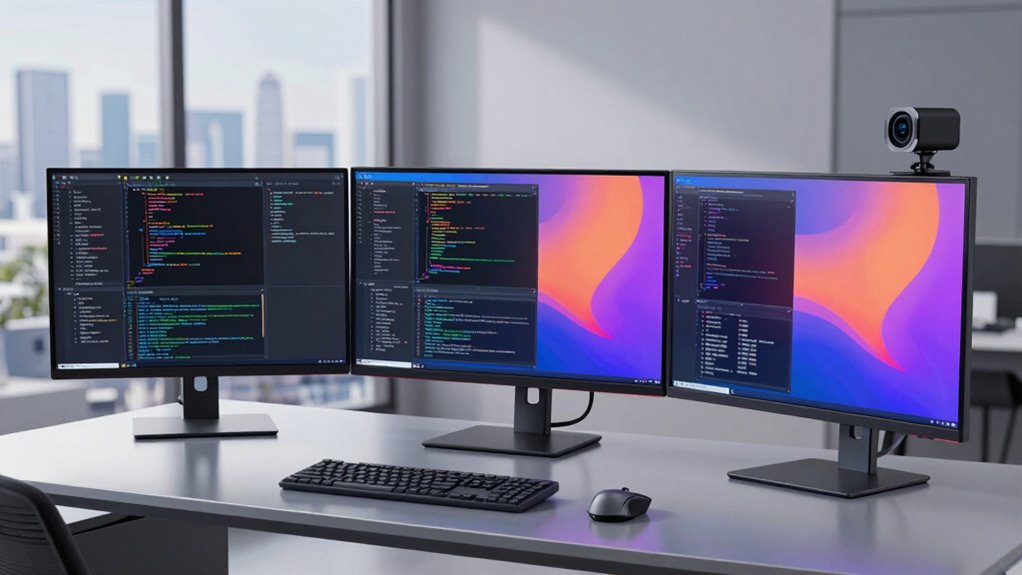

Choosing the right monitor for coding can significantly impact your productivity and comfort. The best options balance screen size, resolution, color accuracy, and ergonomic features. The ViewSonic VP2756A stands out for its excellent color accuracy and USB-C docking, making it ideal for professional developers. The Dell 27 Plus QHD offers high refresh rates and quick response times, perfect for fast-paced coding sessions. Meanwhile, the LG 27UP850K-W delivers stunning 4K clarity for detailed work. However, the main tradeoffs include balancing budget, screen real estate, and resolution. Continue reading for a detailed breakdown of each option to find your ideal match.

Get your next haul delivered free — and shop member deals
- Fast, free delivery on millions of items
- Access to Prime Big Deal Days deals on October 6–7
- Prime Video, Amazon Music and more included
Key Takeaways
- High-resolution monitors (4K and UltraWide) greatly enhance multitasking and detailed coding tasks.
- Color accuracy and factory calibration matter most for developers working with design or front-end development.
- Ergonomic features like height adjustment and flicker-free screens improve long-term comfort.
- UltraWide and curved monitors increase workspace and reduce eye strain during extended coding sessions.
- Budget options often sacrifice resolution and adjustability but can still serve basic coding needs effectively.
| ViewSonic VP2756A 27-Inch 1440p IPS Monitor with USB-C Docking |  | Best Overall for Professional Coding Setups | Size: 27 inches | Resolution: 2560 x 1440 (2K) | Refresh Rate: 120Hz | VIEW ON AMAZON | See Our Full Breakdown |
| Samsung 27″ Odyssey G5 (G51F) Series QHD Gaming Monitor |  | Best for Fast-Paced Coding and Casual Gaming | Size: 27 inches | Resolution: 2560 x 1440 (QHD) | Refresh Rate: 180Hz | VIEW ON AMAZON | See Our Full Breakdown |
| LG 27UP850K-W 27-inch 4K UHD IPS Monitor |  | Best for Multitasking and Color Precision in Coding | Size: 27 inches | Resolution: 3840 x 2160 (4K UHD) | Color Gamut: 95% DCI-P3 | VIEW ON AMAZON | See Our Full Breakdown |
| LG 34WR55QK-B 34-inch UltraWide WQHD Curved Computer Monitor |  | Best for Multitasking and Extended Coding Sessions | Size: 34 inches | Resolution: 3440 x 1440 (WQHD) | Refresh Rate: 100Hz | VIEW ON AMAZON | See Our Full Breakdown |
| Dell 27 Plus QHD Monitor – S2725DSM – 27-inch QHD (2560×1440), 144Hz, 1ms, IPS, AMD FreeSync, Speakers, Adjustable |  | Best for Fast, Vivid Coding with Eye Comfort | Size: 27 inches | Resolution: 2560 x 1440 (QHD) | Refresh Rate: 144Hz | VIEW ON AMAZON | See Our Full Breakdown |
| ASUS ProArt PA278QV 27 Inch 1440p QHD Professional Monitor |  | Best for Color-Critical Work | Display Size: 27 inches | Resolution: 2560 x 1440 (QHD) | Color Gamut: 100% sRGB & 100% Rec. 709 | VIEW ON AMAZON | See Our Full Breakdown |
| Samsung 32-Inch Odyssey G55C Series QHD Curved Gaming Monitor |  | Best for Immersive Gaming | Size: 32 inches | Resolution: QHD (2560×1440) | Refresh Rate: 165Hz | VIEW ON AMAZON | See Our Full Breakdown |
| Philips 24 Inch Full HD VA Monitor, 100Hz, VESA Flicker-Free |  | Best Budget Daily Use | Display Size: 24 inches | Resolution: 1920×1080 | Panel Type: VA | VIEW ON AMAZON | See Our Full Breakdown |
| Samsung 34″ ViewFinity S50GC Series Ultra-WQHD Monitor |  | Best for Multitasking and Productivity | Size: 34 inches | Resolution: Ultra WQHD | Refresh Rate: 100Hz | VIEW ON AMAZON | See Our Full Breakdown |
| Sceptre 27-inch Prime Gaming Monitor 100Hz 1ms with Built-in Speakers |  | Best for Budget Gaming and Everyday Use | Screen Size: 27 inches | Resolution: 1920 x 1080 pixels | Response Time: 1ms | VIEW ON AMAZON | See Our Full Breakdown |
| BenQ Programming Monitor RD280UG 28.2″ 4K+ 120Hz, 3:2 Aspect Ratio, Nano Matte Panel, MoonHalo Backlight, Coding Modes, 2000:1 Contrast Ratio, Eye-Care |  | Best for Long Coding Sessions with High Resolution and Eye Comfort | Display Size: 28 inches | Resolution: 3840×2560 pixels | Refresh Rate: 120Hz | VIEW ON AMAZON | See Our Full Breakdown |
| Dell 34 Monitor S3425DW, WQHD VA, 120Hz, FreeSync Premium, Eye Comfort |  | Best for Vivid Colors and Immersive Multi-Tasking | Screen Size: 34 inches | Resolution: WQHD | Panel Type: VA | VIEW ON AMAZON | See Our Full Breakdown |
| Samsung 27″ Essential S3 (S36GD) Series FHD Curved Computer Monitor |  | Best for Immersive Visuals and Versatile Use | Screen Size: 27 inches | Display Type: FHD | Curvature: 1800R | VIEW ON AMAZON | See Our Full Breakdown |
| LG 27US500-W 27-Inch 4K UHD IPS Monitor with HDR10, Borderless Design, Reader Mode, Flicker Safe, HDMI & DisplayPort – White |  | Best for Detailed Visuals and Creative Work with Wide Viewing Angles | Screen Size: 27 inches | Resolution: 3840×2160 (4K UHD) | Display Technology: IPS | VIEW ON AMAZON | See Our Full Breakdown |
| monitors for coding | Resolution | Refresh Rate | Size |
|---|---|---|---|
| ViewSonic VP2756A 27-Inch 1440 | 2560 x 1440 (2K) | 120Hz | 27 inches |
| Samsung 27" Odyssey G5 | 2560 x 1440 (QHD) | 180Hz | 27 inches |
| LG 27UP850K-W 27-inch 4K UHD I | 3840 x 2160 (4K UHD) | — | 27 inches |
| LG 34WR55QK-B 34-inch UltraWid | 3440 x 1440 (WQHD) | 100Hz | 34 inches |
| Dell 27 Plus QHD Monitor | 2560 x 1440 (QHD) | 144Hz | 27 inches |
| ASUS ProArt PA278QV 27 Inch 14 | 2560 x 1440 (QHD) | — | — |
| Samsung 32-Inch Odyssey G55C S | QHD (2560×1440) | 165Hz | 32 inches |
| Philips 24 Inch Full HD VA Mon | 1920×1080 | 100Hz | — |
| Samsung 34" ViewFinity S50GC S | Ultra WQHD | 100Hz | 34 inches |
| Sceptre 27-inch Prime Gaming M | 1920 x 1080 pixels | 100Hz | — |
| BenQ Programming Monitor RD280 | 3840×2560 pixels | 120Hz | — |
| Dell 34 Monitor S3425DW | WQHD | 120Hz | — |
| Samsung 27" Essential S3 | — | 100Hz (adjustable from 60Hz) | — |
| LG 27US500-W 27-Inch 4K UHD IP | 3840×2160 (4K UHD) | 60Hz | — |
More Details on Our Top Picks
ViewSonic VP2756A 27-Inch 1440p IPS Monitor with USB-C Docking
This monitor stands out for its superb balance of resolution, color accuracy, and connectivity, making it ideal for serious coders who also handle design or color-sensitive work. The 2560×1440 IPS panel offers sharp clarity, while factory-calibrated colors with Delta E<2 ensure accurate coding environments, especially for UI development. Its built-in 90W USB-C dock simplifies workspace clutter, a feature that sets it apart from less connected options like the Dell S2725DSM, which lacks USB-C docking. However, its premium price may be a hurdle for budget-conscious programmers, and its focus on professional use means it’s less suited for gaming or casual browsing. Overall, this pick makes the most sense for developers needing high fidelity and versatile connectivity in a professional setting.
Pros:- High-resolution 2K IPS display with exceptional color accuracy
- Integrated 90W USB-C docking reduces cable clutter
- Fully adjustable ergonomic stand for long coding sessions
- Versatile connectivity options including USB-C, HDMI, and DisplayPort
Cons:- Premium price may be prohibitive for some users
- Limited to professional workflows, not optimized for gaming
Best for: Software developers or designers who prioritize color accuracy and workspace flexibility
Not ideal for: Casual users or gamers who seek high refresh rates or gaming-specific features
- Size:27 inches
- Resolution:2560 x 1440 (2K)
- Refresh Rate:120Hz
- Color Coverage:100% sRGB, Rec.709
- Calibration:Delta E<2
- USB-C Power Delivery:90W
Our verdict“This monitor is best suited for developers who want a precise, flexible, and clutter-free workspace.”
Samsung 27″ Odyssey G5 (G51F) Series QHD Gaming Monitor
This monitor shines for its high refresh rate and rapid response time, making it a solid choice for coders who also enjoy gaming or need quick visual feedback. The 180Hz refresh rate and 1ms response time outperform typical office monitors like the LG 27UP850K-W, which is more focused on color and 4K resolution. The HDR10 support and AMD FreeSync provide vivid visuals and reduced tearing, beneficial when multitasking with graphics-heavy applications. However, its 27-inch size might limit workspace real estate compared to ultra-wide options, and the higher price tag could be a concern for non-gaming users. This pick makes the most sense for those balancing intense coding sessions with gaming or multimedia needs.
Pros:- High refresh rate (180Hz) and 1ms response time for ultra-smooth visuals
- HDR10 support for vivid images and deeper contrast
- Ergonomic stand with tilt, pivot, and height adjustments
- Dark area adjustment with Black Equalizer for gaming clarity
Cons:- Limited to 27 inches, less ideal for extensive multitasking
- Relatively higher cost compared to standard office monitors
Best for: Gamers and developers who value high refresh rates alongside coding efficiency
Not ideal for: Professionals needing high color accuracy or 4K resolution for color-sensitive tasks
- Size:27 inches
- Resolution:2560 x 1440 (QHD)
- Refresh Rate:180Hz
- Response Time:1ms
- HDR:HDR10
- Adaptive Sync:AMD FreeSync
Our verdict“Best suited for gamers or coders who prioritize fast response times and smooth visuals over ultra-high resolution.”
LG 27UP850K-W 27-inch 4K UHD IPS Monitor
This 4K IPS monitor excels for coders who need sharp detail and vibrant colors, especially when working on interface design or detailed debugging. The 95% DCI-P3 coverage and HDR 400 support ensure rich, accurate visuals that surpass the clarity of the QHD options like the ViewSonic VP2756A. Its USB-C port with 90W power delivery makes it easier to connect modern laptops without clutter. The built-in stereo speakers and smart features, such as screen splitting and webOS streaming, add convenience for multitasking or casual media use. The main tradeoff is the higher price point and the need for a device capable of supporting 4K output at 60Hz for full benefit. This monitor is perfect for designers and developers seeking a high-resolution, feature-rich display.
Pros:- Vibrant 4K UHD display with 95% DCI-P3 coverage
- Multiple connectivity options including USB-C with 90W power
- Built-in speakers and smart multitasking features
- Adjustable height, tilt, and pivot for ergonomic comfort
Cons:- Higher price compared to QHD monitors
- Requires compatible hardware for full 4K experience
Best for: Developers and designers who want detailed visuals and multitasking capabilities
Not ideal for: Gamers or users seeking high refresh rates or lower-priced options
- Size:27 inches
- Resolution:3840 x 2160 (4K UHD)
- Color Gamut:95% DCI-P3
- HDR:VESA DisplayHDR 400
- Connectivity:USB-C (90W), HDMI, DisplayPort
- Speakers:Built-in stereo
Our verdict“Ideal for professionals needing detailed visuals and versatile multitasking in a single monitor.”
LG 34WR55QK-B 34-inch UltraWide WQHD Curved Computer Monitor
This ultra-wide curved monitor offers a vast canvas, making it ideal for multitasking, coding with multiple windows, or working with complex dashboards. The 3440×1440 resolution provides excellent detail, while the HDR10 support and 99% sRGB coverage deliver vibrant, accurate colors. Compared with smaller or less expansive displays like the Samsung Odyssey G5, this monitor enables a more immersive environment for lengthy coding or data analysis sessions. Its USB-C port with 65W power delivery simplifies connections, and the ergonomic stand allows for comfortable positioning. The main limitation is its 100Hz refresh rate, which isn’t suited for fast-paced gaming. This makes it perfect for developers who need screen real estate and color fidelity over gaming performance.
Pros:- Wide 34-inch UltraWide curved display enhances multitasking
- High color accuracy with HDR10 and 99% sRGB coverage
- USB-C with 65W power delivery streamlines device connections
- Ergonomic stand with tilt and height adjustments
Cons:- Limited to 100Hz, not optimized for gaming
- No built-in speakers mentioned
Best for: Developers, data analysts, or professionals who need extensive multitasking space
Not ideal for: Gamers or users requiring high refresh rates for fast-paced gameplay
- Size:34 inches
- Resolution:3440 x 1440 (WQHD)
- Refresh Rate:100Hz
- HDR:HDR10
- Color Gamut:up to 99% sRGB
- Connectivity:USB-C (up to 65W), HDMI, DisplayPort
Our verdict“Best for multitasking professionals who need a broad, color-accurate workspace without gaming focus.”
Dell 27 Plus QHD Monitor – S2725DSM – 27-inch QHD (2560×1440), 144Hz, 1ms, IPS, AMD FreeSync, Speakers, Adjustable
The Dell S2725DSM makes a compelling case for coders who need quick refresh and vivid visuals, especially with its 144Hz refresh rate and 1ms response time. Its IPS panel offers wide viewing angles and accurate colors, comparable to the ViewSonic VP2756A but with a more accessible price point. The built-in dual speakers add convenience, though their sound quality is standard rather than exceptional. The adjustable stand supports height, tilt, pivot, and swivel, promoting ergonomic comfort during long coding stretches. A notable concern is the conflicting specs regarding HDR support; despite the listing, it lacks true HDR, which might disappoint those expecting visual enhancement. Overall, this monitor suits developers prioritizing speed and vivid imagery at a more budget-friendly price.
Pros:- High refresh rate (144Hz) and 1ms response time for fluid motion
- Vivid colors and wide viewing angles with IPS technology
- Adjustable stand for ergonomic positioning
- Built-in dual speakers for convenience
Cons:- Lacks true HDR support despite listing, which may limit visual quality
- Limited port options (only HDMI and DisplayPort)
Best for: Developers and programmers who need fast refresh rates and vibrant visuals
Not ideal for: Color-sensitive professionals or those seeking HDR capabilities
- Size:27 inches
- Resolution:2560 x 1440 (QHD)
- Refresh Rate:144Hz
- Response Time:1ms
- Technology:IPS
- Speakers:Dual 3W
Our verdict“Ideal for developers who want rapid response and vivid visuals without the premium price of high-end HDR displays.”
ASUS ProArt PA278QV 27 Inch 1440p QHD Professional Monitor
The ASUS ProArt PA278QV stands out for its exceptional color accuracy, making it ideal for photo and video editors. Its factory calibration with Delta E < 2 and 100% sRGB coverage surpasses typical consumer monitors like the Philips 24 Inch Full HD, which offers decent contrast but lacks professional-grade calibration. While its extensive connectivity and ergonomic stand enhance usability, its higher price tag and lack of touch or built-in speakers limit appeal for casual users. Compared with the ViewSonic VP2756A, it offers more precise color calibration but at a premium. This monitor is best suited for creative professionals who need accurate color reproduction and long-hour comfort without sacrificing flexibility.
Pros:- High factory-calibrated color accuracy with Delta E < 2
- 100% sRGB and Rec. 709 support for vibrant, true-to-life colors
- Extensive connectivity including USB hub and multiple input options
- Fully adjustable ergonomic stand for long hours of comfortable use
Cons:- Premium price may be prohibitive for casual or budget-conscious buyers
- Lacks built-in speakers and touchscreen functionality
- Not designed for gaming or multimedia entertainment
Best for: Professional photographers, video editors, and designers needing precise color accuracy
Not ideal for: Casual users or gamers who prioritize refresh rates and fast response times over color fidelity
- Display Size:27 inches
- Resolution:2560 x 1440 (QHD)
- Color Gamut:100% sRGB & 100% Rec. 709
- Calibration:Calman Verified, Delta E < 2
- Connectivity:DisplayPort, HDMI, DVI-D, Mini DP, USB hub
- Stand Adjustments:Tilt, pivot, swivel, height
Our verdict“This monitor is perfect for creative professionals who prioritize color precision and ergonomic comfort over gaming features.”
Samsung 32-Inch Odyssey G55C Series QHD Curved Gaming Monitor
The Samsung Odyssey G55C excels at delivering an immersive gaming experience with its 1000R curvature and high refresh rate of 165Hz. This makes it a standout against more general-purpose screens like the Philips 24 Inch Full HD, which offers decent display quality but lacks the curvature and speed for gaming. Its 1ms response time and HDR10 support ensure smooth, vibrant visuals, though its focus on gaming means it falls short for professional work or color-critical tasks. The high power consumption and need for a capable GPU for FreeSync optimize performance for gamers but make it less suitable for office or creative uses. Compared with the ViewSonic VP2756A, it offers a more engaging visual experience but less color accuracy for editing.
Pros:- 1000R curvature enhances immersion and reduces eye strain
- High 165Hz refresh rate and 1ms response time for smooth gameplay
- Vivid visuals with HDR10 support and deep blacks
- Large 32-inch display provides ample screen real estate
Cons:- Limited to gaming and entertainment, not suited for professional work
- Requires a powerful graphics card to leverage FreeSync fully
- Potentially high power consumption due to high refresh rate
Best for: Gamers seeking a highly immersive experience and fast response times
Not ideal for: Creative professionals or office workers needing accurate color or multitasking features
- Size:32 inches
- Resolution:QHD (2560×1440)
- Refresh Rate:165Hz
- Response Time:1ms
- Curvature:1000R
- HDR:HDR10
Our verdict“Ideal for gamers who want an immersive, fast, and vibrant display for entertainment but not for color-critical tasks.”
Philips 24 Inch Full HD VA Monitor, 100Hz, VESA Flicker-Free
The Philips 24 Inch Full HD monitor offers a solid balance of contrast and eye comfort, making it well-suited for everyday work and entertainment. Its VA panel provides deep blacks and wide viewing angles, comparable to the Sceptre 27-inch but with a smaller footprint. The flicker-free technology and BlueMode reduce eye strain during long sessions, yet its 1080p resolution and limited brightness make it less suitable for tasks requiring high detail or in brightly lit environments. Unlike the ultra-wide Samsung ViewFinity, it prioritizes simplicity and affordability. Compared with the Sceptre gaming monitor, it emphasizes comfort and color depth over response time, but at the cost of resolution and gaming features.
Pros:- Vivid contrast with deep blacks and bright whites
- Wide viewing angles prevent color shifting from different positions
- Flicker-free and BlueMode for reduced eye fatigue
- Sleek bezel-free design facilitates multi-monitor setups
Cons:- Brightness may be insufficient in very bright rooms
- Limited to 1080p resolution, not suitable for 4K or detailed editing
- No built-in speakers for multimedia audio
Best for: Students or professionals seeking an affordable, reliable monitor for work and casual media consumption
Not ideal for: Graphic designers or gamers who need high resolution or fast response times
- Display Size:24 inches
- Resolution:1920×1080
- Panel Type:VA
- Refresh Rate:100Hz
- Contrast Ratio:3000:1
- Viewing Angle:178 degrees
Our verdict“A cost-effective choice for everyday tasks, offering comfort and decent image quality without high-end features.”
Samsung 34″ ViewFinity S50GC Series Ultra-WQHD Monitor
The Samsung ViewFinity S50GC offers a wide 34-inch Ultra WQHD display with a 21:9 aspect ratio, ideal for multitasking and detailed workflows. Its HDR10 support and vibrant color reproduction rival the LG 34WR55QK-B, but with added productivity features such as PIP and PBP modes. Its 100Hz refresh rate is sufficient for office work and media consumption, but it’s less suited for high-end gaming where higher refresh rates and faster response times are preferred. The monitor’s VESA compatibility and sleek borderless design make it a versatile addition to a professional setup. Compared with the gaming-oriented Odyssey G55C, it’s more about clarity and multitasking than gaming speed, but at a higher price point.
Pros:- Generous 34-inch ultra-wide display enhances multitasking
- Vibrant colors with HDR10 support for rich visuals
- PIP and PBP modes boost productivity and efficiency
- Eye care features reduce fatigue during prolonged use
Cons:- Limited to 100Hz, not ideal for fast-paced gaming
- Premium price may be a barrier for some users
- No mention of built-in speakers
Best for: Professionals needing a large, vibrant display for multitasking, editing, and general productivity
Not ideal for: High-end gamers or users requiring 4K resolution and faster refresh rates
- Size:34 inches
- Resolution:Ultra WQHD
- Refresh Rate:100Hz
- HDR:HDR10
- Inputs:2 x HDMI 2.2, 1 x DisplayPort 1.2
- Design:Borderless
Our verdict“A strong choice for professionals seeking a large, vibrant, and multitasking-friendly monitor for daily productivity.”
Sceptre 27-inch Prime Gaming Monitor 100Hz 1ms with Built-in Speakers
The Sceptre 27-inch Prime combines a 1080p display with a 100Hz refresh rate and 1ms response time, making it a compelling option for budget-conscious gamers and casual users. Its VESA compatibility and built-in speakers add versatility, but it remains limited by its resolution compared to the 1440p options like the ASUS ProArt or Samsung ViewFinity, which deliver sharper images and more workspace. Its frameless design appeals to those who prioritize aesthetics, yet the absence of higher refresh rates or advanced gaming features makes it less ideal for competitive gaming. The monitor’s affordability is balanced by its resolution and feature set, which are practical for everyday tasks but not for high-end gaming or professional editing.
Pros:- Fast 1ms response time for smooth gaming
- VESA mount compatibility saves desk space
- Built-in speakers add convenience
- Affordable price point for entry-level gaming
Cons:- Limited to 1080p resolution, less sharp for editing or detailed work
- No high-end gaming features like G-SYNC or 144Hz+ refresh rates
- Design may be too frameless for some users who prefer more bezel
Best for: Casual gamers or users on a budget wanting decent gaming performance and basic multimedia features
Not ideal for: Professional creatives or competitive gamers needing higher resolution or refresh rates
- Screen Size:27 inches
- Resolution:1920 x 1080 pixels
- Response Time:1ms
- Refresh Rate:100Hz
- Connectivity:DisplayPort, HDMI
- VESA Mount:Yes
Our verdict“A practical, budget-friendly monitor for casual gaming and everyday use, with tradeoffs in resolution and advanced features.”
BenQ Programming Monitor RD280UG 28.2″ 4K+ 120Hz, 3:2 Aspect Ratio, Nano Matte Panel, MoonHalo Backlight, Coding Modes, 2000:1 Contrast Ratio, Eye-Care
The BenQ RD280UG stands out for its large 28.2-inch 4K+ display, delivering sharp images that make reading code and debugging easier. Its 3:2 aspect ratio offers more vertical space compared to standard widescreens like the Samsung Essential S3, reducing scrolling and improving focus. The Nano Matte Panel minimizes reflections, a key advantage over glossy screens like the LG 27US500-W, especially in bright environments. Its 120Hz refresh rate and specialized coding modes enhance smoothness and reduce eye strain during long hours. However, it lacks built-in speakers and has limited connectivity options, which might be a downside for some users. The premium features come with a higher price tag, but for developers prioritizing clarity and eye comfort, this monitor offers a compelling package.
Pros:- High-resolution 4K+ display ensures crisp, detailed visuals
- Specialized coding modes improve readability and reduce eye fatigue
- Nano Matte Panel minimizes glare for long sessions
- Smooth visuals with 120Hz refresh rate
Cons:- Limited connectivity options may restrict flexible setup
- No integrated speakers or multimedia features included
- High price point for some budgets
Best for: Developers and programmers who spend extended hours coding and need high resolution with minimal glare.
Not ideal for: Casual users or gamers who prioritize fast refresh rates and multimedia features, as the monitor’s focus is on clarity and eye care rather than gaming performance.
- Display Size:28 inches
- Resolution:3840×2560 pixels
- Refresh Rate:120Hz
- Contrast Ratio:2000:1
- Aspect Ratio:3:2
- Panel Type:Nano Matte Panel
Our verdict“This monitor is perfect for developers who need clarity, comfort, and a large workspace for long hours at the desk.”
Dell 34 Monitor S3425DW, WQHD VA, 120Hz, FreeSync Premium, Eye Comfort
The Dell S3425DW offers a sprawling 34-inch WQHD VA panel, making it ideal for multitasking and immersive coding setups. Its high 99% sRGB and 95% DCI-P3 coverage provide vibrant, true-to-life colors that surpass the more neutral tone of the BenQ RD280UG, especially useful for creative work alongside coding. The 120Hz refresh rate paired with FreeSync Premium ensures smooth visuals, which benefits both video editing and casual gaming. The monitor also features blue light reduction, easing eye fatigue over long workdays. However, it lacks detailed info on ergonomic adjustments like height or tilt, which might affect comfort over extended sessions. Compared to the LG 27US500-W, the Dell’s larger screen and color accuracy make it a better fit for users needing more screen real estate and color fidelity.
Pros:- Large 34-inch display maximizes workspace and multitasking
- Vivid color coverage enhances visual clarity for creative tasks
- 120Hz refresh rate and FreeSync for smooth motion
- Blue light reduction reduces eye strain
Cons:- Limited ergonomic adjustment details may impact comfort
- No built-in speakers, requiring external audio solutions
- Design is more suited for stationary setups rather than portable use
Best for: Developers who work with color-sensitive projects or need a large screen for multitasking.
Not ideal for: Gamers seeking ultra-fast response times or adjustable stands, as the focus is on color and size rather than gaming-specific features.
- Screen Size:34 inches
- Resolution:WQHD
- Panel Type:VA
- Refresh Rate:120Hz
- Color Coverage:99% sRGB, 95% DCI-P3
- Contrast Ratio:3000:1
Our verdict“Ideal for developers who need a color-accurate, spacious monitor for multitasking and creative work.”
Samsung 27″ Essential S3 (S36GD) Series FHD Curved Computer Monitor
The Samsung Essential S3 with its 1800R curved screen provides an immersive experience suitable for both entertainment and coding. Its 100Hz refresh rate helps reduce motion blur, though the default is 60Hz, requiring manual adjustment for optimal performance. The curved design enhances focus and reduces visual fatigue during long work sessions, especially compared to flat screens like the LG 27US500-W. The monitor’s adjustable game mode offers vivid visuals, but some features are more promotional than substantive, and connectivity options are limited to HDMI and D-sub. While not ideal for fast-paced gaming or professional color work, it excels in creating a comfortable, engaging workspace for general coding, media, and casual use.
Pros:- Curved 1800R screen enhances immersion and reduces eye strain
- High refresh rate reduces lag and motion blur (after adjustment)
- Adjustable game mode for vivid visuals
- Eye comfort technology minimizes fatigue
Cons:- Default 60Hz refresh rate may require manual setup for best performance
- Limited connectivity options restrict flexible setups
- Some features are only promotional images, not real enhancements
Best for: Coders and content creators who prefer an immersive curved display for extended periods.
Not ideal for: Fast-paced gamers or professionals needing precise color accuracy, as the monitor’s focus is on immersive viewing and basic performance.
- Screen Size:27 inches
- Display Type:FHD
- Curvature:1800R
- Refresh Rate:100Hz (adjustable from 60Hz)
- Connectivity:HDMI, D-sub
- Eye Comfort Technology:Yes
Our verdict“Best suited for users seeking an immersive, curved display for casual coding and media consumption.”
LG 27US500-W 27-Inch 4K UHD IPS Monitor with HDR10, Borderless Design, Reader Mode, Flicker Safe, HDMI & DisplayPort – White
The LG 27US500-W offers a crisp 4K UHD IPS display, making it an excellent choice for detailed coding, creative tasks, and general productivity. Its borderless design maximizes workspace and aesthetic appeal, especially compared to the more utilitarian BenQ or Dell models. The monitor’s wide viewing angles and HDR10 support deliver vibrant colors and contrast, beneficial for color-sensitive projects. However, the 60Hz refresh rate limits its appeal for fast-paced gaming or high-frame-rate video editing. The included Flicker Safe and Reader Mode features help reduce eye fatigue, but its power consumption is slightly higher than some competitors. Overall, this model balances high resolution and color accuracy with simple ergonomic features, making it a versatile option for everyday use and detailed coding work.
Pros:- 4K UHD resolution provides sharp, detailed images
- IPS technology ensures wide viewing angles and color consistency
- Borderless design maximizes workspace efficiency
- Supports HDR10 for enhanced contrast and color
Cons:- Limited to 60Hz refresh rate, not suitable for competitive gaming
- Requires software for advanced control features
- Power consumption is somewhat higher for prolonged use
Best for: Creative professionals and developers who need high resolution and color fidelity, but do not prioritize gaming or ultra-fast refresh rates.
Not ideal for: Gamers or users requiring high refresh rates for fast-paced visual tasks, since it is limited to 60Hz.
- Screen Size:27 inches
- Resolution:3840×2160 (4K UHD)
- Display Technology:IPS
- HDR:HDR10
- Refresh Rate:60Hz
- Viewing Angle:170 degrees
Our verdict“A strong choice for creative professionals and developers who need high-resolution visuals and wide viewing angles without gaming demands.”

How We Picked
In evaluating these monitors, I prioritized performance factors that directly impact coding productivity, such as screen size, resolution, color accuracy, and ergonomic features. Usability, build quality, and long-term comfort were also key considerations, along with value for the price. We aimed for a diverse selection that covers beginner to professional needs, ensuring each pick addresses different priorities like affordability, color fidelity, or screen real estate. The ranking reflects a balance between overall performance, features, and user versatility, with the top picks excelling across multiple criteria relevant to coders.Factors to Consider When Choosing Monitors For Coding
Choosing the right monitor for coding involves understanding several key factors beyond just size and resolution. It’s important to consider how each feature impacts your workflow and comfort over long hours. Think about your work environment, the types of projects you handle, and your budget to make an informed decision. The following sections highlight critical factors to keep in mind when selecting your ideal coding monitor.Screen Size and Resolution
For coding, a larger screen provides more space to view multiple windows side by side, reducing the need to switch between tabs. Monitors in the 27-inch range with at least 1440p resolution are popular for a good balance of size and clarity. UltraWide monitors or 32-inch screens with 1440p or 4K resolution further expand your workspace, which can boost productivity but may come with a higher price tag. Be mindful that higher resolutions demand more from your graphics card, especially if you use multiple monitors or high refresh rates.
Color Accuracy and Calibration
If your coding involves UI design, front-end development, or working with visual assets, color accuracy becomes essential. Monitors with factory calibration and wide color gamuts (like sRGB or AdobeRGB) ensure your colors are true-to-life. While less critical for backend programming, accurate display can reduce eye strain and improve your overall visual experience, especially during long coding sessions. Avoid monitors with poor color reproduction if your work depends on visual precision.
Ergonomics and Comfort Features
Extended coding sessions require a monitor that can be adjusted to fit your posture. Look for screens with height, tilt, and swivel adjustments, along with flicker-free technology and blue light filters. Curved monitors can reduce eye movement and fatigue, especially for ultra-wide setups. Investing in ergonomic features not only improves comfort but also helps prevent long-term health issues like neck strain or eye fatigue.
Connectivity and Compatibility
Ensure your monitor offers the right ports, such as USB-C, HDMI, or DisplayPort, to match your devices. USB-C with docking capabilities can streamline your workspace by providing power, data, and video through a single cable. Compatibility with your graphics card and operating system is also crucial. Check if the monitor supports features like FreeSync or G-Sync if you also do gaming or graphics-intensive work, as these can reduce screen tearing and improve visual smoothness.
Budget and Future-Proofing
While it’s tempting to choose the cheapest option, investing a bit more can secure features like higher resolution, better color accuracy, or larger screens that pay off in the long run. Consider your current needs and potential future tasks—an ultra-wide or 4K monitor might seem costly initially but could prove more versatile over time. Balance your budget with the features that will genuinely improve your coding setup, avoiding overspending on unnecessary specs.
Frequently Asked Questions
Is a 4K monitor necessary for coding?
A 4K monitor offers sharper text and more detailed visuals, which can improve readability and multitasking. However, it also demands more from your graphics card and may make interface scaling necessary, especially on smaller screens. For most developers, a 1440p monitor provides a good balance of clarity and performance. If your work involves detailed design or multiple windows, a 4K or UltraWide might be worth the investment, but it’s not a strict requirement for effective coding.
Should I prioritize size or resolution?
Both size and resolution influence how much you can see at once, but their importance depends on your workflow. Larger screens with lower resolution can feel cramped visually, while smaller screens with high resolution can be cluttered or require scaling. A 27-inch monitor with 1440p is a popular sweet spot, offering ample workspace without demanding excessive GPU power. For those who need extensive multitasking, UltraWide or 32-inch 1440p/4K displays can provide significant benefits, though they come at a higher cost.
Are curved monitors better for coding?
Curved monitors can reduce eye movement and create a more immersive experience, which many find helpful during long coding sessions. They are especially advantageous for ultra-wide screens, helping to minimize distortion at the edges. However, preference varies—some users prefer flat screens for their sharpness and traditional feel. The choice ultimately depends on your workspace layout and ergonomic preferences, but curved screens are increasingly popular among developers seeking comfort and increased field of view.
How important is refresh rate for coding monitors?
While refresh rate is more critical for gaming or video editing, a higher refresh rate (above 75Hz) can make scrolling and switching between windows feel smoother. For most coding tasks, 60Hz or 75Hz is sufficient, but if you multitask heavily or use visually dynamic workflows, a 120Hz or higher monitor can slightly enhance comfort. Consider your typical usage—if you also game or do design work, investing in a higher refresh rate monitor might be worthwhile.
Do I need a monitor with built-in speakers?
Built-in speakers can be convenient, but they often lack quality compared to dedicated audio devices. For coding, sound is usually not essential, so prioritize features like screen size, resolution, and ergonomic adjustments first. If you prefer an all-in-one setup for casual listening or video calls, a monitor with decent speakers can save space. Otherwise, investing in external speakers or headphones offers better audio quality and flexibility.
Conclusion
For most users, the ViewSonic VP2756A emerges as the best overall with its balance of color accuracy, connectivity, and ergonomic design, making it ideal for professional developers. Budget-conscious coders should consider the Philips 24 Inch Full HD VA Monitor for reliable performance at a lower price. Those seeking high-end features will find the LG 27UP850K-W perfect with its 4K clarity and versatile workspace. Beginners or casual programmers might prefer smaller or more straightforward options, while professionals working with design should prioritize color accuracy and larger, higher-resolution screens. Ultimately, the right choice depends on your specific needs, workspace, and budget, but this roundup offers a solid starting point for every type of coder.
Halloween Picks
halloween
As an affiliate, we earn on qualifying purchases.