
Choosing the right 8-bay NAS system in 2026 involves balancing performance, scalability, and budget. For those seeking high-speed connectivity and expansion, the QNAP TS-832PX-4G stands out with its 10GbE ports and expandable RAM. For demanding enterprise environments, the UGREEN NAS DXP8800 Plus offers massive capacity and robust security features, though at a higher cost and with more complex setup. Meanwhile, the Synology DS1825+ caters to large-scale video production with its impressive capacity and 25GbE networking. Understanding these differences helps in selecting a system that aligns with your needs, whether for personal use, small business, or enterprise-grade storage.

Get your next haul delivered free with Prime
- Fast, free delivery on millions of items
- Prime Video, Amazon Music and more included
- Member-only deals all year
Key Takeaways
- Most 8-bay NAS systems support multiple RAID configurations, essential for balancing performance and data redundancy.
- High-speed network ports like 10GbE and 25GbE are key features for large data transfers, especially in enterprise settings.
- Processor power varies significantly, from ARM-based CPUs for basic tasks to Intel Core and AMD Ryzen options for demanding workloads.
- Storage capacity can reach up to 360TB with expansion units, but initial drive costs and setup complexity differ widely.
- Security features such as encryption and multi-factor authentication are more prominent in enterprise-grade models.
| QNAP TS-832PX-4G 8-Bay NAS |  | Best Overall High-Speed NAS with Expandability | Processor: AnnapurnaLabs Alpine AL324 ARM Cortex-A57 quad-core 1.7GHz | RAM: 4 GB DDR4 (expandable to 16 GB) | Drive Bays: 8 x 3.5-inch SATA | VIEW ON AMAZON | See Our Full Breakdown |
| UGREEN NAS DXP8800 Plus 8-Bay Enterprise-Grade Network Storage |  | Best for Demanding Business Environments | Processor: 12th Gen Intel Core i5, 10-core | Network Ports: 2 x 10GbE | Maximum Storage Capacity: 272TB | VIEW ON AMAZON | See Our Full Breakdown |
| QNAP TS-855X-8G US 8-Bay NAS |  | Best for Virtualization and High Performance | Processor: Intel Atom C5125 8-core 2.8GHz | RAM: 8GB U-DIMM DDR4 (up to 128GB) | Drive Bays: 6 x 3.5-inch SATA HDD, 2 x 2.5-inch SATA SSD | VIEW ON AMAZON | See Our Full Breakdown |
| QNAP TS-873A-8G 8-Bay NAS |  | Best for Versatile Performance and Expandability | Processor: AMD Ryzen Embedded V1500B quad-core 2.2 GHz | RAM: 8GB DDR4 (up to 64GB) | Ethernet Ports: 2 x 2.5GbE | VIEW ON AMAZON | See Our Full Breakdown |
| Synology DS1825+ Enterprise NAS |  | Best for Large-Scale Storage & High-Speed Networking | Capacity: up to 360TB | Network Speed: 25GbE | Number of Bays: 8 | VIEW ON AMAZON | See Our Full Breakdown |
| nas 8 bay system | Processor | RAM | Drive Bays | Network Ports |
|---|---|---|---|---|
| QNAP TS-832PX-4G 8-Bay NAS | AnnapurnaLabs Alpine AL324 ARM Cortex-A57 quad-core 1.7GHz | 4 GB DDR4 (expandable to 16 GB) | 8 x 3.5-inch SATA | 2 x 10GbE, 2 x 2.5GbE |
| UGREEN NAS DXP8800 Plus 8-Bay | 12th Gen Intel Core i5, 10-core | — | 8 SATA, 2 M.2 NVMe | 2 x 10GbE |
| QNAP TS-855X-8G US 8-Bay NAS | Intel Atom C5125 8-core 2.8GHz | 8GB U-DIMM DDR4 (up to 128GB) | 6 x 3.5-inch SATA HDD, 2 x 2.5-inch SATA SSD | Single 10Gbase-T, dual 2.5GbE |
| QNAP TS-873A-8G 8-Bay NAS | AMD Ryzen Embedded V1500B quad-core 2.2 GHz | 8GB DDR4 (up to 64GB) | — | — |
| Synology DS1825+ Enterprise NA | — | — | — | — |
More Details on Our Top Picks
QNAP TS-832PX-4G 8-Bay NAS
The QNAP TS-832PX-4G is a compelling choice for users who need fast network connectivity and flexible storage. Its dual 10GbE ports make it ideal for high-speed data transfers, especially in small to medium-sized business environments. The quad-core ARM processor and expandable RAM support smooth multitasking, but since it’s diskless, buyers must factor in the cost of drives, which can increase the initial setup expense. Compared to enterprise options, it offers a good balance of speed and affordability, making it suitable for those who want robust performance without the complexity of larger systems.
Pros:- High-speed 10GbE network connectivity
- Expandable RAM up to 16GB
- Supports multiple SATA drives for large storage capacity
Cons:- Requires additional drives for storage
- No included drives, so setup costs are higher
- Limited to network storage, not standalone
Best for: Small to medium businesses needing high-speed networking and scalable RAM
Not ideal for: Large enterprise environments requiring massive capacity and advanced security
- Processor:AnnapurnaLabs Alpine AL324 ARM Cortex-A57 quad-core 1.7GHz
- RAM:4 GB DDR4 (expandable to 16 GB)
- Drive Bays:8 x 3.5-inch SATA
- Network Ports:2 x 10GbE, 2 x 2.5GbE
- Drive Type:Diskless
Our verdict“A versatile, fast NAS best suited for businesses prioritizing connectivity and expandability without enterprise-level complexity.”
UGREEN NAS DXP8800 Plus 8-Bay Enterprise-Grade Network Storage
The UGREEN NAS DXP8800 Plus is tailored for large organizations that need massive storage and enterprise security. Its dual 10GbE ports and 12th Gen Intel Core i5 processor deliver top-tier performance, capable of handling intensive workloads like video editing, large-scale backups, and virtualization. The system supports up to 272TB of storage with multiple RAID options, but it’s a fully diskless unit, meaning buyers must purchase drives separately. Its enterprise features, including encryption and multi-factor authentication, come with a higher price tag and a more complex setup, making it less suitable for casual or smaller users.
Pros:- Dual 10GbE ports for ultra-fast network speeds
- Supports up to 272TB with multiple RAID options
- Powerful 12th Gen Intel Core i5 processor
Cons:- Storage drives sold separately
- Supports only wired Ethernet connections
- Higher cost and complexity
Best for: Large businesses and IT teams requiring scalable, secure, and high-performance storage
Not ideal for: Home users or small offices with simpler storage needs
- Processor:12th Gen Intel Core i5, 10-core
- Network Ports:2 x 10GbE
- Maximum Storage Capacity:272TB
- Drive Bays:8 SATA, 2 M.2 NVMe
- RAID Support:JBOD, RAID0, RAID1, RAID5, RAID6, RAID10
Our verdict“A high-capacity, enterprise-grade NAS ideal for demanding business workflows that need speed, security, and scalability.”
QNAP TS-855X-8G US 8-Bay NAS
The QNAP TS-855X-8G combines high processing power with flexible storage options, making it well-suited for virtualization, media editing, and demanding workloads. Its Intel Atom C5125 processor and support for SSD caching boost performance, while the multiple high-speed network ports facilitate rapid data access. The system supports both HDDs and SSDs, with NVMe cache slots that further accelerate data handling. Its more complex setup might challenge beginners, but for those needing a scalable, high-performance NAS, this model offers a compelling mix of features.
Pros:- High-performance 8-core processor
- Supports SSD caching and NVMe cache slots
- Flexible storage with HDD and SSD support
Cons:- Setup and configuration can be complex
- Higher price point for enterprise features
- No included drives
Best for: Tech-savvy users and businesses needing virtualization and high-speed data access
Not ideal for: Users seeking a simple, plug-and-play NAS solution
- Processor:Intel Atom C5125 8-core 2.8GHz
- RAM:8GB U-DIMM DDR4 (up to 128GB)
- Drive Bays:6 x 3.5-inch SATA HDD, 2 x 2.5-inch SATA SSD
- Network Ports:Single 10Gbase-T, dual 2.5GbE
- NVMe SSD Slots:Dual M.2 PCIe Gen 3 x4
Our verdict“A high-powered NAS optimized for virtualization and demanding workflows, best for advanced users comfortable with setup.”
QNAP TS-873A-8G 8-Bay NAS
The QNAP TS-873A-8G packs a punch with an AMD Ryzen embedded processor, making it suitable for multitasking, media streaming, and virtualization. Its expandable RAM (up to 64GB) and multiple high-speed Ethernet ports provide flexibility for demanding environments. The system supports various USB options for additional connectivity and storage expansion. While its setup can be intricate for newcomers, this model offers a balanced approach to high performance, expandability, and versatility, fitting well into both small business and tech-savvy home environments.
Pros:- Powerful AMD Ryzen embedded processor
- Expandable RAM up to 64GB
- Multiple high-speed Ethernet and USB ports
Cons:- No included storage drives
- Setup complexity may deter beginners
- Higher price for advanced features
Best for: Power users, small businesses, and media professionals needing versatile performance
Not ideal for: Complete beginners or those requiring a simple plug-and-play device
- Processor:AMD Ryzen Embedded V1500B quad-core 2.2 GHz
- RAM:8GB DDR4 (up to 64GB)
- Ethernet Ports:2 x 2.5GbE
- USB Ports:3 x USB 3.2 Gen 2, 1 x USB-C
Our verdict“A flexible, high-performance NAS ideal for users who need expandability and multitasking capabilities in a compact form.”
Synology DS1825+ Enterprise NAS
The Synology DS1825+ is tailored for large enterprises needing extensive storage and fast network throughput. Its support for up to 360TB with expansion units and 25GbE networking makes it suitable for multi-user environments like video editing, large data backups, and virtualization. The system offers robust data protection features and a user-friendly interface, but its setup requires technical skill, and it comes at a premium price point. This NAS excels when high capacity, multi-user access, and speed are non-negotiable.
Pros:- Supports multi-user 4K/8K editing
- Expandable up to 360TB
- High-speed 25GbE networking
Cons:- Requires technical setup
- Price may be prohibitive for small businesses
- No included drives
Best for: Large organizations and media production facilities
Not ideal for: Small offices or home users with modest storage needs
- Capacity:up to 360TB
- Network Speed:25GbE
- Number of Bays:8
- Warranty:3 years
- Supported Users:50+
Our verdict“A powerhouse NAS for enterprise-scale storage, emphasizing capacity, speed, and multi-user access at a higher price.”
How We Picked
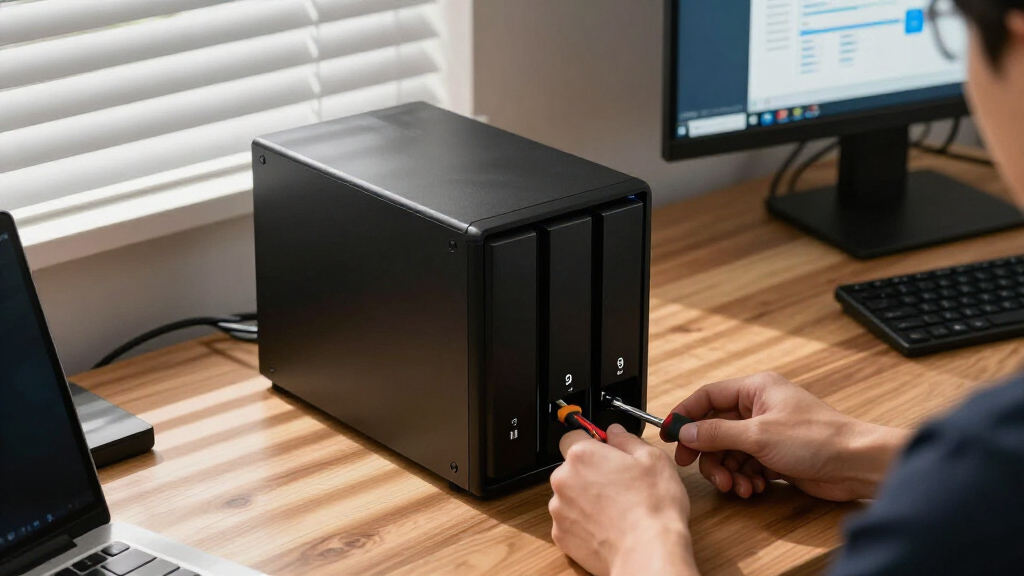
Our selection process focused on systems that offer eight drive bays, with an emphasis on performance, expandability, and value. We considered processor performance to ensure suitability for different workloads, from basic file sharing to intensive data analysis. Network connectivity options, especially high-speed ports like 10GbE and 25GbE, were prioritized for fast data transfer needs. We also evaluated storage capacity, expandability, and security features to cover a broad range of use cases. Finally, price and ease of setup were factored in to present options suitable for beginners through enterprise users.
Factors to Consider When Choosing Nas 8 Bay Systems
When selecting an 8-bay NAS system, consider your primary use case: home storage, small business, or enterprise. Key factors include processor performance, network connectivity, scalability, and security. For basic storage and media streaming, a model with sufficient RAM and gigabit Ethernet may suffice. Larger environments benefit from multi-gigabit ports, enterprise security, and higher expandability. The choice ultimately depends on your data volume, performance needs, and technical comfort level, balancing features against budget.
Performance and Processor
For light to moderate use, ARM-based processors like in the QNAP TS-832PX-4G are enough, offering good speed with lower power consumption. For demanding workloads such as virtualization, large-scale media editing, or enterprise data management, Intel Core or AMD Ryzen processors provide the necessary power and multitasking ability. Consider your workload to match the CPU to your needs, as over-specing can mean unnecessary expense, while underpowered systems struggle with heavy tasks.
Network Connectivity
High-speed networking features like 10GbE or 25GbE are game-changers for transferring large files quickly. If your workflow involves heavy data movement or multi-user access, prioritize NAS systems with these ports. For simpler needs, gigabit Ethernet remains sufficient, especially if you already have a standard network setup. Keep in mind that enterprise models often support multi-gigabit connections, but may require additional investments in compatible switches and cabling.
Capacity and Scalability
Most 8-bay NAS units support RAID configurations that balance performance and redundancy. If you anticipate growth, choose a model with support for large capacity drives or expansion units—some systems support up to 360TB or more. For small setups, initial drive selection is critical, as drives are typically sold separately. Be mindful of your storage needs now and in the future, and select a system that can grow with you without requiring a complete overhaul.
Security and Management
Security features like encryption, multi-factor authentication, and remote access controls are vital for protecting sensitive data. Enterprise models like the UGREEN NAS DXP8800 Plus and Synology DS1825+ excel here, offering robust security alongside management tools. For home or small business users, simpler interfaces and basic security features may suffice, but always prioritize systems with reliable data protection capabilities to prevent data loss and breaches.
Frequently Asked Questions
What is the main advantage of a high-speed 10GbE or 25GbE port in NAS systems?
High-speed ports like 10GbE and 25GbE significantly reduce data transfer times, making large backups, media editing, and virtualization more efficient. These ports are especially beneficial in multi-user environments where multiple devices access large files simultaneously, minimizing bottlenecks and improving workflow productivity.
Are enterprise NAS systems worth the investment for small businesses?
Enterprise NAS units offer advanced features like larger storage capacity, higher security, and faster networking, which can benefit growing small businesses with demanding data needs. However, they come with higher costs and complexity. If your business handles large files or multiple users, the investment can improve productivity and data security, but for simpler needs, smaller or mid-range models might be more cost-effective.
How important is expandability in an 8-bay NAS?
Expandability is critical if you expect your storage needs to grow over time. Many high-end models support expansion units or large drive capacities, allowing your system to scale without replacing the entire device. For users with fixed storage requirements, a non-expandable system might suffice, but planning for future growth often justifies investing in a more flexible setup.
What should I prioritize when choosing between different NAS processors?
The processor determines how well your NAS handles multitasking and demanding applications. For basic file sharing and media streaming, ARM-based processors are often enough. For virtualization, multimedia editing, or running multiple services, Intel Core or AMD Ryzen processors provide the necessary performance, though at a higher cost. Match processor power to your workload to avoid overspending or underperformance.
Is security a concern with NAS systems, and what features should I look for?
Security is essential, especially for business and enterprise users. Look for features like data encryption, multi-factor authentication, VPN support, and remote access controls. Enterprise models typically include comprehensive security tools, while home systems may have basic encryption. Always choose a NAS with reliable security features to protect your data from unauthorized access and breaches.
Conclusion
For home users or small offices, models like the QNAP TS-832PX-4G offer a balance of speed, expandability, and affordability. Small businesses needing larger capacity and faster networking should consider the QNAP TS-873A-8G or Synology DS1825+, depending on your technical comfort level and budget. Enterprise environments or large media operations will find the UGREEN NAS DXP8800 Plus or Synology DS1825+ more suitable, offering scalability, security, and performance at a premium. Matching your specific data needs and technical skills with these options will help ensure you select the best NAS system for 2026.
Columbus Day / Indigenous Peoples' Day Picks
long weekend sales
As an affiliate, we earn on qualifying purchases.