
To build a calmer home life, start by identifying your emotional triggers and practice mindful communication, pausing before reacting. Set clear boundaries and communicate them kindly to prevent overload. Establish routines that promote self-awareness and emotional regulation, like quiet times or check-ins, to foster stability. Creating a peaceful environment linked to nature and sustainability can also help. If you keep exploring, you’ll discover more ways to nurture peace and reduce reactivity in your home.

Get your next haul delivered free with Prime
- Fast, free delivery on millions of items
- Prime Video, Amazon Music and more included
- Member-only deals all year
Key Takeaways
- Practice mindful communication by pausing before responding and speaking with clarity and respect.
- Establish clear emotional boundaries and communicate them to prevent overload and negativity.
- Create consistent routines that include self-awareness check-ins and quiet time for emotional stability.
- Develop emotional regulation techniques to manage reactions and recognize early signs of reactivity.
- Cultivate a calm environment connected to nature to foster resilience and reduce impulsive responses.
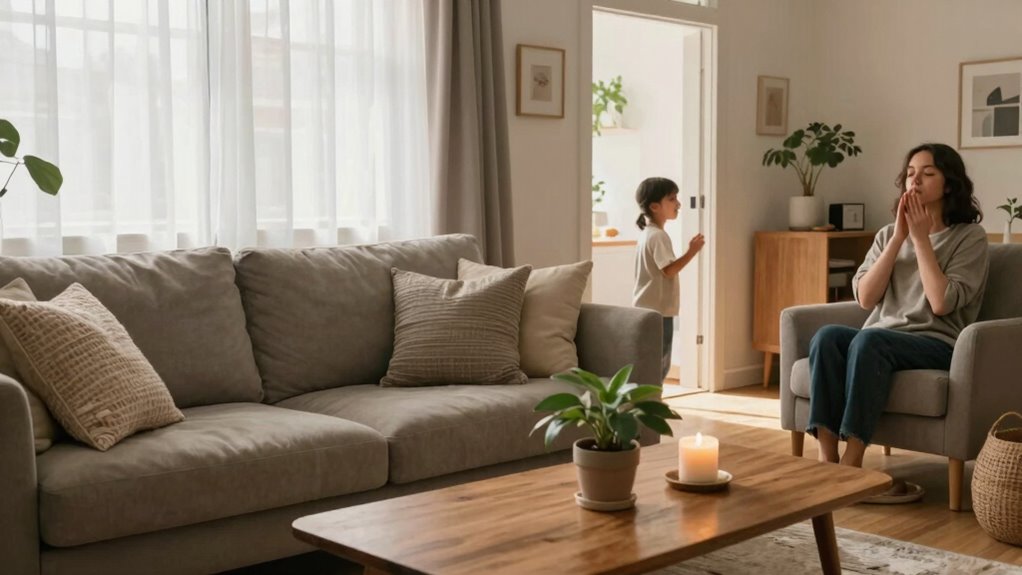
Creating a home environment that feels less reactive starts with understanding how daily triggers and emotional responses can escalate tension. When you’re aware of what sets off strong reactions, you can better manage your responses and prevent conflicts from spiraling. One of the most effective tools is practicing mindful communication. Instead of reacting impulsively, take a moment to pause and consider your words before speaking. Speak with clarity and intention, making sure your tone remains calm and respectful. This approach not only helps you express yourself authentically but also encourages your family members to do the same. When everyone commits to mindful communication, the home becomes a space of understanding rather than defensiveness.
Equally important is establishing and respecting emotional boundaries. You need to recognize your limits and communicate them clearly. If you’re feeling overwhelmed or stressed, it’s okay to step back and take some time for yourself. Setting emotional boundaries prevents you from absorbing others’ negativity or becoming reactive yourself. For example, if a conversation starts to escalate, you can politely say, “I need a moment to process this,” or “Let’s revisit this when we’re both calmer.” By doing so, you’re actively managing your emotional space and signaling to others that their reactions don’t have to trigger your own. This creates a more stable environment where reactions are deliberate rather than automatic.
Building this kind of home life requires consistency. You might find it helpful to establish routines that promote calmness, such as regular check-ins or designated quiet times. These routines reinforce the importance of mindful communication and emotional boundaries, making them part of your daily rhythm. Over time, they help everyone in the household become more aware of their emotional triggers and responses. Remember, it’s not about perfection but progress. When conflicts do arise, approach them with curiosity rather than judgment. Ask yourself what triggered your reaction and whether there’s a healthier way to respond next time. This ongoing self-awareness will gradually reduce reactivity and foster a more peaceful home. Incorporating emotional self-regulation techniques can further support this process by helping family members manage their feelings more effectively. Developing a mindful awareness of your emotional responses can also aid in recognizing early signs of reactivity before they escalate. Additionally, cultivating a calm environment can enhance the overall sense of stability and emotional safety within your home. Creating routines that include emotional regulation practices can help reinforce these skills and promote resilience during stressful moments.
Fostering a biodiversity-conscious mindset at home can also support emotional wellbeing by creating a calming environment connected to nature and sustainability. Ultimately, creating a less reactive home depends on your ability to stay grounded and present. When you practice mindful communication and maintain clear emotional boundaries, you set the tone for a calmer, more understanding environment. Your home becomes a place where everyone feels safe to express themselves without fear of escalation, leading to stronger relationships and greater overall harmony.
Products Worth Considering

Therabody Theragun Relief Massage Gun, 3-Speed, Black

LEVOIT Vital 100S-P Smart Air Purifier with Washable Pre-Filter

Therabody Theragun Mini 3rd Generation Massage Gun
As an affiliate, we earn on qualifying purchases.
Frequently Asked Questions
How Long Does It Take to See Results?
You can start noticing results in just a few weeks if you practice mindful communication and build emotional resilience consistently. It takes time to rewire habits, so stay patient and committed. As you implement these techniques daily, you’ll likely see a calmer, more connected home environment within a month or two. Keep practicing, and over time, your reactions will become more measured, creating a more peaceful and supportive home life.
Can This Approach Work for All Family Dynamics?
Yes, this approach can work for all family dynamics. By improving family communication and fostering emotional resilience, you create a stronger foundation for understanding and patience. It encourages everyone to express themselves honestly and manage emotions better, reducing reactive responses. While each family is unique, consistent effort builds healthier interactions, helping your family navigate challenges calmly and compassionately, regardless of your specific situation.
What if I Backslide Into Reactive Habits?
If you backslide into reactive habits, don’t worry—you’re not alone; studies show change takes time. When this happens, pause and practice mindful communication to regain composure. Focus on emotional regulation techniques like deep breathing or stepping away briefly. Recognize triggers calmly and gently steer your responses. Consistent effort helps you refocus, making reactive tendencies less automatic over time. Remember, setbacks are part of growth, so be patient with yourself.
Are There Specific Tools or Apps to Help?
Yes, you can use apps like Headspace or Calm for mindfulness practices that help manage reactive habits. Communication tools like Slack or WhatsApp can foster clear, calm conversations, reducing misunderstandings. These tools encourage you to pause and reflect before reacting, promoting healthier interactions. Incorporate regular mindfulness exercises and utilize these apps daily to build a calmer, more intentional home life.
How Do I Maintain Progress Over Time?
Think of your progress as a trusty pocket watch—if you don’t wind it regularly, it stops. To maintain your growth, prioritize daily practices like cultivating emotional resilience and practicing mindful communication. Set small, achievable goals, reflect often, and stay committed even through setbacks. Use reminders or journaling to reinforce these habits. Consistency keeps your efforts ticking smoothly, helping you build a calmer, more balanced home life over time.
Conclusion
So, go ahead—rearrange your chaos like a feng shui master, tame that wild pet of emotions, and turn your home into a zen fortress. Picture yourself calmly sipping tea while chaos rages outside—kind of like a peaceful ninja in a tornado. Remember, a less reactive home isn’t built overnight; it’s crafted with patience, humor, and maybe a few well-placed snacks. Now, go forth and conquer your reactive domain—one calm moment at a time.