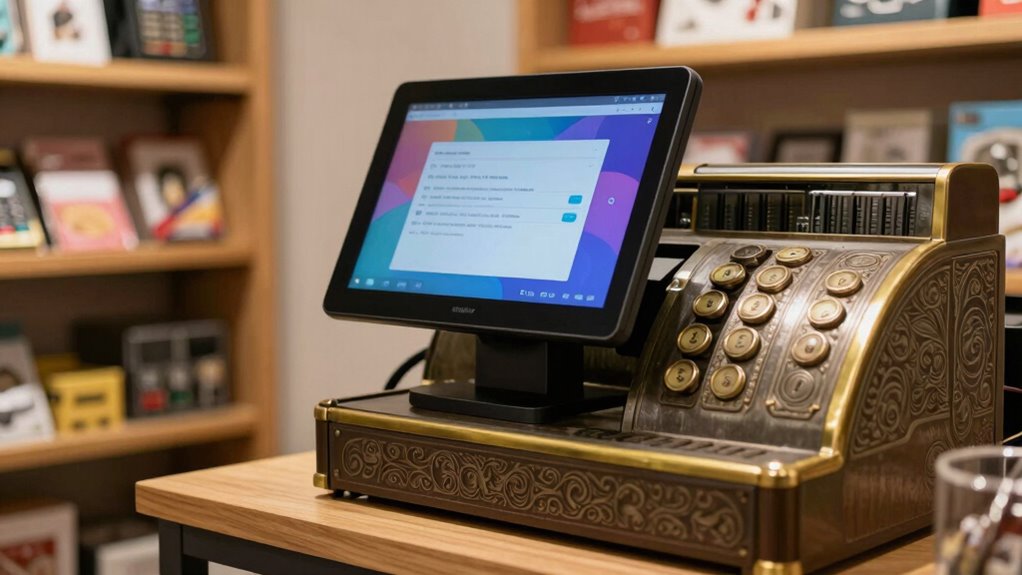

Choosing between a cash register and a POS system depends on your business needs. If you run a simple shop with basic sales, a cash register might be enough. But if you want faster payments, inventory tracking, and detailed analytics, a POS system is better suited and can grow with you. Future expansion becomes smoother with a POS. Keep exploring to discover which option truly fits your business now and later.

Get your next haul delivered free — and shop member deals
- Fast, free delivery on millions of items
- Access to Prime Big Deal Days deals on October 6–7
- Prime Video, Amazon Music and more included
Key Takeaways
- Cash registers are suitable for small businesses with basic sales needs, while POS systems support advanced features for growing enterprises.
- POS systems support modern payment methods, improving customer experience and transaction speed compared to cash registers.
- Automated inventory management in POS systems helps prevent stock issues and provides valuable sales data.
- Cash registers are cheaper and easier to set up but lack scalability and integration capabilities of POS systems.
- Upgrading from a cash register to a POS system can be costly, but POS solutions enhance decision-making and operational efficiency.
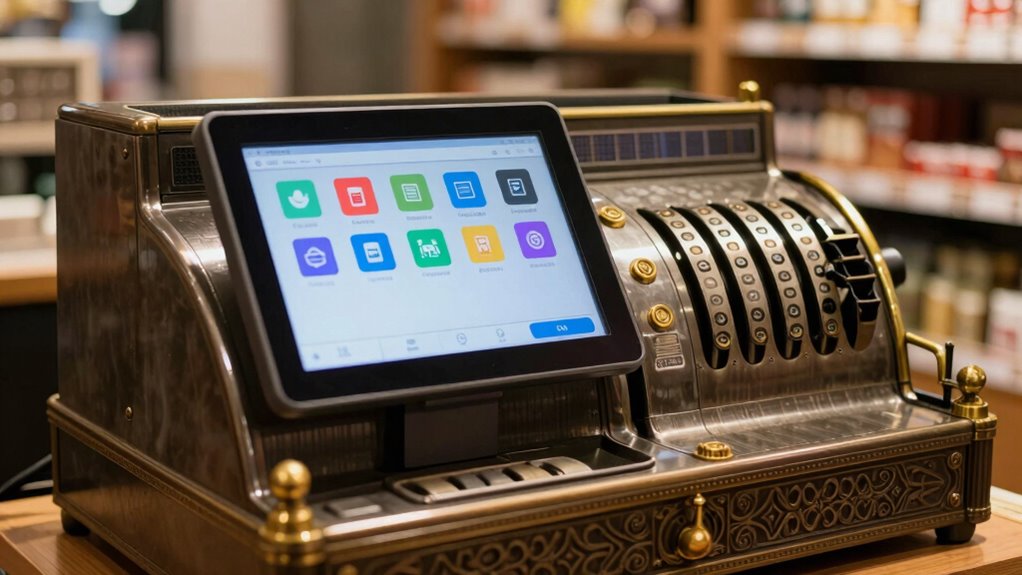
When choosing a system to handle sales transactions, understanding the differences between a cash register and a POS system is essential. Your decision impacts how smoothly your business operates, especially as technology evolves. Cash registers are straightforward devices that handle basic sales functions like ringing up items, giving change, and printing receipts. They’re reliable and simple to use but lack advanced features. On the other hand, POS (Point of Sale) systems offer a wide range of functionalities that can streamline your operations, enhance customer experience, and provide valuable insights.
A key advantage of a POS system is its support for mobile payments. You can accept credit cards, digital wallets, and contactless payments directly from a mobile device or integrated hardware. This flexibility appeals to customers who prefer fast, convenient payment options, helping you close sales quicker and reduce wait times. Mobile payments also open up opportunities for loyalty programs and targeted marketing, which can boost repeat business.
Inventory management is another critical feature where POS systems excel. Unlike cash registers, which require manual tracking and updating, modern POS solutions automatically monitor stock levels in real time. Every sale updates your inventory instantly, giving you accurate data without extra effort. If you sell a product online and in-store, a POS system helps synchronize inventory across channels, preventing overselling or stockouts. This level of control and insight can save you money and improve customer satisfaction. Additionally, integrating inventory management with sales data can give you valuable business insights that inform your decision-making. Implementing automated updates ensures your inventory data remains consistent across all sales platforms. Moreover, many POS systems also facilitate integrated reporting, allowing you to analyze sales trends more effectively.
While cash registers are often cheaper upfront and easier to set up, they fall short in providing detailed sales analytics or integration with other business tools. If your business is small, with limited product variety or sales volume, a basic cash register might suffice. However, as your business grows, a POS system becomes increasingly valuable. It can integrate with accounting software, manage employee schedules, and generate reports that reveal sales trends, top-selling products, and customer preferences.
Ultimately, your choice depends on your business size, growth plans, and the importance of advanced features. If you prioritize speed, convenience, and data-driven decision-making, a POS system is likely the better fit. It empowers you to leverage mobile payments and manage inventory effortlessly, elevating your customer experience and operational efficiency. Conversely, if your needs are minimal and budget is tight, a cash register might cover your basic requirements, but keep in mind that upgrading later could be more costly. Additionally, understanding the basic functionalities of each system can help you make a more informed decision.
POS system with inventory management
As an affiliate, we earn on qualifying purchases.
As an affiliate, we earn on qualifying purchases.
Frequently Asked Questions
Can a Cash Register Handle Inventory Management?
A cash register can’t handle inventory management effectively. Its limitations are mainly in basic sales tracking and cash handling, but it lacks advanced features for inventory tracking. If you want to monitor stock levels, reorder items, or analyze sales data, a cash register falls short. For better inventory management, a POS system offers integrated tools that streamline tracking, saving you time and reducing errors in your business operations.
Are POS Systems Suitable for Small Businesses?
Yes, POS systems are suitable for small businesses. They enhance customer engagement by offering quick, efficient service and personalized options. Plus, they provide detailed sales tracking, helping you understand your customers’ preferences and improve your offerings. These features streamline operations, reduce errors, and support growth. With a POS system, you’re better equipped to manage customer relationships and analyze sales data, making your small business more competitive and customer-focused.
What Are the Security Features of Modern POS Systems?
Modern POS systems quietly prioritize your business’s safety through robust security features. They use encryption protocols to safeguard sensitive data and employ user authentication to guarantee only authorized personnel access critical functions. These measures work seamlessly in the background, giving you peace of mind while you focus on serving your customers. With these security features, your transaction data remains protected, helping you maintain trust and compliance effortlessly.
Do Cash Registers Support Digital Receipts?
Yes, some cash registers now support digital receipts, allowing you to send receipts via email or text instead of printing paper. However, traditional cash registers generally lack this feature, focusing more on basic transaction functions. If digital receipts are important for your business, consider upgrading to a modern cash register with integrated digital receipt capabilities or switching to a POS system, which typically offers more advanced options.
Can a POS System Integrate With Accounting Software?
Yes, a POS system can integrate with accounting software. You benefit from cloud integration, which connects your POS data directly to your accounting platform, streamlining your workflow. This setup offers real-time analytics, so you get instant insights into sales, inventory, and finances. By syncing seamlessly, you save time, reduce errors, and make more informed decisions, helping your business run smoothly and efficiently.
mobile credit card reader for small business
As an affiliate, we earn on qualifying purchases.
As an affiliate, we earn on qualifying purchases.
Conclusion
Ultimately, choosing between a cash register and a POS system depends on your business needs. For example, a small bakery might stick with a simple register, but a busy café could benefit from a POS system to track sales and inventory in real-time. Think about your growth plans and what features matter most. Making the right choice now sets you up for smoother operations and better customer service down the line.
cash register with receipt printer
As an affiliate, we earn on qualifying purchases.
As an affiliate, we earn on qualifying purchases.
As an affiliate, we earn on qualifying purchases.
Fall Picks
fall essentials
As an affiliate, we earn on qualifying purchases.