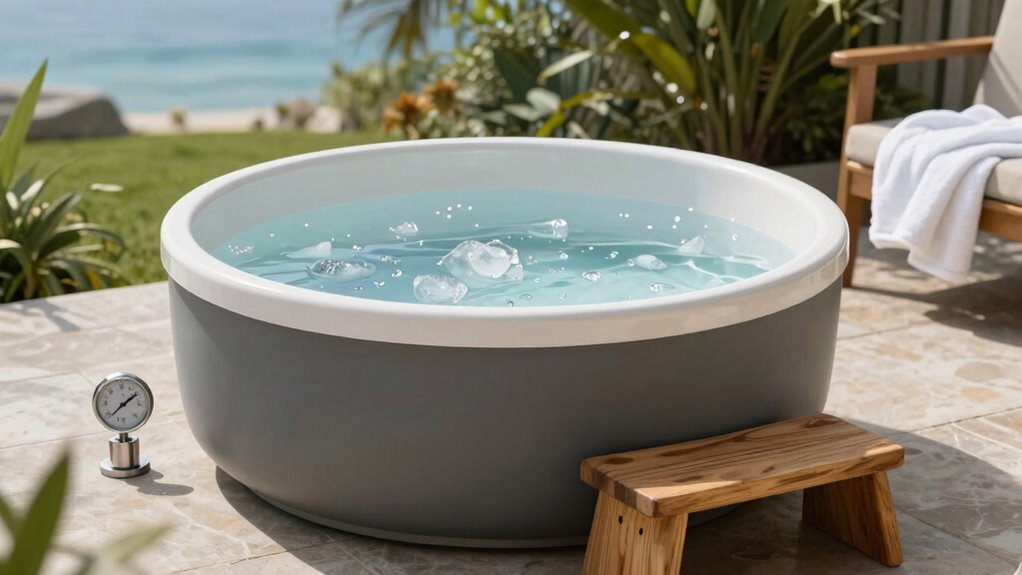

To set up your cold plunge tub safely, choose a flat, stable spot with easy access and proper drainage, ensuring it can support the full weight. Connect it to a reliable water source and keep water temperatures between 50-59°F, using built-in chillers or simple ice packs. Limit your sessions to 5-10 minutes and have a friend nearby for safety. Regularly sanitize the water and keep emergency supplies handy. Keep going to learn essential tips for a smooth, beneficial experience.

Get your next haul delivered free with Prime
- Fast, free delivery on millions of items
- Prime Video, Amazon Music and more included
- Member-only deals all year
Key Takeaways
- Choose a flat, stable surface with reliable water supply and drainage for safe installation.
- Maintain water temperature between 50-59°F, using chillers, ice, or external cooling units.
- Limit sessions to 5-10 minutes, set timers, and have a helper nearby for safety.
- Regularly sanitize water and inspect the setup for cleanliness and safety hazards.
- Keep emergency contacts handy and avoid alcohol or drugs before cold plunging.
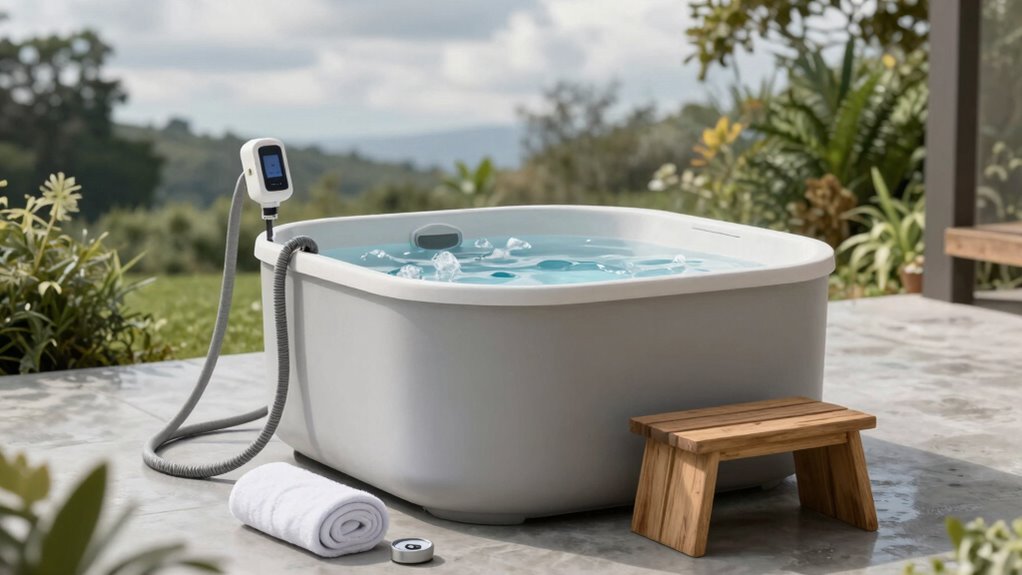
Setting up a cold plunge tub might seem intimidating at first, but with a clear plan, it becomes straightforward. The key to a successful setup is understanding how to manage temperature regulation and ensuring safety precautions are in place. First, you’ll want to choose the right location for your tub. Find a flat, stable surface that can support the weight of the filled tub and is easily accessible. Once positioned, you’ll need to connect your tub to a reliable water source and ensure proper drainage to prevent overflow issues.
Choose a stable, accessible spot, connect to water and drainage, and prepare for a safe cold plunge setup.
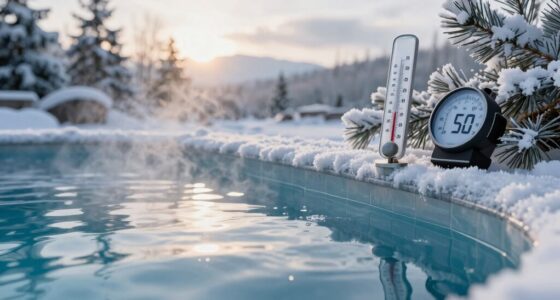
Temperature regulation is crucial to enjoy your cold plunge safely and effectively. Most tubs come with built-in chillers or cooling systems, but if yours doesn’t, you might consider using external ice or specialized cooling units. It’s essential to monitor the water temperature closely, especially during initial uses. For beginners, keeping the water between 50-59°F (10-15°C) is recommended, gradually adjusting as your body adapts. Use a waterproof thermometer to check the temperature regularly. Automatic temperature controllers are a helpful investment—they keep the water at your desired level without constant manual adjustments. Remember, maintaining consistent temperature helps prevent sudden shocks to your system and ensures you get the most benefits from your cold plunge.
Safety precautions are just as important as proper temperature regulation. Always set a timer before entering the tub, limiting your session to 5-10 minutes, especially when starting out. Cold exposure can cause shock or dizziness if you stay in too long, so listen to your body and exit immediately if you feel uncomfortable. It’s advisable to have a friend nearby during your first few sessions in case you need assistance. Make sure the water is clean and sanitized regularly to prevent infections, using appropriate disinfectants compatible with your tub’s material. Also, check the electrical components and connections periodically to avoid hazards like short circuits or malfunctions. It’s also beneficial to educate yourself about cold therapy benefits, so you understand how to maximize your experience safely. Incorporating proper water sanitation practices is essential for maintaining a healthy environment in your setup. Regularly inspecting your setup and being aware of biodiversity and conservation can also inspire you to choose eco-friendly options for your setup. Additionally, paying attention to water quality ensures a safer and more enjoyable experience.
Finally, familiarize yourself with emergency procedures. Keep a phone nearby, and know how to quickly exit the tub if you start feeling unwell. Avoid alcohol or drugs before cold plunging, as they impair your judgment and increase risks. Being aware of potential health risks related to cold exposure can help you stay cautious and prepared. By setting clear boundaries for temperature regulation and following safety precautions diligently, you’ll create an enjoyable, safe experience with your cold plunge tub. With patience and proper setup, you’ll soon reap the benefits of cold therapy, feeling refreshed and energized after each session.
cold plunge tub with temperature control
As an affiliate, we earn on qualifying purchases.
As an affiliate, we earn on qualifying purchases.
Frequently Asked Questions
How Much Space Do I Need for a Cold Plunge Tub?
You’ll want at least 3 to 4 feet of space around your cold plunge tub for easy access and maintenance. Consider the material durability, ensuring the surface can withstand weather and frequent use. Also, plan for space to install water filtration systems, which are essential for clean, safe water. Adequate room makes it easier to maintain the tub, check equipment, and enjoy your cold plunge without feeling cramped.
What Is the Ideal Temperature for Cold Plunging?
The ideal temperature for cold plunging is around 50°F to 59°F, where cold therapy is most effective. Think of it as a dance with temperature regulation—too cold, and your body can’t adapt; too warm, and you miss the benefits. Staying within this range helps reduce inflammation, boost circulation, and enhance recovery. Remember, listen to your body, and adjust the temperature to match your comfort and experience level.
How Often Should I Drain and Clean the Tub?
You should drain and clean your cold plunge tub every 4 to 6 weeks to maintain proper chemical balance and prevent bacteria buildup. Regular maintenance involves checking the water’s pH and sanitizer levels, then draining and scrubbing the tub to keep it hygienic. Adhering to a consistent maintenance schedule ensures your tub stays safe and inviting, making each plunge a invigorating and worry-free experience.
Can I Use a Regular Bathtub as a Cold Plunge?
You can technically use a regular bathtub as a cold plunge, but it’s not ideal. Make certain to insulate the tub properly to retain cold temperatures and consider adding a water circulation system to keep the water fresh and prevent stagnation. Regular bathtubs aren’t designed for continuous use like plunge tubs, so you’ll need to monitor water quality and temperature closely to ensure safety and comfort.
What Safety Precautions Should I Take During Setup?
When setting up your cold plunge tub, prioritize electrical safety by ensuring all connections are properly grounded and avoid using extension cords. Keep water filtration systems in place to maintain cleanliness and prevent mold. Always turn off power before any maintenance, and double-check that electrical outlets are waterproof and located away from water splashes. These precautions help keep you safe and your plunge experience enjoyable.
As an affiliate, we earn on qualifying purchases.
Conclusion
Now that you’ve got the basics down, setting up your cold plunge tub is within reach. Remember, start with a simple setup and gradually explore additional features like filtration or heating. For example, imagine Sarah, a beginner who started with a basic tub and now enjoys daily cold plunges to boost recovery. With patience and proper setup, you’ll soon be enjoying the invigorating benefits of your own cold plunge, just like she does!
As an affiliate, we earn on qualifying purchases.
As an affiliate, we earn on qualifying purchases.
Evergreen bestsellers Picks
bestsellers
As an affiliate, we earn on qualifying purchases.