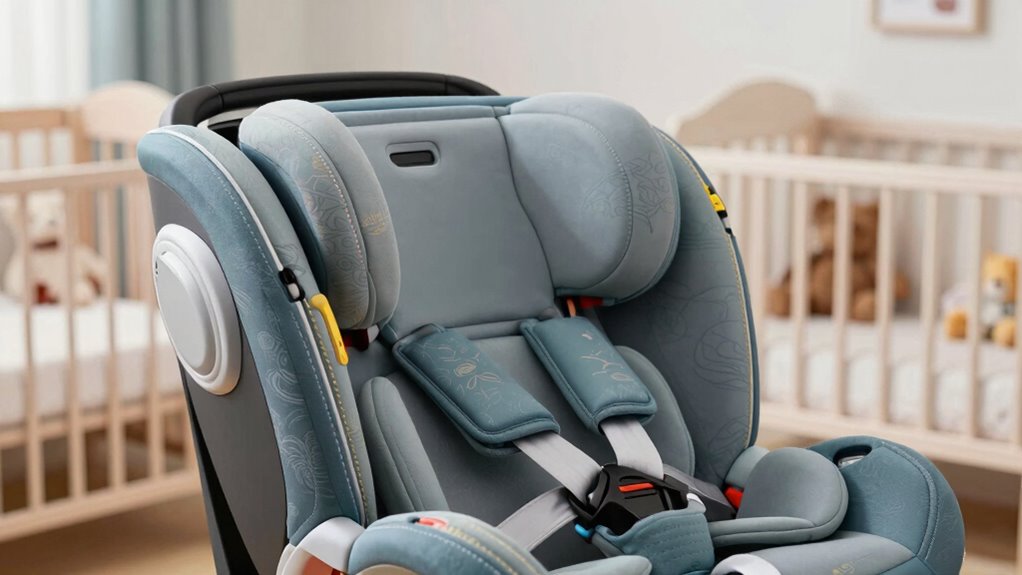

Convertible car seats are designed to grow with your child, starting with rear-facing from birth up to about age 2 or until they reach weight or height limits—often 40-50 pounds. After that, you switch to forward-facing, following the manufacturer’s instructions. It’s important to wait until your child reaches these limits before shifting, ensuring maximum safety. Proper installation and regular checks are key. Keep going for more details on making each stage safe and effective.

Get your next haul delivered free — and shop member deals
- Fast, free delivery on millions of items
- Access to Prime Big Deal Days deals on October 6–7
- Prime Video, Amazon Music and more included
Key Takeaways
- Use rear-facing mode from birth until the child reaches the seat’s weight limit (usually 40-50 pounds).
- Transition to forward-facing once the child exceeds rear-facing weight or height limits, following manufacturer instructions.
- Keep children rear-facing until at least age 2 or longer, for maximum safety.
- Properly install and adjust the seat at each transition to ensure continued safety.
- Regularly monitor the child’s growth and adhere to seat limits before switching to the next stage.
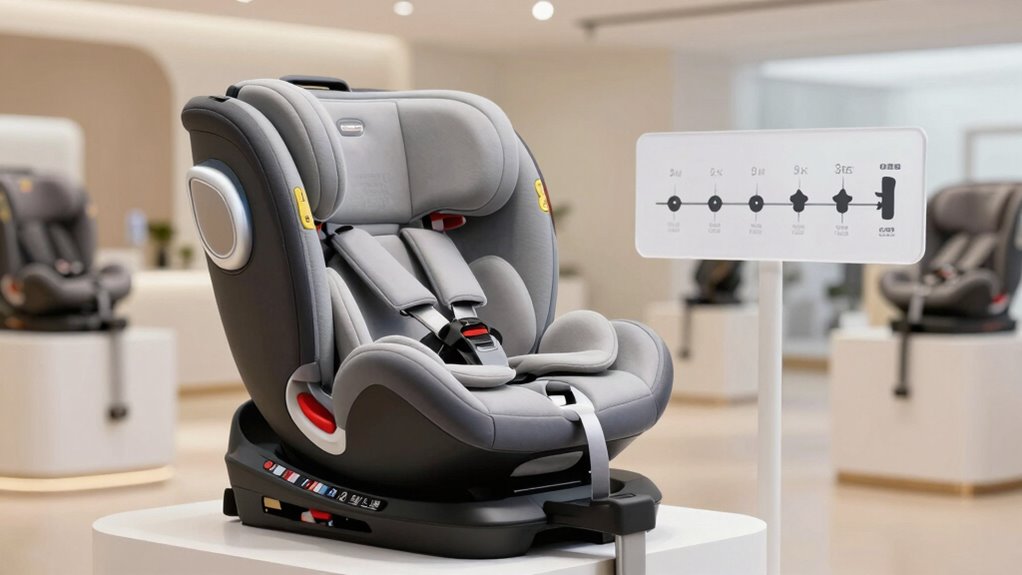
When it comes to your child’s safety and comfort, understanding the typical timelines for convertible car seats is essential. One of the most important phases is the rear-facing position. You might be eager to switch your child to a forward-facing seat, but sticking with rear facing for as long as possible is crucial for their safety. Rear facing safety provides better support for your child’s head, neck, and spine in the event of a crash. Most car seat manufacturers specify weight limits for rear-facing mode, which you need to follow strictly. These limits vary between models but generally range from 40 to 50 pounds. Once your child surpasses these weight limits, it’s time to transition to the forward-facing position. Waiting until they reach the maximum weight limit ensures they get the maximum rear-facing protection, which is recommended by safety experts.
Every convertible car seat has its own set of guidelines, so it’s vital to read the manufacturer’s instructions carefully. Typically, children remain rear facing from birth until about 2 years old, but some seats allow rear-facing use up to 40 or 50 pounds, which can extend this phase. This means your child might stay rear facing longer than you think, and that’s a good thing. The longer your child remains in this position, the better protected they are during a crash. Additionally, properly installing the seat according to the manufacturer’s instructions is essential for safety. Once they outgrow the rear-facing weight limits, you can flip the seat forward, but keep in mind that safety experts recommend keeping children rear facing until at least age 2, and ideally longer if the seat allows. Being aware of the weight and height limits**** and how they influence your child’s safety is vital to making informed decisions during each stage.
Understanding car seat guidelines and adhering to them ensures safety and compliance. Transitioning from rear facing to forward facing is a significant milestone, but it’s not just about age; it’s primarily about weight and height limits. When your child reaches the maximum weight or height allowed in the rear-facing mode, that’s your cue to move to the next stage. It’s also important to regularly check your child’s growth and the seat’s height limits to ensure continued safety. Remember that the goal is to maximize safety, so don’t rush this transition. Instead, focus on the seat’s guidelines for weight limits and your child’s growth. Also, ensure the seat is properly installed and adjusted after each transition. The correct installation and positioning are key to maintaining safety throughout your child’s car seat timeline.
convertible car seat with adjustable height and weight limits
As an affiliate, we earn on qualifying purchases.
As an affiliate, we earn on qualifying purchases.
Frequently Asked Questions
How Do I Know When My Child Is Ready to Transition?
You’ll know your child’s ready to shift when their child height reaches the seat’s maximum height limit, and they can sit comfortably with the harness properly adjusted. Check that the seat installation remains secure, and your child can sit upright without slouching. When these conditions are met, and your child can maintain good posture, it’s time to move to the next stage for safety and comfort.
Are Convertible Seats Suitable for Overnight Travel?
You can definitely use a convertible seat for overnight travel, but make sure it’s properly installed with these tips. Secure it tightly and double-check the harness fit for your child’s safety. Also, consider cleaning and maintenance, like removing crumbs and wiping down surfaces, to keep it fresh during long trips. Keep in mind, a comfortable, well-maintained seat makes overnight journeys safer and more pleasant for everyone.
Can a Convertible Car Seat Be Used in Airplanes?
Yes, you can use a convertible car seat on an airplane. Most convertible seats are airplane-compatible, but you should check the manufacturer’s specifications to confirm they fit airline safety standards. When you arrive at the airport, you’ll need to focus on proper seat installation, securing the seat according to the instructions. Remember to bring the seat’s manual and verify that the harness system is correctly adjusted for your child’s safety during the flight.
How Long Can a Child Remain Rear-Facing Safely?
You can keep your child rear-facing safely until they reach the maximum weight or height limit set by the car seat manufacturer, usually around age 2 or longer. For maximum infant safety, guarantee proper car seat installation and follow the manufacturer’s guidelines. Continue rear-facing as long as possible, since it provides better protection for your child’s head, neck, and spine in case of an accident. Regularly check the seat’s fit to maintain safety.
Do Convertible Seats Meet All Safety Standards Worldwide?
Convertible seats are like sturdy shields, but they don’t automatically meet all safety standards worldwide. You need to check installation guidelines and material safety to guarantee they comply with local regulations. Some brands pass rigorous tests, while others may not. Always verify labels and certifications before choosing a seat, so your child’s safety isn’t left to chance. Your vigilance transforms a good seat into a reliable guardian.
rear-facing convertible car seat for infants
As an affiliate, we earn on qualifying purchases.
As an affiliate, we earn on qualifying purchases.
Conclusion
As you navigate the evolving world of convertible car seats, remember that timing is everything—waiting too long or rushing can impact your child’s safety and comfort. The next milestone might be closer than you think, but making the right choice requires patience and attention to detail. Stay informed, stay prepared, and watch for those subtle signs that your little one’s needs are changing. The perfect shift is just around the corner—are you ready to make it?
best forward-facing car seat for toddlers
As an affiliate, we earn on qualifying purchases.
As an affiliate, we earn on qualifying purchases.
car seat installation check tools
As an affiliate, we earn on qualifying purchases.
As an affiliate, we earn on qualifying purchases.
Fall Picks
fall essentials
As an affiliate, we earn on qualifying purchases.