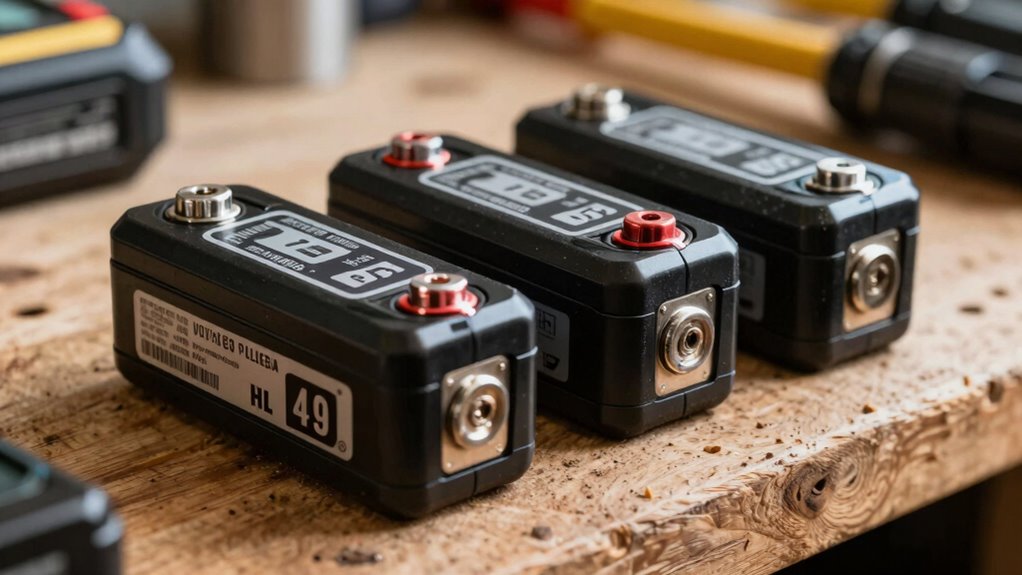

Cordless tool batteries are primarily defined by volts, which indicate the power output, and amp hours, showing how long they last between charges. Higher volts deliver more force, perfect for tough jobs, while more amp hours mean longer runtime. Battery chemistry, like lithium-ion, also affects performance, safety, and lifespan. Understanding these factors helps you choose the right battery for your project needs — and there’s plenty more to learn about how to optimize your tool’s power and efficiency.
Key Takeaways
- Voltage indicates the battery’s power output, affecting the tool’s strength, while amp hours determine how long the battery can run between charges.
- Higher voltage batteries provide more power for demanding tasks, but runtime depends mainly on amp hour capacity.
- Amp hours reflect the energy capacity; larger values mean longer working time but often add weight.
- Battery chemistry, such as lithium-ion, influences performance, safety, and lifespan, with advanced chemistries offering better efficiency.
- Proper charging, storage, and maintenance practices extend battery life, safety, and overall tool performance.
What Do Voltage and Amp Hours Really Say About Your Cordless Battery?

When choosing a cordless tool battery, understanding what voltage and amp hours really indicate can prevent confusion and help you select the right power source. Voltage reflects the battery’s power output, impacting how much force your tool delivers, while amp hours show how long the battery can run between charges. However, these numbers don’t tell the whole story. Battery chemistry plays a role in how efficiently the battery performs and its safety, affecting charging cycles and lifespan. A higher number of charging cycles means the battery can be recharged many times before its capacity diminishes. So, don’t just focus on volts and amp hours—consider the type of battery chemistry and how it influences overall durability and performance over time. Understanding battery chemistry is essential for making informed choices about your cordless tools. Additionally, battery capacity can be a useful measure of a battery’s longevity and suitability for different tasks. Recognizing technology advancements helps you stay informed about improvements that can enhance your tool’s performance and safety. Moreover, choosing batteries with reliable safety features can provide extra protection during operation and charging.
How Do Voltage and Amp Hours Impact Power and Runtime?
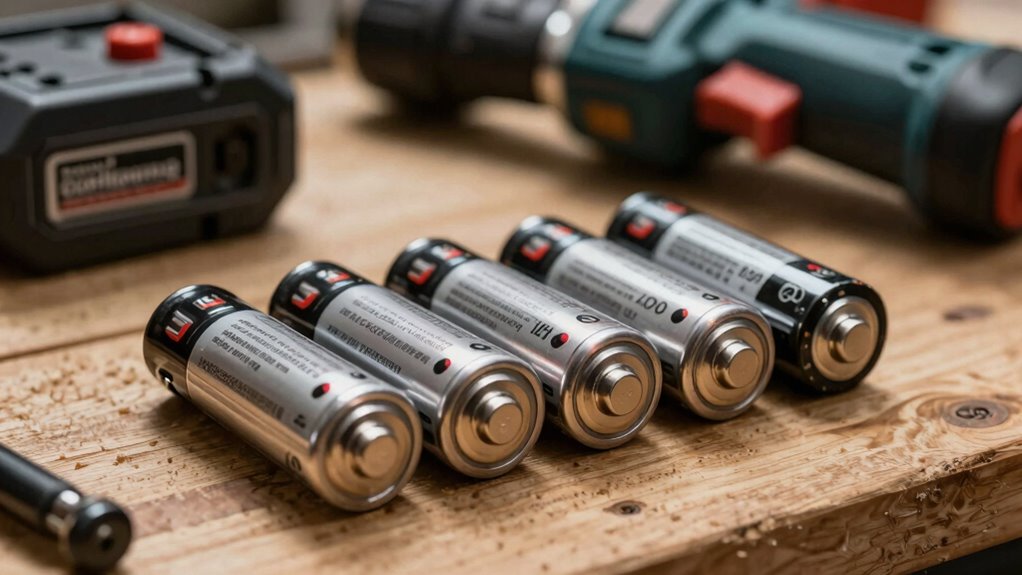
Your tool’s voltage determines its overall power, affecting how tough the job gets. Higher amp hours mean longer runtime, so you can work more without changing batteries. Understanding how voltage and amp hours work together helps you choose the right battery for your needs. Additionally, recognizing ownership essentials ensures you select batteries that suit your work demands and maintain safety. Embracing a calm approach when choosing tools helps you make better decisions and avoid unnecessary frustration. Being aware of battery compatibility can also prevent damage and ensure optimal performance. Knowing the battery specifications can help you compare different models and make informed choices, especially considering the connected technology features that enhance modern power tools.
Voltage’s Power Influence
Voltage directly affects the power output of a cordless tool battery, with higher voltage typically providing more strength for demanding tasks. When you choose a higher-voltage battery, you’re investing in increased power, which can handle tougher materials and longer operation times. Battery chemistry also plays a role, influencing how efficiently the voltage translates into usable energy. For example, lithium-ion batteries generally offer better power delivery and faster charging speeds compared to older chemistries. Higher voltage batteries often mean quicker charging times, so you spend less time waiting to get back to work. Keep in mind, though, that while voltage boosts power, it doesn’t directly extend runtime—that depends more on amp hours. Battery chemistry also influences overall performance and lifespan, making it an important factor when selecting batteries. Still, understanding voltage helps you match your tool’s strength to your specific project needs. Additionally, Free Floating designs in batteries contribute to better weight distribution and handling during use.
Amp Hours and Runtime
Amp hours (Ah) measure a battery’s capacity to store energy, directly impacting how long your tool can run on a single charge. The higher the Ah, the longer you’ll work before needing to recharge. Think of it as a reservoir filling your tool’s energy needs, influenced by battery chemistry and how many charging cycles the battery can endure. A battery with a higher Ah and robust chemistry will typically last through more charging cycles, maintaining performance longer. Visualize:
- A larger, fuller reservoir powering your tasks
- Fewer interruptions during long projects
- Better durability over multiple charges
Your runtime depends on both voltage and Ah, but understanding amp hours helps you choose a battery that balances power needs with longevity, ensuring your cordless tool keeps up with your workload. Additionally, the battery chemistry plays a crucial role in overall battery performance and lifespan, especially as advancements in battery technology continue to emerge. A deeper understanding of battery capacity can assist you in selecting the most efficient power sources for your tools, as improvements in battery design also contribute to better energy storage and longer-lasting performance.
How to Choose the Right Battery Voltage and Capacity for Your Projects

Choosing the right battery voltage and capacity depends on the scope and demands of your projects. Higher voltage batteries deliver more power, ideal for tough tasks like heavy demolition or large woodworking. Lower voltages suit light tasks, such as drilling small holes or assembling furniture. Capacity, measured in amp hours, impacts runtime; larger capacities last longer but are heavier and more expensive. Consider your project’s battery chemistry as well—lithium-ion batteries offer better energy density and longer charging cycles, making them more dependable over time. To select the best battery, evaluate the power requirements of your tools and the frequency of use. Understanding battery chemistry and the balance of voltage, capacity, and chemistry ensures you get the right performance without unnecessary weight or cost. Being aware of battery compatibility helps prevent mismatched tools and batteries that could reduce efficiency or cause damage. Additionally, understanding battery management systems can help extend the lifespan of your batteries by preventing overcharging and overheating, which is especially important for maintaining battery longevity over time. Incorporating proper charging practices can further enhance battery health and overall performance for your projects.
Myths About Battery Capacity That Can Mislead You
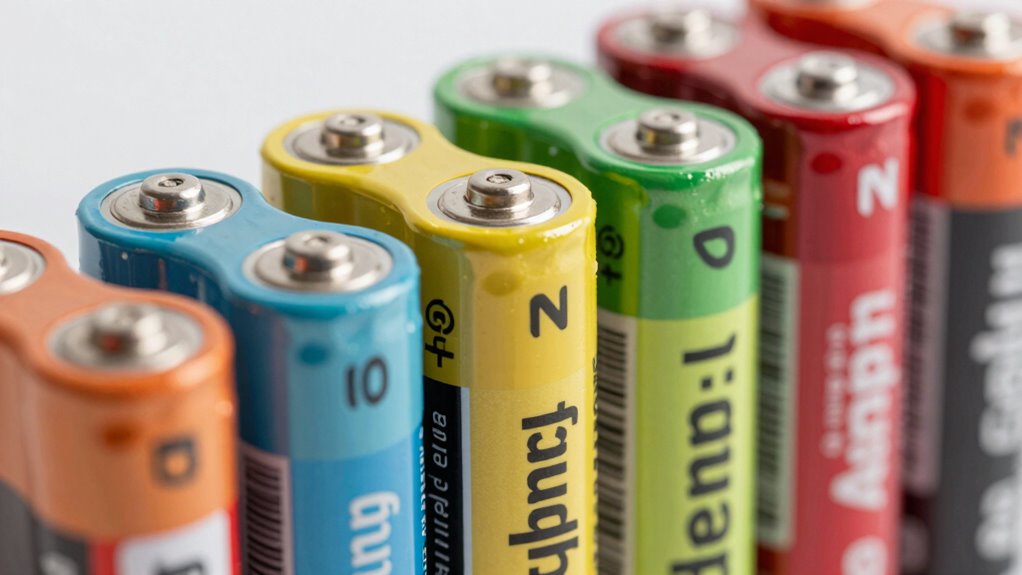
Many people assume that a higher-capacity battery always means longer runtime, but this isn’t necessarily true. This battery myth stems from a capacity misconception—thinking more amp hours automatically equals more work time. However, other factors like motor efficiency, tool design, and how you use the tool influence actual runtime. Visualize these misconceptions:
- A larger battery sitting in your toolbox, not always in use
- A small, efficient tool running longer than a bulky, high-capacity battery
- Different tasks draining batteries at varied rates, regardless of capacity
These examples show that capacity alone doesn’t tell the full story. You might see a bigger number on the label, but that doesn’t guarantee extended use or better performance. Focus on overall tool design and how you work. Additionally, urban and cultural activities in different regions can influence how often and how long you use power tools, depending on local events and community engagement. Understanding battery management techniques can also help optimize the lifespan and performance of your cordless tool batteries. Recognizing the role of battery chemistry is essential for choosing the right batteries and maximizing their efficiency over time. Moreover, considering charge cycles and maintenance practices can significantly impact the overall longevity of your batteries.
Additional Factors to Consider When Selecting a Cordless Battery

When selecting a cordless battery, it’s vital to take into account factors beyond just capacity, as these can profoundly influence your tool’s performance and longevity. One key factor is battery chemistry; lithium-ion batteries generally offer better energy density, longer life, and less memory effect compared to older chemistries like NiCd. Additionally, consider brand compatibility—using batteries designed specifically for your tool brand ensures proper fit, optimized performance, and safety. Mismatched batteries may not connect properly or could damage your device. Also, check for features like built-in protection circuits and temperature regulation, which help prolong battery life. By paying attention to battery chemistry and brand compatibility, you’ll make a smarter choice that enhances your tool’s efficiency and durability over time.
Tips for Getting the Most Out of Your Cordless Tool Batteries

To get the most out of your cordless tool batteries, you need to follow some simple tips. Proper charging, smart storage, and regular maintenance can markedly extend their lifespan. Keep these practices in mind to ensure your batteries perform at their best whenever you need them.
Proper Charging Techniques
Proper charging techniques are essential to maximize the lifespan and performance of your cordless tool batteries. To do this effectively, always use chargers recommended by your cordless tool brands to prevent overcharging or damaging the cells. Avoid letting batteries completely discharge before recharging; instead, recharge them when they’re around 20-30% full. When charging, picture a sleek, glowing indicator that signals full power, ready for your next project. Remember to recycle old batteries responsibly—many communities offer battery recycling programs. Proper charging also involves keeping batteries in a cool, dry place and avoiding extreme temperatures. This practice helps maintain their capacity and reduces waste, supporting eco-friendly battery recycling efforts. Following these tips ensures your batteries stay reliable, saving you money and hassle.
Optimal Storage Practices
Maximizing your cordless tool batteries requires more than just correct charging habits; how you store them plays a big role in their longevity. To guarantee ideal storage practices, prioritize storage safety by keeping batteries in a cool, dry place away from moisture and direct sunlight. Proper temperature control is essential—avoid exposing batteries to extreme heat or cold, as both can degrade their capacity and lifespan. Store batteries at around 50% charge if you won’t use them for an extended period, preventing capacity loss. Keep batteries in their original cases or in a dedicated container, and away from flammable materials. These practices help preserve battery health, prevent safety hazards, and extend your cordless tools‘ overall performance and lifespan.
Regular Battery Maintenance
Regular maintenance is essential to get the most life out of your cordless tool batteries. Proper care can considerably extend your battery’s lifespan and keep your tools running smoothly. To do this, avoid deep discharges and recharge before the battery drops below 20%. Keep batteries clean and free of dirt or corrosion. When batteries reach the end of their life, participate in battery recycling programs to reduce environmental impact. Visualize your battery as a delicate component that benefits from:
- Regularly checking for corrosion and cleaning terminals
- Storing batteries in a cool, dry place when not in use
- Recharging batteries periodically if unused for long periods
These simple steps help maximize performance and ensure safe disposal or recycling, ultimately saving you money and supporting environmental health.
Frequently Asked Questions
How Do Temperature Changes Affect Battery Performance and Lifespan?
Temperature changes considerably impact your battery’s performance and lifespan. Thermal effects cause batteries to drain faster in high temperatures and reduce capacity in cold conditions. Proper temperature management helps maintain ideal performance and extends lifespan. Avoid exposing your batteries to extreme heat or cold, and store them in a cool, dry place. By controlling thermal effects, you guarantee your cordless tool batteries stay reliable and last longer.
Are Higher Voltage Batteries Always Better for Every Tool?
Think of voltage as the language your tool speaks. Higher voltage batteries aren’t always better; they must match your tool’s voltage standards to guarantee compatibility. Using a battery with too high a voltage can damage the tool, while too low may underperform. Always check your tool’s specifications and battery compatibility before upgrading. When properly aligned, the right voltage powers your work smoothly, like a well-tuned instrument.
What Are the Signs That a Cordless Battery Needs Replacement?
You’ll know your cordless battery needs replacing when you notice warning signs like reduced run time, inconsistent power, or the tool struggling to start. Battery degradation often causes these issues. If the battery no longer retains a charge or takes longer to recharge, it’s time for a new one. Pay attention to these warning signs to avoid sudden tool failure and ensure safe, efficient operation.
How Should I Store Batteries to Maximize Longevity?
Think of your batteries as delicate seeds that need the right environment to grow strong. Store them in a cool, dry place with stable storage conditions, away from extreme temperatures and moisture. Keep them at about 50% charge if you’re not using them for a while, and avoid direct sunlight or freezing conditions. An ideal environment guarantees your batteries stay healthy, ready to power your projects when you need them most.
Can I Mix Different Brands of Batteries in the Same Tool?
You generally shouldn’t mix different brands of batteries in the same tool because of brand compatibility and battery interoperability issues. Different brands often have unique designs, voltages, and charging protocols, which can lead to reduced performance or damage. Sticking to the same brand ensures maximum compatibility, safety, and longevity of your batteries and tools. Always check the manufacturer’s guidelines before mixing batteries to avoid potential problems.
Conclusion
Understanding volts and amp hours helps you pick the right battery, boosting power and runtime. But don’t let myths or misconceptions trick you—bigger isn’t always better. Focus on what your projects need, considering all factors. With the right knowledge, you’ll get more out of your cordless tools, saving time and effort. Power and capacity are your tools’ heartbeats—manage them wisely, and your projects will flow smoothly, reliably, every time.