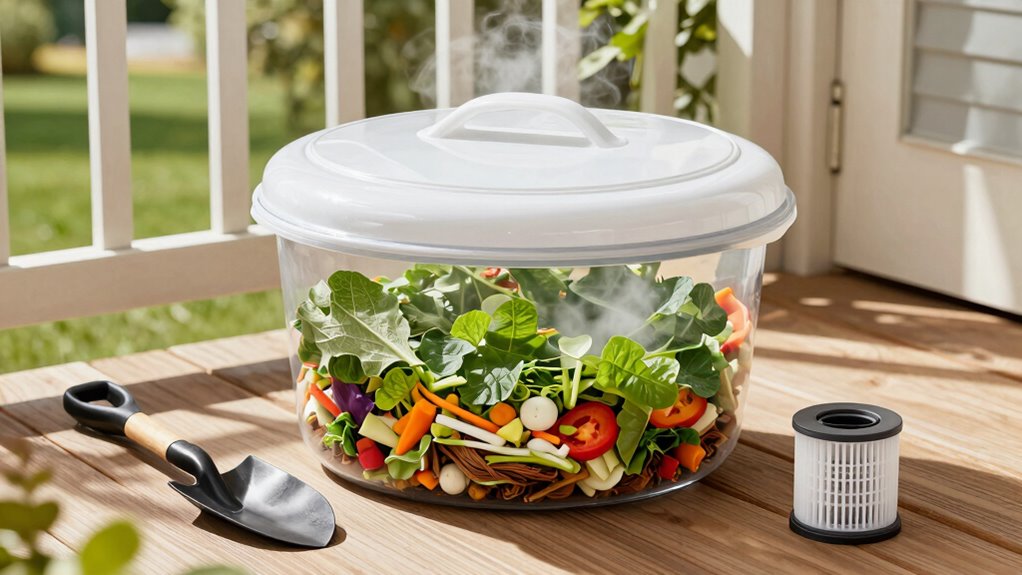

To start composting without the smell and mess, set up a small, well-ventilated worm bin with drainage holes and a lid. Use bedding like shredded newspaper or coconut coir, and bury fruit and vegetable scraps beneath it to prevent odors and pests. Keep the bedding moist, aerate regularly, and avoid meat or dairy. Proper management guarantees a clean, odor-free system that’s easy to maintain—plus, you’ll discover more tips if you keep exploring.

Get your next haul delivered free with Prime
- Fast, free delivery on millions of items
- Prime Video, Amazon Music and more included
- Member-only deals all year
Key Takeaways
- Use a sealed, well-ventilated container with drainage holes to control moisture and prevent odors.
- Bury kitchen scraps beneath bedding materials like shredded paper or leaves to contain smells and pests.
- Maintain proper moisture levels—moist but not soggy—and aerate bedding regularly to promote airflow.
- Store scraps in the refrigerator or freezer until adding to the bin to minimize pests and odors.
- Cover food waste and keep bedding layered to control odors and maintain a clean, odor-free compost system.
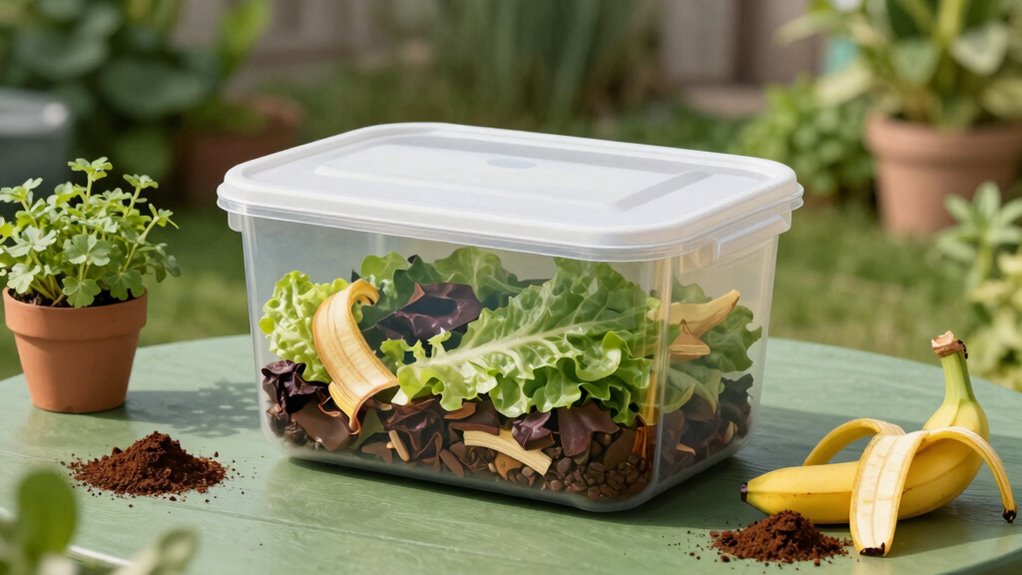
Starting composting can seem intimidating, especially when you’re worried about unpleasant odors and messes. The good news is, with the right approach, you can turn your kitchen scraps into nutrient-rich compost without creating a smell or clutter. One effective method is worm composting, also known as vermicomposting. Worm composting is ideal for beginners because it’s clean, odorless, and manageable inside your home or in a small outdoor space.
Start composting easily with worm bins—clean, odorless, and perfect for small spaces.
To get started, you’ll need a worm bin, which is usually a simple container with small drainage holes and a lid to keep pests out. Place bedding material like shredded newspaper, coconut coir, or cardboard at the bottom, then add your kitchen scraps. Worm composting works best when you feed the worms only fruit and vegetable scraps—avoid meat, dairy, and oily foods, as these can cause odors and attract pests. Your worms will happily eat banana peels, coffee grounds, vegetable peels, and other compostable kitchen scraps, breaking them down into dark, nutritious castings.
One of the main advantages of worm composting is that it produces very little smell if you maintain the right balance of bedding, scraps, and moisture. Keep the bedding moist but not soggy, and avoid overfeeding. When you add kitchen scraps, bury them beneath the bedding to prevent odors and discourage fruit flies. Regularly aerate the contents by gently mixing the bedding to keep oxygen flowing, which further reduces the chance of smell and helps the worms process the waste efficiently. Using a proper composting environment ensures optimal conditions for your worms and minimizes odor issues. Additionally, maintaining proper moisture levels is crucial for creating a healthy environment for your worms and preventing unpleasant smells. Proper bedding materials also play a significant role in controlling odors and providing a comfortable habitat for your worms.
Managing kitchen scraps properly is key to avoiding messes and odors. Instead of tossing scraps directly into your bin, store them in a small container in your refrigerator or freezer until you’re ready to add them to your worm bin. This minimizes odors and keeps pests away. To further enhance the process, consider composting principles like balancing carbon and nitrogen materials to optimize decomposition and reduce odors. You can also add small amounts of shredded paper or dry leaves to help absorb excess moisture and improve airflow. When you do add scraps, layer them with bedding and keep the contents covered. This prevents smells from escaping and keeps the environment comfortable for your worms.
Over time, your worm bin will produce rich compost that you can use for your plants. The process is quiet, clean, and sustainable, especially when you stick to feeding only suitable kitchen scraps. With consistent attention—adding scraps thoughtfully, maintaining bedding moisture, and aerating regularly—you’ll enjoy composting without the mess or smell. Worm composting is a straightforward, eco-friendly way to turn kitchen waste into a valuable resource for your garden or indoor plants. Proper compost management techniques can help ensure your system remains odor-free and efficient.
As an affiliate, we earn on qualifying purchases.
Frequently Asked Questions
Can Composting Be Done Indoors Successfully?
Yes, you can compost indoors successfully if you manage indoor ventilation and avoid common composting myths. Proper airflow helps reduce odors, and using a sealed bin minimizes mess. Turn your compost regularly to prevent smells, and only include appropriate kitchen scraps. With these tips, indoor composting becomes an eco-friendly, mess-free way to recycle waste, proving that composting myths about indoor environments aren’t true when you follow the right methods.
What Are the Best Composting Bins for Odor Control?
You should choose composting bins designed for odor prevention, like those with airtight lids or carbon filters. Look for bins made of odor-neutralizing materials and guarantee proper bin maintenance by regularly turning compost and avoiding overfilling. These steps help control smells and prevent messes, making indoor composting more manageable. With the right bin and consistent upkeep, you’ll keep odors at bay and enjoy a cleaner composting experience.
How Long Does It Take to Compost Kitchen Waste?
Your kitchen waste can break down faster than you think—usually within 3 to 6 months, depending on your composting method. The decomposition timeline varies with factors like temperature, moisture, and bin type. If you keep the compost moist and aerated, you’ll see a quicker kitchen waste breakdown. Remember, patience is key, but with proper care, you’ll have rich compost ready to nourish your garden in no time!
Is Composting Suitable for Small Apartments?
Yes, composting can suit small apartments. You can set up composting containers on your apartment balcony, making use of limited space effectively. Choose odor-controlled bins and keep them covered to prevent smells and mess. Regularly turn the compost to speed up decomposition, and add browns like leaves or paper to balance moisture. This way, you enjoy eco-friendly composting without cluttering your living space.
What Should I Do if Pests Are Attracted to My Compost?
If pests are attracted to your compost, don’t panic—just get proactive. You should focus on pest prevention by turning your compost regularly to aerate and break down odors, which pests love. Cover your compost with a layer of brown materials like leaves or straw to hide food scraps. This simple step discourages pests from digging in and keeps your composting experience clean and pest-free.
small indoor compost bin with lid
As an affiliate, we earn on qualifying purchases.
As an affiliate, we earn on qualifying purchases.
Conclusion
So, now you’re a composting pro, living the dream of turning kitchen scraps into black gold—without smelling up your entire house or turning your yard into a messy swamp. Remember, with a little planning and the right balance, you’ll be the envy of every neighbor and the hero of your garden. Who knew composting could be so glamorous? Welcome to the clean, mess-free world of eco-friendly living—your plants (and nose) will thank you.
coconut coir bedding for composting
As an affiliate, we earn on qualifying purchases.
As an affiliate, we earn on qualifying purchases.
kitchen scraps storage container
As an affiliate, we earn on qualifying purchases.
As an affiliate, we earn on qualifying purchases.
Fall Picks
fall essentials
As an affiliate, we earn on qualifying purchases.