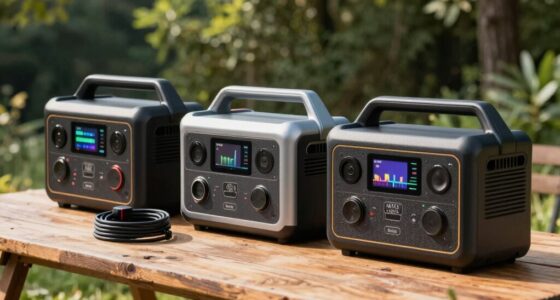

Before your EV charger installation, you need to evaluate your electrical system’s capacity, verify it meets local codes, and obtain necessary permits. Decide on the right charger type based on your vehicle and daily needs, and plan the parking spot for easy access and wiring. Consider future expansion and load management to avoid overloads. Preparing during the installation day and practicing safe charging habits will keep everything running smoothly. Continue for more essential steps to ensure a successful setup.

Get your next haul delivered free with Prime
- Fast, free delivery on millions of items
- Prime Video, Amazon Music and more included
- Member-only deals all year
Key Takeaways
- Ensure your electrical panel can support the new charger and upgrade it if necessary for safety and compliance.
- Confirm local permits, zoning laws, and adherence to electrical codes before installation.
- Assess your parking setup, vehicle compatibility, and plan for future expansion to avoid overloads.
- Choose the right charger type (Level 1 or Level 2) based on your vehicle and charging needs.
- Prepare for installation day by clearing access, confirming appointment details, and discussing safety protocols with your electrician.
As an affiliate, we earn on qualifying purchases.
Why Your Electrical System Matters for EV Charger Installation

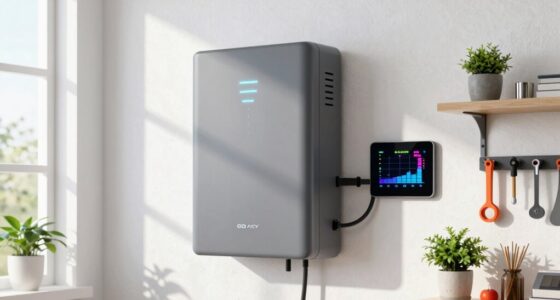
Your electrical system plays a crucial role in guaranteeing a safe and efficient EV charger installation. The electrical panel, in particular, determines whether your home can handle the additional load. It’s essential to assess your current power capacity to avoid overloads or electrical hazards. If your electrical panel’s capacity is insufficient, your electrician might need to upgrade it to meet the charger’s demands. This step helps prevent tripped breakers and potential damage to your electrical system. Additionally, understanding your electrical system’s capabilities ensures the installation process runs smoothly, saving you time and money. Making sure your electrical panel can support the charger is a fundamental part of preparing for a safe and reliable EV charging setup. Proper system sizing ensures compatibility and long-term efficiency of your EV charging solution. Moreover, consulting with a licensed electrician can help identify any potential electrical issues before installation begins, ensuring a seamless process. Regularly evaluating your electrical panel can also help maintain safety and performance over time.
As an affiliate, we earn on qualifying purchases.
How to Determine Your Charging Needs and Parking Setup
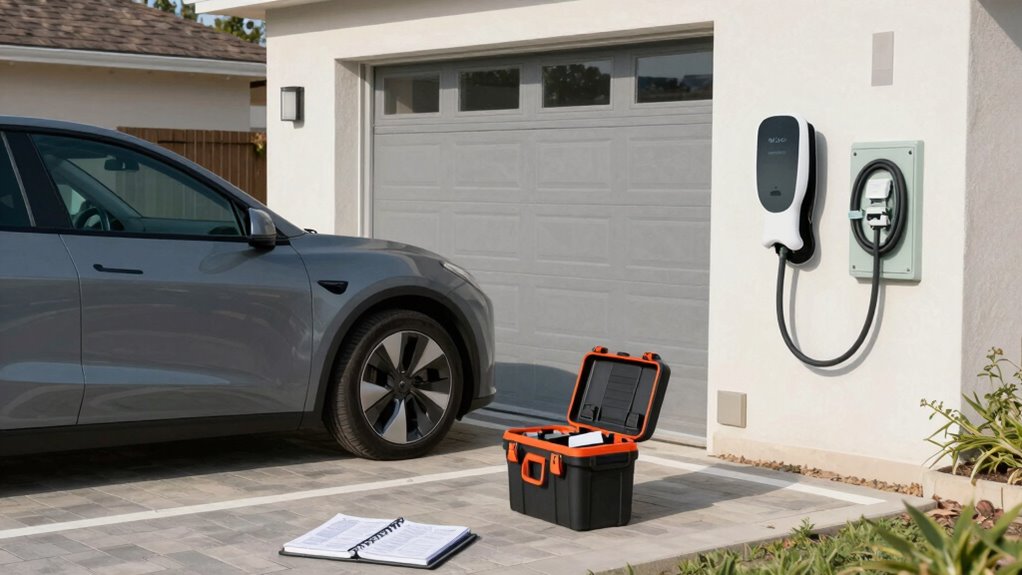
To guarantee your EV charger meets your daily needs, start by evaluating how much you drive and when you’ll need to charge. This helps determine the power level and charging speed required. Next, consider parking considerations: do you have a dedicated spot or shared driveway? Proper charging station placement is key for convenience and safety. Think about proximity to your electrical panel and ease of access. Use this table to assess your setup:
| Parking Type | Charging Needs | Placement Considerations |
|---|---|---|
| Dedicated garage | Daily commuting, frequent charging | Near electrical panel, sheltered from elements |
| Carport or driveway | Occasional use | Easy access, minimal wiring |
| Shared parking lot | Multiple users | Clearly marked, accessible |
| Street parking | Limited use | Nearby power source, legal access |
This evaluation guarantees your setup fits your lifestyle and space. Additionally, understanding your electrical capacity can prevent overloads and ensure safe installation. Being aware of your power requirements is essential to select an appropriately rated charger and avoid potential electrical issues. Considering the sustainability impact of your installation choices can promote environmentally friendly practices. Moreover, consulting with a licensed electrician can help identify any electrical upgrades needed for a safe and efficient setup. Knowing your existing electrical system can also influence the type of charger and installation process.
electrical panel upgrade for EV charger
As an affiliate, we earn on qualifying purchases.
As an affiliate, we earn on qualifying purchases.
Which EV Charger Type Is Best for Your Home or Business?
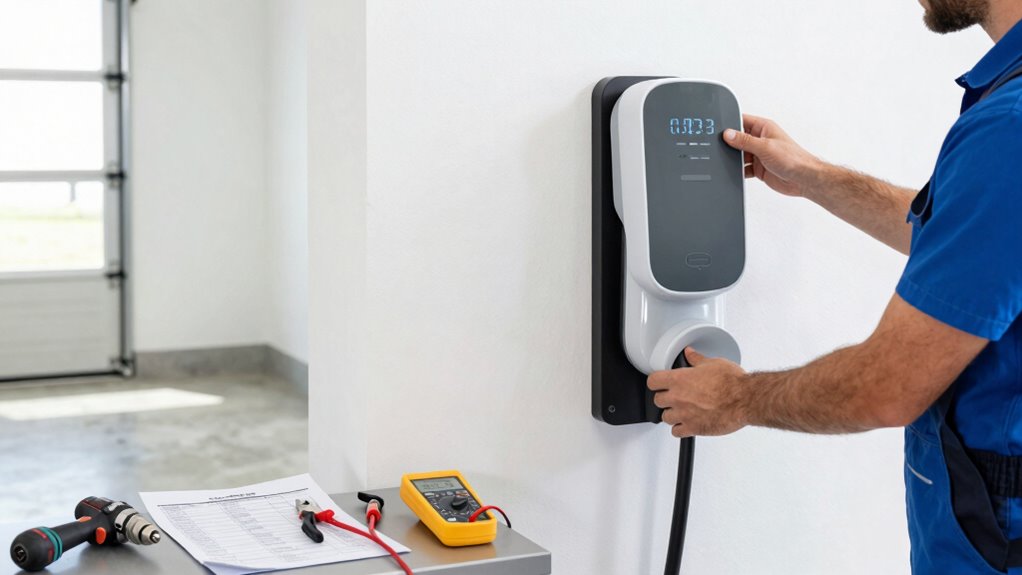
Choosing the right EV charger for your home or business depends on your specific charging needs and usage patterns. Consider charger compatibility with your vehicle’s make and model to guarantee seamless operation. If you have multiple EVs or plan to upgrade, select a charger with sufficient power capacity to handle higher charging demands. Level 1 chargers are ideal for occasional, overnight charging but are slower, while Level 2 chargers provide faster charging and are better suited for daily use. For commercial settings, faster DC fast chargers might be necessary. Assess your electrical system’s capacity to support the charger’s power requirements without overloading circuits. Additionally, charger installation complexity varies depending on the type and existing electrical infrastructure, so planning for professional support is advisable. Planning for electrical capacity and future expansion can help you choose the most efficient and effective charging solution. Being aware of Vetted options and standards can ensure reliable and safe installation. Evaluating installation requirements beforehand can also prevent unexpected delays and costs, especially when considering safety considerations for electrical systems.
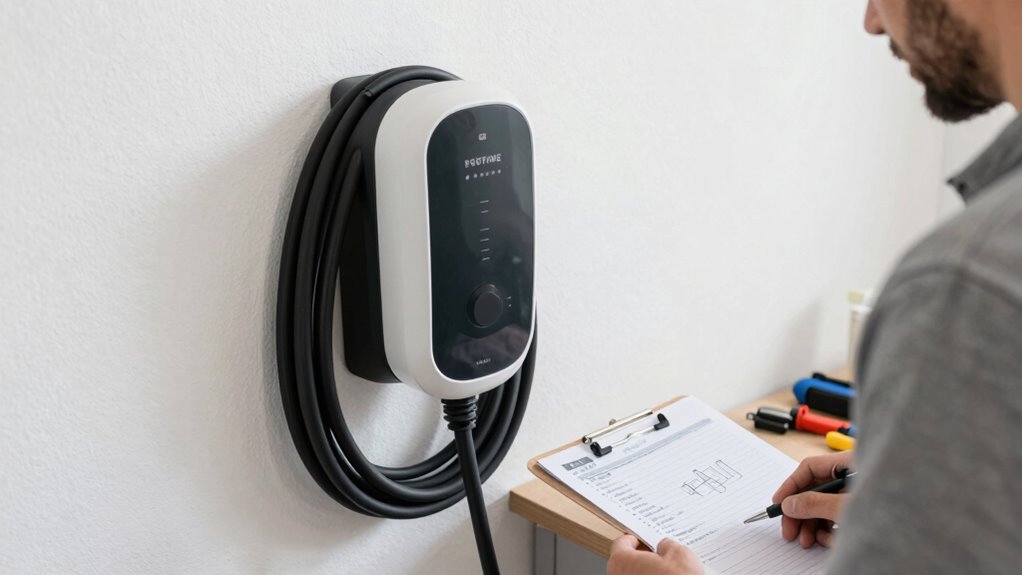
EV charging station with safety features
As an affiliate, we earn on qualifying purchases.
As an affiliate, we earn on qualifying purchases.
How to Plan Wiring, Circuit Breakers, and Future Expansion
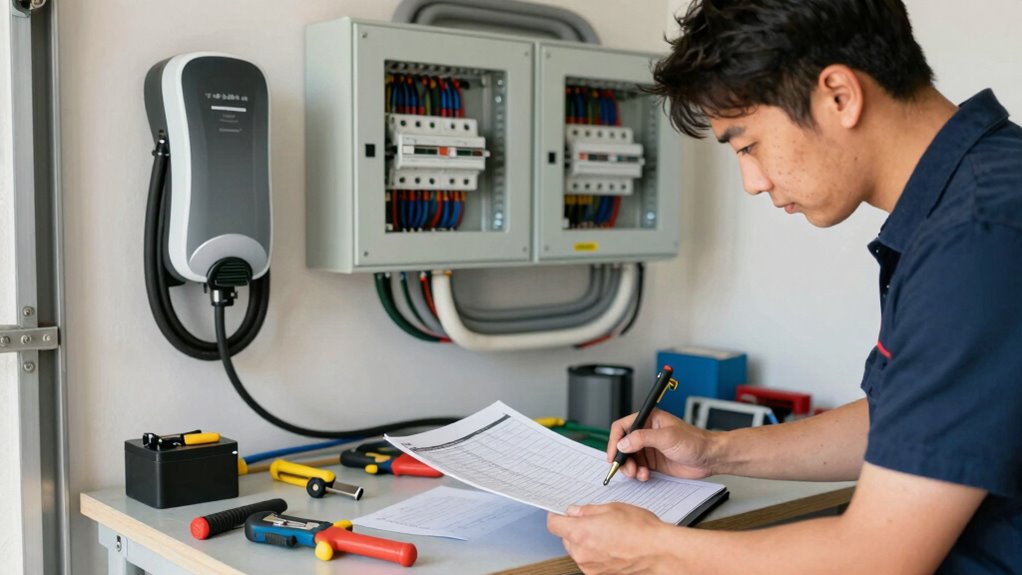
Planning the wiring and circuit breakers for your EV charger setup guarantees safe and reliable operation now and in the future. Start by reviewing wiring diagrams to verify proper connections and load capacity. Consider your current electrical panel and how it can accommodate the charger, including the size and breaker ratings. Think ahead with expansion planning—allow room for future chargers or upgrades without costly rewiring. Incorporating sound engineering principles ensures a robust electrical system that can adapt to changing needs. Additionally, understanding electrical load management is essential to prevent overloads and ensure efficient operation over time. Proper circuit protection measures help safeguard your system from faults and ensure longevity, while also accounting for electrical code compliance to meet safety standards. Prioritizing electrical safety protocols throughout the installation process helps minimize risks and ensures a secure setup.
What You Need to Know About Permits, Codes, and Safety?
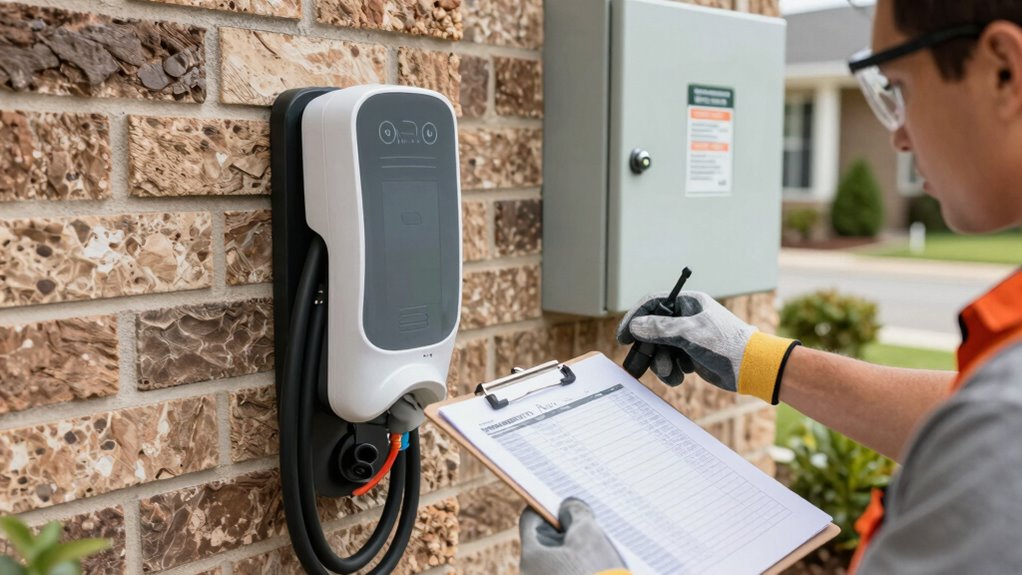
Before you start installing your EV charger, you need to understand permits and local regulations to stay compliant. Ensuring electrical code compliance is essential for safety and legality. Knowing the rules upfront helps prevent delays and costly mistakes during installation. Additionally, understanding proper cabling solutions can help ensure a safe and reliable setup. Being aware of home safety considerations can further reduce risks during and after installation. Recognizing the importance of ethical consumer choices can also guide you toward environmentally responsible products and services. Moreover, staying informed about recent AI discoveries in technology can help you make smarter, future-proof decisions for your home and energy systems. Considering the value of security systems may also be beneficial if you want to protect your investment from theft or damage.
Permits and Local Regulations
Finding permits and local regulations is essential to guarantee your EV charger installation is legal and safe. Without proper approval, you risk fines or having to redo the work. To stay compliant, you should:
- Check if you need local permits before starting installation, as requirements vary by area.
- Understand zoning laws that may restrict where you can place your charger or how it’s installed.
- Contact your local building department to clarify specific regulations and ensure your plan meets all safety standards.
- Be aware of digital content regulations that might impact how you verify compliance or access relevant permits.
Electrical Code Compliance
Ensuring your EV charger installation complies with electrical codes is crucial for safety and legality. You need to understand grounding requirements to prevent electrical shocks and guarantee system stability. Proper grounding involves connecting the charger to a grounding system, typically linked to your electrical panel, to protect against faults. Your electrical panel must support the additional load of the charger and meet local code specifications. It’s essential to verify that wiring and connections adhere to the National Electrical Code (NEC) or your local standards. Failing to meet these requirements can lead to safety hazards or code violations, which might delay permits or invalidate insurance. Always consult a licensed electrician who understands electrical code compliance to ensure your installation is safe, legal, and ready for use.
How Much Will Your EV Charger Installation Cost?
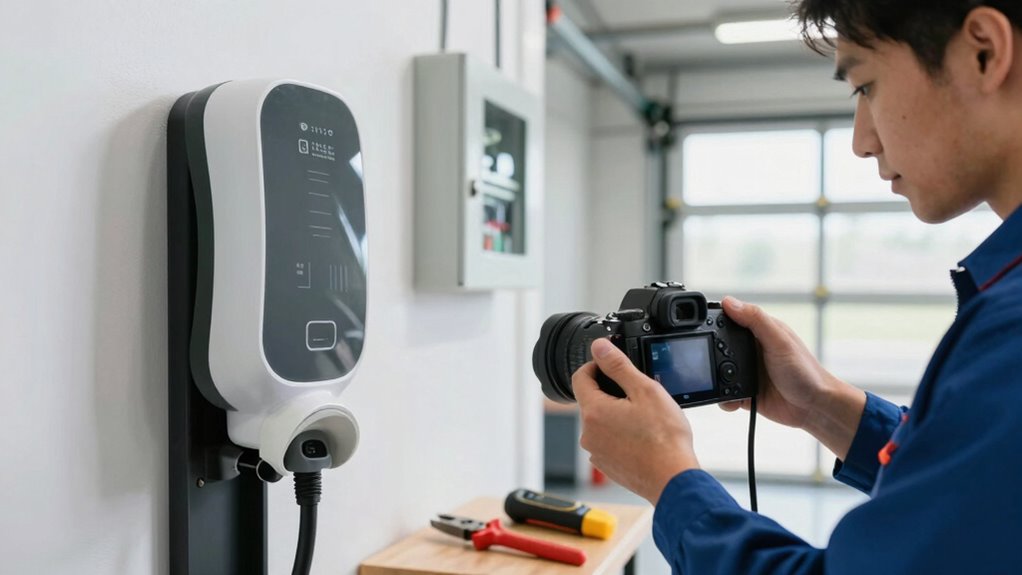
The cost to install an EV charger can vary widely depending on several factors, including the charger type, location, and existing electrical setup. To get a clear cost estimate, consider these key pricing factors:
- Charger Type: Level 1 chargers are cheaper but slower, while Level 2 chargers cost more upfront but offer faster charging.
- Electrical Upgrades: If your home’s wiring needs updating or a dedicated circuit is necessary, expect higher costs.
- Installation Complexity: Hard-to-reach locations or additional permits can increase labor expenses.
Understanding these factors helps you anticipate the total investment and plan accordingly. By evaluating your specific setup and needs, you’ll get a more accurate cost estimate from your electrician.
What to Expect on Installation Day and How to Prepare
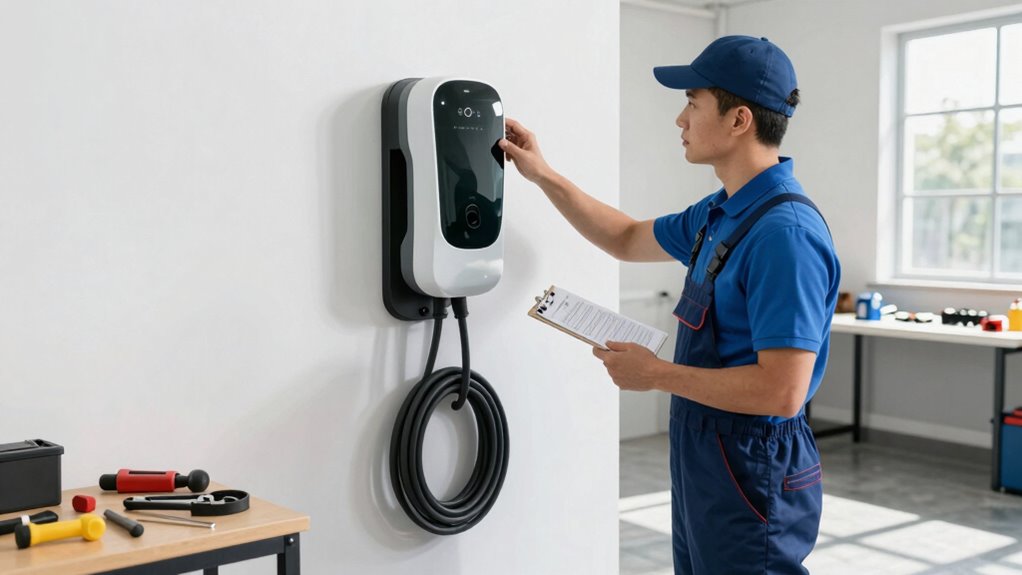
On installation day, your electrician will arrive prepared to set up your EV charger efficiently and safely. To guarantee a smooth process, clarify parking considerations beforehand—make sure there’s adequate space for the contractor’s vehicle and tools. Clear the area around your electrical panel and charging spot to give your electrician easy access. Good contractor communication is key; confirm the appointment time, ask about any necessary permits, and discuss your preferred parking arrangements. Be available to answer questions or provide access if needed. Keep pets and children away during the installation to ensure safety. By preparing the site and maintaining clear communication, you help the electrician work efficiently, minimize delays, and set the stage for a seamless charging setup.
Tips for Safe, Efficient Charging and Maintaining Your EV Charger
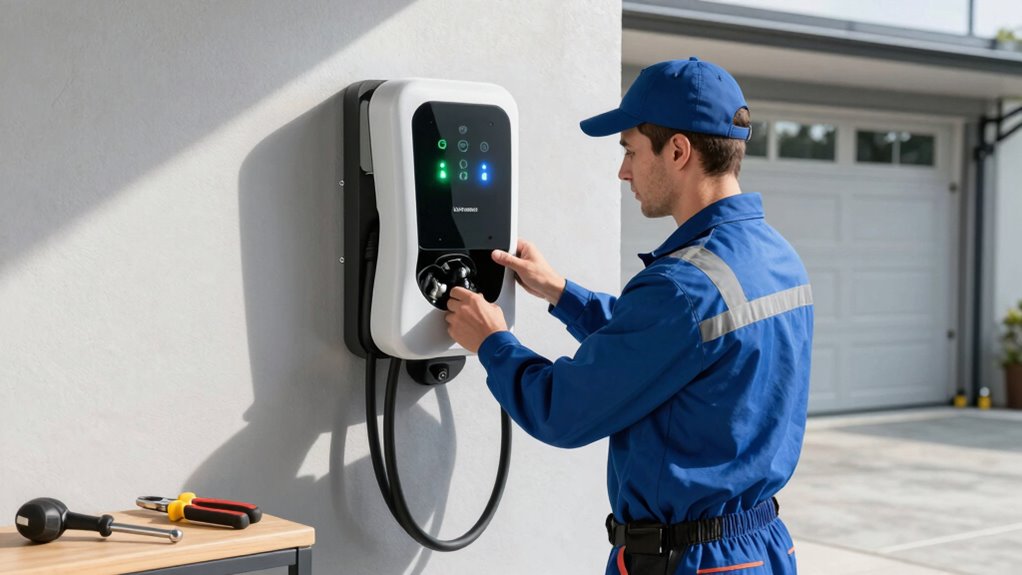
To keep your EV charger safe and efficient, it’s important to follow proper charging techniques and stay on top of maintenance. Regular checks can prevent issues and extend the life of your charger. Let’s explore some simple tips to help you charge safely and keep everything running smoothly.
Proper Charging Techniques
Making certain safe and efficient charging starts with understanding proper techniques that protect both your vehicle and your charger. Good charging etiquette ensures you’re considerate of others and helps maintain the lifespan of your equipment. Proper cable management prevents damage to the cable and reduces tripping hazards. To optimize your charging routine, keep these tips in mind:
- Always disconnect the charger gently, avoiding excessive force.
- Wrap and store cables neatly after each use to prevent wear.
- Follow manufacturer guidelines for charging times to avoid overcharging or undercharging your EV.
Regular Maintenance Tips
Maintaining your EV charger regularly is key to safe and efficient charging. Check connections and inspect cords for damage to make certain everything functions properly. Keeping your charger clean prevents dust and debris from affecting performance. Good charging habits, like avoiding frequent deep discharges, help preserve your vehicle’s battery health. Use the charger as recommended by the manufacturer and avoid overloading circuits. Periodic inspections can catch issues early, preventing costly repairs or inefficient charging. Proper maintenance also ensures that your charger operates safely, reducing the risk of electrical hazards. By staying attentive to your charger’s condition and practicing smart charging habits, you’ll extend its life and keep your EV ready for reliable, ideal performance.
Frequently Asked Questions
Can I Install an EV Charger Myself or Should I Hire a Professional?
You shouldn’t attempt to install an EV charger yourself because of DIY risks and licensing requirements. Electric work involves high voltage and complex wiring, increasing safety hazards if not done properly. Hiring a licensed electrician ensures the installation meets local codes and safety standards, preventing future problems. Leave it to the professionals to guarantee your EV charger is installed correctly, safely, and in compliance with all regulations.
How Long Does the Entire EV Charger Installation Process Typically Take?
On average, installing an EV charger takes about 4 to 8 hours. Notably, over 60% of installations are completed in a single day. The installation timeline depends on factors like the charger type and your home’s electrical setup. Scheduling considerations include coordinating with your electrician and ensuring proper permits. Planning ahead helps avoid delays, so check with your professional to get an accurate estimate and secure a convenient appointment slot.
What Are the Most Common Mistakes to Avoid During Installation?
To avoid wiring errors and improper grounding, double-check all connections before the electrician finishes. Make sure the circuit breaker matches the charger’s requirements and that grounding is secure and compliant with local codes. Don’t rush through the setup; take your time to verify everything. Avoid DIY fixes if you’re unsure, as mistakes like incorrect wiring or poor grounding can cause safety hazards or charger malfunctions later.
Are There Any Incentives or Rebates Available for EV Charger Installation?
Yes, you can benefit from incentives like government grants and tax credits when installing an EV charger. These financial incentives help offset installation costs and make going electric more affordable. Keep in mind that eligibility varies by location and program, so it’s smart to research local and federal options. Applying for these incentives can considerably reduce your expenses, encouraging more homeowners to switch to cleaner transportation.
How Often Should I Inspect or Maintain My EV Charging Station?
You should inspect and maintain your EV charging station at least once a year. Follow a regular maintenance schedule to guarantee everything functions smoothly. Check for any signs of wear or damage, and clean the station as needed. Use troubleshooting tips like verifying connections and resetting the unit if you encounter issues. Regular inspections help prevent problems, extend the lifespan of your charger, and keep your EV charging experience safe and reliable.
Conclusion
By following this checklist, you’ll navigate your EV charger installation with confidence, turning your home into a hub of clean energy. Think of it as planting a sturdy tree—you want strong roots and proper care to enjoy its benefits for years to come. Prepare wisely, stay informed, and you’ll soon be charging up smoothly, making every drive a little greener and a lot more convenient. Your electric journey starts with a solid plan—charge ahead!
Columbus Day / Indigenous Peoples' Day Picks
long weekend sales
As an affiliate, we earn on qualifying purchases.