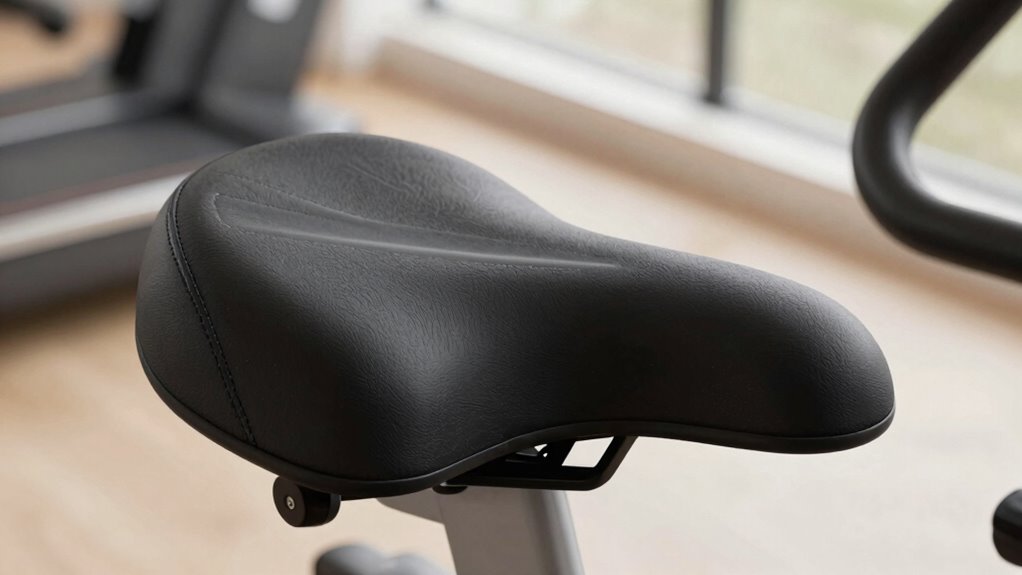

To guarantee your exercise bike seat is comfortable, start by checking if it supports proper posture and promotes a neutral spine with hips level. Make certain the cushioning balances padding and stability, avoiding excessive softness or hardness. Consider the seat’s material for moisture and heat management, and see if it allows ventilation. A well-designed ergonomic seat will reduce fatigue and soreness over time. Keep these factors in mind, and you’ll discover more tips for maximum comfort ahead.

Get your next haul delivered free with Prime
- Fast, free delivery on millions of items
- Prime Video, Amazon Music and more included
- Member-only deals all year
Key Takeaways
- Ensure the seat promotes a natural, upright posture to support proper spine alignment.
- Check that the cushioning balances comfort and stability, avoiding excessive or insufficient padding.
- Confirm the seat material offers good moisture management and ventilation for extended comfort.
- Verify ergonomic design features align with natural body contours to reduce fatigue.
- Adjust the seat position to maintain hips level and prevent leaning forward or slouching.
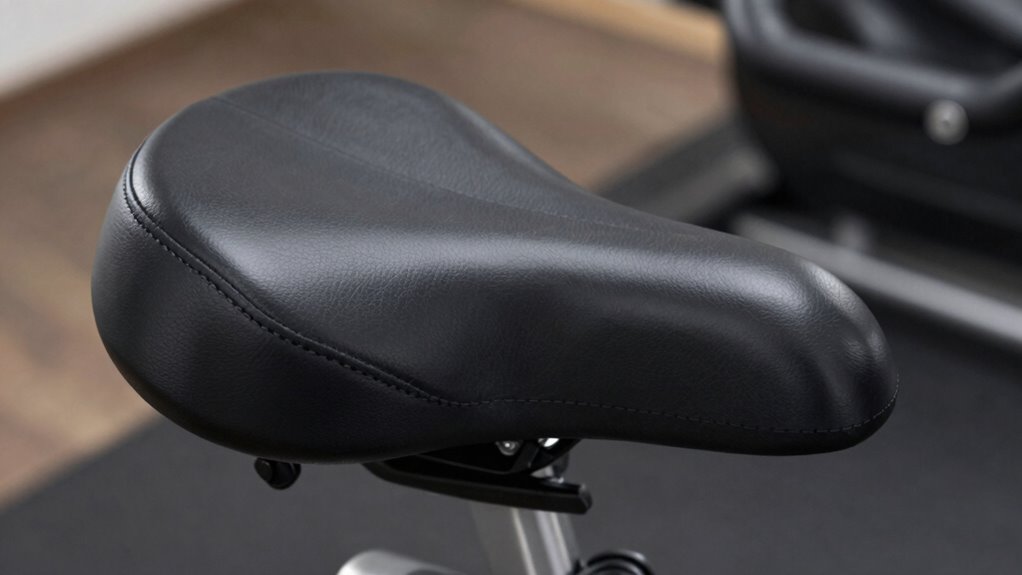
When it comes to getting the most out of your exercise bike, seat comfort plays a vital role in ensuring you can ride longer and more effectively. The first thing to consider is how well the seat supports your posture alignment. Proper posture helps prevent discomfort and reduces the risk of injury, so your seat should encourage a natural, upright position without forcing you into awkward angles. When you sit down, your hips should be level and your spine should remain in a neutral position. If your seat causes you to lean forward excessively or slouch, you’ll likely experience fatigue or pain over time. Ensuring your seat supports your natural body alignment helps you maintain a consistent, efficient pedaling motion without unnecessary strain.
A well-supported, neutral posture on your exercise bike prevents discomfort and promotes efficient, injury-free riding.
Next, pay close attention to seat cushioning. The right amount of padding can make a significant difference in comfort, especially during longer rides. Too much cushioning might feel plush at first but can cause instability, making your hips and pelvis shift around, which can lead to soreness. Conversely, a seat with insufficient padding can cause pressure points and discomfort, especially in sensitive areas. The ideal seat offers a balance—enough padding to absorb shocks and reduce pressure, but not so much that it compromises stability or causes you to slide forward. Take note of how your body responds during initial rides; if you start to experience soreness or numbness, it might be time to look for a seat with a different cushioning level. Additionally, seat material can influence how well it manages moisture and heat, further enhancing comfort during extended use. Proper seat ventilation can also help prevent overheating and sweating, adding to overall comfort. Selecting a seat with the appropriate seat design can also improve overall stability and reduce discomfort during longer sessions, especially if it features ergonomic features that support natural movement.
As an affiliate, we earn on qualifying purchases.
Frequently Asked Questions
How Often Should I Replace My Exercise Bike Seat?
You should consider replacing your exercise bike seat if it becomes uncomfortable, damaged, or worn out—typically every 1-3 years depending on usage. Check the seat material for tears or excessive wear, and use adjustment techniques to improve comfort first. If adjustments don’t help and the seat still causes discomfort or shows signs of deterioration, it’s time for a replacement to guarantee safe, comfortable workouts.
Can Seat Padding Affect Long-Term Comfort?
Yes, seat padding can affect long-term comfort. If the padding’s durability decreases or the seat material wears out, you’ll feel more discomfort during rides. Over time, compressed or worn padding loses its cushioning, leading to soreness. Check the seat’s padding and material regularly; replace or upgrade them if they show signs of deterioration. A well-maintained seat guarantees consistent comfort, helping you enjoy your workouts without unnecessary discomfort.
Are There Specific Seats for Different Body Types?
Yes, there are specific seats designed for different body types. Look for an ergonomic design tailored to your body shape, which can improve comfort and reduce strain. Consider seat materials—breathable, cushioned options offer better support. Adjustability is also essential, so choose a seat that allows you to customize height and tilt. This way, you guarantee a comfortable, supportive ride, no matter your body type.
How Do I Know if My Seat Height Is Correct?
Think of your exercise bike seat as the foundation of a house—you want it just right. To check if your seat height is correct, adjust it so your knee is slightly bent at the top of the pedal stroke. Proper seat adjustment helps with posture correction and prevents strain. When you sit on the seat, your hips should remain stable, and you should feel comfortable, not stretched or cramped.
What Are Common Signs of an Uncomfortable Seat?
If your seat feels uncomfortable, you might notice signs like persistent pain, numbness, or chafing during or after your ride. Check if the seat material is too hard or too soft, which can cause discomfort. Also, assess the cushion firmness—if it’s too firm or too soft, it may not provide enough support. These issues often indicate your seat needs adjustment for better comfort and a more enjoyable workout.
As an affiliate, we earn on qualifying purchases.
Conclusion
Remember, finding the right bike seat can feel like finding a favorite pair of shoes—you’ll know it’s perfect when it fits just right. I once tried countless seats before discovering one that transformed my rides from uncomfortable to enjoyable, much like finally slipping into a well-worn glove. Don’t settle for discomfort; check your padding, adjust your position, and listen to your body. A comfortable seat isn’t just about ease—it’s the key to making every pedal stroke count.
As an affiliate, we earn on qualifying purchases.
As an affiliate, we earn on qualifying purchases.
Halloween Picks
halloween
As an affiliate, we earn on qualifying purchases.