
To prevent problems when making formula, you should always sterilize bottles, nipples, and caps daily using boiling water or sterilizers. Wash your hands thoroughly beforehand and use hot, soapy water to clean all parts after each use. Rinse well to remove soap residue and store bottles in a clean, dry location with sanitized caps. Keep storage areas disinfected regularly, and check bottles for damage. Maintaining these routines helps keep bacteria at bay—continue to learn more ways to keep your baby safe.

Get your next haul delivered free with Prime
- Fast, free delivery on millions of items
- Prime Video, Amazon Music and more included
- Member-only deals all year
Key Takeaways
- Sterilize bottles, nipples, and caps daily using boiling, steam, or microwave sterilizers to eliminate harmful bacteria.
- Wash hands thoroughly before handling feeding equipment to prevent contamination.
- Store sterilized bottles in a clean, dry, and covered environment to avoid recontamination.
- Rinse bottles thoroughly after cleaning to remove soap residue and inspect for damage regularly.
- Disinfect storage areas and sterilizers routinely to maintain a hygienic feeding environment.
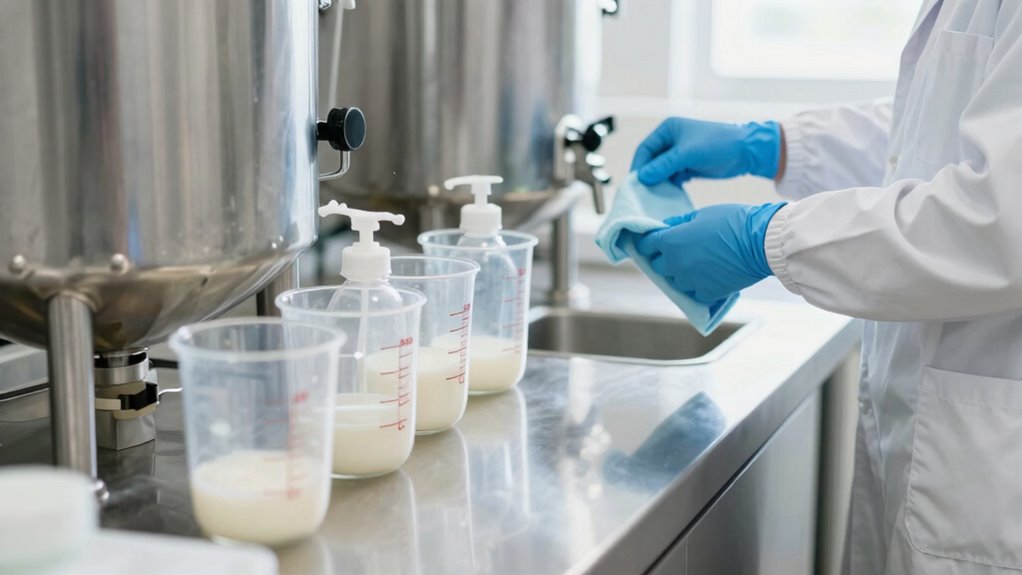
Have you ever wondered why maintaining good cleaning habits is essential when making formula? It’s because clean tools and proper techniques directly impact your baby’s health. When you’re preparing formula, every step counts, especially bottle sterilization and storage techniques. These habits help prevent bacteria build-up and ensure your baby’s nourishment stays safe and fresh.
Bottle sterilization is a crucial part of your routine. No matter how clean you think your bottles are, bacteria can lurk in places you might overlook. Boiling bottles and nipples in water for at least five minutes is one of the most effective ways to kill germs. Alternatively, using a steam sterilizer or microwave sterilizer can save time while guaranteeing thorough cleaning. Remember, it’s not enough to just rinse bottles after each use; sterilization eliminates unseen bacteria that might cause infections or upset your baby’s digestive system. Make sure to sterilize all components—bottles, nipples, and caps—every day or as recommended, especially during your baby’s first few months when their immune system is still developing. Regularly checking sterilizer effectiveness helps ensure all germs are properly eradicated. Incorporating proper sterilization methods into your routine is vital for safeguarding your baby’s health. Maintaining proper cleaning routines also involves keeping your sterilizers clean and in good working condition to prevent cross-contamination.
Sterilize bottles, nipples, and caps daily to protect your baby’s health and prevent bacterial infections.
Storage techniques are just as essential in maintaining a safe feeding environment. After sterilizing, store your bottles in a clean, dry place to avoid recontamination. Keep bottles covered with sterilized caps or store them in airtight containers until you’re ready to use them. Always check that storage areas are sanitized and free of dust or pests. When preparing formula in advance, store it in the refrigerator and use it within 24 hours; avoid leaving prepared bottles at room temperature for long periods. Proper storage helps prevent bacterial growth, which can occur rapidly in warm environments. It’s also helpful to keep your formula supplies organized and separate from other household items to avoid cross-contamination. Additionally, regularly disinfecting storage areas can further reduce the risk of bacterial transfer to feeding supplies.
In addition to sterilization and storage, paying attention to your cleaning routine overall makes a difference. Wash your hands thoroughly before preparing bottles or handling feeding equipment. Use hot, soapy water to clean all parts of the bottles and nipples after each use, and rinse well to remove soap residue. Regularly inspecting your bottles for cracks or damage ensures no hidden crevices harbor bacteria. Choosing the best small wood stoves for your home and adopting consistent, thorough cleaning habits minimizes the risk of problems like infections, upset stomachs, or worse issues caused by contaminated formula feeding.
As an affiliate, we earn on qualifying purchases.
Frequently Asked Questions
How Often Should I Replace My Formula Maker’s Parts?
You should replace your formula maker’s parts every 6 to 12 months, depending on usage and wear. Follow your cleaning schedules and maintenance tips closely to keep it functioning well. Regularly inspect parts like the filters, nozzles, and seals for signs of damage or buildup. Replacing worn parts promptly guarantees safe, efficient operation, and helps prevent problems down the line, keeping your machine in top shape.
Can I Use Regular Soap to Clean the Formula Maker?
Using regular soap to clean your formula maker is like trying to scrub away a stubborn stain with a dull knife—you might do more harm than good. For effective cleaning techniques, stick to manufacturer-approved solutions and avoid regular soap, which can leave residues and affect safety. Cleaning frequency depends on usage, but aim to clean thoroughly after every use to prevent buildup and guarantee safe, hygienic operation.
What Are the Signs of a Contaminated Formula Maker?
You’ll notice contamination symptoms like a strange smell, cloudy water, or inconsistent formula output. If your machine looks dirty, has mineral build-up, or shows visible mold, it’s time for a thorough inspection. Regularly check for signs of contamination during machine inspection, and don’t ignore any unusual odors or changes in water clarity. Cleaning promptly helps prevent health risks and keeps your formula maker functioning properly.
Is It Safe to Use Vinegar for Cleaning?
Yes, using vinegar for cleaning is generally safe and effective if you follow proper guidelines. Vinegar safety involves diluting it with water to prevent damage to your formula maker. Its cleaning effectiveness helps break down mineral deposits and bacteria, making it a popular natural disinfectant. Just make sure to rinse thoroughly afterward to remove any vinegar residue, ensuring your appliance stays safe and clean for daily use.
How Do I Prevent Mold Buildup in the Machine?
Imagine your machine as a fresh, clean oasis—mold has no place here. To prevent mold buildup, focus on mold prevention by keeping the machine dry and well-ventilated. Regular cleaning frequency is key; wipe down surfaces and run a cleaning cycle weekly. Always dry parts thoroughly after use, and store the machine in a cool, dry area. These habits will keep mold at bay and guarantee your machine stays pristine.
As an affiliate, we earn on qualifying purchases.
Conclusion
By sticking to these simple cleaning habits, you’re not just maintaining your formula maker—you’re safeguarding your baby’s health. Imagine the quiet moment when you finally see that spotless machine, knowing it’s free of lingering germs and residue. But the real surprise? A small oversight could introduce unseen risks. Stay vigilant, keep your routine consistent, and watch as your careful habits transform into a fortress of cleanliness—protecting your little one, one spotless bottle at a time.
As an affiliate, we earn on qualifying purchases.
electric steam sterilizer for baby bottles
As an affiliate, we earn on qualifying purchases.
As an affiliate, we earn on qualifying purchases.
Halloween Picks
halloween
As an affiliate, we earn on qualifying purchases.