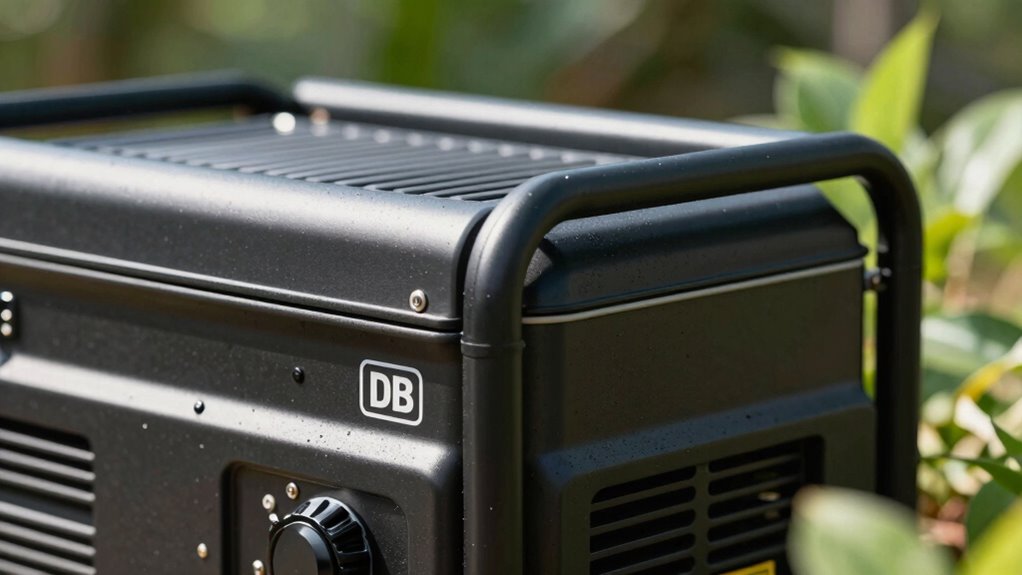
Many believe that a lower decibel (dB) rating means a generator is quieter, but that’s not always true. The dB number measures sound levels at a specific distance and doesn’t account for soundproofing, placement, or environmental factors that influence perceived noise. Good insulation, enclosure design, and proper setup can make a generator seem quieter than its rating suggests. Curious about what really impacts noise levels? Keep exploring to find out more.
Key Takeaways
- A lower dB rating indicates less noise at a specific measurement point but doesn’t guarantee quieter operation in real environments.
- Soundproofing, placement, and insulation significantly impact perceived noise, beyond the generator’s rated decibel level.
- Different measurement methods and distances can cause variations in reported dB levels, affecting comparisons.
- Modern generators often use soundproof enclosures and vibration dampening, which reduce actual noise regardless of their dB rating.
- Ambient noise levels and environmental acoustics can influence how loud a generator truly feels, regardless of its dB rating.
What Does a Quiet Generator’s dB Rating Really Measure?
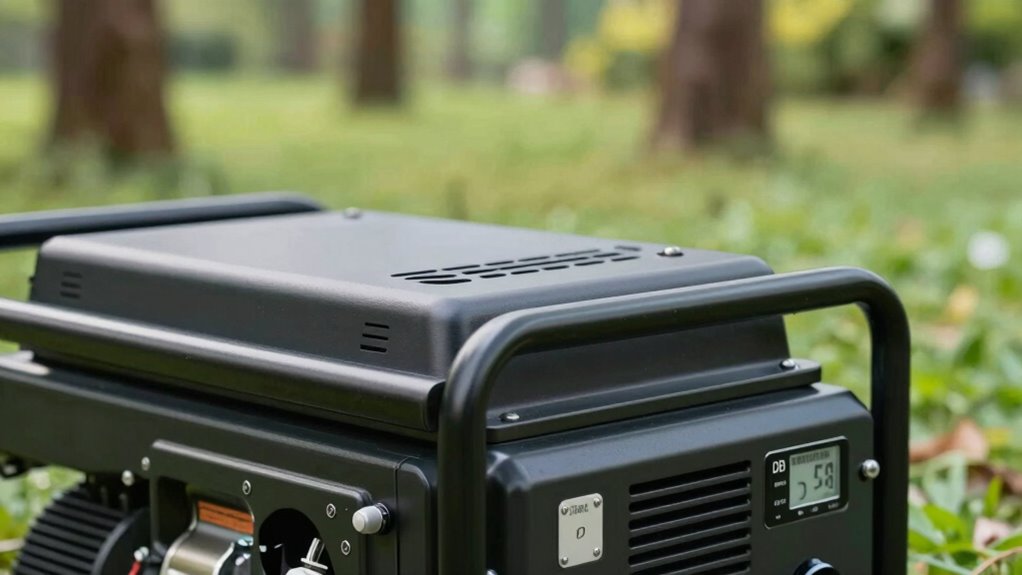
Have you ever wondered what those decibel (dB) ratings on quiet generators actually mean? These ratings measure the sound level the generator produces in a specific environment, often influenced by sound insulation and noise barriers around it. A lower dB rating indicates less noise, making it more suitable for quiet settings. Keep in mind that the rating doesn’t account for how well the generator’s noise is contained or blocked by barriers or soundproofing. Noise barriers and sound insulation can substantially reduce the perceived noise, even if the generator’s dB rating is higher. Additionally, soundproofing techniques can further enhance the quiet operation of your generator by reducing noise transmission. Proper installation methods can also play a significant role in minimizing noise levels and optimizing performance. It’s also important to consider the environmental impact when choosing a generator, as quieter models tend to be more environmentally friendly by reducing noise pollution. In addition, understanding sound absorption properties can help you select the best materials for effective noise reduction. So, while the dB rating gives you a baseline, your environment and additional sound control features play an essential role in how quiet the generator truly is. For optimal quiet operation, selecting a generator with high-quality sound insulation can further minimize noise levels.
How Do You Interpret a Generator’s dB Rating for Your Needs?
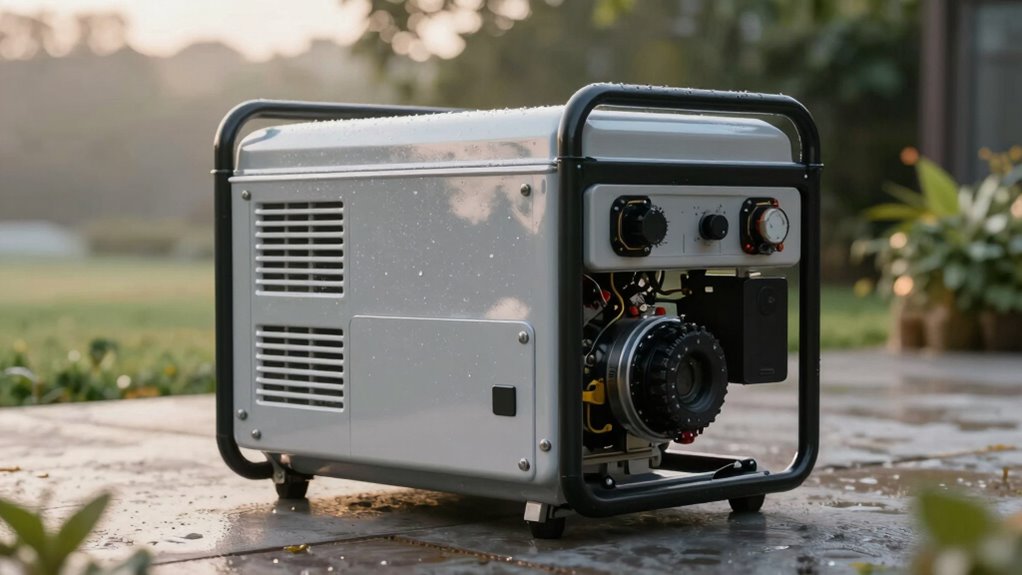
Understanding a generator’s dB rating is essential for choosing the right model for your needs. To interpret it effectively, consider how sound absorption features can reduce noise impact in your environment. For example, installing the generator with barriers or soundproof enclosures can markedly lower perceived noise levels. Pay attention to the dB rating at a specified distance, often 7 meters, and compare it to ambient noise levels in your area. Keep in mind that installation techniques play a vital role; proper placement and soundproofing can make a quieter generator even more discreet. Also, consider how the generator’s noise compares to daily sounds, like conversation or traffic, to determine if it meets your comfort threshold. This approach helps you select a model that fits your noise sensitivity and site conditions. Additionally, evaluating piercing care and hygiene can help prevent infections that might require medical attention, ensuring your overall safety and comfort during use. Proper maintenance and understanding of noise levels and absorption can further enhance your experience with your generator. Being aware of sound absorption features can help optimize the reduction of noise impact based on your specific environment. Moreover, incorporating soundproofing materials during installation can significantly improve noise reduction, especially in sensitive areas. Furthermore, examining installation environment can assist in making informed decisions to achieve optimal noise reduction.
What Factors Besides Decibel Ratings Influence Generator Noise?
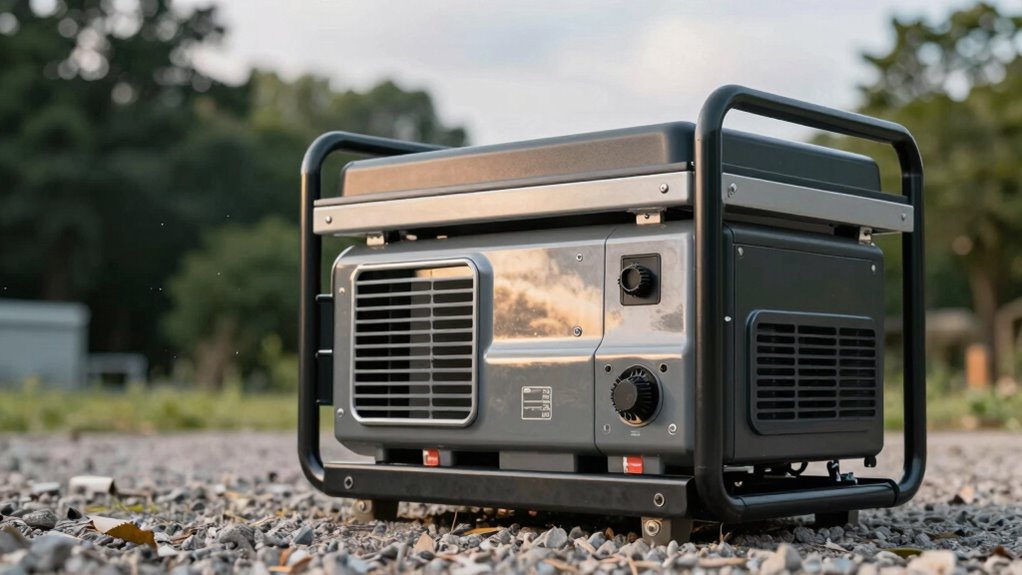
While decibel ratings give a baseline for generator noise levels, several other factors notably influence how loud a generator truly sounds in your environment. Sound insulation plays a key role; a well-insulated enclosure can substantially reduce noise transmission, making the generator quieter nearby. Additionally, operating hours matter—longer use can increase perceived noise, especially if the generator runs continuously or during quiet times. The placement of your generator also impacts sound levels; installing it on a sound-absorbing surface or away from living spaces can help. Proper soundproofing techniques can further mitigate noise and improve overall quietness, especially when combined with thoughtful installation practices. The design and build quality of the generator can also lead to quieter operation, as higher-quality units often incorporate noise-reducing features. Moreover, selecting a generator with noise-reduction features can significantly decrease sound output, making it even quieter during operation. Increasing awareness of sound-dampening materials can help you choose the best options for minimizing noise. By considering sound insulation, operating hours, and placement, you get a more accurate picture of how loud your generator will be in real-world scenarios.
Debunking Common Myths About Generator Noise
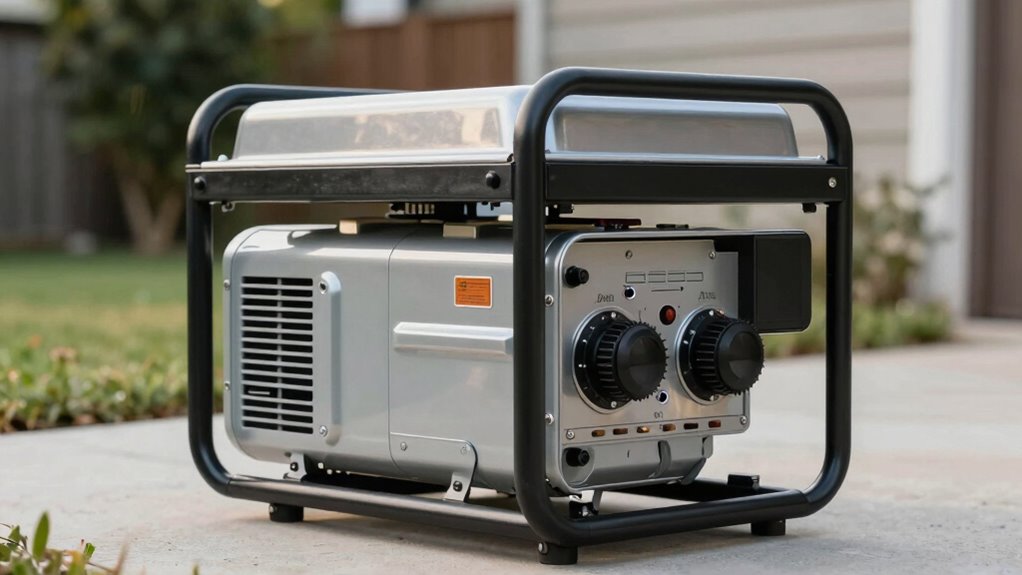
Many people believe that a lower decibel rating always means quieter operation, but noise levels are more complex. Understanding how decibel ratings work helps you accurately compare generator sounds. By focusing on actual noise levels and how they’re measured, you can make smarter choices for your needs. For example, knowing the dB rating can help you interpret the true noise output of a generator in real-world conditions. Additionally, factors like sound attenuation and environmental acoustics influence perceived noise, making it important to consider these elements alongside the decibel measurement. Recognizing how measurement methods impact the reported dB levels ensures you’re comparing generators based on consistent standards. Being aware of noise perception differences can also help you better assess how loud a generator will sound in various settings. Understanding sound pressure levels helps clarify how noise is experienced at different distances and environments, which is crucial for realistic expectations.
Noise Levels Explained
Despite common beliefs, not all generators are painfully loud; in fact, modern models are designed to operate quietly. Noise levels depend heavily on sound insulation and the use of noise barriers that absorb or block sound. Manufacturers now incorporate soundproof enclosures and vibration dampening materials to reduce noise emissions. Understanding these features helps you see that a lower dB rating doesn’t always mean a louder machine; it often reflects better sound insulation. It’s important to recognize that noise levels are relative and can be minimized with proper placement and barriers. By focusing on these design elements, you can enjoy reliable power without the disruptive noise traditionally associated with generators. This knowledge dispels myths and highlights the importance of soundproofing in quiet generator design. Additionally, advancements in fabric technology facilitate the development of noise-absorbing materials that further enhance generator quietness. In fact, soundproofing techniques are continually evolving to create more effective and affordable solutions for reducing noise pollution. For example, innovative soundproofing materials can significantly improve noise reduction without adding substantial weight or cost. Moreover, selecting a generator with advanced sound insulation features can make a noticeable difference in noise levels during operation.
Understanding Decibel Ratings
Understanding decibel ratings is key to accurately evaluating a generator’s noise level. When comparing different generator brands, don’t rely solely on dB ratings without context. Many myths suggest that lower decibel numbers always mean quieter operation, but the reality is more nuanced. A generator’s placement and soundproofing techniques considerably influence perceived noise. Some brands incorporate soundproof enclosures or mufflers that reduce noise without lowering the actual decibel rating. Others rely on external soundproofing solutions to enhance quietness. Remember, a generator with a modest dB rating can still be loud if not properly soundproofed or placed near your living space. To choose the quietest option, consider both the decibel rating and the soundproofing features offered by different brands.
How to Choose a Truly Quiet Generator Based on Noise Performance
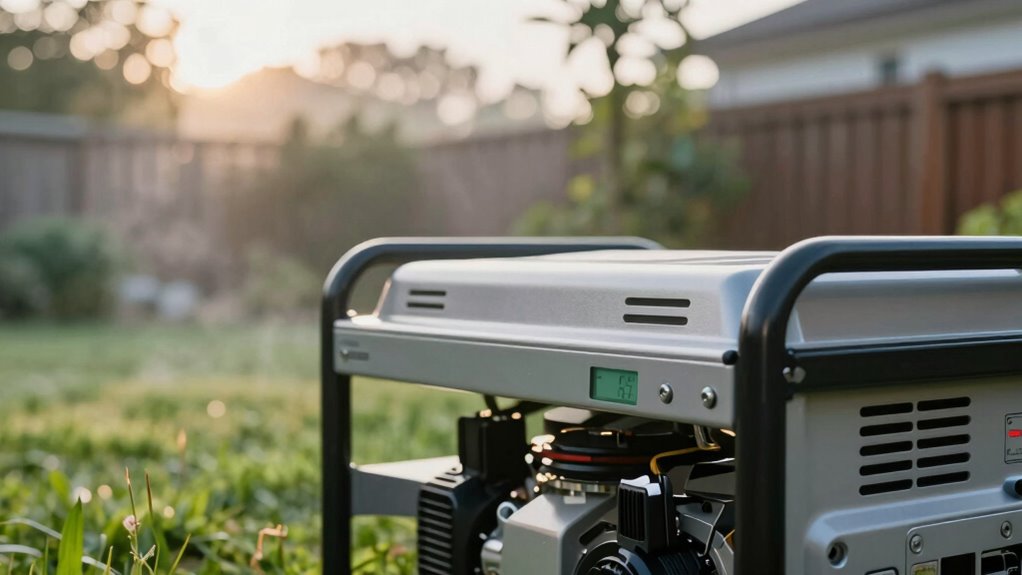
Choosing a truly quiet generator requires more than just looking at decibel ratings on the label. Noise performance depends on factors like generator placement and understanding manufacturer specifications. Positioning your generator properly can markedly reduce perceived noise; place it away from windows and enclosed areas. Always check manufacturer specifications for real-world noise levels, not just advertised dB ratings. Keep in mind that the environment can amplify sound.
| Factor | Tip | Impact |
|---|---|---|
| Generator Placement | Place it on a soft surface and away from structures | Reduces sound reflection and transmission |
| Manufacturer Specs | Look for real-world test results | Ensures accurate noise level expectations |
| Environment | Choose open, ventilated spaces | Minimizes sound amplification |
What Noise Regulations Should You Know When Buying a Generator?
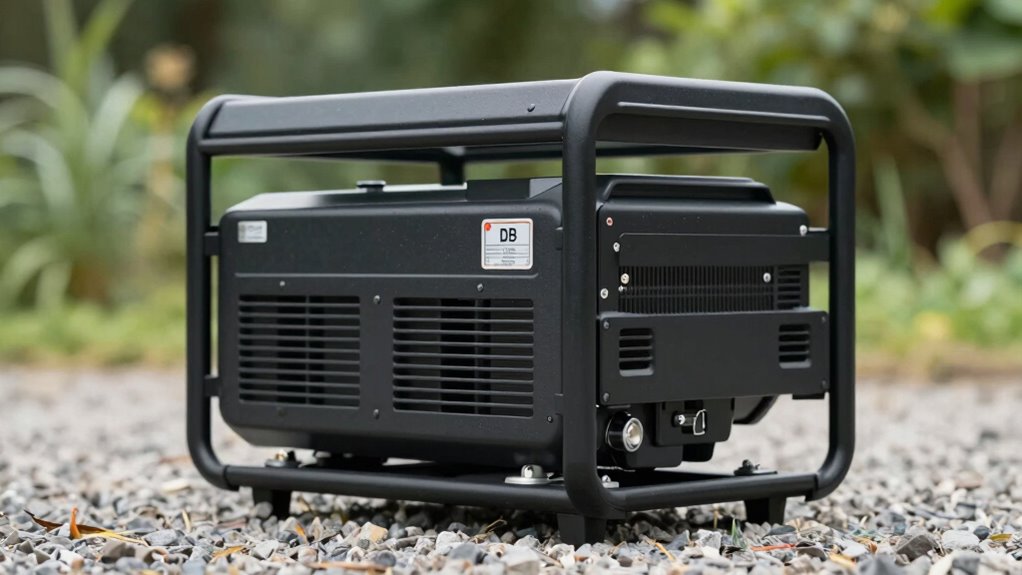
When buying a generator, you need to be aware of local noise regulations and residential noise limits. These rules can vary considerably depending on where you live, so it’s essential to check what’s permitted in your area. Ignoring these regulations could lead to fines or the need to replace your generator later.
Local Noise Regulations
Before purchasing a generator, it’s vital to be aware of local noise regulations, as these rules can vary considerably depending on where you live. Understanding these rules helps you choose the right generator and avoid fines. Regulations may specify maximum sound levels or restrict operation hours. When considering generator placement, think about distance from property lines and neighbors. Using soundproofing techniques, like enclosures or barriers, can help reduce noise impact. Check your local ordinances before installation to ensure compliance.
| Regulation Type | Key Consideration |
|---|---|
| Noise limits | Max dB levels allowed |
| Operating hours | Restrictions on nighttime use |
| Distance | Minimum distance from homes |
| Soundproofing | Approved soundproofing methods |
Residential Noise Limits
Are you aware of the residential noise limits that could affect your generator purchase? These limits are vital for maintaining peace in your neighborhood and complying with local laws. If you’re planning for emergency preparedness or outdoor activities, selecting a generator within acceptable noise levels is essential. Many areas regulate noise to protect residents from disruptive sounds, often specifying maximum decibel levels during certain hours. Ignoring these limits can lead to fines or having to upgrade your equipment later. To avoid issues, check your local regulations before buying. Opt for a generator with a lower dB rating to guarantee it’s quiet enough for nighttime use or outdoor gatherings. Knowing these residential noise limits helps you choose a generator that’s both functional and neighborhood-friendly.
Frequently Asked Questions
How Does the dB Rating Compare Between Different Generator Brands?
You’ll notice that the dB ratings vary between brands due to different decibel standards and manufacturer noise levels. When comparing generators, check their specific decibel standards, as some manufacturers test at different distances or conditions. Lower dB ratings generally mean quieter operation, but always verify manufacturer noise levels to confirm you’re comparing like with like. This helps you choose a generator that meets your noise comfort needs effectively.
Can a Lower dB Rating Still Mean a Louder Generator in Practice?
Yes, a lower dB rating can still mean a louder generator in practice because decibel measurement doesn’t always align with noise perception. Factors like sound frequency, environment, and how noise travels can make a generator seem louder despite a lower decibel rating. So, don’t rely solely on the dB number; test how it sounds in real-world conditions to accurately gauge noise levels.
Do Outdoor Conditions Affect the Perceived Noise Level of Generators?
Did you know that outdoor conditions can change how loud a generator seems by up to 10 dB? Environmental factors like wind, terrain, and nearby objects *considerably* affect noise perception. When you’re outdoors, these factors can amplify or muffle the sound, making a generator seem louder or quieter than its actual dB rating. So, always consider environmental influences to get a realistic idea of your generator’s noise level.
Are There Specific Industries That Require Quieter Generator Models?
Yes, certain industries demand quieter generator models, especially in residential environments where noise can disturb neighbors. Industrial applications also sometimes require low-noise generators for indoor use or sensitive areas to meet safety and comfort standards. You should consider these factors when choosing a generator, ensuring it complies with noise regulations and minimizes disruption, whether for residential or industrial purposes. Quieter models enhance efficiency and reduce complaints in noise-sensitive settings.
How Does the Placement of a Generator Influence Its Noise Impact?
You can reduce noise impact by carefully placing your generator near a soundproof enclosure or behind a noise barrier. Position it away from living or work areas, and use barriers to block sound waves. Proper placement minimizes noise pollution, making your generator less intrusive. Combining strategic placement with soundproofing guarantees quieter operation, which is especially important in residential or sensitive environments.
Conclusion
Understanding decibel ratings helps you choose a generator that truly meets your noise needs. Knowing what the dB rating measures, interpreting it correctly, and considering other noise factors empowers you to make informed decisions. Bust the myths, navigate regulations, and select a generator that’s quiet in operation, respectful of your environment, and reliable in performance. With this knowledge, you’ll confidently find a generator that fits your quiet standards and keeps your peace of mind intact.