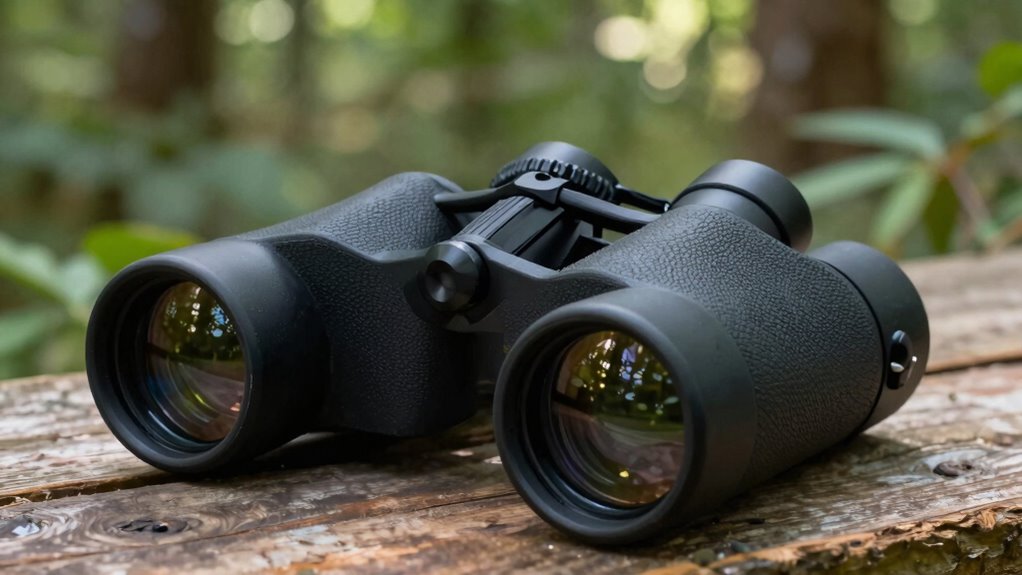

To pick binoculars for birding without guessing, focus on lens coatings, especially fully multi-coated lenses, which boost light transmission for bright, clear images. Consider eye relief, choosing models with longer eye relief (15mm or more) for comfortable viewing, especially if you wear glasses. Check for good optical quality, which enhances clarity and reduces eye strain. Also, think about the overall ergonomic design and light handling to suit various lighting conditions. Keep exploring to discover more about selecting the perfect binoculars for your adventures.

Get your next haul delivered free with Prime
- Fast, free delivery on millions of items
- Prime Video, Amazon Music and more included
- Member-only deals all year
Key Takeaways
- Prioritize fully multi-coated lenses for maximum light transmission and clearer, brighter images in diverse lighting conditions.
- Choose binoculars with at least 15mm of eye relief for comfortable viewing, especially if wearing glasses.
- Consider the binoculars’ size, weight, and ergonomic design for extended birding sessions.
- Opt for higher optical quality to ensure sharpness, contrast, and reduced eye strain during prolonged use.
- Assess light transmission capabilities to avoid missing details in low-light situations like dawn or dusk.

Choosing the right binoculars can substantially enhance your birding experience, but with so many options available, it’s easy to feel overwhelmed. To make an informed choice, you need to consider key features that affect image clarity and comfort. One of the most important factors is lens coatings. High-quality lens coatings improve light transmission, which means you get brighter, sharper images, even in low-light conditions like dawn or dusk. Fully multi-coated lenses are ideal because they have multiple layers of coatings on all lens surfaces, reducing glare and reflections. This results in clearer, more vibrant views. Cheaper binoculars may have single or no coatings, leading to duller images and reduced contrast. So, when shopping, look for binoculars that specify fully multi-coated lenses to guarantee you’re getting the best optical performance.
Another essential aspect is eye relief. Eye relief refers to the distance you can hold the binoculars away from your eyes while still seeing the full field of view. If you wear glasses, longer eye relief—typically 15mm or more—is especially important. It allows you to comfortably see the entire image without pressing the binoculars tightly against your face or removing your glasses. Short eye relief can cause vignetting, where parts of the view are cut off, which can be frustrating when trying to spot fine details in distant birds. When trying out binoculars, test the eye relief by holding them at different distances from your eyes to see what feels comfortable and provides a full, undistorted view. Additionally, understanding the optical quality of the binoculars can help you choose a model that offers the best clarity and brightness for your birding adventures. Remember, lens coatings are just one part of the overall optical performance that makes a difference during your birding excursions. Investing in high-quality optics can significantly improve your viewing experience and help you appreciate the details of your feathered friends. Furthermore, considering ergonomic design can ensure that your binoculars are comfortable for prolonged use, making your birding outings more enjoyable. Paying attention to light transmission can also help you select binoculars that perform well in various lighting conditions, ensuring you don’t miss any beautiful moments.
fully multi-coated birding binoculars
As an affiliate, we earn on qualifying purchases.
As an affiliate, we earn on qualifying purchases.
Frequently Asked Questions
How Do Binoculars Perform in Low-Light Conditions?
Binoculars perform better in low-light conditions if they have good night vision capabilities and high light transmission. You should look for models with larger objective lenses, which allow more light to enter, enhancing visibility at dawn or dusk. Opt for binoculars with multi-coated lenses to maximize light transmission. This way, you’ll see clearer, brighter images, making it easier to spot birds even when lighting is poor.
Are Waterproof Binoculars Necessary for Birding?
Waterproof binoculars aren’t always necessary, but they’re highly beneficial if you often bird in unpredictable weather. Waterproof features guarantee your binoculars stay safe from rain or snow, while weather resistance guards against moisture and dust. If you bird in areas with frequent rain or humid climates, investing in waterproof binoculars is wise. They provide durability and clear views without worrying about weather damage, making your birding experience more enjoyable and worry-free.
What Is the Ideal Weight for Birding Binoculars?
The ideal weight for birding binoculars is around 20 to 25 ounces, balancing weight considerations and handling comfort. Lightweight binoculars make it easier to hold steady during long birding sessions, reducing fatigue. Heavier models might offer better optics but can strain your hands and neck. Choose a pair that feels comfortable to hold for extended periods, ensuring you stay alert and focused on spotting those elusive birds.
How Does Eye Relief Affect Comfort During Long Use?
If you think eye relief isn’t essential, imagine missing that perfect bird sighting because of discomfort. Eye relief directly impacts your comfort during long periods of use, especially if you wear glasses. Look for binoculars with adjustable comfort settings, including ample eye relief, so you can customize your view. This guarantees a comfortable, clear experience, letting you focus on birding without strain or distraction.
Should I Consider Image Stabilization for Birding Binoculars?
Yes, you should consider image stabilization for birding binoculars, especially if you often observe from shaky positions or long distances. Image stabilization helps reduce hand fatigue and provides a steady view, making it easier to spot fine details. It’s a valuable birding accessory that enhances your experience. While those binoculars tend to be pricier, the convenience and clarity they offer are well worth the investment for avid birders.
As an affiliate, we earn on qualifying purchases.
Conclusion
Now that you know what to look for, picking the perfect binoculars becomes less of a gamble and more of a walk in the park. Remember, the right pair isn’t just about zoom or size—it’s about feeling confident in your choice, like a bird you’ve always wanted to spot. So go ahead, trust your instincts, and embrace the adventure. After all, the world’s most beautiful sights are waiting just beyond your lenses—ready for you to discover them.
lightweight ergonomic binoculars for birdwatching
As an affiliate, we earn on qualifying purchases.
As an affiliate, we earn on qualifying purchases.
high optical quality binoculars for low light
As an affiliate, we earn on qualifying purchases.
As an affiliate, we earn on qualifying purchases.
Halloween Picks
halloween
As an affiliate, we earn on qualifying purchases.