Many myths about induction cooking aren’t true. For example, some think your cookware must be special, but it only needs to be magnetic—most cast iron or stainless steel works. Others believe induction is unsafe or complicated, but it’s actually safer and easier to clean. Plus, it heats faster and more evenly than traditional methods. If you want to uncover these misconceptions and discover the real facts, keep exploring the details below.
Key Takeaways
- Many believe induction is only compatible with expensive cookware, but ferromagnetic materials make most common pots suitable.
- A common myth is that induction stoves are unsafe; in reality, they are safer due to no open flames and quick cooling.
- People think induction cooking is expensive to operate, but its energy efficiency often lowers long-term utility costs.
- Some assume induction heats unevenly, but it provides faster, more even heat distribution compared to traditional methods.
- There’s a misconception that induction cooktops are difficult to maintain; in fact, they are easy to clean with simple wiping.
Will Your Cookware Work With Induction?
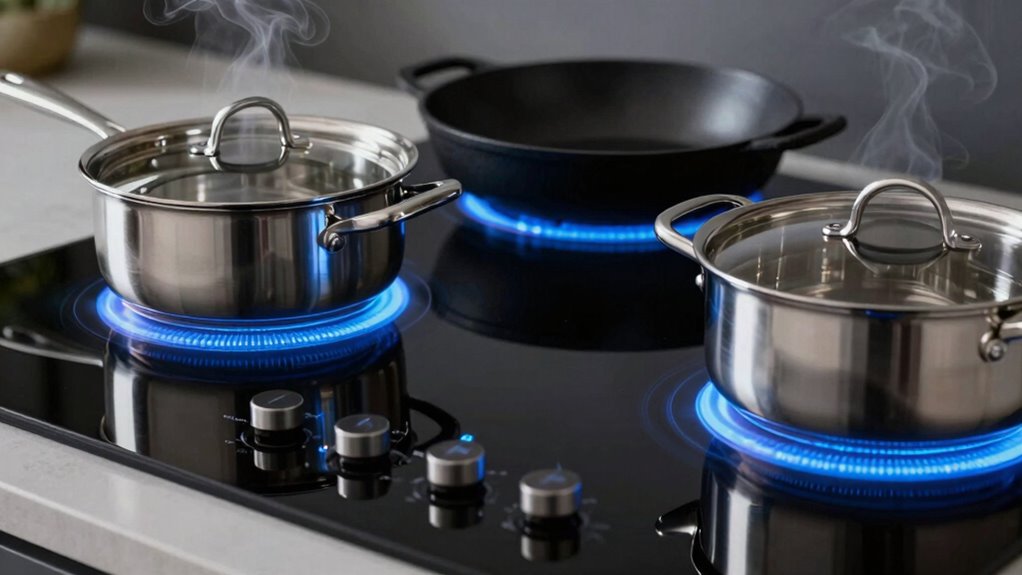
Wondering if your current cookware will work with induction cooking? It all comes down to cookware compatibility and magnetic properties. Induction stoves require cookware made from ferromagnetic materials, like cast iron or certain stainless steels, which have the right magnetic properties. If your pots and pans are magnetic, they’ll attract a magnet, indicating they can work on induction. Non-magnetic cookware, such as aluminum or glass, won’t activate the burner. To test yours, simply see if a magnet sticks firmly to the bottom. If it does, you’re good to go. Otherwise, you might need to upgrade your cookware to ensure it’s compatible with induction technology. This quick check saves you time and helps you avoid purchasing incompatible pots and pans. cookware compatibility is essential for optimal induction cooking performance, especially since magnetic properties determine whether your existing cookware will work effectively.
Is Induction Cooking Safer Than Traditional Methods?
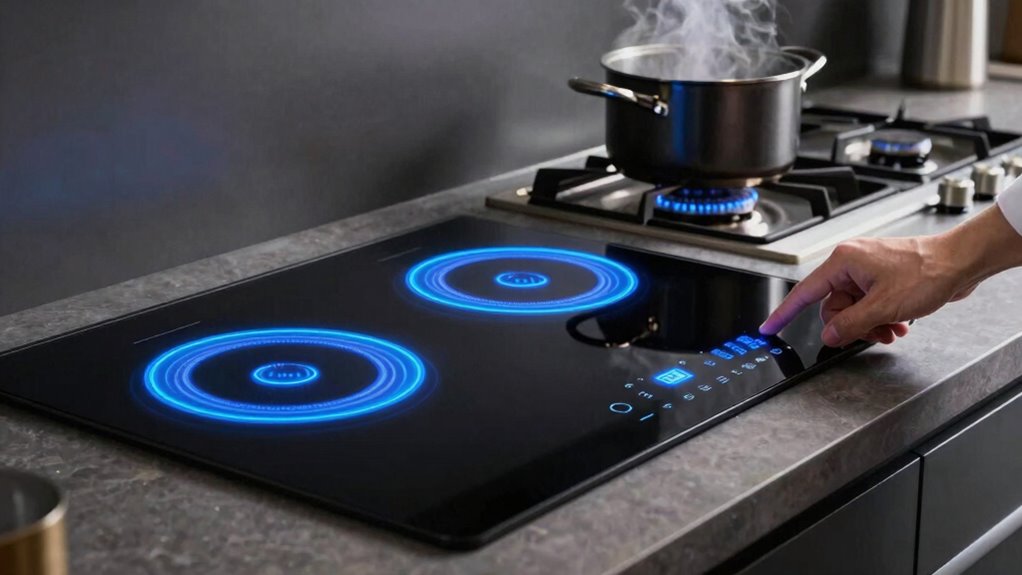
Many people ask whether induction cooking is safer than traditional methods, and the answer largely depends on how each technology interacts with users. Induction cooktops eliminate open flames and hot surfaces, reducing fire risks and burns, which addresses common safety concerns. Additionally, because they heat cookware directly, they cool down quickly when turned off, further enhancing safety. Regarding appliance durability, induction cooktops are generally robust and resistant to damage from spills or impacts, making them reliable over time. However, proper maintenance remains essential to guarantee safety and longevity. Overall, induction cooking tends to be safer than traditional gas or electric stoves, especially when used correctly, but understanding safety concerns and appliance durability will help you make the most informed decision.
Is Induction More Expensive to Buy or Operate?
Induction cooktops often come with a higher upfront price compared to traditional gas or electric stoves. However, when you look at the cost comparison over time, the story changes. Induction tends to be more energy-efficient, meaning you’ll use less electricity, which lowers your utility bills. While the initial investment is higher, the operating costs are typically lower due to faster heating and precise temperature control. Additionally, choosing the right energy-efficient appliances can further enhance appliance performance and longevity. Proper maintenance and energy-saving techniques can maximize savings and extend the lifespan of your induction cooktop. Considering long-term savings can help you make a more informed decision about your kitchen investments. Here’s what to contemplate:
Induction cooktops have higher upfront costs but save money over time through energy efficiency and faster heating.
- Energy efficiency reduces ongoing expenses, making induction cheaper to operate.
- Cost comparison shows that savings on energy can offset the higher purchase price over time.
- Long-term savings often outweigh the initial cost difference, especially if you cook frequently.
A dedicated energy management approach can also optimize your overall kitchen efficiency and reduce unnecessary power consumption.
Does Induction Heat Faster and More Evenly?
While induction cooktops may have a higher upfront cost, their real advantage lies in performance. They heat faster and distribute heat more evenly than traditional methods. Thanks to electromagnetic technology, heat is generated directly in your cookware, resulting in quicker cooking speed and precise control. This direct heat transfer enhances energy efficiency and reduces cooking times. Additionally, induction cooktops are known for their safety features, making them a popular choice for modern kitchens. It is also worth noting that the cost-effectiveness of induction cooking improves over time due to lower energy consumption. To illustrate, here’s a comparison of key features:
| Feature | Traditional Electric | Gas Cooktop | Induction Cooktop |
|---|---|---|---|
| Cooking Speed | Moderate | Slow | Fast |
| Heat Distribution | Uneven | Variable | Very Even |
| Responsiveness | Slow to adjust | Quick | Instant |
| Energy Efficiency | Low | Moderate | High |
| Safety | Moderate | Moderate | High |
Induction’s rapid, even heat makes it a game-changer in your kitchen.
How Difficult Is It to Maintain an Induction Cooktop?
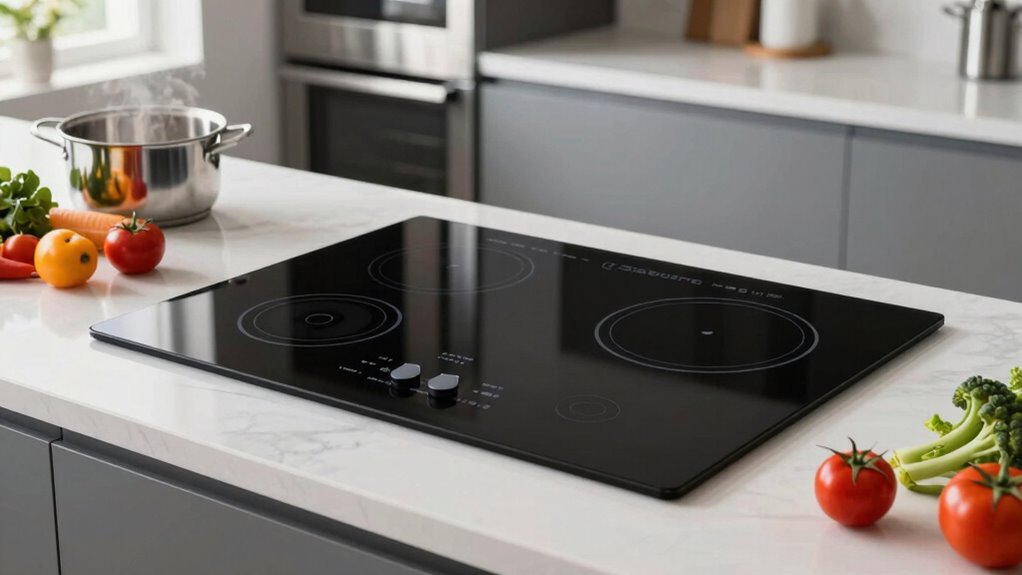
Maintaining an induction cooktop is straightforward because its smooth surface and simple design require minimal effort. Unlike traditional stoves, it doesn’t have grates or burners that trap dirt, making cleaning easier. Cleaning requirements are minimal but essential for ideal performance. You should wipe the surface after each use with a soft, damp cloth to remove spills and crumbs. Avoid abrasive cleaners that could scratch the glass. Here are some tips:
- Use non-abrasive cleaning pads
- Regularly check for and remove any debris around the venting areas
- Avoid placing heavy or rough cookware that could scratch the surface
- Proper maintenance techniques can extend the lifespan of your cooktop. Incorporating regular inspections can also help identify potential issues early and prevent costly repairs. Additionally, choosing sustainable cookware options can further enhance the longevity and eco-friendliness of your induction cooking setup. Proper care includes understanding induction compatibility, which ensures optimal performance and safety. Being aware of sustainable options in cookware can also help reduce environmental impact. With proper care, your induction cooktop stays in great shape with little effort.
Frequently Asked Questions
Can Induction Cooktops Be Used Outdoors or in RVS?
You can use induction cooktops outdoors or in RVs, but you need to take into account outdoor durability and RV compatibility. Look for models designed with weather-resistant features to withstand outdoor elements. For RV use, choose portable, compact units that work with your power source. Always check manufacturer guidelines to ensure safe, efficient operation, and protect your induction cooktop from extreme weather conditions for long-lasting performance.
Do Induction Stoves Emit Harmful Electromagnetic Fields?
Electromagnetic safety is a common concern with induction stoves, but field exposure is generally minimal. You’re exposed to electromagnetic fields only when you’re close to the cooktop, and these fields drop rapidly with distance. Modern induction stoves are designed with safety in mind, ensuring that electromagnetic emissions stay well within safe limits. So, while you might notice the fields, they pose little to no harm during normal use.
Are There Environmental Benefits to Using Induction Cooking?
Using induction cooking offers environmental benefits, including energy savings and reduced emissions. You’ll use less energy because induction stoves heat cookware directly, minimizing heat loss. This efficiency cuts down on electricity consumption, which can lower your carbon footprint. Plus, since induction cooking heats faster and more precisely, you save time and energy, making it a greener choice for your kitchen and the planet.
How Compatible Are Induction Cooktops With Smart Home Systems?
You’ll find induction cooktops highly compatible with smart home integration and voice control, making your kitchen smarter and more convenient. They easily connect with popular smart home systems, allowing you to control settings remotely or with voice commands. This seamless integration simplifies cooking, enhances safety, and adds modern efficiency to your kitchen. So, if you want effortless control and a connected cooking experience, induction cooktops are a perfect choice.
Can Induction Cooking Be Effectively Used for Baking or Grilling?
You can definitely use induction cooking for baking and grilling, but it requires some adjustments. For baking, you’ll want to use induction-compatible bakeware and focus on techniques that evenly distribute heat. When grilling, induction cooktops excel at quick, precise heat control, making them great for grilling methods like searing or delicate grilling tasks. Just keep in mind that traditional baking and grilling methods may need some tweaks for ideal results.
Conclusion
Now that you’ve uncovered the truths behind induction cooking, you can see it’s not as complex as it seems. Think of induction as a well-choreographed dance—smooth, efficient, and surprisingly easy to keep in rhythm. With the right cookware and a little know-how, you’ll enjoy faster, safer, and more reliable cooking. So go ahead, embrace induction; it’s the modern kitchen partner that’s ready to make your culinary life easier and more enjoyable.