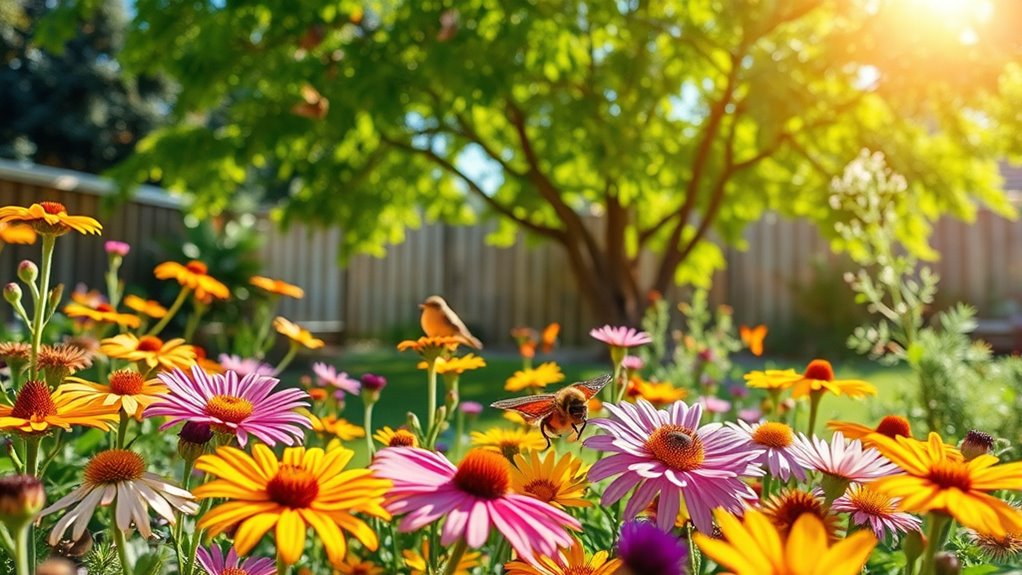

Supporting biodiversity in your backyard can transform your space into a vibrant ecosystem. You can attract pollinators by planting native wildflowers that need less water and maintenance. Create habitats with piles of sticks or birdhouses to invite wildlife visits. Reducing chemicals in your garden supports beneficial insects and promotes balance. By engaging with your neighbors in garden swaps or cleanups, you amplify your impact. Discover how simple changes can profoundly enhance your yard’s biodiversity.
Key Takeaways
- Plant native flora to enhance biodiversity, requiring less water and maintenance while supporting local wildlife.
- Create diverse habitats using piles of sticks, rocks, or birdhouses to attract various species.
- Reduce pesticide use and adopt organic gardening practices to promote a balanced ecosystem.
- Engage with neighbors in gardening tips and plant swaps to amplify biodiversity efforts.
- Organize community cleanups and wildlife-friendly spaces to collectively enhance local environments.
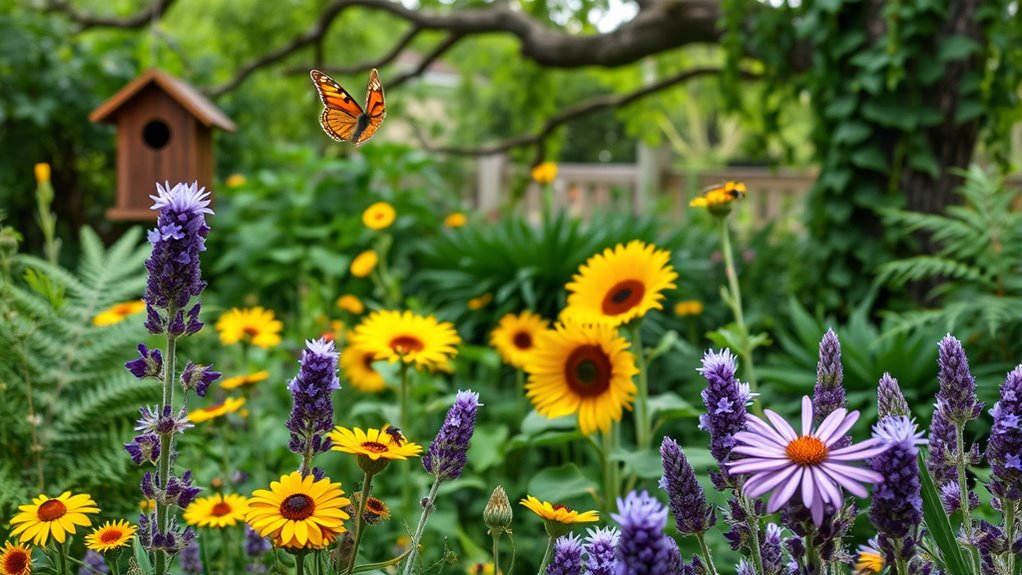
When you step outside, your backyard isn’t just a patch of grass; it’s a vibrant ecosystem waiting to be explored. With a little curiosity, you’ll discover a world teeming with life, from buzzing bees to fluttering butterflies. These creatures play essential roles in maintaining biodiversity, which is indispensable for a healthy environment. By fostering this diversity, you can contribute to the well-being of your local ecosystem while enjoying the beauty of nature right at home.
Start by observing what’s already there. Take note of the plants and animals that frequent your yard. Even the smallest patch of wildflowers can attract pollinators, while shrubs provide shelter for birds and small mammals. You might find that native plants thrive better in your soil and climate, requiring less water and maintenance. Consider replacing non-native species with local flora to support the wildlife that depends on them. This simple change can create a more balanced ecosystem.
Observe your backyard’s plants and animals; native flora can enhance biodiversity and thrive with less care.
Next, think about creating habitats. Piles of sticks or rocks can serve as homes for insects and small creatures, while birdhouses and feeders attract avian visitors. If you’ve got the space, a small pond or water feature can bring in frogs, dragonflies, and more. Each addition increases the variety of life in your backyard, making it a lively hub of activity.
Don’t forget about your gardening practices. Reducing the use of pesticides and chemical fertilizers benefits both the plants and the creatures that inhabit your yard. Instead, try organic methods to keep pests at bay. You can even plant companion flowers that deter harmful insects while attracting beneficial ones. This approach not only supports biodiversity but also helps create a safe haven for your backyard wildlife.
Consider engaging with your neighbors. A community effort can amplify your impact. Share tips on gardening for biodiversity, swap plants, or even organize a neighborhood cleanup. Together, you can create a network of wildlife-friendly spaces that enhance the local environment. Moreover, fostering a supportive community can lead to increased awareness and action towards protecting biodiversity in your area.
Frequently Asked Questions
How Can I Attract Butterflies to My Garden?
To attract butterflies to your garden, plant native flowers like milkweed, coneflower, and asters. These provide nectar and essential food for caterpillars. Create sunny spots for them to bask and add shallow water sources for hydration. Avoid pesticides, as they can harm butterflies and their larvae. You can also include plants with different bloom times to guarantee a steady food supply throughout the season. Enjoy watching these beautiful creatures flourish in your garden!
What Native Plants Are Best for My Region?
You might think native plants won’t look as nice as exotic ones, but they’re often stunning and perfectly adapted to your region. Check local resources to find the best options for your area, like coneflowers, black-eyed Susans, or milkweed. These plants not only thrive in your garden but also attract beneficial pollinators. By choosing native species, you’ll create a vibrant ecosystem that supports local wildlife while enhancing your landscape’s beauty.
How Do I Create a Wildlife-Friendly Water Source?
To create a wildlife-friendly water source, start by setting up a shallow birdbath or a small pond. Make sure it has sloped sides, so animals can access the water easily. You can add stones or plants around the edges for stability and shade. Regularly clean the water source to keep it fresh, and consider adding a few native aquatic plants to enhance the habitat further, attracting more wildlife to your yard.
Are There Any Plants to Avoid for Local Wildlife?
You’ll want to steer clear of invasive species like Japanese knotweed and garlic mustard, as they can outcompete native plants and disrupt local ecosystems. Avoiding non-native ornamentals, too, can help keep local wildlife thriving. Think about how certain plants might attract pests instead of pollinators. By choosing wisely, you can create a welcoming environment for beneficial wildlife and support the delicate balance nature relies on. It’s all about making informed choices!
How Can I Involve My Kids in Biodiversity Efforts?
You can involve your kids in biodiversity efforts by organizing fun activities like nature walks or garden projects. Encourage them to plant native flowers, create a small wildlife habitat, or build birdhouses together. Let them observe insects or collect leaves for a nature scrapbook. You could also volunteer at local conservation events, teaching them the importance of protecting wildlife. By engaging them in hands-on activities, they’ll appreciate and understand biodiversity better.
Conclusion
By nurturing nature in your backyard, you can create a vibrant haven for diverse life. From fluttering butterflies to buzzing bees, every bloom and branch contributes to the beauty and balance of our ecosystem. Embrace this enchanting endeavor, and you’ll not only support local wildlife but also savor the satisfaction of seeing your space thrive. So, dig in, plant passionately, and watch your backyard transform into a breathtaking biodiversity bonanza!