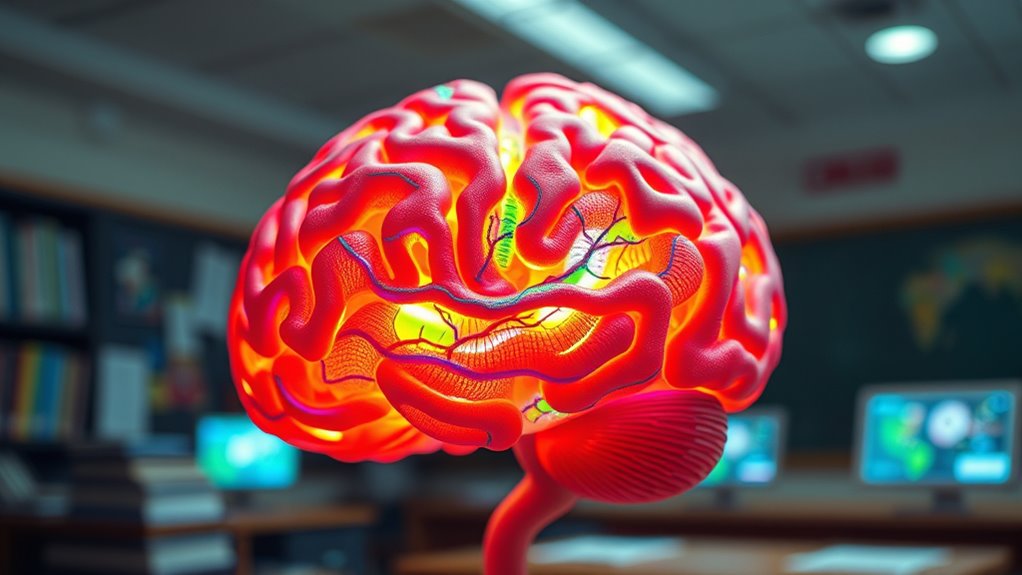

Neuroeducation shows you how your brain learns by highlighting its remarkable ability to adapt. You engage better when emotions are involved, making lessons more memorable. Staying focused boosts your understanding, while adequate sleep is essential for memory retention. Using diverse learning strategies enhances your grasp of concepts. Understanding these elements sets a strong foundation for effective learning, and there’s much more to discover about optimizing your brain’s potential.
Key Takeaways
- Neuroplasticity allows the brain to reorganize and form new connections, enhancing learning throughout life.
- Emotional engagement through the amygdala increases memory retention and makes learning experiences more impactful.
- Focus and attention are critical; reducing distractions and concentrating on single tasks improve comprehension and retention.
- Sleep plays a vital role in consolidating memories, making adequate rest essential for effective learning.
- Diverse learning strategies, including technology integration, reinforce understanding and strengthen neural pathways for personalized education.

What if understanding the brain could transform the way you learn? Imagine harnessing the power of neuroscience to enhance your educational experience. Neuroeducation combines insights from neuroscience, psychology, and education to improve how you grasp new information. By understanding how your brain processes, retains, and recalls information, you can adopt strategies that align with its natural functions, leading to more effective learning.
Your brain’s structure plays a vital role in how you absorb knowledge. For instance, neuroplasticity, the brain’s ability to reorganize itself by forming new connections, means that every time you learn something new, you’re physically altering your brain. This dynamic nature suggests that you can continuously improve your learning abilities throughout your life. Embracing this concept encourages you to challenge yourself, knowing that each effort strengthens your neural pathways.
Neuroplasticity empowers you to reshape your brain with every new lesson, enhancing your lifelong learning journey.
You might also discover the importance of emotions in learning. Your brain’s amygdala processes emotions, which profoundly impacts memory formation. When you’re emotionally engaged, whether through excitement or curiosity, you’re more likely to remember what you’ve learned. So, creating a learning environment that sparks your interest can enhance retention. Think about the subjects that excite you and find ways to incorporate them into your study routine.
Attention is another critical factor. Your brain can only focus on a limited amount of information at a time, so multitasking can be detrimental. By minimizing distractions and concentrating on one task at a time, you can improve your comprehension and retention. Techniques like the Pomodoro Technique, where you work for a set period followed by a break, can help maintain your focus and prevent burnout.
Moreover, understanding the role of sleep in learning is essential. Your brain consolidates memories during sleep, so prioritizing rest can greatly enhance your ability to recall information. If you’re cramming for an exam, don’t underestimate the power of a good night’s sleep; it can be just as important as your study sessions.
Finally, using varied learning methods can cater to different areas of your brain. Engaging with material through reading, writing, and hands-on activities creates multiple connections, reinforcing your understanding. Experiment with different strategies to find what works best for you. Additionally, integrating AI-driven insights into your learning process can enhance your ability to personalize and optimize educational strategies.
Frequently Asked Questions
How Can Parents Apply Neuroeducation Techniques at Home?
You can apply neuroeducation techniques at home by creating a stimulating environment that encourages curiosity and exploration. Use hands-on activities to engage your child’s senses and promote active learning. Incorporate regular breaks to help them focus and absorb information better. Encourage discussions about what they learn to reinforce their understanding. Ultimately, maintain a positive attitude about mistakes, showing them that challenges are part of the learning process and essential for growth.
What Role Does Technology Play in Neuroeducation?
Think of technology as a guiding star in the vast galaxy of learning. It enhances neuroeducation by offering interactive tools that engage your brain’s full potential. You can use apps for personalized learning, virtual reality for immersive experiences, and online resources for diverse perspectives. These technologies stimulate curiosity and make learning dynamic. Embracing them helps you tap into your brain’s natural abilities, making education not just effective, but also exciting!
Are There Specific Learning Styles Emphasized in Neuroeducation?
Yes, there are specific learning styles emphasized in neuroeducation. You might find visual, auditory, and kinesthetic styles highlighted, as they cater to different ways you process information. By understanding your preferred style, you can tailor your learning experience to be more effective. This approach not only helps you grasp concepts better but also keeps you engaged. Ultimately, recognizing your unique learning style can enhance your educational journey markedly.
How Can Teachers Assess the Effectiveness of Neuroeducation Strategies?
To assess the effectiveness of neuroeducation strategies, you can use a mix of formative and summative assessments. Don’t worry if traditional tests seem insufficient; focus on student engagement and understanding. Collect feedback through surveys or informal discussions. Observe changes in behavior and performance over time. By analyzing this data, you’ll get a clearer picture of what’s working, allowing you to adapt your teaching methods to better suit your students’ needs.
What Are Common Misconceptions About Neuroeducation?
Common misconceptions about neuroeducation include the idea that it’s just about brain-based learning techniques or that it guarantees immediate improvement. Some think it offers one-size-fits-all solutions, ignoring individual differences in learning styles. Others believe that understanding brain science alone is enough to enhance teaching effectiveness. Remember, it’s not just about knowing how the brain works; it’s about applying that knowledge in diverse and flexible ways to meet your students’ unique needs.
Conclusion
Incorporating neuroeducation into your teaching can transform how students learn. Did you know that research shows 90% of what we learn is retained when we actively engage with the material? By understanding how the brain processes information, you can create more effective learning experiences. Embracing these insights not only enhances students’ knowledge retention but also fosters a love for learning. So, let’s harness the power of neuroeducation and uncover the full potential of every student!